


If you own a boat, your engine’s reliability depends on the parts inside it and around it. That’s a big reason to get familiar with outboard motor parts. One worn item, like a cracked fuel line or a weak impeller, can turn a good day on the water into a long tow back to shore, and that’s no fun. For commercial boaters, it can also mean lost time and lost money.
More boat owners are keeping their engines longer and paying more attention to practical maintenance. In 2025, the U.S. outboard market reached $3.5 billion, even with a dip in unit sales. The average retail price climbed to $13,081 per engine. Replacement costs can add up fast, so knowing your parts helps protect that investment and avoid extra trouble.
This guide explains the most important outboard motor parts in simple, clear language. It covers what each part does, which signs of wear need attention, and which checks should be part of a regular routine. It also goes over common mistakes, newer trends in marine engine systems, and practical tips that help recreational and commercial boaters stay safe and ready, with fewer surprises when they head out.
Why Outboard Motor Parts Matter More Than Ever
Outboard engines are getting more advanced, so knowing the parts has become a lot more helpful for everyday owners. In 2025, 267,000 U.S. outboard engines were sold, and 39,700 of them were rated at 300 hp and greater. Bigger engines put more strain on cooling and fuel delivery, and they also affect controls and propeller systems. That’s a real shift for owners who want to stay on top of maintenance.
| Metric | Value | Year |
|---|---|---|
| U.S. outboard engines sold | 267,000 | 2025 |
| U.S. outboard market value | $3.5 billion | 2025 |
| Average retail price per engine | $13,081 | 2025 |
| 300 hp+ outboards sold | 39,700 | 2025 |
| Global outboard market size | $13.10 billion | 2026 |
For many owners, the practical reason is simple: replacing an engine costs a lot, so keeping up with outboard motor parts is usually the smarter move. Safety is part of it too. In 2024, the U.S. Coast Guard reported 3,887 recreational boating accidents, 2,170 injuries, and 599 fatalities. Not every one of those incidents was caused by engine trouble, but reliable equipment can still help lower risk on the water.
Despite softer unit demand, the market remained stable overall, supported by resilient pricing and continued strength in higher horsepower segments.
Strong, reliable engines still hold their value. If the goal is to keep a motor running well, it helps to know which parts fail most often and which ones need regular service.
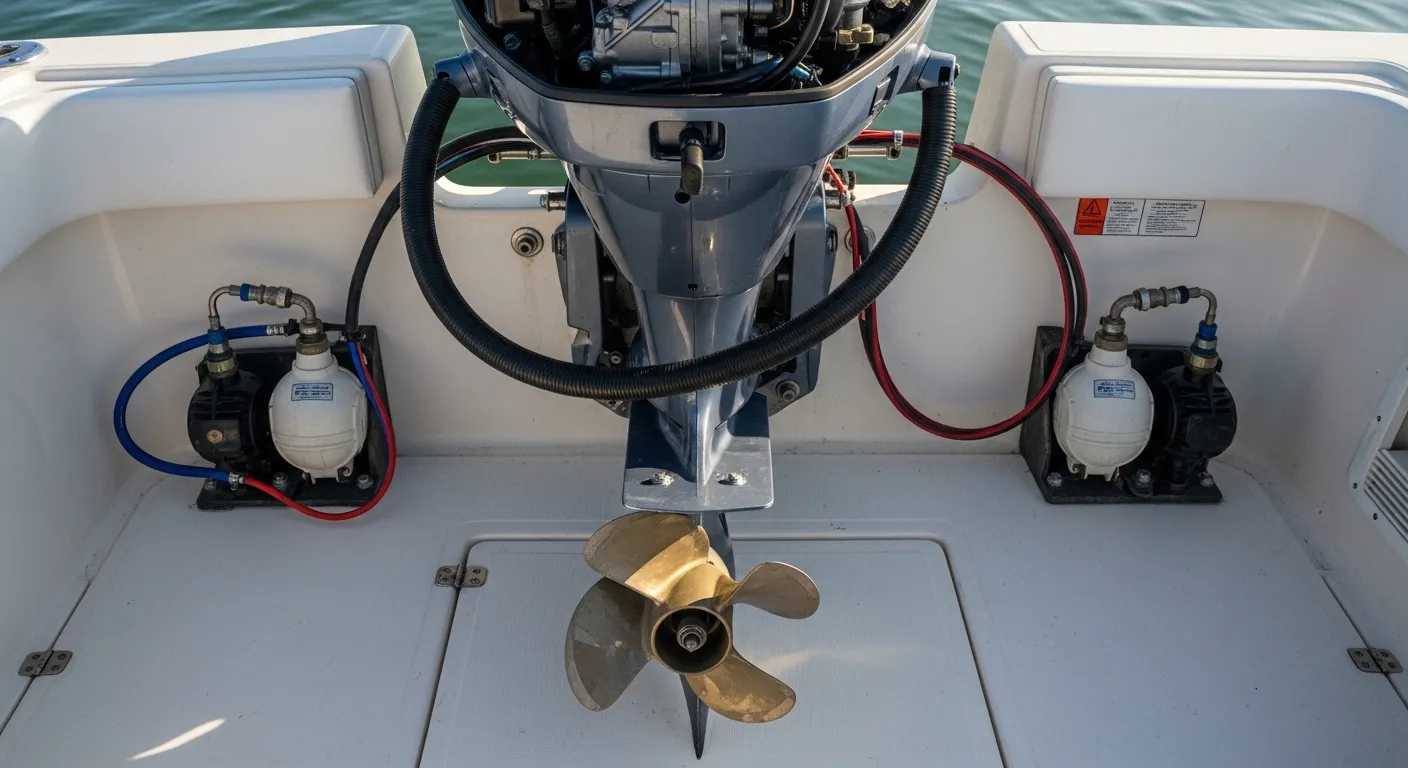
The Core Outboard Motor Parts You Should Know
Some outboard motor parts are easy to spot. Others sit behind covers or inside housings, out of sight. Either way, each one plays a big part in keeping the engine running well. These are the main parts.
Fuel system parts
The fuel system includes the fuel tank, fuel lines, primer bulb, fittings, clamps, and fuel filter. Together, these parts move clean fuel from the tank to the engine. If any one of them fails, the engine may sputter, surge, or not start at all, which can quickly become a real headache.
Before every trip, Discover Boating recommends checking the fuel filter bowl for water. It also suggests looking over fuel lines for cracks, leaks, corrosion, and other damage, including small problems that are easy to miss.
Cooling system parts
The water pump, impeller, thermostat, plus the cooling passages help keep the engine from overheating, and that can happen fast. These are some of the main wear parts on any outboard. If the impeller hardens, tears, or starts losing vanes, cooling water flow can drop quickly. Before long, that can damage the powerhead.
Ignition and electrical parts
Spark plugs, ignition coils, battery cables, charging parts, and starter components help the engine start and keep the electrical system working. If it’s hard to start, idles rough, or cranks weakly, the problem is likely somewhere in this area.
Drive and protection parts
The propeller, prop shaft, seals, anodes, and gearcase lubrication parts turn power into motion and also help protect the motor from corrosion and water getting in, which is easy to overlook. Problems here often stay hidden until vibration starts, the motor gets noisy, speed drops, or all three happen at once.
If you’re dealing with a running issue now, this 2025 outboard motor troubleshooting guide can help narrow down the problem by symptom.
How to Inspect Parts Before Problems Start
Regular maintenance does not take much time, but it does need to happen on schedule. A common benchmark across marine service guidance is every 100 hours or once a year. Some boaters, [especially those in salt water or heavy commercial use], should check parts more often because those conditions are simply tougher on them.
Before each trip, do a quick walk-around. Squeeze the primer bulb and check the fuel lines for soft spots, cracks, or any fuel smell. These are small warning signs, and they are easy to ignore. Then check the propeller. Remove fishing line if needed, and watch for bent blades, chipped edges, grease leaking around the prop shaft, or anything else that looks unusual.
Once the engine is running, confirm cooling flow. A weak telltale stream may point to a blockage or a water pump problem. Battery connections also need a look for looseness or white or green corrosion. Visible wires should be checked for rub marks too, since those are easy to miss without taking a second look.
After every outing, flush the engine. Discover Boating recommends flushing after every trip, even in fresh water. It helps clear out sand, salt, silt, and debris, which can shorten the life of cooling system parts.
A broader service plan was covered in this Outboard Motor Maintenance: Preventive Checklist 2026. It works well with routine parts inspection and can help keep seasonal tasks from being missed.
Parts That Commonly Fail and Mistakes Owners Make
Most engine failures do not start with a major breakdown. More often, they begin with skipped checks on basic outboard motor parts. The impeller is a good example. Owners may think the motor is cooling properly because it ran fine on the last trip, and that is an easy mistake to make. But rubber wears out over time, and an impeller that is already worn can fail after a dry start or a blocked intake.
The fuel system gets ignored just as often. Old fuel, dirty filters, brittle hoses, cracked primer bulbs, and water in the fuel can all lead to hard starting and weak performance. These may seem like small issues at first, but they can quickly turn into major frustration. Many boaters keep fuel stabilizer and engine care products nearby as part of regular maintenance, which usually helps them avoid trouble later.
Propeller damage is another thing owners miss. Even a small bend can cause vibration, and that extra stress may wear down bearings and seals sooner than expected. Fishing line wrapped around the shaft can also damage seals and let water into the gearcase. Leave that unchecked, and repair costs can rise fast.
Corrosion causes problems quietly. Salt water slowly affects connectors, anodes, fasteners, and exposed metal over time. Once the anodes are used up, corrosion starts attacking other metal parts instead. For that reason, corrosion prevention needs to stay part of a regular routine instead of a once-a-year fix.
A real-world example is the weekend angler who leaves a boat in storage all winter without proper prep. By spring, the battery is weak, the fuel has gone bad, hoses have stiffened, and cooling passages are dirty. The engine might still start, but reliability has already taken a hit. Winter storage deserves the same attention as in-season checks. If the motor needs to be ready in spring, the off-season basics cannot be skipped.
Choosing the Right Replacement Parts
When replacement outboard motor parts are needed, fit and quality matter right away. The safest place to start is with the engine make, model, horsepower, and serial number, and it helps to check them twice. Even small changes between model years can affect which impeller, spark plug, gasket, or fuel filter actually fits the motor.
For important systems like fuel delivery, cooling, lower unit sealing, and similar service areas, guessing is a bad idea. Replacement parts need to match the engine’s specs and also how the boat is used on the water. A commercial operator running long hours may prefer heavy-duty service items and replace them more often, and that cost can add up fast. A weekend boater usually has different priorities, with more focus on seasonal inspections and storage protection.
Many boat owners turn to retailers like First Choice Marine for reliable engine care products, boating accessories, and maintenance parts in one place. Still, the main thing is choosing parts that fit the motor correctly and help with long-term reliability, instead of just picking the cheapest option on the page.
Modern engines may also include electronic controls and smart diagnostics. As electric and hybrid marine propulsion grows, owners will probably need to keep up with more sensors, modules, connected service tools, and other technology as part of regular support. Boaters comparing newer propulsion setups may also want to read about the best boat motors for fishing boats in 2026.
Build a Simple Preventive Maintenance Plan
Keeping track of outboard motor parts gets a lot easier when you use a repeatable system. Keep a notebook or a log on your phone with engine hours, service dates, and any parts you replaced, using whatever method you’ll really keep up with. Track spark plugs, filters, gear lube changes, impeller service, anode condition, and battery checks. It’s a small habit that makes regular service easier to manage.
Split the work into four groups: before every trip, every 100 hours, annual service, and end-of-season storage. Before each trip, inspect fuel and prop parts. The 100-hour or yearly schedule is the time for more detailed service like plugs, filters, lubrication, and cooling-system checks, nothing fancy, just the main items. During storage, stabilize fuel, protect internal surfaces, and winterize based on your climate.
If a longer-range approach sounds useful, this Ultimate Guide to Outboard Motor Preventive Maintenance 2025 is a good next step. It helps turn scattered checks into a complete maintenance program.
A simple plan saves money, cuts down on surprise breakdowns, and gives you more confidence every time you leave the dock.
Frequently Asked Questions
What are the most important outboard motor parts to inspect regularly?
The most important parts are the fuel filter, fuel lines, primer bulb, spark plugs, water pump impeller, thermostat, propeller, battery connections, anodes, and gearcase seals. These parts affect starting, cooling, power, and corrosion protection.
How often should outboard motor parts be serviced?
A common rule is every 100 hours or once a year, whichever comes first. Boats used in salt water, heavy fishing use, or commercial work may need more frequent checks.
What part causes an outboard motor to overheat most often?
The water pump impeller is one of the most common causes. If it wears out or the cooling path gets blocked, water flow drops and engine temperature rises quickly.
Can I replace outboard motor parts myself?
Many basic parts can be handled by a careful DIY owner, including spark plugs, fuel filters, primer bulbs, propellers, and battery terminals. For gearcase sealing, electrical diagnosis, or internal engine work, a trained marine technician is often the safer choice.
Where can I find reliable outboard motor parts and maintenance products?
A marine-focused retailer is usually the best place to start because fit and application matter. Stores like First Choice Marine can be useful for boat owners who want engine care items, maintenance supplies, and other marine products from a source that serves boating needs specifically.
What should I buy first if I want to build a simple spare-parts kit for my boat?
Start with spark plugs, a fuel filter, spare prop hardware, basic fuses, gear lube supplies, and corrosion protection products. Many boaters also keep flushing gear and seasonal maintenance items on hand, and First Choice Marine is one example of a place where those broader engine care basics can fit into one order.
Keep Your Outboard Ready for the Next Trip
Knowing your outboard motor parts makes owning a boat a lot easier. It helps you catch small problems early, protects an expensive engine, lowers the risk of trouble on the water, and can save you from bigger repairs later. The main systems to watch are fuel, cooling, ignition, propeller drive, electrical, and corrosion protection, since those are the parts that keep everything working the way it should.
Regular checks help a lot. After every trip, flush the motor. Follow the 100-hour or yearly service schedule, and watch for early warning signs before they turn into something expensive. A cracked fuel line, a damaged prop, a weak battery cable, or a worn impeller may seem small at first, but any of them can lead to costly repairs if ignored.
If the boat is used for fishing, work, or family trips, a basic parts plan helps keep things under control. Keep track of service history, get familiar with the engine, and replace wear items before they fail. That gives the outboard a much better chance of staying reliable, efficient, and safe for seasons ahead.
