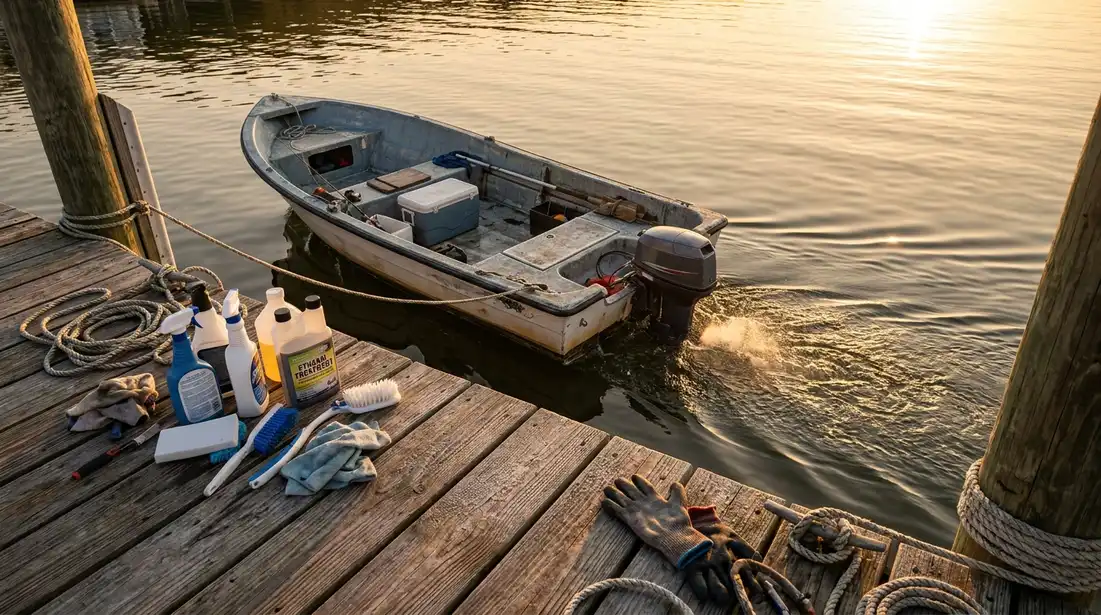
Ethanol in boat fuel gets talked about like it’s either completely safe or sure to wreck an engine. In real life, it depends more on how the fuel is used and stored. Many marine engines run fine with the right fuel blend, but problems start when fuel sits too long, takes on water, or comes from the wrong pump (and that happens more often than people think). That’s where the right ethanol treatment matters.
For boat owners, fuel trouble is more than a nuisance. It can cause hard starts, rough idling, clogged filters, corrosion, and repair bills that add up fast. That hits seasonal boaters especially hard, along with fishing crews and anyone leaving fuel in the tank for weeks at a time (which is pretty common). A good treatment routine helps protect the engine by keeping fuel stable and cutting down on moisture-related problems before they grow into bigger ones.
This guide covers what ethanol does in marine fuel, what an ethanol treatment can and can’t do, how to choose the right product, and how to build a simple fuel maintenance routine. It also looks at filter care, storage steps, common mistakes, and a few practical habits that help keep an outboard or inboard running well.
Why Ethanol Creates Marine Fuel Problems
Ethanol is common in gasoline, and for many engines that is fine on its own. Marine fuel guidance says nearly all manufacturers build engines to run on gasoline with up to 10% ethanol, also called E10. The real issue is how ethanol acts once it is used around boats. Boats often sit longer than cars, and that changes things. Damp air, temperature swings, and fuel tanks that may not get emptied very quickly all make problems more likely.
Importantly, our Ethanol Fuel Treatment is totally alcohol-free and helps ensure longer life and better performance for marine engines.
The risk starts to go up because ethanol pulls in water. Once too much water gets into the fuel, the mix can split apart. This is called phase separation. When that happens, the engine might pull in a weaker fuel layer or a heavier water-rich layer that does not burn the right way. That can cause trouble for both the engine and the boat. A Boating Magazine lab test found that stabilizers delayed phase separation until 2.5 milliliters of water was added, equal to 0.5% or 12,500 ppm.
| Marine fuel fact | Value | Why it matters |
|---|---|---|
| Approved ethanol blend for most marine engines | Up to 10% ethanol or E10 | Commonly accepted when fuel is fresh and system is maintained |
| E15 for marine engines | Not approved | Raises risk of damage and misfueling issues |
| Water level where stabilizers delayed phase separation in one lab test | 0.5% or 12,500 ppm | Shows treatment can help, but not make bad fuel safe forever |
The table points to what matters most: an ethanol treatment may help, but it is not a fix for everything. It works best when used with the right fuel and regular maintenance. Those basics are easy to miss, especially if a boat is not used often. For a broader look at additive choices, there is also this guide on gasoline additives for boats.
What an Ethanol Treatment Actually Does
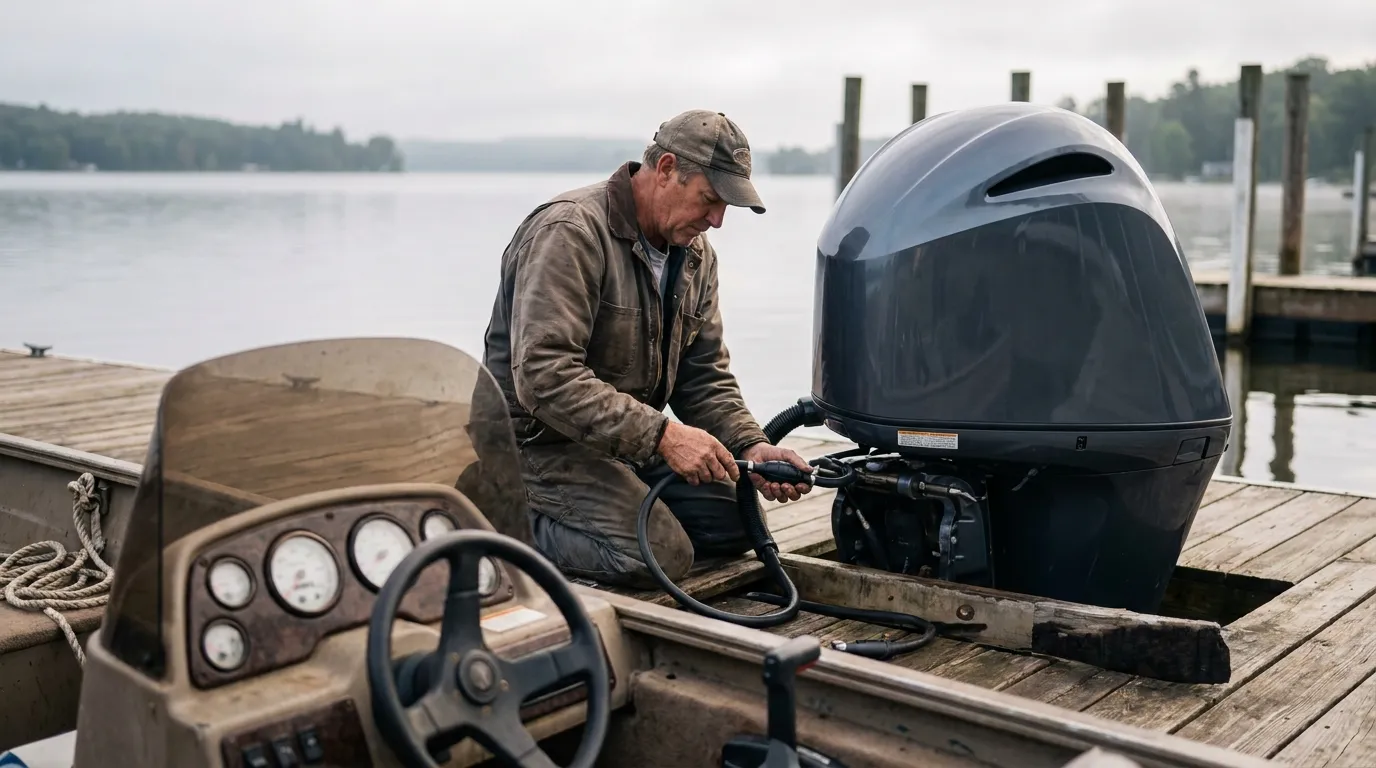
A good ethanol treatment helps support fuel quality, but it won’t turn bad fuel into good fuel, it just can’t. Put simply, it helps fuel stay stable while it sits and helps protect the fuel system from the usual issues that come with ethanol. Many marine formulas are made to slow oxidation, control deposits, fight corrosion, and help deal with water.
That matters on boats because use is not always consistent, and conditions are often wet. A weekend fishing boat might sit for two weeks and then run hard all day. A charter vessel may use fuel faster but still face moisture and contamination risk. In both cases, treatment helps keep fuel more stable and the system cleaner.
What to look for on the label
Look for a marine-specific ethanol treatment that clearly says it works with ethanol, helps keep fuel stable during storage, includes corrosion inhibitors, and supports deposit or injector cleaning, since those details really matter. Water management support should be on the label too. If that fits your setup, make sure it also says the treatment is safe for use in outboards, inboards, and portable tanks, because that’s an easy detail to miss.
One important note: treatment will not fix the wrong fuel. E15 is not approved for marine engines. If E15 gets into the tank by accident, don’t assume an additive will fix it. The safer move is to deal with the fuel problem right away before running the engine hard.
What treatment cannot do
It can’t fix cracked hoses or fully reverse phase-separated fuel. It also won’t clear heavy sludge from a neglected tank overnight; that’s not realistic. If the fuel looks cloudy or milky, or smells stale, draining and replacing it may be the better choice. This is especially true in older fuel systems with aging rubber parts, since they’re more likely to have problems.
How to Use Ethanol Treatment the Right Way
Ethanol treatment works best when you use it at the right time and in the right amount. Many boat owners wait until the engine starts running rough, and that happens more often than they expect. Sometimes that’s already too late. By then, damage may already be starting, so preventive care usually makes more sense.
It’s worth reading product directions carefully because dosing changes from brand to brand, and the numbers really do matter. One marine treatment guide lists a storage dose of 1:1000, with 32 ounces treating 250 gallons. That example makes one thing pretty clear: guessing is a bad idea. Too little may not protect the fuel enough, while too much only wastes product without adding any real benefit.
A simple step-by-step routine
- Add the treatment before fueling or while fueling so it mixes well.
- Use fresh E10 or lower from a reliable pump, since fuel quality matters here.
- Fill the tank to the level recommended for your storage plan. A fuller tank may help reduce the chance of condensation, which is a nice extra benefit.
- Run the engine long enough for treated fuel to move through the lines and into the engine.
- Check the water-separating filter and fuel lines for signs of contamination or wear.
- Write down the treatment date in your maintenance log.
For weekend boaters, guide boats, owners getting ready for winter storage, and anyone putting together an outboard preventive maintenance plan, this keeps the process simple. Instead of leaving fuel care to memory or guesswork, it gives them a checklist they can really use.
Marine engine manufacturers and maintenance specialists generally say E10 is acceptable if the fuel is fresh, the tank is maintained, and water-separating filtration is in place. Still, fuel treatment works best as part of the whole system, not as a fix by itself. Fresh fuel, a maintained tank, and good filtration all work together to keep things running the way they should. Readers comparing products and fuel care routines can also review this guide to fuel additives for boats.
Filters, Hoses, and Other Parts That Matter Just as Much
Many boat owners pay attention to additives but miss the rest of the fuel system. That can become a problem. Ethanol treatment works best when the rest of the system is in good shape (it all works together). It matters just as much.
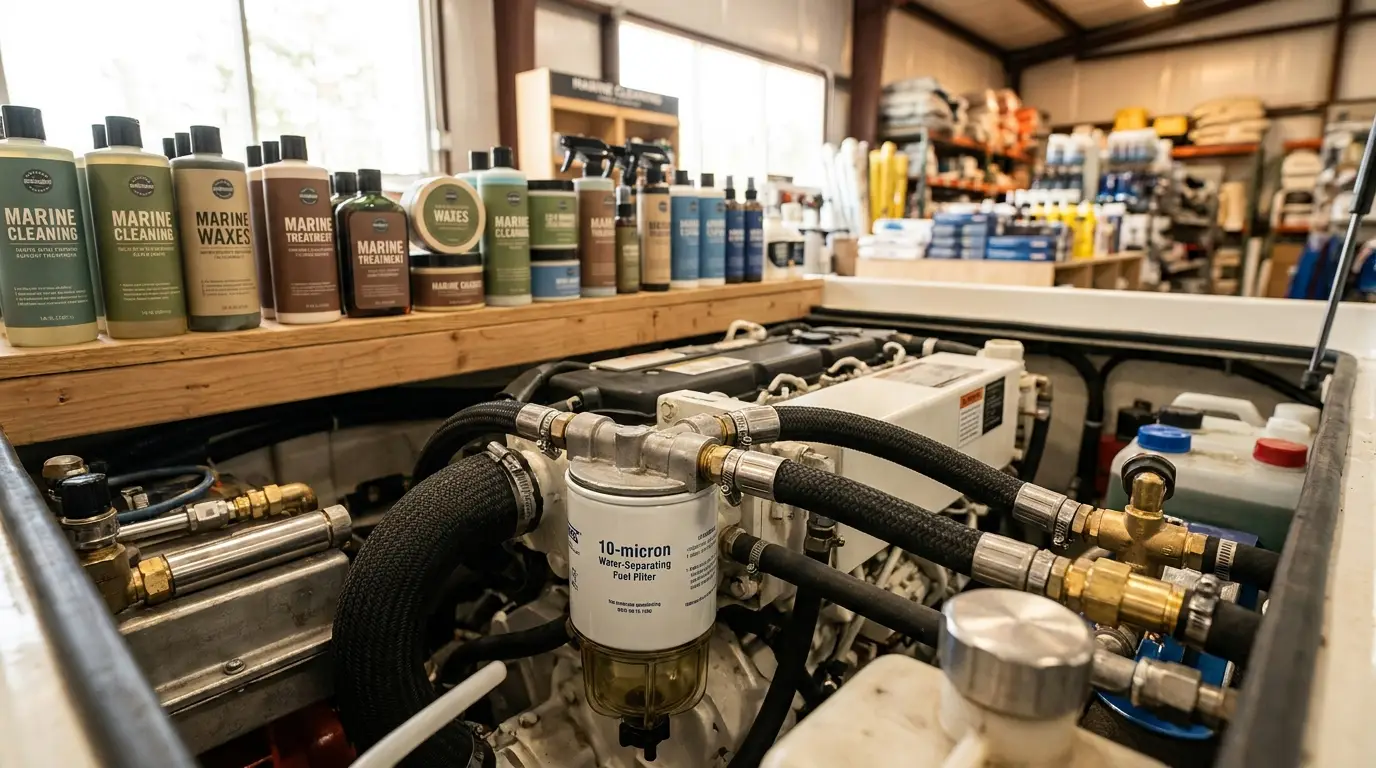
A 10-micron water-separating fuel filter between the tank and engine is a maintenance step that gets recommended often. It helps catch water and debris before they reach sensitive engine parts. In real use, that can make a clear difference.
Service timing matters too. Some guidance recommends replacing 10-micron filters every 50 hours and primary or in-line filters every 100 hours (worth checking in your manual). The exact schedule can change depending on the engine and how the boat is used. Still, those numbers show how quickly a neglected filter can start causing trouble.
Common weak points to inspect
- Fuel hoses on older boats
- Primer bulbs that feel soft, cracked, or sticky
- Tank vents that let in too much moisture
- Seals, gaskets, and filter bowls in older fuel systems with visible water or debris
A common example is a fishing boat sitting between trips in warm, humid weather, which is pretty normal. The owner may add treatment at every fill-up, but the engine can still run badly if an old fuel hose is starting to break down on the inside. In that case, replacing the hose matters just as much as using the additive, because treatment alone will not fix a hose that is already failing.
SAIL Magazine reported that 92% of marine-industry respondents had seen big engine damage caused by ethanol, and that more than 70% of outboard-related fuel problems reportedly involved ethanol.
Common Mistakes That Make Ethanol Problems Worse
Most serious ethanol issues usually start with habits, not chemistry alone. A common mistake is grabbing fuel without really checking the pump label, especially when you’re in a rush. During busy summer travel season, boaters sometimes end up with road fuel blends that are not a good match for marine use. And E15 is not approved for marine engines.
Letting fuel sit too long without treatment causes trouble too. As time passes, fuel can oxidize, lose quality, and absorb moisture. That matters even more during storage. If a boat is being laid up for winter, treat the fuel before storage and then run the engine so the treated fuel moves through the whole system.
Some owners also expect treatment to fix fuel that is already contaminated. Once phase separation has happened, treatment may not restore the fuel enough for safe use. In many cases, it won’t. Draining the bad fuel is often the better choice, even if it means extra work.
Skipping off-season inspections can make small problems grow. Ethanol may reveal weak hoses and seals that looked fine last season. Boats can also have other age-related issues at the same time, not just fuel-related ones, and moisture can show up beyond the fuel system. Sometimes bigger maintenance issues overlap, as seen in topics like wood rot repair on boats, where neglect over time leads to bigger repairs.
Choosing the Best Ethanol Treatment for Your Boat
The right product depends on the boat, and that’s completely normal. A bass boat that runs every week has different needs than a work skiff or a cruiser that spends part of the year in storage. Start by looking at how the boat is really used. If fuel gets burned quickly, corrosion protection and detergents matter more. If the boat sits for longer stretches, storage stability becomes the bigger focus.
A practical buying checklist includes:
- A marine-specific formula
- Clear dosage instructions
- Protection for storage, plus daily use if possible
- Corrosion and deposit control claims
- Compatibility with ethanol-blended gasoline
Trusted marine retailers can also make the search simpler, especially if more than one issue needs attention at the same time. A site like First Choice Marine may help if filters, fuel system parts, engine care items, seasonal maintenance supplies, and other basics are all part of the job.
It also helps to see the label as one part of a bigger plan. The best ethanol treatment usually works better with clean fuel handling, proper filtration, and regular inspection. So the bottle matters, but it often works best as part of the full routine.
Frequently Asked Questions
What is the best fuel blend for most marine engines?
For most modern marine gasoline engines, fresh E10 or lower is the safe target. Many manufacturers allow up to 10% ethanol, but E15 is not approved for marine use.
Can an ethanol treatment remove water from boat fuel?
It can help manage small amounts of moisture and support fuel stability, but it cannot fix heavily contaminated fuel. If the fuel is cloudy or phase separated, draining and replacing it is usually the safer option.
How often should I use ethanol treatment in my boat?
Use it whenever fuel may sit for more than a short time, such as between weekend trips or before storage. Many boat owners also use treatment at every fill-up for steady protection, as long as they follow the label dosage.
Do I still need a fuel filter if I use ethanol treatment?
Yes. A 10-micron water-separating filter is still one of the most important parts of marine fuel protection. Treatment and filtration work together, and one should not replace the other.
Where can I find marine fuel system parts and treatment options?
Many boat owners look for one place that carries engine care products, filters, and maintenance supplies together. First Choice Marine is one example of a marine-focused retailer that fits that need when you are building a full fuel care routine.
What should I do before winter boat storage?
Add the correct ethanol treatment, fill the tank based on your storage plan, and run the engine so treated fuel moves through the system. It also helps to inspect filters, hoses, and primer bulbs before the boat sits for months.
Put Fuel Protection Into Practice
Ethanol treatment works best as part of a full marine fuel care routine. Fresh E10 plays a big role, along with the right additive, a 10-micron water-separating filter, and regular inspection, even though that part is easy to put off. If the boat sits in storage, treatment matters even more, since time, moisture, and stale fuel can cause real trouble for marine engines.
The plan does not need to be complicated. Use the right fuel and skip E15. Add treatment before fuel sits for a while. Replace filters on schedule. Older boats also deserve a quick check of hoses and seals. And if the fuel already looks bad, trying to save it with wishful thinking usually only makes the problem last longer.
A little prevention usually costs far less than a repair visit after a rough start, a clogged injector, or a corroded fuel system part. If it is a weekend fishing rig or a hard-working commercial boat, a good ethanol treatment routine can help protect performance, improve reliability, and keep it on the water with more confidence.