


Water in the bilge is normal, but water that stays there usually points to trouble. That’s why a bilge pump switch matters so much. This small part tells the pump when to turn on and when to stop. If the switch fails, the pump may never start. In other cases, it can keep running and drain the battery, which happens more often than many people think. Either problem can turn a simple trip into a stressful situation fast.
For boat owners, fishing crews, and DIY marine maintenance fans, understanding the bilge pump switch is one of the easiest ways to improve safety onboard. It’s a practical step. It also makes it easier to choose better parts, wire them correctly, and catch problems before they become expensive repairs. In this guide, readers will learn what a bilge pump switch does, the main switch types, and how to choose the right one for a boat. It also covers common installation mistakes, especially the ones that are easy to miss. Testing and maintenance are included too, along with why backup systems, manual override, and high-water alarms matter on recreational boats and commercial boats during heavy rain, rough water, or a pump failure.
What a Bilge Pump Switch Does and Why It Matters
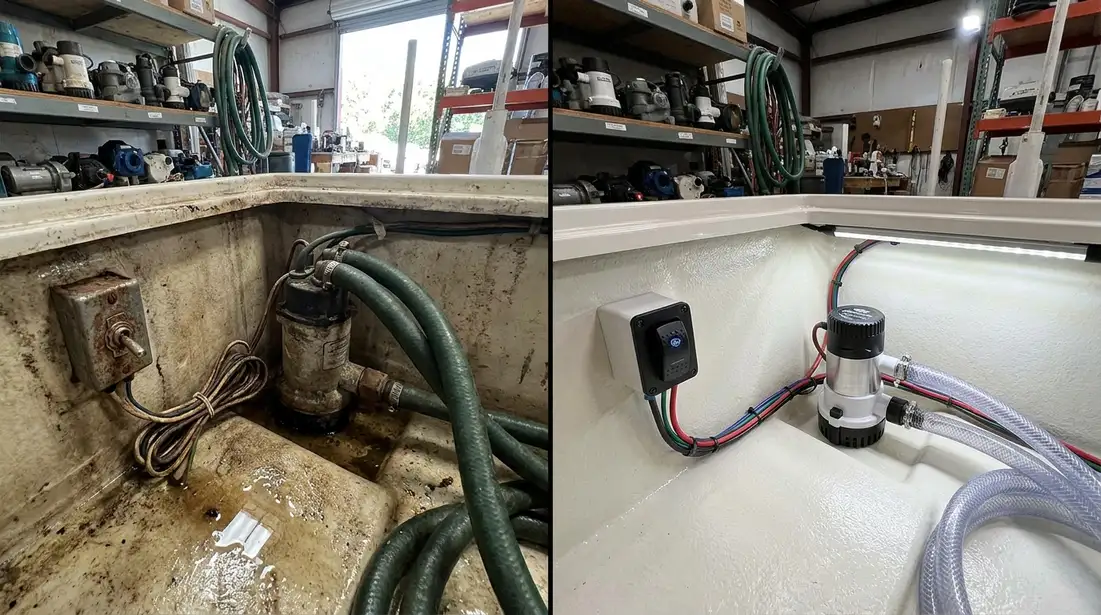
A bilge pump switch senses rising water in the bilge and automatically turns the pump on. When the water level drops again, it turns the pump back off. It’s a simple job, but on a real boat it can make a real difference. It helps protect against standing water in the bilge, hidden leaks, rainwater building up below, and smaller system problems that can become a more serious flooding issue if they’re ignored.
Practical Sailor generally divides bilge pump switches into 4 main types: pivoting arm float, air pressure, vertical float, and electronic. They all do the same basic job, but each one detects water a bit differently. That difference usually affects reliability, price, maintenance, and how well the switch handles dirt, oil, or debris in the bilge, which is often where problems start.
| Bilge Pump Switch Type | How It Senses Water | Best Fit |
|---|---|---|
| Pivoting arm float | A float arm rises with water | Simple setups and budget replacements |
| Vertical float | A float slides up a post | Tighter spaces with straight travel |
| Air pressure | Water pressure triggers a diaphragm | Protected sensing in some enclosed installs |
| Electronic | Sensors detect water without moving parts | Dirty bilges and low-maintenance systems |
If bilge systems are new to you, this is also a good time to read a broader Bilge Pump Selection Guide for Safer Boating. The switch is only one part of the system, not the whole answer.
Maritime safety guidance is clear here: automatic pumping should not be the only line of defense.
It is good practice for an automatically controlled submersible bilge pump to be fitted with a manual override switch.
That matters because boats rarely run in ideal conditions. Bilges get dirty, and wiring gets wet. Because of that, floats can stick. A manual backup gives you another layer of control when conditions get rough, which is usually a very practical safeguard.
The Main Types of Bilge Pump Switches and How to Choose
The best bilge pump switch for your boat usually isn’t just about price. It also helps to look at bilge space, debris, wiring access, and how often the boat is left unattended, since that can make a big difference. The risk if the switch fails is also worth thinking about, especially while you’re away.
Float switches
Traditional float switches are still common mostly because they’re simple and easy to understand. As the water level rises, the float lifts and turns the pump on. It’s a pretty simple setup, and on most boats you can usually tell how it works with a quick look.
Boaters often use them on small recreational boats, skiffs, pontoons, and basic center consoles. The tradeoff is that the moving parts can get blocked by sludge, stray wire ends, zip ties, or small bits of trash, the kind of messy stuff that tends to collect in the bilge.
Vertical float switches
These work a lot like a standard float switch, but the float moves up and down on a shaft, which is pretty simple. They often fit better in narrow bilge spaces, so they’ll likely work well there, and that’s a big plus. They still need to move freely, though, so buildup can still cause problems.
Air pressure switches
These use pressure from rising water instead of a visible float arm, which is probably the main difference. In some protected setups, they can work well. But for everyday DIY replacement, they’re usually much less common, at least to me.
Electronic switches
Electronic or solid-state bilge pump switches don’t use a moving float arm, and that’s a pretty practical plus. It usually makes them a good fit for dirty bilges or boats where debris tends to gather at the bottom.
The Practical Sailor testing team says reliability often comes down to the sensing method. A lot of boaters choose electronic options because they want to avoid mechanical parts that can get jammed, which does happen in real use.
So what makes sense to buy? For a lightly used trailer boat with a clean bilge, a float-style bilge pump switch is often enough. On an offshore fishing boat, a commercial workboat, or a boat kept in the water, many owners prefer some redundancy instead. They may use an electronic switch as the main one or add one as a backup. That’s probably why this setup gets mentioned so often. The deeper comparison is covered in Automatic Bilge Pumps vs Manual: Real Failure Scenarios & Redundant Design.
Installation Basics That Prevent Most Problems
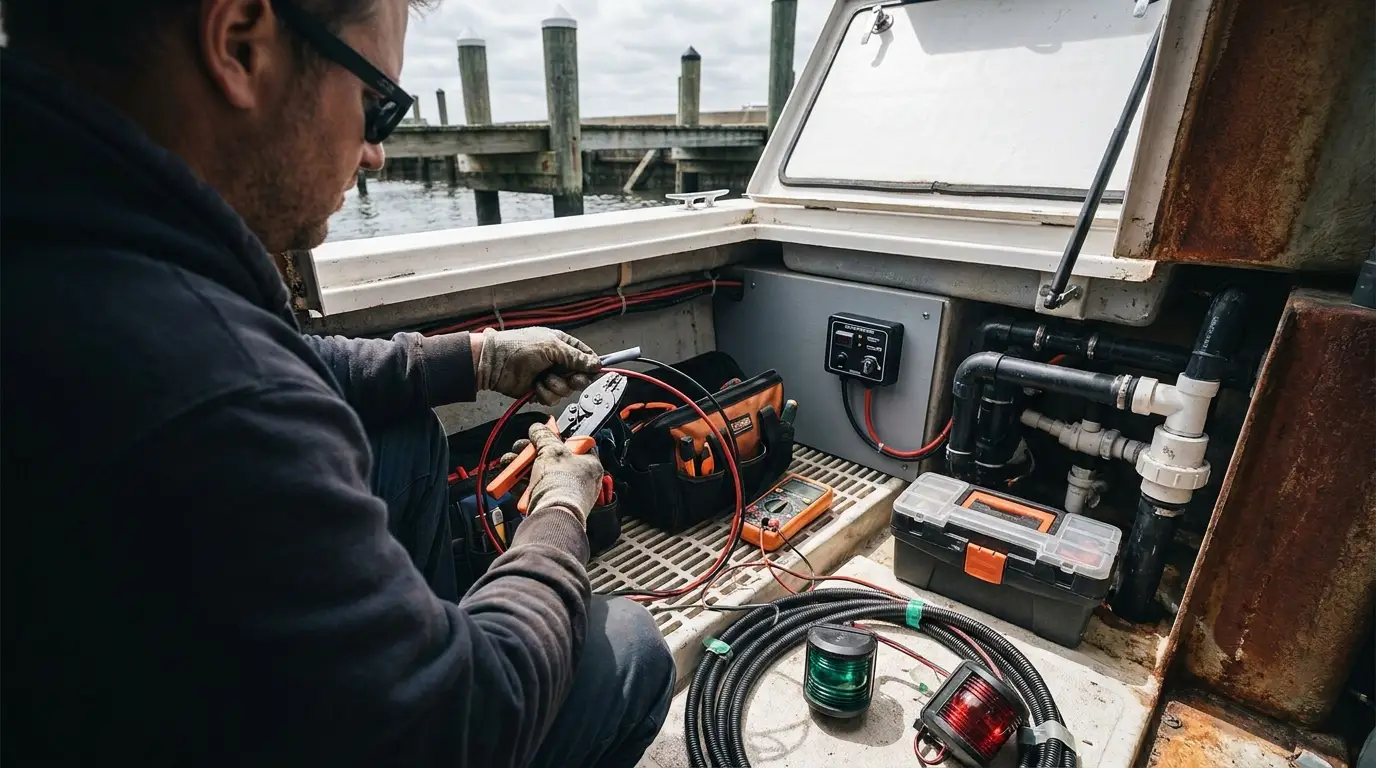
Even a good bilge pump switch can fail if the installation is a little off, and in many cases the switch itself is not really the problem. Trouble usually starts with the mounting height being wrong, wiring left unsupported, float movement getting blocked, or placement that looks fine at first but later causes issues. Small details often turn into the biggest headaches here.
Mount the switch where water collects early, but stay away from spots where debris usually builds up first. It should remain level and clear of hoses, loose wiring, or hull features that could stop it from moving freely. If the system has a backup pump and switch, BoatUS guidance says the backup switch should sit 2 to 3 inches above the primary cut-on level. That setup means the second system only turns on when the first one cannot keep up, which is usually exactly what a backup is meant to do.
Wiring matters just as much. Support it every 18 inches or less so it does not sag into the bilge or wear down over time. Keep connections high, dry, and marine-rated whenever possible. It sounds simple, but it really does make a difference. The discharge outlet also needs to sit well above the waterline to help lower siphoning risk. On larger boats and commercial rigs, that can turn into a serious safety problem fast.
The switch should be left in the automatic position during normal operations, with the manual override only used in an emergency to by-pass the automatic function if that fails.
That also means the panel should be easy to understand. Auto should be the normal setting. Manual should still be available, but usually not the everyday mode, since most setups work better that way.
Redundancy, Alarms, and Real-World Safety Planning
A single bilge pump switch is obviously better than having no automatic protection at all. Still, one switch on its own often is not enough. Modern safety guidance puts more focus on layered protection, especially for offshore boats, larger recreational boats, charter vessels, and commercial fishing setups, and that fits here. In most cases, the goal is to have backup protection ready before trouble starts, not after water is already rising in the bilge.
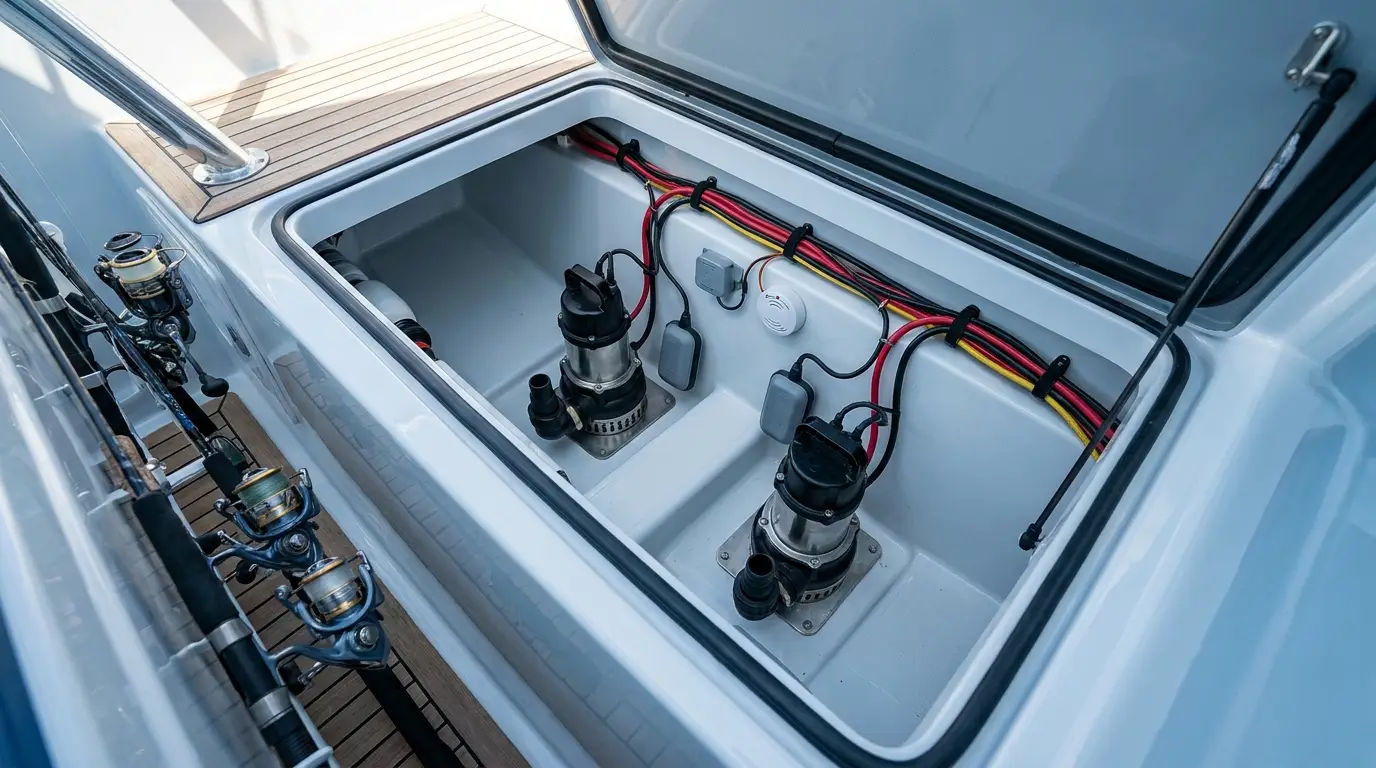
A solid setup often includes a primary pump and switch, a backup pump mounted higher in the bilge, plus a manual override and high-water alarm. That added protection gives you more time to respond if a leak gets worse or the first pump cannot keep up. It also helps if a switch sticks, a fuse blows, or a pump gets clogged, and that really does happen in real conditions.
Testing schedules point to the same approach. Government guidance recommends checking bilge systems at least weekly, testing bilge alarms daily, and exercising bilge or seawater valves at least monthly where applicable. It may sound strict. But marine conditions can change quickly, and small issues can turn serious before anyone notices, especially when the boat is unattended or rough weather is already making everything harder.
Many newer systems now include electronic sensing, adjustable run times, and even Bluetooth monitoring. These features are not required for every boat, but they show where the market is going. Owners want fewer moving parts, because that often means fewer things that can fail. They also want earlier warning before a flooding problem becomes serious enough to threaten equipment, batteries, or the engine space.
Btw, we covered related install and safety ideas here: Automatic Bilge Pumps: Installation & Safety Tips 2025.
Common Bilge Pump Switch Mistakes to Avoid
A bilge pump switch can seem fine just because the pump worked once last season, but that usually does not prove much. These switches need regular testing, and it is easy to forget that until something goes wrong. Another problem comes up when the switch is installed in a tight, crowded bilge, where hoses or wires can block the float and stop it from rising like it should.
Boat owners also run into trouble by using household connectors, skipping fuse protection, or leaving wiring low in wet spots. That often causes corrosion, weak connections, or complete failure. Not good, honestly. On boats kept outside, leaves, fish scales, dirt, and oil film can also get in the way of the switch, especially as that buildup slowly collects over time.
Depending on only one layer of protection is another mistake. A single pump without an alarm or backup might be enough for a very small boat on a trailer. But for boats moored full-time or used far from shore, that setup is usually not the best option. In most cases, having at least a pump, an alarm, or some kind of backup makes more sense.
Also, leaving the switch in manual mode during normal use can make the pump run dry, wear out faster, and drain the batteries sooner than expected.
A Simple Maintenance Routine You Can Actually Follow
Taking care of a bilge switch doesn’t have to become a big project. What matters most, in most cases, is doing it regularly. Start by checking the bilge for trash, sludge, or anything else that could stop the switch from moving freely, it’s usually pretty easy to tell when something is blocking it. Then manually lift or trigger the switch to make sure the pump turns on. After that, let the water level drop or reset the switch so you can also confirm the pump shuts off. Pretty simple.
At a minimum, do this weekly, and usually more often if your boat stays in the water. The high-water alarm should be tested regularly too, since that’s easy to forget. For commercial boats or boats that get heavy use, one practical option is to add this check to the departure routine before leaving the dock. It’s worth it.
If you’re shopping for parts, replacement pumps, wiring supplies, or other maintenance items, First Choice Marine is one example of a marine parts source boat owners often use when putting together a safer bilge system. This isn’t really about brand hype. The goal is simply to get marine-ready parts that fit your boat and match your risk level. You can also compare broader maintenance ideas in Bilge Pumps Maintenance Checklist for Boat Safety.
Frequently Asked Questions
What is a bilge pump switch?
A bilge pump switch is the device that tells the bilge pump when to turn on and off based on water level. It helps automate water removal so the pump does not need to be turned on by hand every time.
Which is better: float switch or electronic bilge pump switch?
It depends on your boat and bilge conditions. Float switches are simple and common, while electronic switches may work better in dirty bilges because they have fewer moving parts to jam.
How often should I test my bilge pump switch?
At a minimum, test the bilge system weekly. If your boat stays in the water, runs offshore, or sees heavy use, more frequent checks are a smart idea.
Should a bilge pump switch have a manual override?
Yes, in most cases that is the safer choice. Manual override gives you backup control if the automatic function fails, but the switch should normally stay in auto mode during regular operation.
When should I replace a bilge pump switch?
Replace it if it sticks, fails to start the pump, keeps the pump running too long, shows corrosion, or becomes unreliable during testing. If you are unsure what matches your setup, parts suppliers like First Choice Marine can help you compare bilge system components by application.
Can I install a bilge pump switch myself?
Many DIY boat owners can, especially on simple 12-volt systems. But you should follow marine wiring best practices, support wires properly, protect circuits, and test the full system before trusting it on the water.
The Bottom Line for a Safer Bilge System
A bilge pump switch is a small part with a big job. It sits between normal bilge water and the kind of trouble that can damage equipment, drain batteries, or even put the boat at risk. When you know how the switch works, the four main types, and why a clean installation matters, it becomes much easier to make smart choices for your setup.
The basics can go a long way. Choose a switch that fits your bilge conditions, and keep the system in auto for normal use. It’s simple, but it matters. If your boat and your level of risk call for more protection, add manual override, a backup pump, a high-water alarm, or another safeguard. You should also test the system weekly, clean it regularly, and fix wiring issues early before they turn into bigger problems, which they often do.
If your current switch is old, unreliable, or mounted in a bad spot, don’t wait for a hard rain or a failed seal to reveal the weak point. A good time to check the bilge system is now. Replace any questionable parts and add redundancy where it makes sense. A little time spent today can often save a lot of trouble on the water later.
