


Boat repairs can get confusing fast. One product says it bonds anything. Another says it’s the best choice for hulls, decks, transoms, and other fiberglass repairs. Then one person says polyester is fine, while someone else insists only marine epoxy will last. For owners of fishing boats, work boats, skiffs, or family cruisers, all that mixed advice can waste time, waste money, and become frustrating very quickly.
Marine epoxy is a strong choice for many boat repairs, but it still is not the right one for every job. In fiberglass boat repair, it works especially well when a repair needs a solid bond to old laminate, better water resistance, or something that can fill gaps. It also has limits. If the surface is wet, dirty, or sun-damaged, epoxy can fail. In some cases, flexible marine adhesives and sealants are a better fit for the repair.
This guide explains where epoxy makes sense and where it does not. It also points out what helps repairs last for seasons instead of only a few weeks. The article covers structural patches, blister work, fairing, bonding limits, surface prep, and clear steps that help DIY repairs hold up better over time. If you want practical advice before buying supplies from sources like First Choice Marine, this article can help you make a smarter choice and avoid extra hassle.
When marine epoxy is the right choice
Marine epoxy makes the most sense when the job involves cured fiberglass, damaged laminate, sealing out moisture, rebuilding strength in a weak area, or bonding over an older repair. That covers a lot of real boat work, since most repairs are not done on fresh fiberglass. They are secondary repairs, which means the new material has to bond to an older surface that has already cured, and that changes how the repair works.
Polyester is cheaper and a little faster to work with. Epoxy is stronger and far, far more forgiving of secondary bonding challenges and minor structural errors.
That is one reason epoxy shows up so often in serious fiberglass boat repair. WEST SYSTEM technical data also says that epoxy stretches more before failure than typical polyester resin. In repair work, that extra flexibility helps because it lets the material handle stress instead of failing too quickly.
| Repair factor | Epoxy | Polyester |
|---|---|---|
| Tensile elongation at failure | 3.5%, 4.5% | 1%, 2% |
| Bonding to cured laminate | Very strong | Less forgiving |
| Typical repair use | Structural and moisture-critical repairs | Faster, lower-cost cosmetic work |
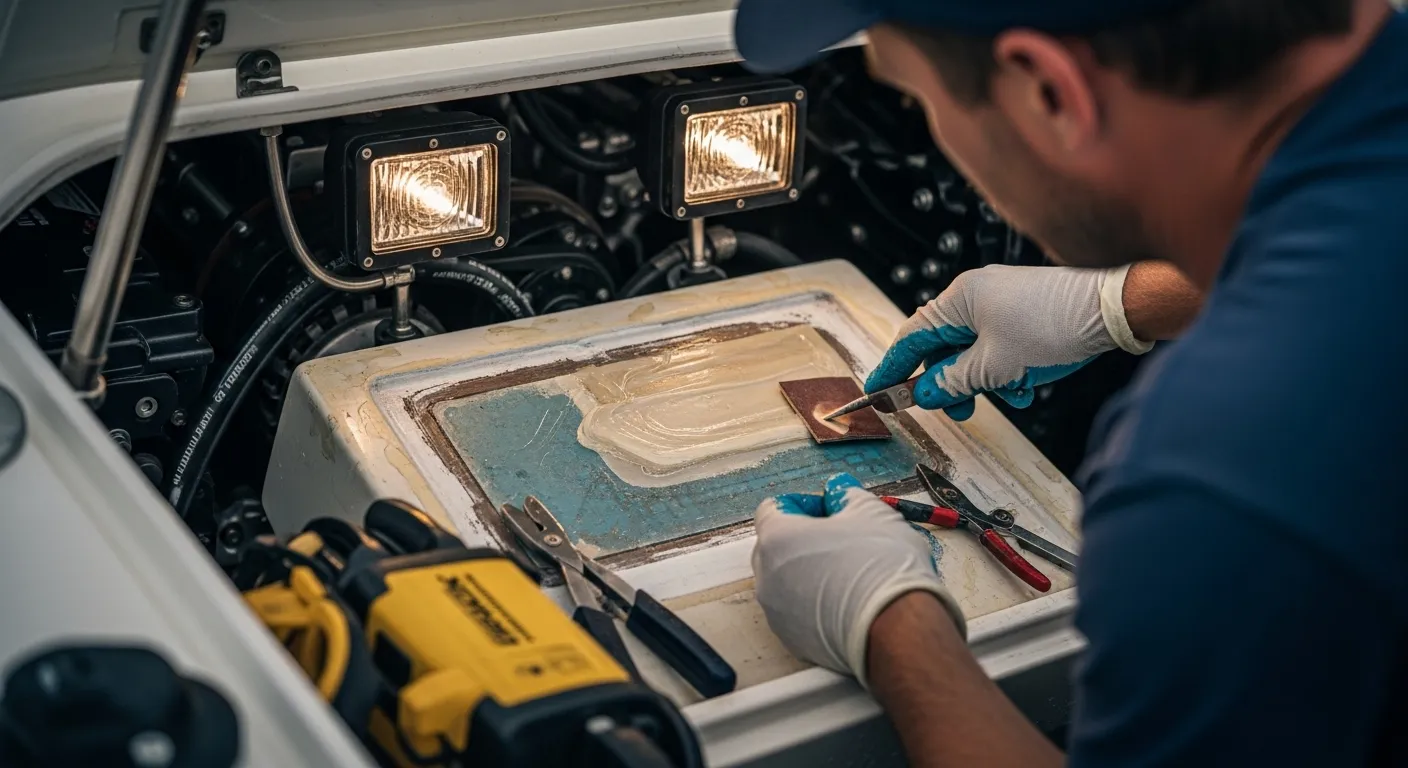
In day-to-day repair work, marine epoxy is a good pick for cracked hull sections, soft spots after poor core removal, blister repair, gouges below the waterline, and bonding fiberglass cloth over properly prepared damage. It also works well when a repair area is hard to fit perfectly, since epoxy handles small gaps better than many other systems. If the fit is less than ideal, epoxy is usually easier to trust.
For larger hull work, see Fiberglass Boat Hull Repair: Step-by-Step Restoration for Structural Integrity.
Where marine epoxy fails or gets misused
Epoxy has a strong reputation, but it does not belong in every repair. Most failures usually come from the repair plan, not from the epoxy itself. One common mistake is using epoxy in places where flexible marine adhesives or sealants are a better fit. A deck fitting, hatch frame, rub rail, or hardware base may need some movement and still stay watertight. In those spots, epoxy can be too rigid. Too stiff, and that is a real problem.
Poor prep is another big reason repairs fail. Steve D’Antonio’s repair guidance points to the basics: aggressive sanding, careful cleaning, and a strong bond to the existing surface matter a lot in secondary repairs. If wax, salt, oxidation, fuel residue, oil, or trapped moisture stay in the laminate, the bond can fail early. And that can happen fast, faster than you might expect.
Shortcuts create problems too. Patch a crack without grinding back far enough, and the repair may look fine at first, then print through, crack, or start lifting at the edges a month later. Repair shape matters too. Even if the resin bond is solid, the repair itself can still fail. That is why many repair guides recommend a 12:1 bevel ratio in damaged fiberglass areas. Small detail. Big difference.
Epoxy also breaks down in sunlight if it is left unprotected, and it can start to chalk. Anywhere with high UV exposure needs a proper topcoat or paint. If the hull is still wet inside from old water intrusion, sealing over it may only trap the problem instead of fixing it, which just hides it for a while.
Use epoxy for strength and barrier protection. Marine adhesives and sealants make more sense where a joint needs flexibility, movement, or hardware that may need to come off later. Match the material to the job, and the repair is much more likely to last.
How to get long-lasting fiberglass boat repair results
Long-lasting fiberglass repairs start before anything gets mixed. Begin by checking the whole damaged area, not just the clear crack or chip. Small hairline cracks can point to deeper laminate damage underneath. Tap around the section, look for soft spots, and check for moisture if that part of the boat has stayed wet for a while. If the core or backing material has started to rot, epoxy on its own will not fix the problem.
Preparation and drying before repair
After that, open up the damage enough to remove anything weak. Grind it back until only solid fiberglass is left. For structural damage, add a bevel so the new glass spreads stress more evenly into the old laminate. Better Boat says a 12:1 bevel is a common standard for fiberglass repair work. Additionally, Fiberglass Repair Kits That Work for Boat Hulls & Decks can make this stage easier for DIY users.
Drying the area fully is another step people often rush. Moisture trapped in the laminate can weaken the bond and cause blister issues to come back later. Once the area is dry, sand it, vacuum it well, and clean the surface the way the product instructions recommend.
Applying epoxy and finishing layers
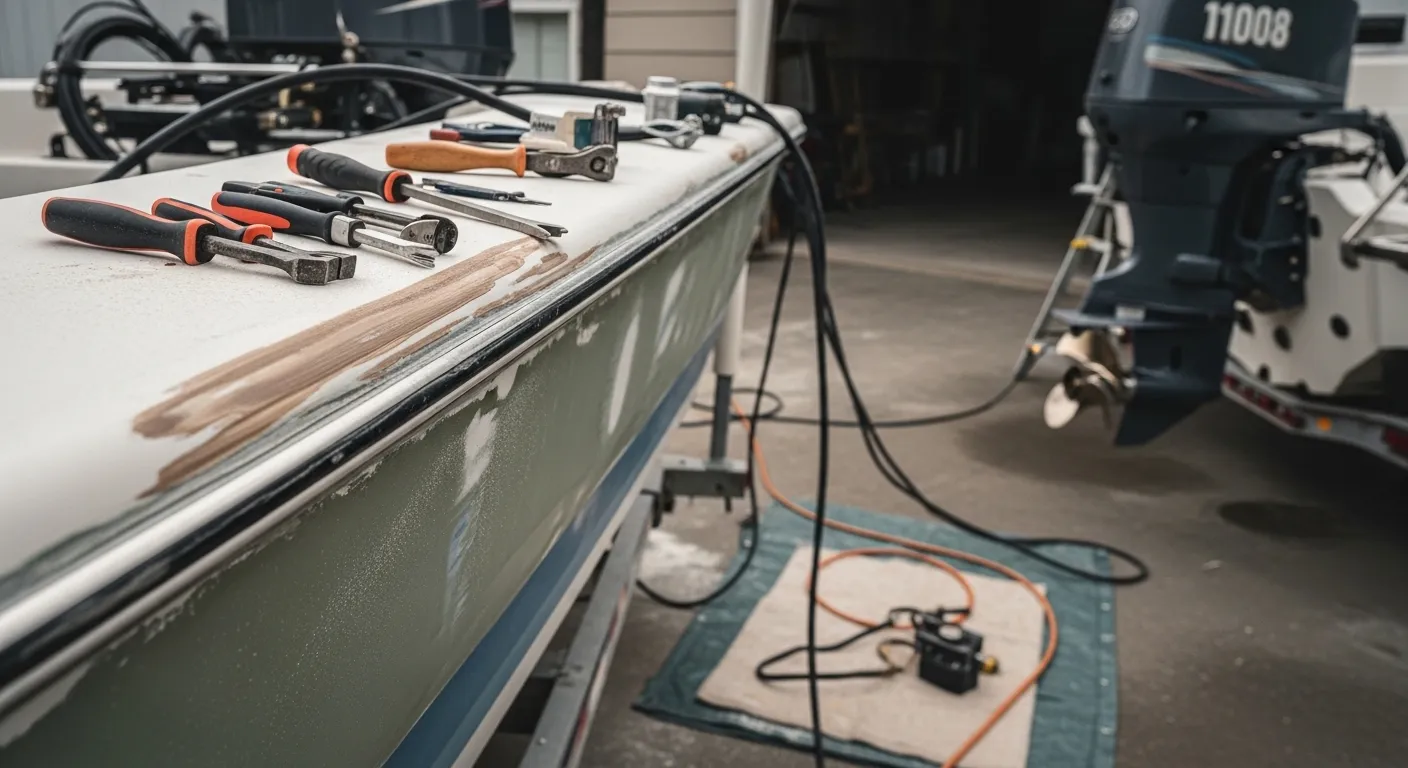
Apply the fiberglass in stages. Start with the larger structural layers, then do the fairing work over the top. Deep repairs should not be filled with thick epoxy alone if cloth or biaxial fabric is needed for strength. After the repair cures, fair the surface and sand it smooth. Finish with the right coating or barrier system so the repair is sealed the right way.
| Repair type | Typical cost range | Why proper epoxy work matters |
|---|---|---|
| Minor cosmetic fiberglass repair | $100, $500 | Good prep avoids repeat cracking |
| Moderate fiberglass damage | $500, $2,000 | Correct laminate rebuild restores strength |
| Severe damage or delamination | $2,000, $10,000+ | Mistakes become expensive fast |
Those cost ranges make the value of careful prep pretty obvious. A small DIY repair can stay manageable on cost. But if the repair fails and the damage spreads into delamination, it can turn into a much bigger yard bill fast.
Need a simpler overview before starting? It is covered here: Fiberglass Repair Basics: From Gelcoat to Structural Fixes.
Epoxy, sealants, and coatings each have a different job
Many boat owners group repair products together, but each one does a different job. Marine epoxy is mostly used for bonding, laminating, filling, and keeping moisture out. Marine adhesives and sealants are a better fit for bedding hardware, sealing joints, and working in spots that need a little movement. Coatings and paints protect the surface from sun, water, abrasion, and fouling.
The difference is even clearer because marine maintenance products are changing quickly. Market research says the marine coatings market was valued at USD 6.67 billion in 2025 and is expected to grow at a 6.24% CAGR through 2032. Waterborne and more eco-friendly coating systems are also becoming more common. That shows a real change in the market, not just a short-lived trend.
The global Marine Coatings Market was valued at USD 6.67 billion in 2025 and is projected to grow at a 6.24% CAGR from 2026 to 2032, reaching nearly USD 10.19 billion by 2032.
For boat owners, that likely means future repair systems will be simpler to use, have less odor, and focus more on moisture control and surface protection. Even so, the basic order still matters: start with a strong structure, then sealing, then UV and water protection. Following that order gives the repair a better chance to last.
If the repair also includes deck or transom core damage, see: Marine Wood Rot Repair: Restore Transoms and Decks Easily. It can help find hidden trouble before it gets sealed in and becomes a bigger problem later.
A simple repair checklist before you mix epoxy
Before you mix anything, stop and run through five checks. Start by deciding if the repair is structural, cosmetic, or mostly for sealing. Make sure the area is completely clean and dry, since moisture and dirt can cause problems quickly. Then check if the part needs a rigid bond or if it still needs some flexibility. It also helps to plan the laminate schedule ahead of time instead of guessing one layer at a time. Finally, think about the finish, because exposed epoxy will need protection.
Getting your tools and materials ready first makes the whole job easier: gloves, mixing cups, spreaders, fiberglass cloth, filler, sandpaper, a grinder, vacuum, solvent-safe wipes, and the right primer or topcoat. It may seem like a small step, but it avoids extra hassle once the work begins. Good prep can prevent more repair problems than expensive tools.
Many DIY boaters get better results by working in smaller sections. Repair one solid area, let that stage cure fully, and sand between stages if needed. What if the job gets rushed? Air pockets, weak spots, and uneven fairing become much more likely. The repair may take longer at first, but it will hold up better on the water. For more insights on adhesive technology, see Adhesives and Sealants Driving Fishing Innovations 2026.
Frequently Asked Questions
Is marine epoxy better than polyester for boat repair?
In many repair cases, yes. Marine epoxy usually gives better secondary bonding to old fiberglass and better moisture resistance. Polyester can still work for some cosmetic jobs, but epoxy is often the safer choice for structural repairs.
Can I use marine epoxy below the waterline?
Yes, often you can. Epoxy is commonly used for underwater repairs, blister repair, and moisture barrier work. The key is proper prep, full cure, and using the right topcoat or barrier system for the job.
Why did my epoxy repair peel off?
Peeling usually points to poor prep. Common causes include wax, salt, oxidation, moisture, or not grinding back to solid laminate. Wrong product choice can also be the issue if the joint really needed a flexible sealant instead of epoxy.
Does marine epoxy need paint or topcoat?
Usually yes if it will see sunlight. Epoxy can break down under UV exposure over time. Paint, gelcoat-compatible finishing steps, or another protective top layer help the repair last longer.
Can marine epoxy replace all marine adhesives and sealants?
No. Epoxy is great for rigid bonding and fiberglass rebuilds, but it is not ideal for every sealing job. Hardware bedding, moving joints, and serviceable fittings often need dedicated marine adhesives and sealants instead.
The bottom line for a repair that lasts
Marine epoxy has a good reputation for a reason: it deals well with the problems boat owners run into all the time. It bonds well to cured fiberglass, helps create strong secondary repairs, fills gaps, and offers very good moisture resistance, which matters even more on the water. That makes it a practical option for many fiberglass boat repairs, including hull patches, blister repairs, and core-related rebuilds.
Still, the product is only one part of a repair that lasts. Epoxy can fail if the surface is wet or dirty, if it stays exposed to sun without protection, or if the job actually calls for flexible marine adhesives and sealants instead. Repairs usually hold up when the product fits the problem, damaged material is fully removed, the area is dry, the repair shape is done properly, and the surface is finished the right way.
If a repair is coming up, start with a careful inspection and a realistic scope. Small cracks can hide bigger issues and are easy to miss. If there is any doubt, slow down, spend more time on prep, and use good materials. That can save money, help avoid repeat failures, and keep the boat safer on the next trip.
