


Marine batteries carry more load than ever. They now run trolling motors, engine care systems, fish finders, advanced marine electronics, and plenty of other onboard gear people rely on every trip out (yeah, it’s a lot more gear than it used to be). By 2026, the biggest threat to those batteries isn’t age alone. Heat, and poor temperature control, cause more trouble than many owners expect. Many boaters still look only at voltage and capacity, and that narrow focus leads to problems (even when the numbers look fine on paper).
When a battery gets too hot or too cold, usable power quietly drops, sometimes without much warning (which is never fun once you’re already on the water). Over time, swelling can appear, and early failure becomes much more likely. In extreme cases, safety can even be a concern. Weekend anglers deal with these issues, and offshore fishing crews do too. Commercial operators face the same risks, just on a bigger scale. Thermal management has shifted from “nice to have” to something basic.
This guide looks at why temperature matters, how heat damages marine batteries, and what helps lower the risk (nothing complicated here). It shares real-world examples, simple checks that don’t need special tools, and trends that matter in 2026. Battery temperature also affects engine care and reliable marine electronics, shaping how smoothly everything works once you’re out there.
Why Temperature Control Matters More Than Ever for Marine Batteries
Modern boats ask a lot more from their electrical systems than older setups ever did. High‑thrust trolling motors, livewell pumps, chartplotters, radar, and lighting often run at the same time, pulling steady power from marine batteries. You can feel it when everything’s on. Heat plays a big role in many battery failures boaters face, and it often comes as a bad surprise. Anyone who’s lost a battery halfway through the day already gets it.
Most lithium and LiFePO4 marine batteries work best between 68°F and 86°F. Go past that range and the chemistry inside speeds up, which slowly causes damage. Once temps climb over 95°F, wear increases fast. The tricky part is capacity drops well before a battery fully fails, so the warning signs are easy to miss.
| Battery Type | Ideal Temp Range | Typical Cycle Life |
|---|---|---|
| LiFePO4 | 68, 86°F | 3,000+ cycles |
| Lithium-ion | 68, 86°F | 2,000, 3,000 cycles |
| AGM Lead-Acid | 60, 80°F | 500, 1,000 cycles |
Even high‑end batteries feel the stress when heat gets ignored. Engine compartments, sealed battery boxes, and tight bilge areas trap warmth with little airflow. Add summer sun and long charging sessions, and heat builds quickly. For boat owners, that means shorter run times, shorter battery life, and more replacements. Definitely not a great trade‑off.
How Heat Causes Capacity Loss and Swelling in Marine Batteries
Swelling is one of the clearest signs that a battery has dealt with too much heat, even though the real damage starts out of sight. Inside the cells, heat causes gas to build up. As pressure rises, the case slowly pushes outward. At the same time, performance drops. At first it happens slowly. Then it speeds up, and before long it’s hard to miss.
Capacity loss usually shows up sooner and in quieter ways. A trolling motor might feel a bit weaker than normal, or marine electronics may reboot when a heavy load hits. It’s often subtle enough that people question whether it’s even real. Engine starts can feel sluggish too, especially after the battery has been exposed to heat again and again. None of these signs come with a clear warning. Together, they point to cells that are already stressed from excess heat.
The causes are often nearby. Poor airflow around engines or exhaust traps heat, and oversized chargers can force more current than the battery can take. Vibration matters too. Rough water and repeated hull impacts slowly wear down internal cell layers. Once that begins, the cells heat up faster during charging and use, and the cycle keeps going.
Regular checks help catch this early. After charging, a quick touch can tell you a lot: warm is normal, hot is not. You may also see bulging sides or terminals that no longer sit straight. For a closer look at prevention, there’s also a guide on marine battery maintenance for longevity.
Smart Thermal Management Starts With Installation
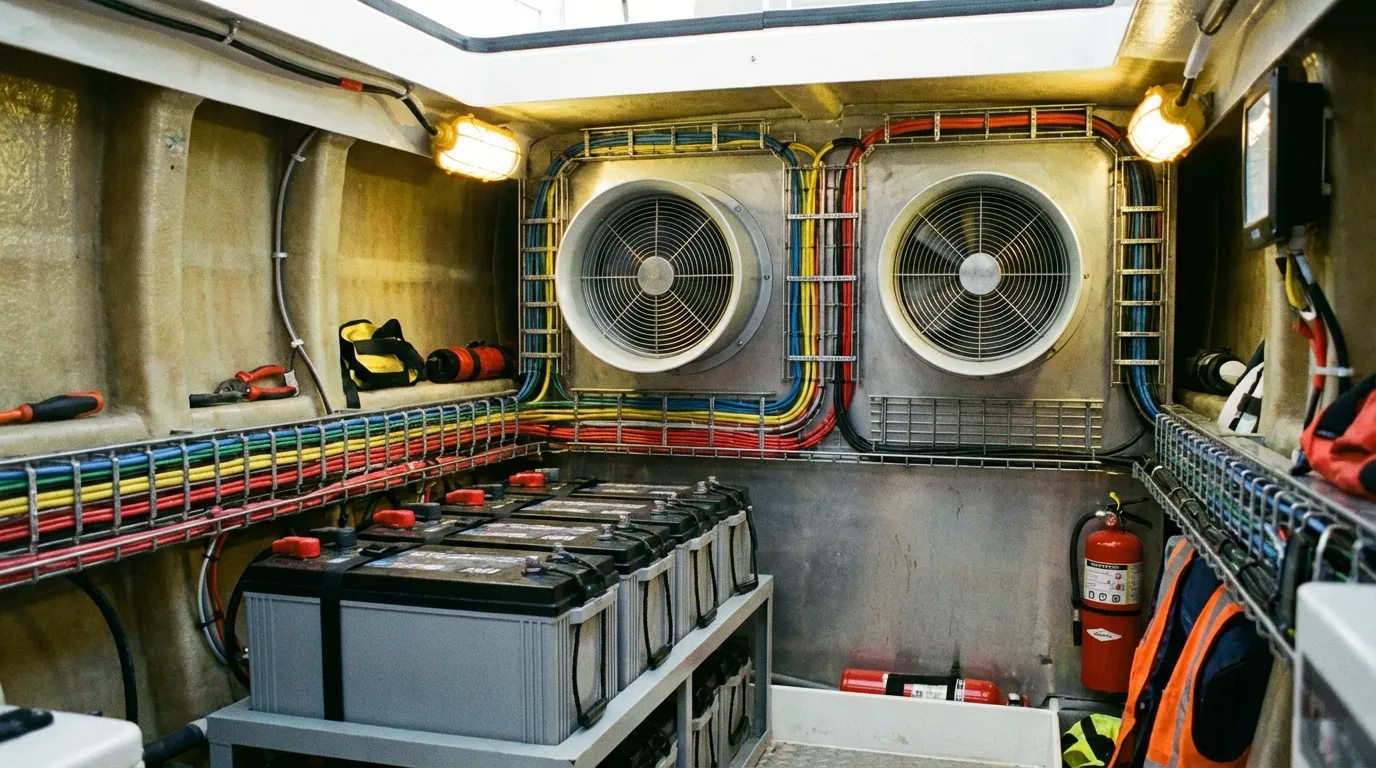
Heat issues often begin long before a battery fails. Installation choices matter just as much as the battery itself. What works today focuses on airflow, separation, monitoring, and easy access for quick checks. Nothing fancy, just small details that are easy to miss and usually noticed later.
Placement sets the direction early on. Engine compartments are better avoided, but sometimes there’s no other option. When that happens, heat shields and directed airflow help balance the compromise. Batteries need space around them. Tight foam boxes trap heat, while ventilated trays let warmth move away over time. Even a small gap can keep long trips noticeably cooler.
Wiring and charging need the same care. Heat builds quickly when resistance goes up. Cables that are too small cause it, and loose connections make it worse. Many lithium marine batteries now include Battery Management Systems, or BMS units, that track temperature and stop charging when limits are hit. That protection matters when systems are working hard.
Charging habits also play a role. Faster charging creates more heat, especially with older chargers that don’t slow down as temperatures rise. Smart chargers adjust on their own, which helps during long days running heavy marine electronics.
For boaters upgrading their setups, careful installation paired with the right battery choice can change how everything runs. A separate article looks at battery selection and care for modern power needs and is worth reading.
Cooling, Monitoring, and Daily Use Tips
Most boats don’t need fancy heat management to stay cool. What often works best is passive cooling. Good vents, steady airflow, and smart equipment placement matter more than many people think, especially in tight spaces. In hot climates or closed compartments where heat builds fast, light active cooling can help. A small fan is usually enough to move trapped air and bring temperatures down without making things complicated.
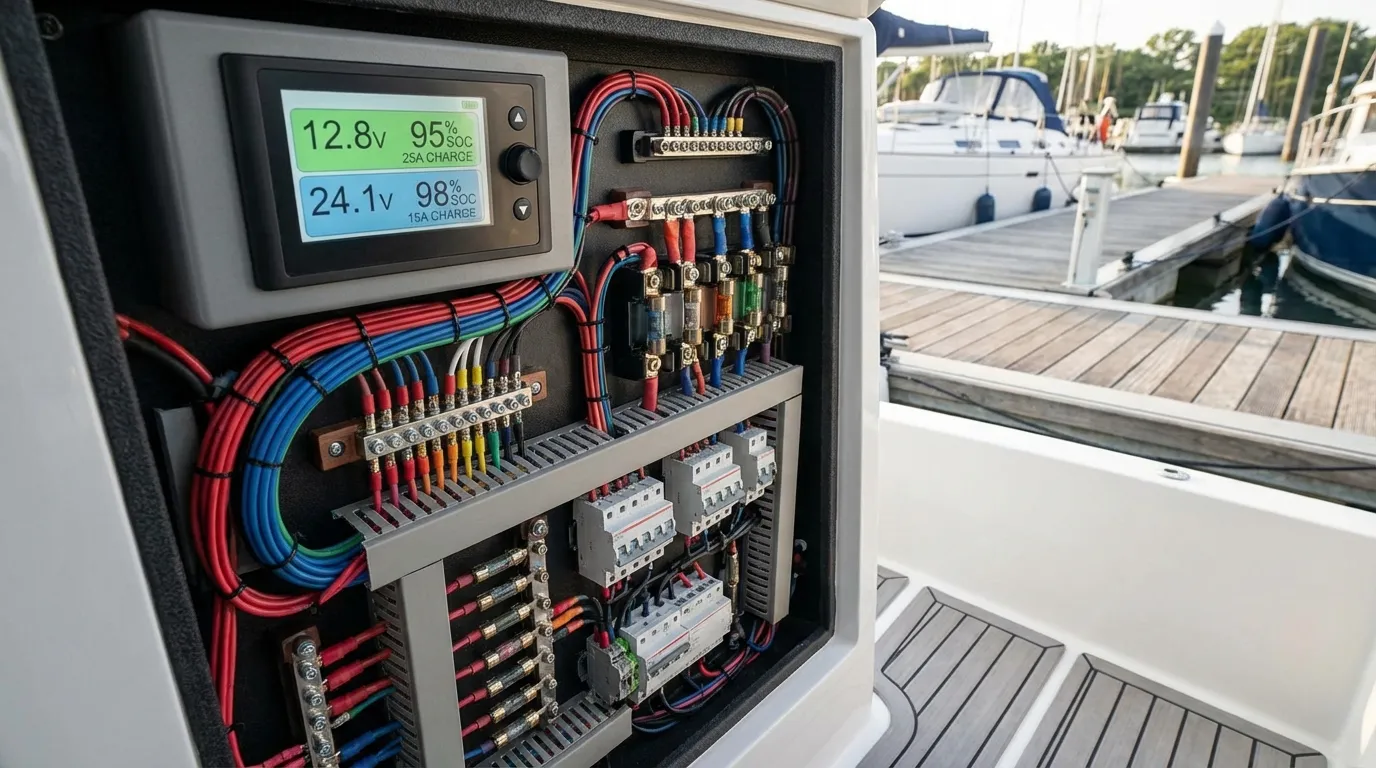
Keeping an eye on temperature is also easier than it used to be. Many newer batteries connect to apps that show live temperature readings on your phone while you’re out on the water. Seeing that info in real time helps you catch problems early. If numbers start rising past safe levels, lowering the load or pausing charging for a short time can stop bigger issues and help protect long-term battery life.
Daily habits make a difference over time. After hard use on hot days, letting batteries cool off before charging helps reduce wear. Storing fully charged lithium batteries in extreme heat isn’t a great idea either. In winter, freezing temps are a serious concern, since cold damage inside a battery can be permanent and costly.
Some mistakes are easy to miss. Covering vents or stacking gear on battery boxes cuts airflow and shortens lifespan. And for boats that rely on electronics for navigation and safety, consistent, reliable power really matters.
What Thermal Management Looks Like in 2026 for Marine Batteries
By 2026, LiFePO4 batteries are the go‑to option on new boats. They stay stable and last longer, which matters a lot if you’ve upgraded recently. Insurers and surveyors now expect thermal protection as part of a basic install. UL‑rated batteries with built‑in temperature cutoffs show up on most new builds, and anyone ordering a new boat can see these features are no longer optional.
Boat builders are also changing how battery compartments are set up. Better airflow and more fire‑resistant materials are now common, and these small changes add real protection. Retrofits often happen in stages. Many owners start with monitoring, then add ventilation once they see how the system acts. Spreading upgrades out helps keep costs manageable.
After a few seasons, the benefits reach beyond the batteries. More consistent voltage helps engine management systems run better, which you can feel underway. Starters and alternators deal with less strain, leading to fewer breakdowns and smoother trips.
Retailers like https://www.firstchoicemarine.com/ are seeing more demand for thermal‑safe batteries and smart chargers. The focus has moved to power systems that stay controlled and reliable, season after season.
Practical Steps You Can Take This Season
Big upgrades aren’t needed to move things forward. A quick check often catches problems early. Battery placement and airflow are smart places to start, since tight areas trap heat faster than many people think. Chargers without temperature sensing can miss early warning signs, so upgrading that part can be worth it. You’ll often feel hot spots right away, which makes adding vents or small fans an easy fix. Small changes like these add up over time.
Clear labels help more than you might expect. Mark each battery with its install date and keep short notes on how it’s doing. If one unit starts running warmer than the rest, fixing it early helps avoid bigger issues. That little bit of care often stops failures that cost much more later.
Boats with hybrid or electric systems need closer watch. Ongoing power use creates regular heat, even on normal trips. Knowing how batteries act under load helps trips run smoother and cuts down on surprises.
For system expansions, the article on integrating advanced marine electronics takes a closer look at how power planning and electronics upgrades connect, and where problems usually show up first.
Commonly Asked Questions
Swelling and lost capacity often show up during long heat spells, even before owners notice a problem. Most marine lithium batteries wear out faster above 95°F, and they may still run for a while, even as damage builds.
Yes. Charging lithium batteries below freezing can harm internal cells, which isn’t good. Because of this risk, many batteries won’t charge when it’s cold.
How do I know if my battery is overheating?
Shorter run time can be a sign (yeah, a red flag). A battery hot to the touch or swollen may appear. Under load, the device can shut off (you’ll notice), and apps may show rising temperatures.
Is ventilation enough for battery heat control?
Ventilation helps with smart placement and heat-aware chargers by keeping air moving. In tight spaces, active cooling may still be needed (you’ll notice). Other setups work fine without it.
Does thermal management affect engine care?
Yes. Keeping battery temperatures even holds voltage steady, which takes pressure off engine starting and charging systems and helps cut stress as time goes on.
The Bottom Line for Smarter Battery Care
Stopping heat damage is still the most reliable way to avoid capacity loss and early battery failure on boats in 2026. That’s why thermal management is now a normal part of marine battery care, not just an optional upgrade. Along with protecting the battery, good temperature control improves safety and helps engines and onboard electronics stay dependable, the gear people count on most.
Temperature awareness and smart installation choices quietly carry a lot of weight. They extend battery life, lower long‑term costs, and bring a consistent sense of confidence every time the dock lines come off. Real peace of mind shows up in small ways, like a cooler, well‑protected battery lasting season after season.
