


Fiberglass damage shows up on almost every boat sooner or later, usually when you’re not expecting it. One day it’s a small crack near the bow you notice while cleaning. Another time it’s a soft spot on the deck that just feels wrong under your feet. For many boats, faded gelcoat also shows up over the years, especially with constant sun exposure, and it looks worse season after season. Not great. When that moment hits, most boat owners end up asking the same question: which fiberglass repair kit actually works, and which ones are mostly marketing hype?
That’s where this guide steps in. It keeps things easy to read and skips brand-name hype or flashy packaging, since that’s already everywhere. The focus stays on real fiberglass repair results for boats, strong hull repairs, deck fixes that can hold up over time, and gelcoat repair that doesn’t give up after a few trips. Real-world stuff, basically. If DIY fiberglass boat repair is on the table, or if you want to understand the options before calling a pro, this should help.
Quick-fix promises are everywhere, but damage is rarely one-size-fits-all. Structural cracks need real strength to stay put under load. Gelcoat damage is more about color match, finish, and patience. Different goals lead to different results. Some kits handle surface issues well and fall short on deeper problems. This article breaks down what works, what doesn’t, and the fiberglass repair pros and cons, right down to practical situations like fixing a deck soft spot or sealing a bow crack.
Why Repair Kits Are in High Demand
Fiberglass boats still make up a large share of what you see on the water, and that’s true in most marinas people visit. Since so many boats are built this way, demand for fiberglass repair products keeps growing each year. Industry data shows steady growth in repair and restoration, which makes sense when you look at the reasons. Boats are aging, and professional labor costs keep going up. That often leads owners to look at other options sooner than they planned.
| Market Segment | Value | Year |
|---|---|---|
| Global boat repairing market | USD 7.18 billion | 2025 |
| Boat restoration products market | USD 1.75 billion | 2025 |
| Fiberglass resin boat market | USD 3.59 billion | 2025 |
This background helps explain why fiberglass repair kits are appearing everywhere lately, you’ve likely noticed the wider range. For many owners, a DIY marine fiberglass patch feels like a sensible choice. A small fix might cost a few hundred dollars in materials instead of thousands in labor. Still, not every kit works the same. Some don’t hold up, and losing time or money is a risk most people want to avoid.
Intel Market Research Analysts explain why fiberglass drives this trend:
Fiberglass remains the primary focus for restoration products because it is the dominant material in modern boat construction, creating substantial maintenance needs and requiring specialized cleaners to prevent oxidation and gelcoat deterioration.
Understanding the Main Types of Repairs
Before buying anything, it helps to spot the damage first, a small step that can save money and frustration (seriously). I see fiberglass repairs fit a few common categories, which makes choices easier once the damage is clear.
Structural Hull Repairs
When the hull gets damaged, problems can get serious quickly, especially near or below the waterline where cracks, holes, and delamination often appear. In these areas, strength and a fully waterproof seal matter more than speed, since quick cosmetic fixes usually fail early once they stay wet. Epoxy‑based fiberglass repair kits work well here because they bond strongly and last through multiple seasons. Long‑term protection matters when the surface rarely dries out.
A clear step‑by‑step guide can really help before you take on structural work. We wrote one here: Fiberglass Boat Hull Repair: Step-by-Step Restoration for Structural Integrity. I think it’s worth reading, especially if you’re dealing with a crack below the waterline.
Deck and Hardware Area Repairs
Decks take ongoing stress from foot traffic and hardware, especially around fittings, and that’s normal with heavy use. Cracks near cleats and rails are common. Epoxy with fiberglass cloth usually lasts here, while fast-curing polyester kits often crack again when loads return.
Gelcoat and Cosmetic Damage
Scratches and chips are common and usually just cosmetic.
Gelcoat repair kits can fix these easily.
They don’t add strength, but they bring back color and help protect the fiberglass below, so this type of coverage stays cosmetic.
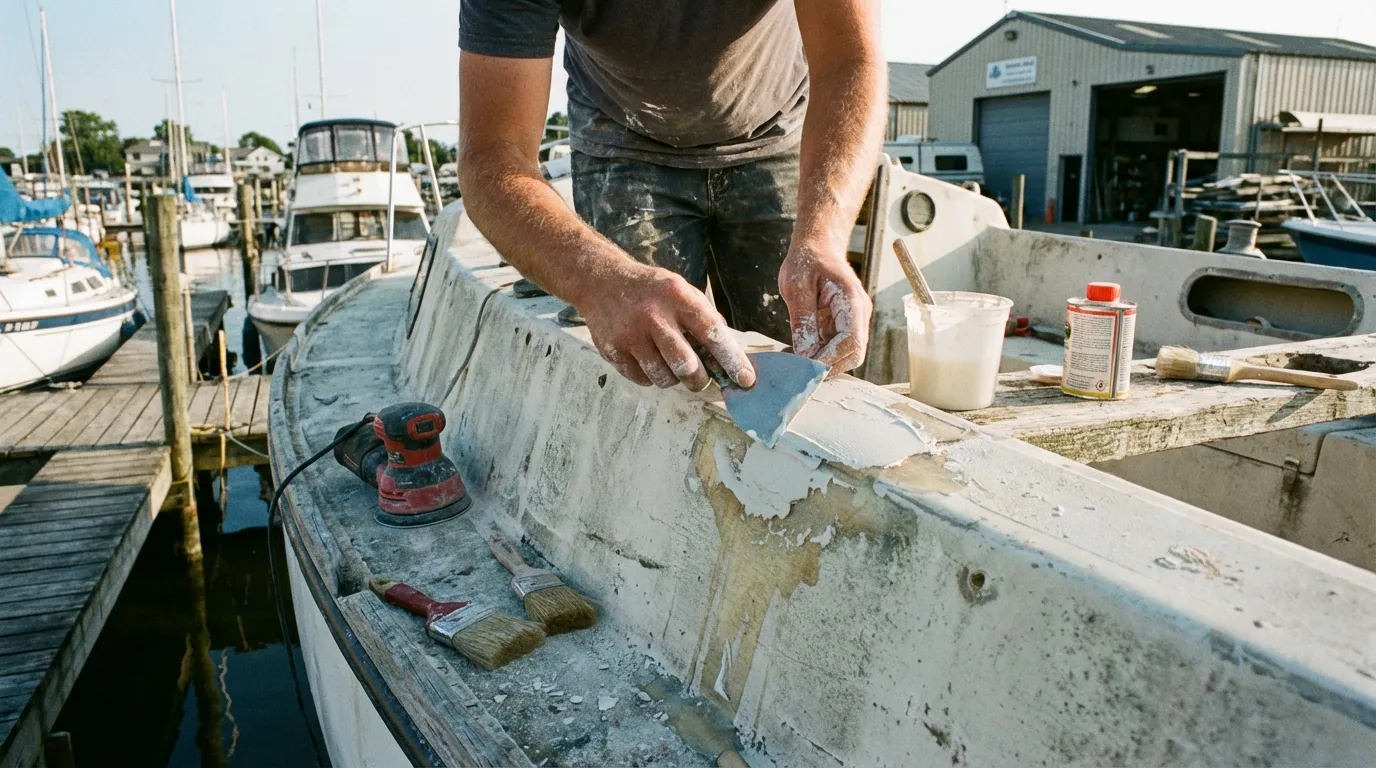
Epoxy vs Polyester vs Gelcoat Kits: What Actually Works
A lot of confusion builds up right here, and honestly, that’s very normal. The details can get messy fast, so it helps to look at how these kits usually act during real repairs.
Epoxy fiberglass repair kits are often the most flexible choice. They stick well, handle water exposure, and give you more working time. That extra time matters when a repair doesn’t go perfectly, which happens a lot. Polyester kits sound tempting because they cost less and cure fast. The downside is that the quick cure leaves little room for mistakes if mixing or timing is even slightly off. Gelcoat kits are a different thing entirely. They focus mostly on appearance and small surface fixes, with strength being a lower priority.
Temperature matters more than many people think. Controlled tests show that working time changes as conditions shift, which is especially relevant for DIY fiberglass boat repair done outside or in a garage. Weather can change things quickly.
| Product type | Temperature | Working time |
|---|---|---|
| Gelcoat kit | 75°F | About 20 minutes |
| Polyester repair kit | 95°F | About 7 minutes |
| Gelcoat kit | 65°F | About 45 minutes |
In my view, epoxy systems are easier for beginners. They deal better with small mixing errors and temperature changes, which keeps frustration lower. Practical Sailor testing also shows epoxy-based kits hold up better for structural repairs, while gelcoat kits work best when a smooth finish is the main goal.
There’s also a common belief that marine-labeled products are always the best option. Intel Market Research Analysts point to a real drawback:
The premium pricing of marine-certified restoration products presents a significant barrier for hobbyists; professional-grade epoxy systems and teak restoration kits can cost 30, 50% more than standard marine maintenance products.
Marine kits aren’t bad. They’re just not the right fit for every repair, so the price should match what you’re actually fixing.
Common Mistakes DIY Boat Owners Make
A decent fiberglass repair kit can still fail if it’s used the wrong way, and that happens more often than most people think. You’ve probably seen a repair that looked fine at first, then didn’t hold up for long.
One of the biggest problems is surface prep. Fiberglass repairs need a surface that’s fully cleaned and sanded the right way, not something rushed at the end of the day. Any leftover wax or oil can stop the repair from sticking, and moisture often causes issues right away. Another common mistake is using gelcoat where strength is needed. Gelcoat helps with looks, but it doesn’t add support in areas that carry weight. Cure time gets ignored too. Sanding too early or putting the boat back in the water before everything sets is a common reason repairs fail.
What’s going on underneath matters just as much. A soft deck often points to core damage, and fiberglass by itself usually won’t fix that. It’s an easy detail to miss. We covered this here: Marine Wood Rot Repair: Restore Transoms and Decks Easily.
Finally, overpaying for anything labeled “marine” happens a lot. Marketing helps, but it isn’t everything, in my view. Wayne, known as Wayne The Boat Guy, puts it bluntly:
I really don't think there's any benefit at all to buying the marine version. I think the word marine is able to jack up the price because people will always pay more for stuff for their boats.
Tools and Supplies That Make Repairs Easier
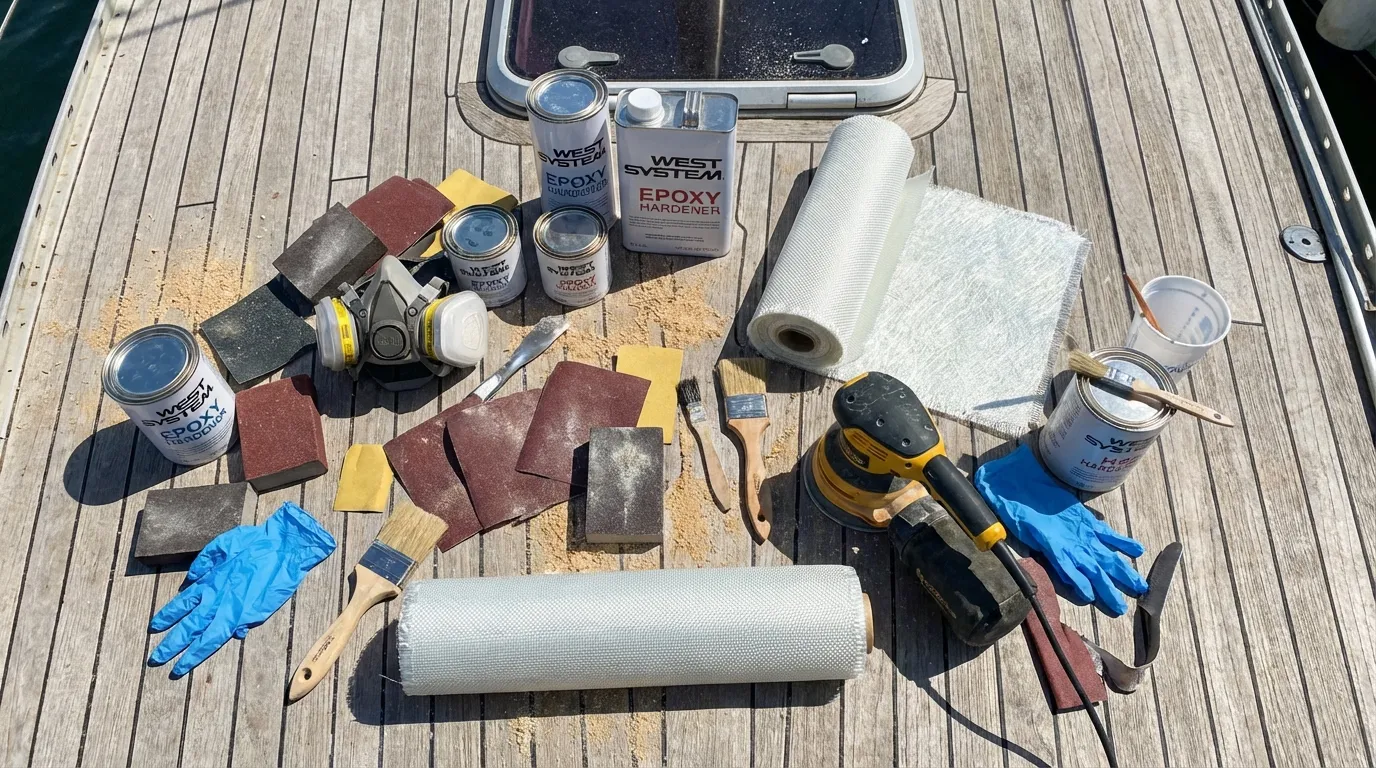
The biggest difference often shows up before the repair even starts. Fiberglass repair kits usually work better when they’re used with the right tools, which people often skip. Nothing fancy is needed. Sanding blocks, mixing cups, gloves, and proper safety gear are the basics people really use. Temperature also matters. Working in the shade or inside a ventilated garage, instead of direct sun, often leads to cleaner cures and fewer problems.
What about cleaning? It’s often rushed and later causes trouble. A clean surface usually improves adhesion and helps create a smoother finish. For a clear example, gelcoat protection is covered in this review of boat cleaning tools: Boat Cleaning Tools Reviewed: What Actually Saves Time, Protects Gelcoat, and Delivers Pro-Level Results.
FAQs People Ask
Can I use one fiberglass repair kit for all boat damage?
But no, you can’t. Structural boat damage usually needs epoxy and fiberglass cloth to hold things together, not gelcoat, and using the wrong kit often fails. Materials matter here. Gelcoat kits are cosmetic, mostly about looks.
Often, a repair done right can hold up for years. What matters more than brand names is surface prep, the materials used, and letting everything cure properly.
Are fiberglass repair kits safe for beginners?
It’s safe when you follow the instructions, and safety gear really matters. I find epoxy kits are usually easier.
Can I repair below the waterline myself?
Usually, yes, if you use an epoxy-based fiberglass kit made for underwater repairs, not standard products. Gelcoat alone usually doesn’t stick well. Short answer.
Is professional repair always better than DIY?
But many DIY boat owners can handle small to medium repairs if they’re patient, even if it’s not easy. Large structural damage usually means bringing in a professional.
The Bottom Line for Smart Repairs
Fiberglass repair kits can save time and money when they fit the job. Epoxy kits are often the go-to for hulls and decks, in my experience, since they bond well and cure strong. Gelcoat and polyester kits are better for cosmetic fixes and faster cures, though polyester usually takes more skill.
Why do many boat owners stick with DIY fiberglass boat repair? For those who enjoy hands-on maintenance, it feels practical and rewarding. Prep makes a difference. Pick materials based on the damage, not the label, so repairs last longer, look right, and get your boat back on the water.
For more tips on do-it-yourself methods, check out Fiberglass Repair Made Simple: DIY Fixes for Boats and Fiberglass Repair Basics: From Gelcoat to Structural Fixes. These guides expand on techniques covered here and help refine the process for durable results.
