


Getting stuck on the side of the road with a boat trailer is one of those lessons most boaters only need once. It usually sticks. Trouble doesn’t always start on the water. A lot of the time, it starts earlier, maybe in a parking lot, halfway to the ramp, or right when you’re already running late. It’s a frustrating spot to be in. Trailer maintenance is often the most ignored part of boating, even for owners with years of experience. Bearings and brakes get put off until something breaks, often after the trailer has been sitting all winter. Trailer lights are treated the same way. When these parts fail, it’s usually sudden, on the drive to launch or while backing down the ramp.
What makes this worse is how easy many of these problems are to avoid. This article looks at common trailer failures that show up before launch, not after the boat is in the water. It also explains why these problems happen and how warning signs usually appear ahead of time if you know what to watch for. In many cases, a quick check at home can save the trip, and your mood.
Weekend anglers, commercial operators, and hands-on DIY boaters should all find something useful here. The goal isn’t only avoiding delays. These checks connect directly to real safety risks, not just inconvenience.
By the end, you’ll better understand why bearings overheat, why brakes seize on the highway or at the ramp (often the worst time), and why lights fail during early-morning launches or late-night returns. A few small upgrades and smart accessories can help. Small changes, big relief.
Why Trailer Bearings Are the Most Common Failure Point in Boat Trailer Maintenance
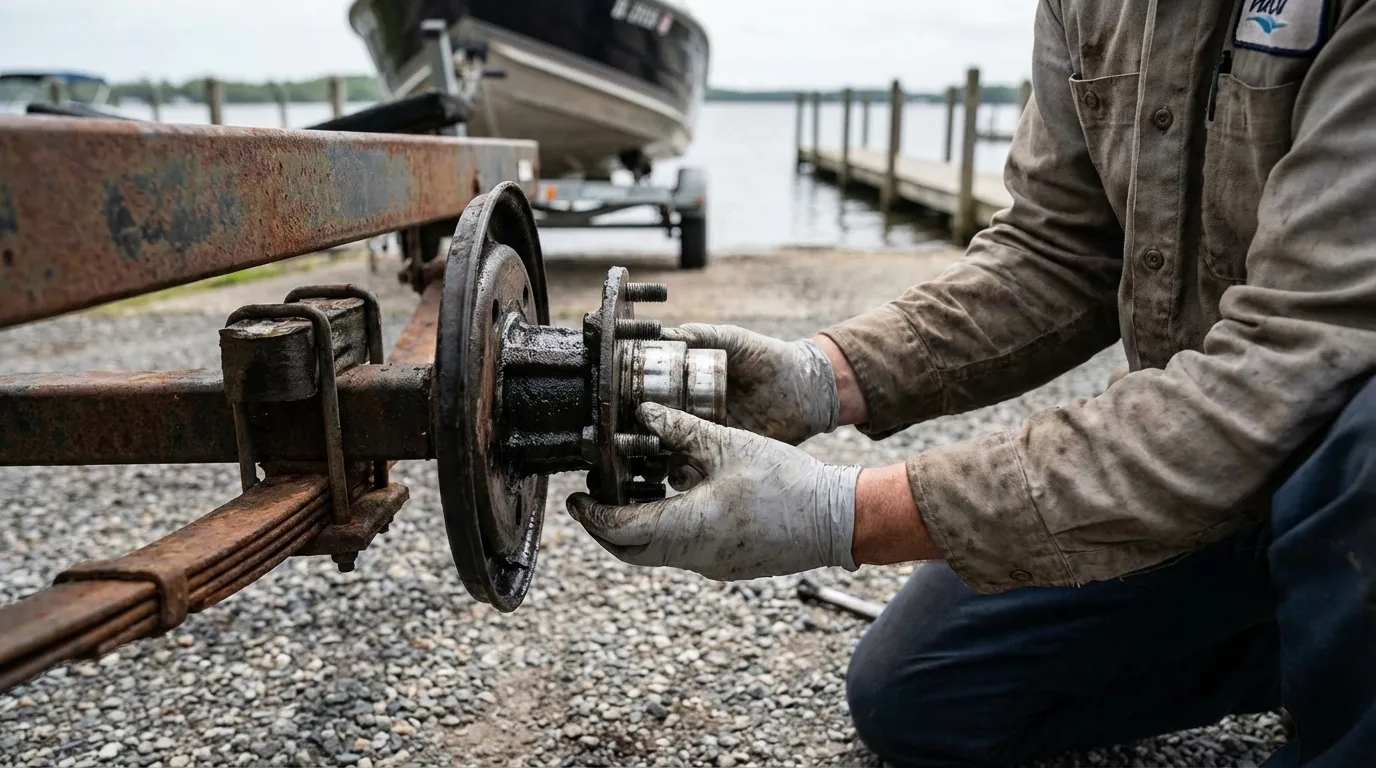
Trailer bearings carry the full weight of the boat and trailer while spinning at highway speeds, which puts more strain on them than most people expect for such a small part. Add regular water exposure and heat from long periods of storage, and problems can show up earlier than planned. Many owners assume everything is fine as long as the trailer still rolls smoothly down the road. That belief is common, and it often leads to repairs that cost much more than expected.
For years, marine safety editors and technicians have pointed to the same issue. Bearings often fail after water sneaks past worn seals during launching, and saltwater usually speeds up the damage. Grease slowly breaks down, metal begins to rust, and heat builds in ways that are easy to miss at first. Most of the time, it’s a slow process that doesn’t look serious in the beginning.
Most trailering problems happen because of flat tires or bearing problems.
What surprises many people is how fast a small problem can turn into a big one. A dry bearing can overheat in minutes, not hours. When that happens, hubs can be ruined, and in worst cases, wheels may come loose. Industry estimates suggest routine upkeep costs stay manageable, but roadside repairs and lost fishing days are where costs often jump, usually at the worst possible time.
| Bearing Condition | Warning Sign | Risk Level |
|---|---|---|
| Well greased | Cool hub after towing | Low |
| Dry or contaminated | Hot hub, burnt smell | High |
| Failed | Smoke, noise, wheel wobble | Severe |
Reducing the risk comes down to simple habits. After towing, you can often spot issues by touching the hub for excess heat and checking for grease around the seal. Bearing protectors help in many cases, but they don’t remove all risk. First Choice Marine also covers these points in their Boat Trailer Maintenance and Accessories Guide 2025 for anyone who wants more detail.
Brake Systems That Fail Quietly Until They Do Not
Trailer brakes are easy to forget because you almost never see them working. Most of the time they do their job quietly in the background, which is exactly why they get ignored. Surge brakes and electric over hydraulic systems, including disc setups, deal with rough conditions and often wear out faster than people expect. They get dunked in water, covered in road salt, and then left sitting for weeks, often right after a long, exhausting tow home.
Most problems usually come down to corrosion. Calipers can seize, and actuators or brake lines start sticking as moisture settles where it shouldn’t, often deep inside fittings you can’t easily see. That kind of damage stays hidden for a long time. Many boaters don’t notice anything wrong until the trailer pulls hard to one side or won’t slow down smoothly. By then, it’s more than annoying. It’s dangerous, especially when towing heavier boats at highway speeds with traffic that isn’t expecting sudden issues.
Marine safety groups often point out that accident reports rarely list trailer brake failures by name. Even so, the mechanical issues behind them are well known and usually preventable. Flushing the system after saltwater use is a simple habit that gets skipped a lot. Checking brake fluid level and condition is another step people miss. Dark or cloudy fluid is often an early warning, even if it’s easy to brush off.
So what does a useful pre-launch brake check look like? Roll the trailer slowly, apply the brakes, and listen for grinding or strange sounds. You can often catch problems early by looking closely at the calipers for rust or visible damage. Trailers built with marine-rated brake parts and corrosion-resistant fittings tend to last longer, and in my view, that matters more than saving a few dollars upfront.
Because brakes tie directly into boating safety, the trailer deserves as much attention as the boat itself. A failed system can turn a great day on the water into a serious roadside emergency, usually on the drive home. That’s why broader safety planning matters, including the points in the Boating Safety Equipment Guide: What Every Boater Should Know we wrote about. The boat and trailer are connected, whether you like it or not.
Trailer Light Failures That Ruin Launch Day in Boat Trailer Maintenance
Finding dead trailer lights right when the ramp finally comes into view can drain the excitement from launch day, especially after a long drive. Most boaters have dealt with it at least once. It can feel even worse when lights quit during a night tow, right when you need them most. Trailer lighting problems happen a lot and often get blamed on burned‑out bulbs, but that’s usually not the real issue. In many cases, corrosion and grounding trouble cause the failure, not the lights themselves.
Modern LED lights last longer and use less power, which helps in many setups. They’re also less forgiving when grounds aren’t clean. Even light corrosion where a wire connects to the frame can cause flickering or a total blackout. When insulation cracks, water gets inside, and repeated exposure starts to wear things down. Over time, the circuit just stops working.
Marine maintenance experts often suggest testing lights before every trip instead of waiting until you arrive. Check brake lights, running lights, and turn signals. Having a helper makes it quicker, but a reflective surface can work too.
| Light Issue | Likely Cause | Quick Fix |
|---|---|---|
| No lights | Bad ground | Clean frame connection |
| Flickering | Corrosion | Replace connectors |
| One side out | Broken wire | Repair harness |
Fully sealed, submersible LED kits can reduce repeat problems, and routing wires inside the frame often helps as well. The link between trailer lighting and safety is explained in more detail in the write‑up on 2025 Marine Lighting Trends: How LED Technology is Transforming Boating Safety.

The Pre-Launch Inspection Most Owners Skip
Problems usually come down to timing, not skill. Skill is rarely the problem. Most owners focus on what’s easy to see: fuel, batteries, electronics, engine care. That all makes sense. The trailer, though, often fades into the background until something fails, usually right before a trip. That’s when it suddenly feels like there’s no time to fix it.
What’s surprising is how little time a smart pre-launch check really takes. Often it’s less than ten minutes. A simple walk-around handles most of it. Check tire pressure and look over the sidewalls. Touch the hubs to feel for issues. Test the lights, then look over the brake lines and couplers. As the trailer moves, listen, strange noises are usually easy to catch. Many common problems show up right away, without using any tools.
This quick habit matters most after storage or long hauls. Bearings can settle, seals can dry out, and wiring can stiffen. A short check before each trip usually reduces surprise repairs and helps protect both the boat and the tow vehicle. Many experienced boaters say it soon feels routine, and skipping it just feels wrong.
Tools and Accessories That Make Boat Trailer Maintenance Easier
One comforting thing about boat trailer maintenance is that it usually doesn’t take a full shop to keep things reliable, even if you’re working in the driveway. A small group of basics often covers what really matters. A grease gun with marine‑grade grease handles regular bearing service, and a torque wrench keeps lug nuts tightened to the correct spec. A simple circuit tester also makes it easier to catch light or wiring problems before a launch or after a long tow. Together, these tools fit into one small box and handle most everyday checks.
Bearing protectors help keep steady pressure and limit water getting inside. Spare light connectors with dielectric grease can save an extra trip home. Carrying a spare hub kit can turn a breakdown into a short delay instead of a tow, which is especially helpful on the way to the ramp. Small steps like these add up, and the gear stays affordable and easy to store.
For DIY boaters, keeping a short checklist in the tow vehicle helps build a routine. Over time, patterns start to show, and parts nearing the end of their life are easier to spot.
Common Questions Asked
How often should boat trailer bearings be inspected?
Experts often suggest checking trailer bearings every 6 to 12 months and after long trips. Boats used in saltwater tend to need checks more often, it happens. Feel heat or hear noise? Those signs often mean it’s time for an inspection.
Are bearing protectors enough to prevent failure?
Bearing protectors can lower risk by keeping grease pressure up, and that helps. By themselves, they can’t fix worn seals or corrosion that’s already there, in my view.
Why do trailer brakes fail after storage?
Problems often show up after storage because moisture slips in, causing corrosion, while brake fluid slowly breaks down, and calipers may seize, especially in damp areas. From my view, that’s the usual pattern, so before towing, you’ll probably do a quick check.
Should trailer lights be checked before every trip?
Yes, I’d say yes. Why wait until the ramp? Checking lights at home is easier, helps avoid delays, and usually makes the drive safer for you overall.
Can I do trailer maintenance myself?
And many tasks are DIY-friendly, like bearings or small light fixes (pretty simple). You can do those. When brakes feel confusing (they do), it’s usually better to call a marine technician.
Make Trailer Checks Part of Every Launch
Trailer bearing and brake failures, along with lighting issues, aren’t rare. They show up often and are usually preventable, but they still get ignored more than they should. That’s likely because they feel easy to put off (we’ve all done that). The good news is how little effort it takes to stop them. A quick inspection before launching can catch most issues early and help protect your boat, your tow vehicle, and everyone else on the road.
Instead of treating the trailer like an add-on, it helps to see it as part of the boat. When it’s built into a regular routine, boating tends to feel smoother and safer, with much less stress on launch day. It shouldn’t fade into the background.
For anyone looking to upgrade parts or simplify upkeep, First Choice Marine offers marine‑grade solutions made for real-world use. The focus is on small, practical changes that cut hassle, like smoother launches and fewer roadside surprises. You can also find helpful insights in Mastering Boat Trailer Maintenance: Essential Tips for 2026 for additional long-term care strategies.
