


Boat stands may seem simple, but they do a very important job. They help keep a boat stable, upright, and protected when it’s out of the water, and that matters more often than many people think. If they’re used the wrong way, though, they can create a serious safety risk. That’s why every boat owner should know the basics of boat stand setup, proper boat stand sizing, safe boat stand placement, and a few key safety checks before starting storage or repair work.
This usually matters most during winter layup, bottom work, trailer changes, or engine and hull maintenance. Recreational boaters need safe storage, and so do fishing fans and commercial operators. The good news is that the basics are not hard to follow once one main rule is clear: boat support stands are there to steady the hull. They are not meant to carry most of the weight. In most situations, keel blocking carries that heavier load and does the main support work.
In this guide, you’ll learn how to use boat stands, how many jack stands for boats are usually needed, where they should go, how to size them, and what to check before leaving a boat in the yard for weeks or months. It also covers storage trends, common mistakes, and simple planning tips that can help save money and avoid damage. That kind of practical prep often makes repairs safer and storage a lot less stressful. For more practical setup advice, see Boat Stands Explained: Safe Hull Support and Setup Tips for additional context.
What Boat Stands Actually Do
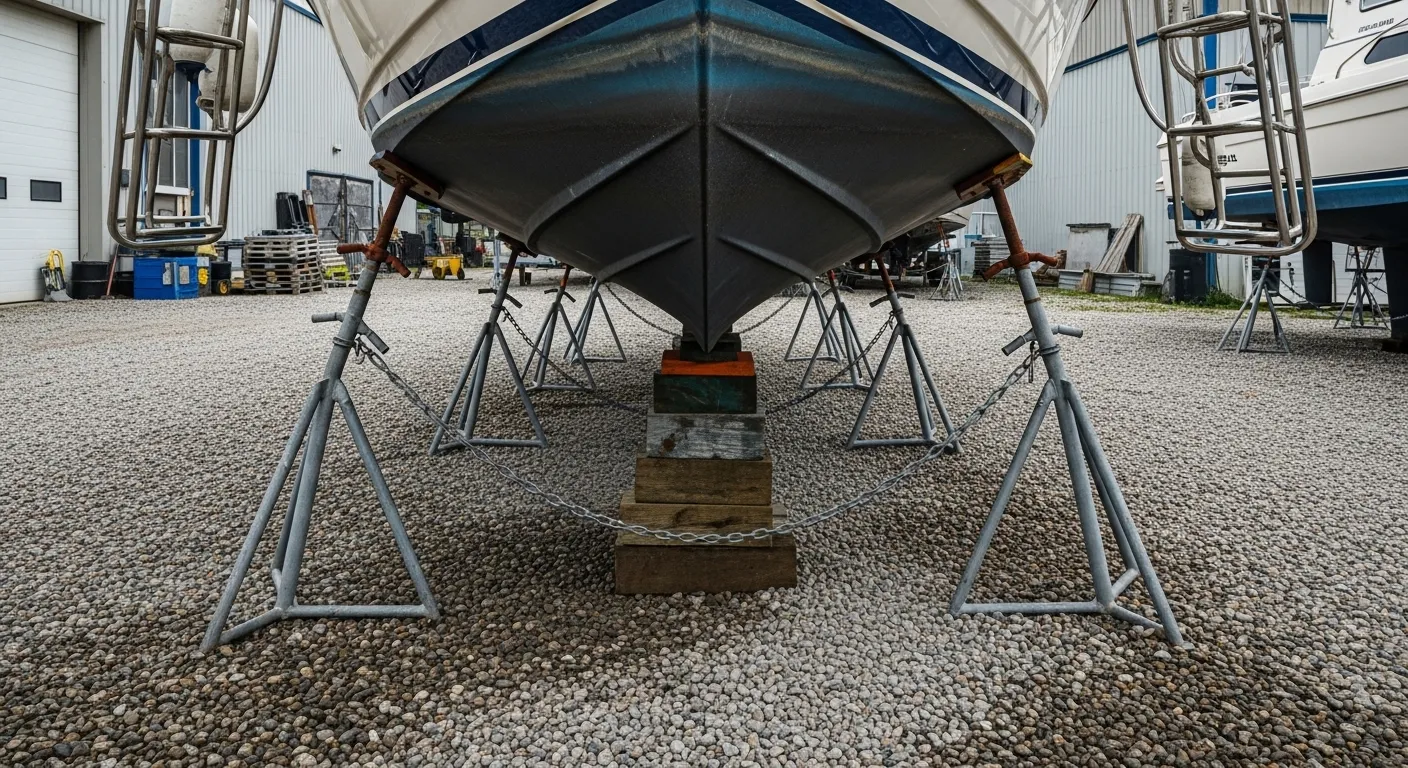
Boat stands, also called boat yard stands or jack stands for boats, are adjustable supports placed along the hull to keep a boat from tipping sideways. Their main job is side-to-side stabilization. Simply put, they help stop the boat from rocking or leaning while keel blocks underneath carry the weight, and that part is usually the most important.
This is an easy detail to miss, and that often causes setup mistakes. The safest setup uses keel blocking together with stands, not one without the other. Current marine guidance says the boat’s weight should rest mostly on keel blocks under the keel. The stands steady the hull from the sides; they are not designed to hold the boat’s full weight. ABYC-related safety guidance, as cited by marine trade sources, also stresses proper immobilization and calls for at least two blocking points so the boat is less likely to rock forward or backward.
<DataTable
headers={[“Support element”, “Main job”, “Common mistake”]}
rows={[[“Keel blocks”,“Carry most of the boat’s weight”,“Using too few blocks”],[“Boat stands”,“Provide side-to-side stability”,“Letting them act as main vertical supports”],[“Chains between stands”,“Keep paired stands from spreading”,“Using rope or wire instead of chain”]]}
caption=“Basic roles in a safe boat stand setup”
/>
A good setup also depends on level ground, strong bases, and proper spacing. Practical Sailor says that stand pairs should be secured across the boat with at least 3/16-inch chain, not rope or wire. Rope can stretch, and wire can slip, which can matter more than it seems during storage. It is a small detail, but it often makes a real difference in keeping a stored boat steady and safer.
The boat must be vertical.
That short quote sums it up well here. When a boat leans, the load becomes uneven, and that usually makes the whole setup less secure for both the boat and anyone working around it.
Boat Stand Sizing and How Many You Need
Boat stand sizing is about more than just picking the tallest stand that fits. The right height range depends on your hull shape, the yard surface, and the blocking height under the keel, which usually affects things more than many people expect. A stand needs enough thread engaged in the screw so it can be adjusted safely. At the same time, it should not be extended too far or lowered too much.
For keel blocks, Practical Sailor gives a useful rule of thumb. Boats 30 feet or less often use several 4 x 4 x 18 inch wood blocks. Boats from 31 to 40 feet usually use 6 x 6 x 18 inch blocks. For boats over 40 feet, 8 x 8 x 18 inch blocks may be needed, and on larger boats the spacing should be no more than 5 feet apart. In most cases, that is a practical place to start.
Side stands follow a common guideline as well. Boats up to 30 feet generally need at least 4 stands. After that, one simple approach is to add another pair of boat support stands for every 8 to 10 feet of length. It sounds simple on paper, but placement still matters. Stands should be spaced no more than 10 feet apart, and the front and rear pairs also need to stay within 10 feet of the ends of the waterline instead of being placed farther toward the middle.
A quick example usually helps make this clearer. A 28-foot sailboat may use 4 stands and several keel blocks. A 36-foot cruiser may need 6 stands and more blocking. A 45-foot boat often needs extra support points, depending on hull shape and any guidance from the manufacturer or yard. That part is not always obvious, and it is often where people begin to second-guess the setup. If there is any uncertainty, asking a qualified yard manager or marine surveyor before storing the boat is a smart move.
If bigger off-season work is planned at the same time, it also helps to think about nearby systems like batteries and wiring, since those are easy to miss. We covered that here: Battery Chargers for Boats: How to Size and Install for Long Life, especially if the boat will sit for months.
Step-by-Step Boat Stand Setup and Placement
A safe boat stand setup usually comes down to doing things in the right order. Start on level ground, because this really makes a difference. Then place sturdy pads under each stand. Even on pavement, plywood pads can help reduce sinking or sliding. On gravel or softer ground, that support often matters even more, and you will usually notice the difference sooner.
Next, set up the keel block stack so the hull’s weight stays centered and supported from below. After the weight is resting on the blocks, move the side stands into place against strong structural areas of the hull. Avoid weak spots and unsupported panels, since those can shift more easily. Centerboard casings should also be avoided. On powerboats, aft stands need to be placed as close to the transom, or the aft end of the waterline, as the structure allows.
Once everything is in place, adjust the stands evenly. If one side is tightened too much, it can create lift instead of steady contact. Chain each pair together under the hull with proper chain. You will also want to check the vertical alignment again. If the boat is not upright, correct it before leaving.
Here is a simple sequence for how to use boat stands safely:
1. Prepare the base
Use level ground if you can; it usually helps. Also put plywood or other sturdy pads under each stand and block so they do not sink.
2. Block the keel first
Usually, it’s best to let the keel take the main load. Then add enough blocks so the weight is spread out evenly, I think.
3. Place them at strong points
Space them evenly, since that usually matters. Keep them within the recommended distance, and don’t place them on weak spots on the hull.
4. Snug, not too tight
Side stands help keep the boat steady, which usually helps. But they shouldn’t be the main lifting tool. Simple, but important.
5. Chain every pair
Use at least 3/16-inch chain, since that’s usually the minimum. Rope or wire likely won’t hold here.
6. Inspect after setup
It’s easy to miss small changes, so it often helps to check again a few hours after setup, then take another look once the weather shifts.
A lot of owners pair storage prep with other jobs too, like bilge cleaning or moisture checks. If that’s on the list, Bilge Pumps: Choosing and Maintaining the Right One for Boats before layup is likely worth a quick read before finishing.
Common Mistakes That Make Boat Storage Stands Unsafe
Most problems with boat stands usually come back to the same small group of mistakes. One is using too few stands. Another is putting weight on the stands that should still rest on the keel blocks. Placement is another big issue, especially when stands end up under weaker parts of the hull, which happens more often than many people think. At first, none of this may seem serious. Over time, though, it can cause shifting, extra hull stress, or in some cases even a full collapse.
Weather often adds to the risk. Heavy rain can soften the ground, freeze-thaw cycles may move pads out of place, and wind puts extra side pressure on a tall hull. Because of that, boat yard stands usually need to be checked after major storms and also at regular times during storage, not just once at the start. That is often when the first small changes begin to show.
Another mistake is skipping chains between paired stands. It may seem minor, but it lowers stability. Some owners also miss fore-and-aft rocking, even though correct blocking points matter just as much as side support. That is one of the easier things to miss, especially when the boat looks steady from the side.
One real example shows how this can happen. A boat was stored properly at the start of winter and then left unchecked while the surface under one stand slowly settled. By spring, the stand angle had changed. The hull had started to lean slightly, and stress marks appeared near the contact area. Regular checks would have likely caught that sooner.
For bigger maintenance work after haul-out, careful support matters there too when adjusting hardware, steering, or rigging loads. That is covered in this related guide on Boat Rigging Best Practices for Safety & Performance 2025, which looks at another part of safe setup planning.
Planning for Long-Term Storage and Yard Space
Boat storage stands are only one part of a bigger storage setup. The market is growing fast, and that usually means more owners want storage that feels safer and more organized. Research shows the global boat storage facility market is valued at $7.4 billion in 2025 and may reach $13.1 billion by 2034. Indoor storage alone makes up 34.2% of the market. North America holds 42.8% of revenue.
| Storage metric | Value | Year |
|---|---|---|
| Global boat storage facility market | $7.4 billion | 2025 |
| Indoor storage share | 34.2% | 2025 |
| North America revenue share | 42.8% | 2025 |
| U.S. facilities in pricing dataset | 10,431 | 2026 |
That change matters. Purpose-built facilities often have better surfaces and drainage, which can help more than many people expect, along with more practical spacing, security, and lighting. In my view, that means boats sit on more stable ground, water drains away the right way, and workers can move around with fewer blind spots and cramped areas. That usually helps make things safer for both boats and workers.
The industry standard clear height for boat and RV storage is 14 feet, accommodating most boats and recreational vehicles.
In commercial planning, boats on trailers often need at least 12 feet by 35 feet. Larger boats may need 30 to 40 feet of aisle width so turning is easier, especially in tighter yards. A better layout often helps reduce bumps, rushed moves, and poor stand placement, which can lead to smoother handling and fewer avoidable mistakes.
Choosing Quality Equipment and Building a Safer Routine
Not all boat stands are the same. Marine-grade stands with a stable base, solid welds, and adjustment screws that still turn smoothly are usually a better option. Rust, bent parts, and damaged pads are clear warning signs, and they are often easy to notice. If someone is using used jack stands for boats, it makes sense to check them carefully before relying on them through a full season of storage.
Having a routine also makes the whole process easier to handle. One helpful step is labeling stand sizes, and another is keeping chains with the right pairs. Pads should be stored flat and dry too; it sounds small, but it often helps prevent little problems later. These are simple habits, but they usually stop mix-ups. A basic inspection checklist for setup day can help, followed by a one-week check and then monthly checks after that. This is especially helpful for commercial operators or for families with more than one boat.
Boat owners shopping for seasonal maintenance items often handle storage prep at the same time as engine care, corrosion control, and sometimes electrical system checks. A trusted resource like First Choice Marine can help owners get the parts and maintenance products they need before haul-out season starts.
Frequently Asked Questions
How many boat stands do I need for my boat?
A common starting point is 4 stands for boats up to 30 feet. After that, add one extra pair for every 8 to 10 feet of boat length. Hull shape and boatyard rules can change the final number.
Can boat stands hold the full weight of the boat?
No. Boat stands are mainly for side-to-side stability. The boat’s weight should rest mostly on keel blocks or other proper blocking under the hull.
Where should boat stand placement be avoided?
Avoid weak or unsupported parts of the hull, including centerboard casings and thin panels. On powerboats, aft stands should be near the transom area if the structure supports it.
Do I need chains between boat yard stands?
Yes. Paired stands should be chained together under the boat. Marine guidance recommends at least 3/16-inch chain, and rope or wire should not be used.
How often should I inspect a boat in storage stands?
Check the setup right after placement, again within the first day, and after major weather changes. For long-term storage, monthly checks are a smart habit.
The Bottom Line on Safe Boat Support
Safe boat storage starts with knowing what boat stands can and can’t do. They help keep a boat steady, but they do not replace proper keel support. When the stand size matches the hull, there are enough stands in place, each pair is chained, the bases rest on solid pads, and the setup is checked often, the chance of movement or damage usually drops a lot, and that is the whole point.
The boat should stay upright while the keel holds the weight. It sounds simple, but in practice it needs to be done right. Stand spacing along the hull matters, and weak spots should be avoided. It also helps to check things again after rough weather and during long storage periods, especially when the boat will be sitting for a while. These basic steps apply whether the boat is a small fishing boat, a family cruiser, or a larger commercial vessel.
Getting ready for haul-out soon? Making a checklist early can help. Before the boat comes out of the water, review the supports, maintenance supplies, bilge system, battery plan, and storage area. In my view, being careful with the setup now can protect the hull, help avoid repair bills, and make the storage season feel much less stressful. For more safety preparation, explore Boating Safety Equipment: Comprehensive Guide to Maximizing Your Boat’s Safety for a complete overview of onboard safety essentials.
