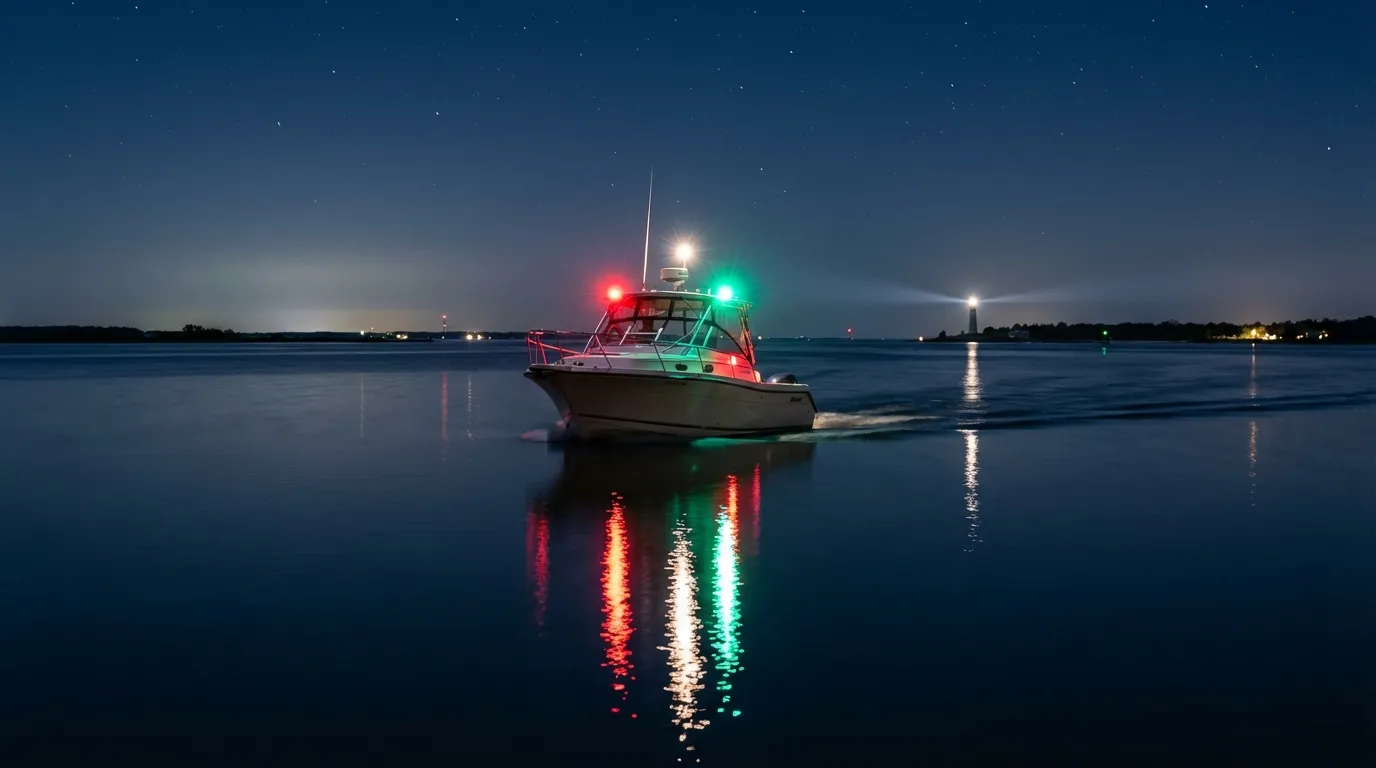
Boat lighting rules often sound simple at first. Turn the lights on at night, use red and green up front, add a white light in back. Easy, right? That’s what many people expect. But once you’re actually out on the water, it gets trickier. A lot of boaters think they’re following the rules, then find out later that something isn’t quite right. Wiring issues happen a lot, mounting heights are often off, and lights can end up blocked by gear or aftermarket add‑ons. This happens more than most people think. These may seem like small details, but they often matter more than boaters assume.
At its core, boat lighting is about staying safe on the water. Avoiding a ticket is nice, but being clearly visible usually matters more. Proper lighting helps other boaters quickly understand what they’re seeing, especially from a distance. Navigation lights help prevent close calls and accidents, often around dusk or dawn, or when weather turns rough.
This guide explains everything in plain language, without fluff. It covers which lights you need, where they go, simple wiring basics, and how far each light must be visible. It also points out common mistakes that even experienced boaters still make. Whether it’s a fishing boat heading out early or a small cruiser coming back at sunset, the same rules apply.
Why Boat Lighting Rules Matter More Than Most Boaters Think
Navigation light violations keep showing up during vessel inspections. Over and over. That alone should get attention, since it clearly isn’t uncommon. What matters even more, at least to me, is how often serious boating accidents happen in low visibility. In many of those cases, poor lighting is part of the story. Inspectors and investigators keep seeing that same link appear over time.
Here’s the simple reason this matters. At night, other boaters usually understand what your boat is doing only by looking at its lights. They read the colors and spacing, then watch how those lights move as you travel, sometimes for just a few seconds. If the lights are wrong, their read of the situation is often wrong too. On the water, that kind of mix-up can turn serious fast, especially as boats get closer.
Here’s the key point: basic visibility rules for most recreational boats leave no wiggle room. These distances aren’t suggestions. They’re minimums you’re expected to meet every time you go out.
| Light Type | Minimum Visibility | Common Use |
|---|---|---|
| Red and Green Sidelights | 1 to 2 nautical miles | Bow visibility |
| Masthead Light | 2 to 3 nautical miles | Powerboats underway |
| Stern Light | 2 nautical miles | Rear visibility |
| All-round White Light | 2 nautical miles | Anchor or small vessels |
Many boaters assume brighter lights are always better. That’s an easy mistake to make, but it often causes trouble. Navigation lights follow strict rules for color and angle, and lights that are too bright, or simply the wrong color, can break those rules just as easily as lights that are too dim.
ABYC C-5 is a technology-forward standard that reflects how navigation lights are built today. This is what success looks like when industry and regulators work together.
That’s why certified marine navigation lights matter. They’re designed and tested to meet real requirements, and they’re meant to work on the water, not just look good at the dock.
Understanding Which Marine Navigation Lights Your Boat Needs
Which navigation lights a boat needs usually comes down to a few practical details. Boat length matters, and so does how the boat is being used. That includes whether it’s a powerboat or a sailboat, and whether it’s moving or sitting at anchor. This is where things often start to feel confusing, especially for newer owners, though experienced boaters can get tripped up too. If you’ve ever paused and wondered which light to turn on as the sun goes down, you’re not alone.
For most small powerboats under 39.4 feet, the setup is pretty standard when they’re underway. They use red and green sidelights at the bow so other boats can tell which direction they’re heading. A white masthead light shines forward, and a white stern light makes the boat visible from behind. Together, these lights cover most normal situations. On some boats, the masthead and stern lights are combined into one all‑round white light, as long as the boat’s size allows it. This option often causes confusion because it isn’t always obvious which setup a boat is using.
Sailboats follow slightly different rules. When sailing without engine power, they don’t use a masthead light. As soon as the engine is running, even for a short time, the boat is treated like a powerboat and must show the same lights. This detail is easy to miss, and brief motoring still counts.
At anchor, most boats must display one all‑round white light that can be seen from every direction. In real life, this light is often forgotten or blocked by deck gear, which happens more often than people realize.
For a deeper look at how modern systems affect visibility and efficiency, there’s a separate guide on 2025 marine lighting trends and LED safety improvements, including why many older setups fall short.
Wiring Boat Lighting the Right Way to Avoid Failures
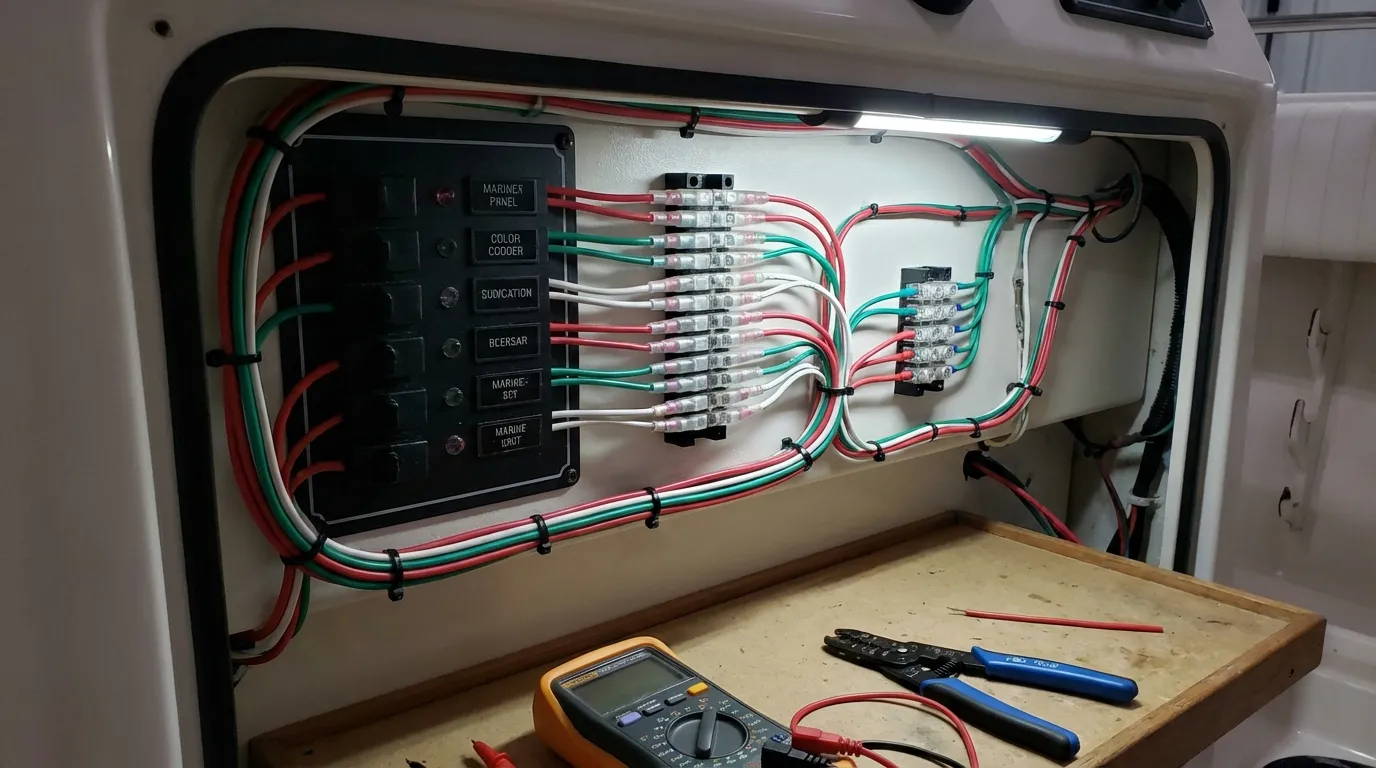
Lighting problems often get blamed on the fixture, but that usually misses what’s really going on. From my experience, wiring is more often the real issue, especially after switching to LEDs. LEDs use less power, which helps efficiency, but they’re also less forgiving. Small voltage drops or minor electrical issues that older lights might ignore tend to show up right away with LEDs.
The mistakes are surprisingly predictable. Undersized wire comes up again and again. Shared circuits cause trouble more often than people expect. Cheap connectors don’t hold up for long. Corrosion adds another problem, and it often starts sooner than planned. Marine environments are tough, and automotive‑grade parts usually struggle over time.
A few smart habits prevent most of these headaches. Marine‑grade wire matters, not just for how long it lasts, but for steady performance. Choosing wire size based on the length of the run helps control voltage drop. Navigation lights work best on their own circuit instead of sharing power with other loads. Sealed connectors and heat shrink add protection, and that extra step often pays off later.
So why does switch placement come up so much? Because it affects safety. Navigation lights should run by themselves. Deck or spreader lights mixed into the same switch can confuse other boaters.
Dim light or color changes surprise many DIY boaters. Red lights shifting toward orange or pink often point to wiring trouble and can cause compliance issues.
If the electrical system is already open, it can make sense to look over other safety gear too. That’s covered in this boating safety equipment guide alongside lighting upgrades.
Proper Placement and Mounting Rules Most People Miss
Even when the right lights and wiring are installed, problems often come from placement. Height and aim matter more than many people think. It may seem straightforward, but the lights must stay visible across the full required arc, not just straight ahead. This is where errors usually appear. When lights are mounted slightly too low or tucked in close, side visibility is often reduced.
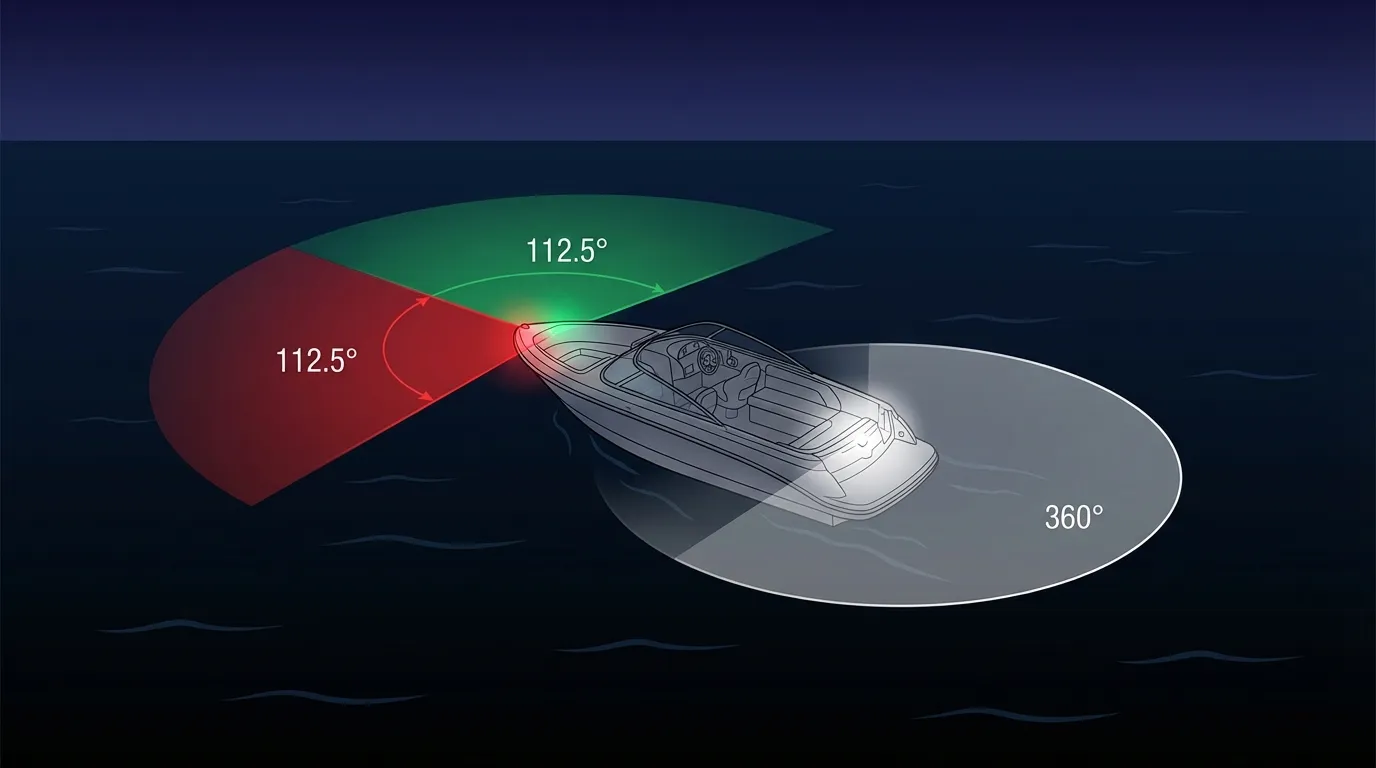
Sidelights need to cover 112.5 degrees on each side, while the masthead light must cover a wider 225-degree arc. The stern light is different again, with its own 135-degree range. These arcs should not overlap in a way that makes direction hard to understand. This becomes especially important at night in busy channels, even if everything looks fine at first glance.
Blocked lights are another common problem. T-tops, antennas, rod holders, and even raised or portable coolers can get in the way. From the helm, it may all seem clear. From another boat, those lights can disappear.
Mixing older incandescent lights with newer LEDs can also cause issues. The colors may not match, and one side might look brighter or slightly off, which can confuse other boaters.
Looking for a simple way to catch problems? One helpful method is to check the boat from different angles at night. Idle away in a dinghy or ask a friend to watch. You’ll often notice that if a light drops out or looks wrong, it needs fixing.
LED, Smart Lighting, and Future Compliance Considerations
One of the first things people usually notice is how common LED navigation lights are on newer boats. That change makes sense. LEDs last longer, use less power, and tend to keep their color better over time, which you really notice after a few seasons on the water. That’s why they’re a good upgrade, especially for older boats still running traditional lights that drain batteries faster.
Smart lighting systems are appearing more often as well. These systems can connect to GPS and adjust lighting based on movement or boat status, which can be helpful while you’re underway. Some setups also send alerts if a light fails, which is useful if you can’t always check equipment manually.
Even with these added features, compliance still matters. Each light needs proper certification, and smart options don’t replace the basic rules. There’s also an overview of advanced LED systems in the 2026 trends in boat lighting and future visibility trends for those curious about what’s coming next.
Commonly Asked Questions
Do I need navigation lights during the day?
Navigation lights are required from sunset to sunrise and anytime visibility is limited, like fog or heavy rain (it happens). In daylight, they aren’t required, but keeping them ready is smart, since conditions on the water can change fast.
Can I use any LED light as a navigation light?
Short answer: no. Navigation lights usually require marine certification. Decorative or automotive LEDs don’t meet color or visibility rules, so they’re not allowed (in most cases).
This often means voltage drop or not-so-great wiring (very common). LEDs tend to show electrical problems by turning on but still looking dim, which is probably annoying, at least, I think so.
Deck lights usually shouldn’t be on if they interfere with navigation lights (it’s pretty obvious). They can confuse boaters and hurt night vision, so at night you’ll generally leave them off.
How often should I check my boat lighting system?
Corrosion can show up earlier than you expect, so seasonal wiring checks matter. Making light checks a habit helps, why risk it? Before any night trip, take a quick look at the lights.
The Bottom Line for Safer, Smarter Night Boating
What matters most at night is being easy to see, and that’s where compliant boat lighting quietly does its job. Boat lighting compliance doesn’t have to feel stressful, even if it often does. It usually comes down to intent: using the right marine navigation lights and taking time to wire them correctly, even if that means checking twice. A helpful way to start is thinking about visibility before mounting anything. Lights should sit where they’re clearly visible. Testing them from another boat, not just the dock, often reveals problems you’d otherwise miss.
Small details matter more after dark than many expect. Most accidents and near misses begin with confusion, and clear, compliant lighting helps clear that up fast, especially late at night.
If you’re upgrading or fixing a system, try this order: test visibility from the water, check the wiring, then confirm the lights. It’s obvious when you can see your boat clearly from 100 yards away.