


Few things can ruin a day on the water faster than electrical problems, especially when they hit out of nowhere. A dead engine or a trolling motor that suddenly shuts off can stop everything, and flickering or failing electronics only pile on the stress (and yeah, it’s frustrating). A lot of the time, the marine batteries aren’t actually to blame. The wiring is. Small wiring mistakes often go unnoticed, slowly draining power, cutting battery life short, and even creating real safety concerns, which is why it gets so annoying. At first, everything seems fine. Wires are connected, switches work, but performance keeps dropping over time. Slowly. Quietly. You don’t always see it coming.
What makes this guide helpful is that it starts with the most common marine battery wiring mistakes that hurt performance and explains why they happen and what they do to your boat. It also walks through safe, straightforward fixes (nothing risky), plus marine electrical wiring basics and the right way to use marine battery switches. As setups get more complex, those details matter. No fluff. Just what counts, whether the boat is for fishing, work, or weekend trips, with a focus on keeping things reliable and time on the water stress free.
Undersized Cables and the Hidden Cost of Voltage Drop
One of the most common wiring mistakes usually comes down to battery cables that are simply too small. This shows up a lot with trolling motors and windlasses, especially on older setups. At first, everything can seem fine. Over time, though, performance often slips in ways that are tough to explain. Motors start to feel weak. Electronics reboot at random times. Batteries seem to wear out faster than expected, which is especially frustrating when you’re on the water and depending on them.
What’s happening behind the scenes is voltage drop. When cables are undersized, resistance increases, and that’s where problems start. That resistance turns usable power into heat, which is rarely a good thing in a marine system. Batteries have to work harder while equipment gets less power. As this continues, battery life gets shorter and sensitive electronics deal with extra strain. This kind of damage builds slowly, so it’s easy to miss in the beginning.
Marine standards call for insulation that can handle high heat and long cable runs. Many older boats still use cable rated for much lower temperatures, and this is more common than people think. It may look fine on the outside, but it wasn’t built for modern electrical loads, and that mismatch often leads to trouble.
<DataTable
headers={[“Wiring Factor”, “Correct Standard”, “Common Mistake”]}
rows={[“Insulation rating”, “105°C marine wire”, “60°C household or auto wire”], [“Cable size”, “Sized for load and length”, “Too small to save cost”], [“Voltage drop”, “Under 3% critical loads”, “Ignored until failure”]}
caption=“Common cable sizing issues in marine electrical wiring”
/>
Choosing the wrong wire can cause problems that stay hidden until performance drops. The fix is simple and worth doing. Use tinned marine‑grade cable rated for 105°C, size it correctly using charts that match both load and distance, and when there’s doubt, going one size up can save headaches later. For more details, see Mastering Marine Electrical Wiring: DIY Guide 2025.
Loose Connections That Steal Power from Marine Batteries and Create Heat
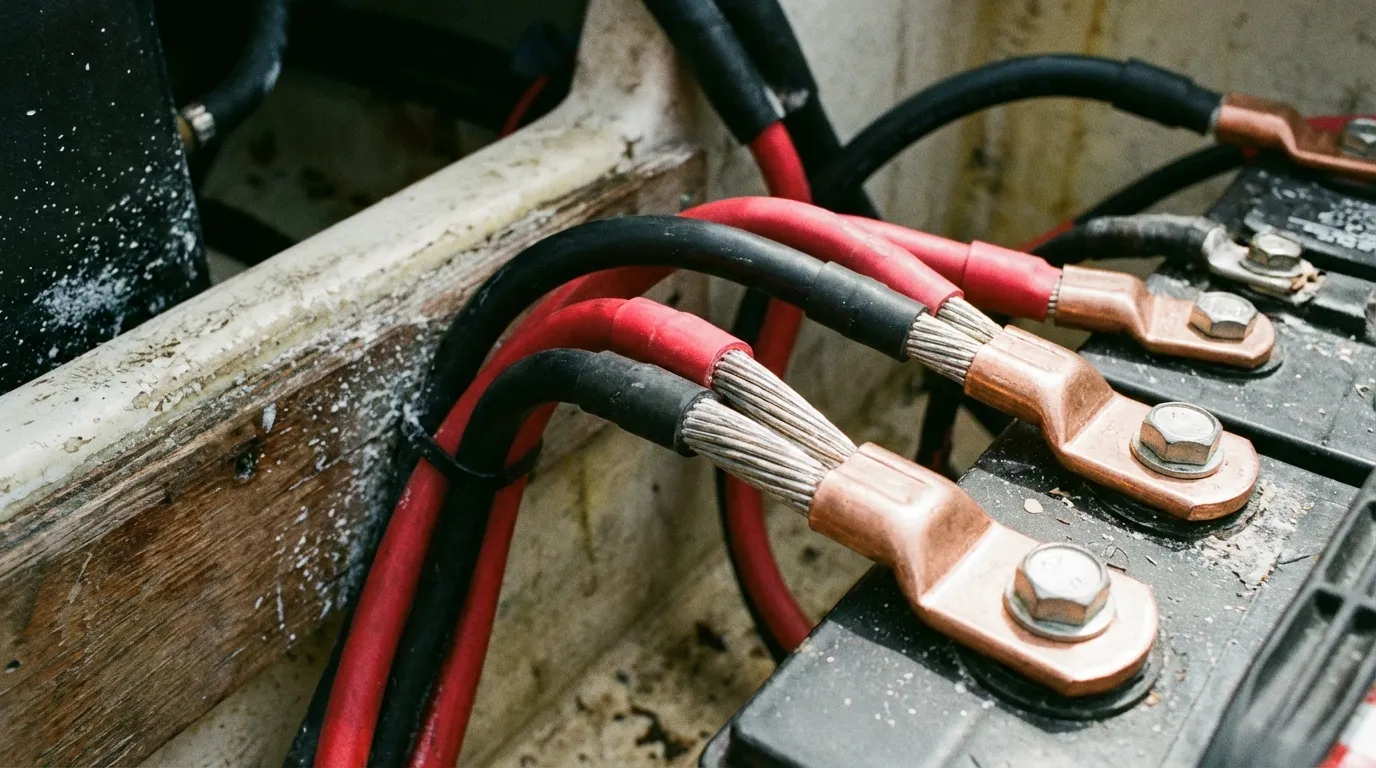
A loose or poorly secured connection is a quiet way to drain performance, and it often goes unnoticed. Even a battery terminal that’s only slightly loose adds resistance. That may not sound serious, but it often leads to voltage drop and heat buildup, especially when the system is pulling steady power. Over time, that extra heat can soften insulation or cause a complete connection failure. Big problems often come from small oversights people didn’t realize they made.
Marine electrical expert Nigel Calder has pointed out how uncommon proper terminal fastening really is, far less common than most people expect, which is honestly a bit concerning. In my experience, this is one of those issues that hides in plain sight until something suddenly stops working.
From our observations, as a marine electrical business, I can say that this number is about as close to 1% as it gets.
This comes down to whether installers actually use locking hardware on battery terminals. Many people stack washers or skip torque specs altogether, usually to save time. Those shortcuts may seem harmless at first. But once the system is under real load, like when electronics are running while batteries are charging, they often lead to power loss and, in some cases, heat that builds up quickly.
A helpful approach starts with the basics: clean contact surfaces. They matter more than most people think. Battery lugs should sit flat on the terminal, with no stainless washers in between (a detail that trips up a lot of people). Use locking nuts or Nyloc hardware, then tighten everything to the manufacturer’s torque spec, not just “hand tight.” Give each cable a firm tug. If it moves, the job isn’t finished.
For boaters doing their own work, this is a good time to step back and look at overall wiring habits. That wider view is covered in a guide on mastering marine electrical wiring, which explains safe connection methods and load-related failures in more detail.
Missing or Misplaced Fuses That Put Marine Batteries at Risk
Fuses are often misunderstood. Some boat owners think fuses are there to protect equipment, but that’s usually not their main job. Their real purpose is to protect the wires, and that detail often gets missed. When fuses are missing or installed the wrong way, a short circuit can heat a cable very fast. That heat is a common cause of onboard fires, more often than many people expect, and it’s a serious safety risk.
Marine engineers tend to see the same wiring problems again and again across different systems. It’s often the same mistakes showing up on different boats, and the results are usually similar. When these issues aren’t found early, they can slowly cause major damage without much warning.
Blue Sea Systems’ engineering department has identified 10 conditions that, when present in your boat’s electrical system, can cause serious problems.
One of the most common problems is a missing main fuse, or a fuse that’s the wrong size. On most circuits, the main fuse should be within seven inches of the battery, close to where power starts. The fuse rating needs to match the wire size, not just the device, which is easy to overlook.
Many issues blamed on marine batteries are actually caused by overloaded circuits with no protection. When voltage drops under load, electronics may reset and motors can slow down or lose speed, something many owners recognize. In most cases, the fix comes down to correct fuse sizing and placement, using marine-rated fuse blocks, ignition-protected parts, and avoiding automotive components.
Marine Battery Switches Wired the Wrong Way
Marine battery switches can cause bigger headaches than people expect when they’re wired the wrong way. In many cases, the trouble starts quietly. Too many loads get pushed through a single switch, or the BOTH setting gets used at the wrong time. Over time, that puts too much strain on the switch contacts. Early on, it may just look like uneven battery drain that’s easy to ignore. Later, it can lead to failures that show up at the worst possible moment.
And what about electronics acting strangely with no clear cause? Often, the real issue isn’t the display or control unit at all. When sensitive electronics aren’t kept separate, switching between batteries can cause short voltage drops. That’s why flickering screens or random resets happen so often. It’s frustrating and confusing, especially when a quick check shows nothing obviously wrong.
Current best practice treats battery switches as part of the whole electrical system. That usually means spreading loads more carefully, using automatic charging relays, and adding clear labels so small mistakes don’t add up later. If the wiring still feels confusing, there’s a detailed article on marine battery switches and wiring safety that explains safer layouts and practical upgrade options.
Lithium Batteries Raise the Stakes for Wiring Quality
Lithium marine batteries are appearing on more boats, mostly because the benefits make sense on the water. They weigh less, recharge fast, handle deeper discharge, and usually provide more usable capacity, helpful on longer trips when power really counts. The upside is easy to see, but there’s a tradeoff that often catches people by surprise.
When wiring isn’t done right, lithium systems tend to respond quickly. The U.S. Coast Guard has pointed to concerns around failures, and these problems usually show up right away instead of months later, which can leave owners unprepared.
Lithium-ion batteries pose a unique and evolving threat when things go wrong.
At the center of this are the battery management systems. With lithium setups, poor crimps or undersized cables often cause shutdowns, and switch layouts that weren’t made for lithium add risk. There’s very little room for mistakes. In extreme cases, extra heat can turn into a real safety issue.
Thinking about upgrading? A smart place to begin is the wiring. Cable size, fuse ratings, and lithium‑ready switches all matter. From my experience, problems blamed on batteries often come back to installation errors, doing the rewiring correctly is what really makes the difference.
Corrosion and Environmental Damage That Go Unnoticed
Salt air and moisture are quiet enemies of marine electrical wiring, especially on boats kept near the coast. Add constant vibration, and wear speeds up over time. Corrosion usually starts slowly, and performance often drops before a clear failure shows up. It’s slow and sneaky, in my view. Early signs are fairly clear: green copper, white powdery residue, and insulation that feels stiff instead of flexible often mean trouble is already starting.
Grease alone is a common go‑to for protection, but it often doesn’t do enough (I think many boaters rely on it too much). While it helps, marine‑grade corrosion inhibitors do a better job of sealing out moisture while still allowing solid electrical contact. Adhesive‑lined heat shrink adds another layer that tends to hold up better when conditions get rough.
Routine inspection makes the biggest difference. You usually notice more by opening battery compartments and really looking, rather than giving a quick glance. Check the terminals first, then the cable ends, where problems often hide. Catching corrosion early can reduce voltage drop and often extends battery life. Marine Batteries Care: Best Practices for 2025 covers this in more detail.
Commonly Asked Questions
Undersized wiring often shows up as poor motor performance, with electronics that reset when the load hits, which is frustrating. Battery cables can feel warm as well. These clues help, but I think the clearest check is running a voltage drop test under load during acceleration.
Can I use automotive wire on my boat?
No. Automotive wire isn’t made for marine heat or corrosion, so it tends to fail quickly. I usually suggest tinned, marine‑grade wire rated to 105°C for boats to prevent problems later.
In most setups, it makes sense to put the main fuse within seven inches of the battery connection for safety. This helps keep the whole cable run protected from short circuits in most cases.
Is the BOTH setting on a battery switch bad?
It’s usually fine, probably, but not in every setup. How it’s used, and the wiring behind it, often matter more. If left on BOTH for long periods, batteries can drain unevenly, and the wiring may face extra strain, especially in systems not built for that.
Do lithium marine batteries require different wiring?
Yes. Lithium systems usually need exact cable sizes, proper fusing, and matching switches, they’re picky. Wiring mistakes often cause problems, while lead-acid setups are more forgiving and handle errors better.
The Bottom Line for Reliable Power on the Water
The frustrating thing about marine battery problems is that they often come from wiring issues hiding in plain sight. Cables that are too small, loose connections, missing fuses, and poorly wired battery switches slowly drain performance over time. As the months pass, these problems can shorten battery life and increase safety risks, usually without obvious warning signs, which makes them especially annoying. The good news, in my view, is that most of these issues can be fixed without guessing.
Instead of rushing, a helpful approach is to slow down and go back to the basics. Many times, using the correct wire size and tightening every connection from start to finish makes a bigger difference than you might expect. Does each circuit have the right protection for the battery type? When systems are upgraded or new loads are added, it’s worth tracing the full electrical path, from the battery to the switch, fuse, and device, since that’s often where problems are hiding.
Solid wiring usually means fewer surprises, more stable electronics, and longer battery life, like when a new accessory works smoothly the first time you pull away from the dock.
