


The market for boat engine parts is heading into 2026 with real momentum. That matters now for anyone who owns, runs, repairs or relies on a boat, as new forecasts point to growth in both the marine engines market and the outboard engines segment.
Recreational boaters, fishing hobbyists, marina operators and commercial crews are all seeing the change, because more engines on the water can mean stronger demand for filters, ignition parts, water pumps, propellers, gaskets, lubricants and cooling system parts.
Recent forecasts place the outboard engine market in the roughly USD 9.79 billion to USD 11.71 billion range for 2026, depending on how the market is defined. Meanwhile, analysts project the broader marine engines market at USD 14.24 billion in 2026. Fleet upgrades, fuel-efficiency demands, emissions rules and steady boating activity are all helping push that growth. Buyers are left with a simple question: which parts will be easier to find, which ones may cost more, and which systems need a closer look before peak season begins?
Why 2026 Looks Bigger for Boat Engine Parts
The clearest reason is simple: demand. As more outboard engines are sold, more service work comes with them. Every engine needs regular replacement parts, and every repower job creates new demand for matching controls, fuel components, electrical connections, seals and rigging items.
Several firms are pointing in the same direction. Future Market Insights projects the marine outboard engines market at USD 11.71 billion in 2026, up from USD 11.10 billion in 2025, with long-term growth to USD 20.00 billion by 2036. Mordor Intelligence estimates the outboard motor market at USD 9.79 billion in 2026, rising from USD 9.32 billion in 2025. MarketsandMarkets puts the wider marine engines market at USD 14.24 billion in 2026, after USD 13.97 billion in 2025. Different sources, same basic signal.
| Market Segment | 2026 Value | Growth Signal |
|---|---|---|
| Marine outboard engines | USD 11.71 billion | Strong long-term expansion |
| Outboard motor market | USD 9.79 billion | Aftermarket and repower demand |
| Global marine engines market | USD 14.24 billion | Broader propulsion investment |
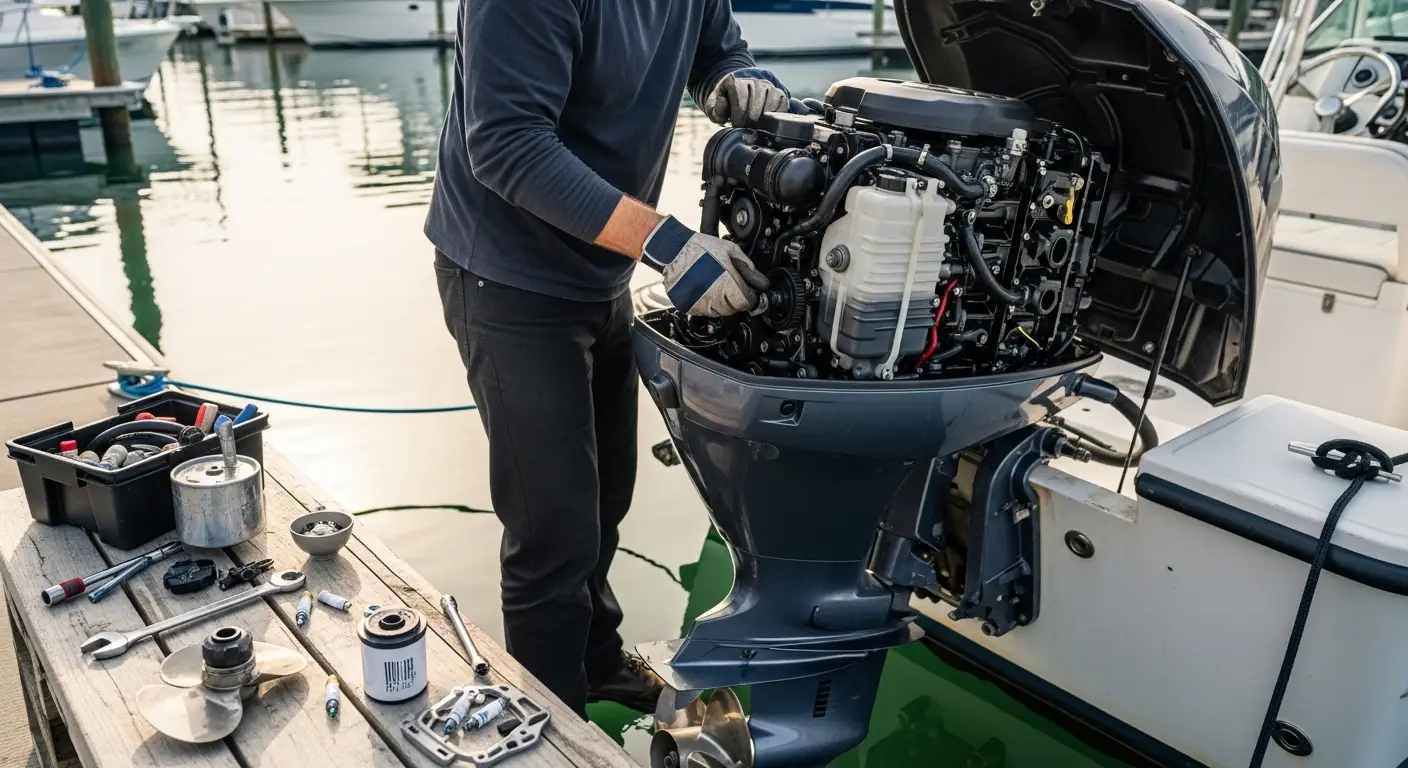
More owners will be shopping for service kits, fuel system parts, impellers, thermostats, spark plugs, trim components and replacement prop hardware. Some buyers may also need to plan for common wear items ahead of time instead of waiting for a breakdown in the middle of the season. It’s a real shift.
The Parts Categories Most Likely to Grow
Not all boat engine parts will move at the same speed in 2026. Some are likely to grow faster, especially the ones linked to routine service, repower jobs, and higher-output four-stroke outboards.
First are maintenance basics. Oil filters, fuel filters, spark plugs, water pump kits, thermostats, belts where they apply, and lower-unit service supplies all fit here. These are the parts owners keep buying, and demand goes up when more boats stay in use through longer seasons.
Next are fuel and ignition system parts. Market analysts point to fuel efficiency and emissions compliance as key drivers of growth in the marine engines market. That points to stronger demand for cleaner-running fuel system components, sensors, injectors, hoses, primer bulbs, and ignition parts that help modern engines run well.
Then there are cooling system parts. As outboard engines get larger and operating loads increase, cooling reliability matters more. Water pump impellers, housings, thermostats, and gaskets may not look like much, but they can lead to serious failures when owners put them off.
Then repower-related parts stand out. Mordor Intelligence specifically includes after-market and re-power channels in its market structure, which suggests boat owners are both maintaining older rigs and upgrading them. Repower jobs often need steering components, mounting hardware, control cables, electrical connectors, and fresh rigging parts.
Anyone who wants to see how one small failure can turn into a much bigger repair can continue with Engine Gaskets on Boat Motors: How to Identify Leaks, Choose Replacements, and Prevent Repeat Failures.
Outboard Engines Are Driving the Story
Outboard engines are a big reason the marine engine parts business keeps growing. They stay popular for good reason. Boaters know them, can service them without too much trouble and rely on them for fishing boats, family runabouts, work skiffs and guide boats.
Future Market Insights says high-power outboards hold a 55.3% power share, while four-stroke models account for a 51.7% share and electric-start systems hold 53.4% share. That points to a market moving toward newer, easier-to-use engines with stronger demand overall. For people buying parts, that shift matters. High-power four-stroke engines can depend on more advanced fuel, cooling and electrical systems than older setups did.
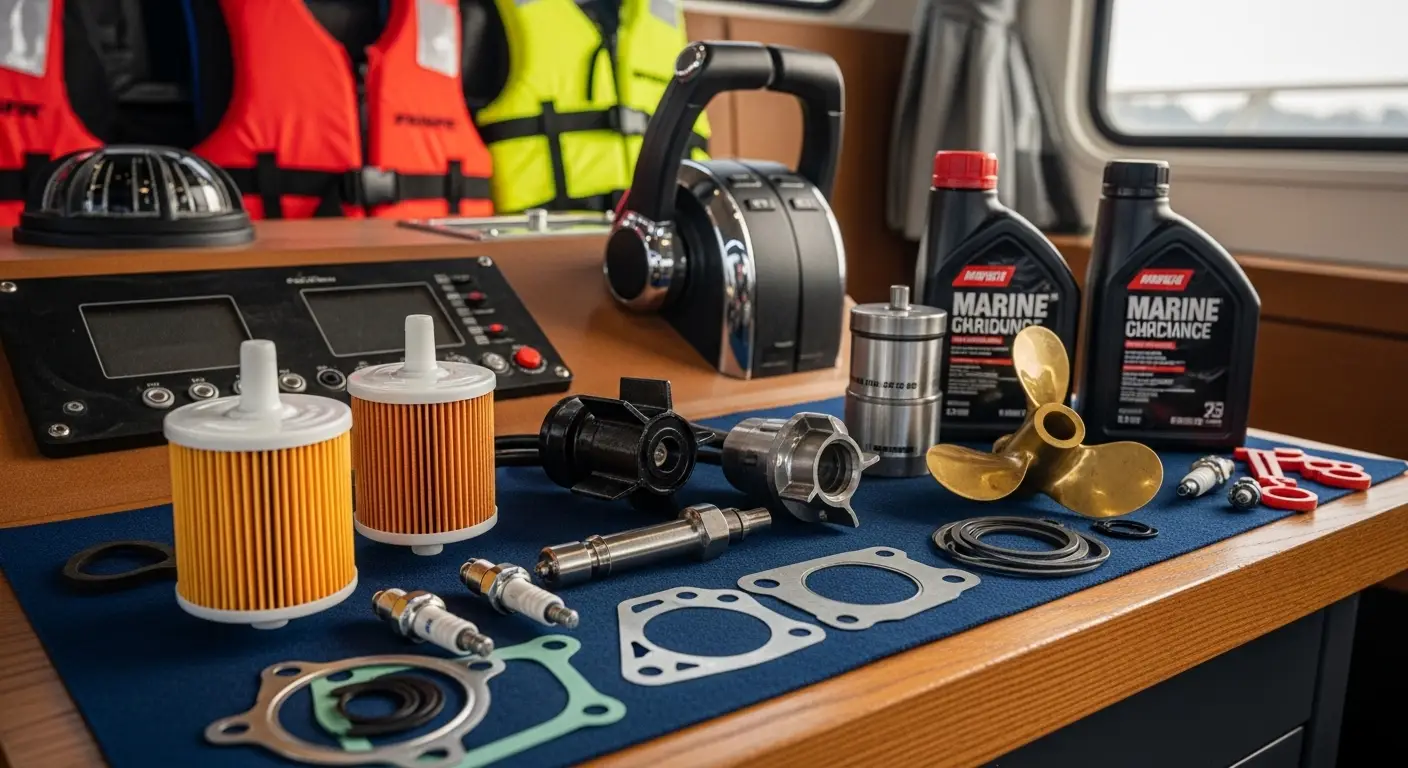
That change also affects what boat owners should keep onboard. Not just the basics. Instead of thinking only about spark plugs and a prop pin, 2026 owners should think in systems and put together a spare-parts list with wider coverage. A solid list may include fuel filters, fuses, water pump kits, an extra propeller, engine oil, gear lube, drain plug washers, hose clamps and electrical connectors. Commercial users may need even more, including backup sensors, trim relays and service seals.
A lot of buyers shop by engine brand alone and miss the exact model, shaft length, horsepower or year range. It’s an easy mistake. Some also wait until the engine starts throwing trouble codes or running hot before they do anything. If you need help spotting early warning signs, see Engine Diagnostics for Boats: Interpret Fault Codes Easily before a small problem turns into a lost weekend on the water.
What Market Growth Means for Prices, Supply, and Repairs
A growing market is good news, but it doesn’t mean every part gets cheaper or easier to find. At times, growth brings opportunity and pressure at the same time. More engines in service can improve overall parts availability. It can also put more strain on stock for fast-moving items during spring launch season and the busy summer fishing peaks.
Technavio projects the marine outboard engines market will grow by USD 3.9142 billion from 2026 to 2030, with a 5.9% CAGR. Global Market Insights also expects the outboard engine market to reach USD 10.5 billion in 2026, driven by marine tourism, recreational boating and fishing activity. Those are healthy trends. They also point to a busier service environment.
For boat owners, the practical impact shows up in three areas:
1. Routine parts may move faster
Impellers, filters, plugs, anodes, seals and prop hardware will likely stay in demand, so it helps to buy them before the season starts and maybe save some time.
2. Repower projects may need more planning
Repowering can affect more than the engine. Controls, wiring, batteries, gauges, and mounting systems may all need upgrades. It takes more planning.
3. Preventive maintenance becomes more valuable
When labor rates climb or marina schedules get packed, simple preventive care matters even more. Small fixes can make a real difference. A low-cost thermostat or gasket can help avoid a much more expensive engine problem later on.
For the same reason, many DIY boat owners are also watching maintenance timing, fluid checks, and storage prep more closely. That helps keep demand steady for engine flush products, corrosion protection, and fuel stabilizers, especially in saltwater use.
The Commercial and Recreational Split Matters
One of the biggest 2026 trends is how the parts market is being shaped by leisure boats and work boats at the same time. Recreational use drives volume for many common outboard engines, while commercial operations bring heavier wear and much faster replacement cycles. Those are two very different pressures.
MarketsandMarkets says seaborne trade growth, fleet modernization, demand for fuel-efficient propulsion and environmental regulation are all pushing the marine engines market. That broader picture matters because commercial operators care most about uptime, service intervals and compliance. Recreational owners focus more on easy starting, quiet performance, fuel savings and avoiding surprise repair bills.
A lot of boat engine parts categories do well where those two groups overlap. Water pumps, filters, electrical parts, controls and cooling components all matter to both sides. That is no surprise. Suppliers that stay focused on practical maintenance and replacement parts should keep their relevance even as engine technology changes.
For smaller boats, electrical reliability is becoming part of engine reliability too. When the motor, electronics, pumps and charging setup all depend on the same system, failures can spread quickly across the boat. One problem can set off another. [this guide to Marine Electrical Systems 2026: Adopting Next-Gen Power Innovations for Small Boats] adds useful context.
How Smart Buyers Can Prepare for 2026
Trying to guess which single part will matter most usually isn’t the best move. Smart buyers make a simple plan around engine type, how the boat gets used, and how long the season lasts. Start with the engine manual. Write down every wear item due over the next 12 months, then match that list to real use: weekend fishing, guide work, family cruising, or commercial use.
If the boat gets trailered a lot or runs in shallow water, pay closer attention to propeller hardware and lower-unit parts. Long, slow fishing days put more strain on fuel filters and cooling components, so it helps to keep those on hand. Saltwater changes things fast. It increases the need for corrosion prevention and flush routines. Older engines can change the math too, and sometimes budgeting now for repower-related boat engine parts makes more sense than paying for emergency labor later.
For many owners in 2026, a practical buying list includes service kits, spare plugs, a fuel-water separator, an impeller kit, engine oil, gear lube, gaskets, hose clamps, electrical fuses, and at least one emergency prop solution. Having one place to shop helps. Trusted marine parts retailers, including First Choice Marine, fit naturally into that shift. Owners increasingly want one place where they can compare routine maintenance items with upgrade parts and care supplies before the season starts.
Frequently Asked Questions
Which boat engine parts are most likely to be in high demand in 2026?
The biggest demand will likely center on maintenance and wear items. That includes fuel filters, spark plugs, impellers, thermostats, gaskets, propeller hardware, lubricants, and common electrical parts. Repower-related rigging and control parts should also stay busy as more owners upgrade older outboard engines.
Will outboard engines continue to dominate the small-boat market?
Yes, current market forecasts suggest outboard engines will remain a major force in 2026. Growth in recreational boating, fishing, and high-power outboard demand supports that trend. For many small and mid-size boats, outboards still offer a strong mix of service access, performance, and broad parts support.
Should I buy spare boat engine parts before the boating season starts?
In most cases, yes. It is smart to buy fast-moving service items early, especially if you depend on your boat during spring and summer. Having basic spares on board or in the garage can reduce downtime and make routine maintenance much easier.
How do I know whether to repair an older engine or plan for repower?
Look at parts availability, compression, starting behavior, fuel use, and repair history. If you are facing repeat failures or several linked repairs at once, a repower plan may make more sense. A parts supplier like First Choice Marine can be useful for comparing the cost of routine maintenance items against the broader list of parts an aging setup may need.
Are four-stroke engines changing the boat engine parts market?
Yes. As four-stroke engines continue to lead more of the market, demand rises for the parts that support cleaner, more efficient operation. That includes fuel system parts, oil-service items, sensors, cooling components, and electrical parts matched to modern engine systems.
What is the easiest way to shop for the right boat engine parts online?
Start with the exact engine details: brand, model, horsepower, serial range, and year if available. Then shop by system, such as fuel, ignition, cooling, or lower unit, instead of buying random parts one by one. Many boat owners use stores such as First Choice Marine because it is easier to build a full maintenance order when products are grouped by boating use and engine care needs.
Getting Ahead of the 2026 Parts Rush
The biggest takeaway for 2026 is simple: the marine engines market is growing, and that changes how boat owners should handle maintenance, repairs, and when they buy parts. When the outboard engine market gets stronger, demand rises for the boat engine parts that keep those motors dependable. The regular stuff: everyday service items, repower hardware, fuel-system parts, and cooling components people may overlook until something finally fails.
Recreational owners need to plan before the season starts instead of scrambling halfway through it. For commercial operators, protecting uptime means keeping parts on hand and sticking to better maintenance habits even when things seem fine. DIY boaters need to understand their engine by system, not just by brand name. Owners who’ll do best in 2026 are the ones who buy smart, inspect early, and treat preventive care as part of every trip. In a growing market, preparation may end up being the cheapest repair decision an owner can make.
