


Keeping a boat clean is about more than looks. A shiny deck is great, but regular cleaning usually protects the boat and often helps it run better. That can make time on the water feel easier and more relaxed. That’s why many owners start looking for the right boat cleaning tools and quickly feel stuck. With brushes, poles, soaps, vacuums, and pads all over the place, costs add up fast, and it’s easy to overthink things. Before you even start, the process can already feel confusing.
This guide aims to clear that up. It looks at which marine cleaning tools usually work best for the hull and deck, and what makes sense for the interior too. It shows that using the right tools often matters more than scrubbing harder. The wrong brush or pad can scratch gelcoat, damage non-skid, or wear out upholstery sooner than expected. Better tools usually just make the job easier.
The guide walks step by step through hull brushes and deck tools, then turns to practical interior cleaning for weekly basics. It also covers eco-friendly options, storage ideas, and long-term maintenance tools that can save time and money. From fishing boats to pontoons and work vessels, the goal is a clear, usable approach that stays simple, effective, and realistic.
Understanding Why the Right Boat Cleaning Tools Matter
The impact of using proper boat cleaning tools goes far beyond how a boat looks. Hull lifespan and resale value are closely tied to upkeep, something many owners don’t think about at first. Recent market data shows about 70% of boat owners now prioritize regular cleaning, which feels like a clear change from past habits. With repair costs rising and environmental rules getting stricter, skipping routine care often ends up costing more than it used to. Fiberglass hulls make up roughly 38% of global boat repair jobs, and much of that damage usually comes from surface wear caused by poor cleaning habits over time. Small choices add up, especially for owners who clean their boats often.
| Maintenance Area | Common Mistake | Long-Term Impact |
|---|---|---|
| Hull | Using stiff household brushes | Gelcoat scratches and fouling buildup |
| Deck | Harsh chemicals on non-skid | Loss of grip and faded surfaces |
| Interior | All-purpose cleaners | Cracked vinyl and fabric damage |
Marine maintenance tools are made to handle constant moisture and weather exposure. Soft-bristle hull brushes protect gelcoat while still removing algae and buildup that stiff brushes can grind into the surface, a detail many people miss. Deck and interior tools are shaped for specific materials, letting them clean non-skid patterns without wearing them down. Mold resistance matters too, since better tools resist mildew instead of spreading it around the cabin.
Industry analysts report a 30% year-over-year rise in eco-friendly marine cleaners. This change usually comes from marina rules and growing awareness around runoff and material safety.
Hull Cleaning Brushes and Bottom Care Basics
The hull takes a lot of wear over time. Sun, salt, algae, and mineral buildup don’t take long to stick, especially if a boat sits unused for a while. That’s where hull cleaning brushes come in. They’re a regular part of bottom care, and picking the right one matters more than many people expect. In my view, the key is matching brush softness to the hull material, not grabbing the stiffest brush just because it looks tough.
Fiberglass hulls usually work best with soft or medium bristles. These remove slime and light growth without damaging the gelcoat, which helps the hull last longer. Stiffer brushes can feel faster, but they often leave tiny scratches. Those scratches give algae more spots to grab onto later, leading to more cleaning over time. Aluminum hulls are generally tougher and can handle firmer bristles, but marine-rated brushes are still the safer choice. It’s usually worth the small extra cost.
One thing that makes cleaning much easier is a telescoping handle. It helps you reach below the waterline from the dock and also works well for higher areas when the boat is on a trailer. Pair the brush with a pH-neutral hull cleaner made for marine surfaces. This protects the finish and helps the brush work better, which your arms will notice.
Some common mistakes keep coming up. Scrubbing a dry hull causes extra wear, and household cleaners can strip protective coatings. Always wet the surface first and rinse often. For heavy fouling, regular bottom cleaning or protective coatings can help. Ceramic hull coatings, for example, can cut cleaning time by up to 50% and reduce fuel drag.
A cleaner hull also helps engine health. Less drag means less strain on the motor, which ties into long-term engine care covered in guides like Marine Batteries: Essential Maintenance Guide 2025.

Boat Deck Cleaning Tools That Protect Non-Skid Surfaces
Boat decks are a bit of a balancing act. They need to look clean, but more than anything, they need to stay safe to walk on at all times, something most boaters figure out sooner or later. Tools made for deck cleaning are designed to reach into non-skid patterns and pull out dirt without grinding those textures down. That balance usually matters more than speed, at least in my view. It can feel slow, but it’s the kind of work that pays off over time.
The key tool here is a deck brush made for non-skid surfaces. These brushes usually have flagged bristles that bend into the grooves instead of dragging across the tops, a small detail that often makes a clear difference. If the brush is too stiff or the pressure washer is turned up too high, coatings can peel and water can get pushed into seams and fittings, which often leads to problems later instead of fixing them.
A practical method is mixing marine deck cleaner exactly as directed in a bucket and cleaning in small sections. The cleaner works better when it doesn’t dry too quickly. Scrub gently and rinse often. Near cleats and rails, handheld scrub pads offer better control, while microfiber pads work well on smooth deck areas and gelcoat trim where a lighter touch helps. Slow and steady usually wins.
After the deck is clean, it’s easier to spot loose hardware or early signs of corrosion. Many boaters notice issues they might have missed before, which fits well with Marine Electrical System Maintenance: Complete Boater Guide, especially when you see a damp fitting or an exposed run near a rail base.
Boat Interior Cleaning Guide for Cabins, Seats and Storage Areas
Mold can spread quickly inside boats, especially around lockers and the bilge, so interior cleaning often matters more than people expect. Storage areas need extra care because tight corners, hinges, and seams tend to trap dirt and moisture. Small brushes help reach those spots, and letting everything dry fully afterward usually cuts down on mold problems.
Comfort still drives most interior cleaning, since cabins and seating areas are where time is actually spent. This guide focuses on gentle tools and smart moisture control, nothing complicated, just methods that work. Pulling out loose dirt first with a marine-rated wet and dry vacuum makes a clear difference. These vacuums handle damp spaces much better than household models, which often struggle in those conditions. Simple tools can make cleaning easier, and the results show fast.
Vinyl seats respond best to soft upholstery brushes and vinyl-safe cleaners. It’s easy to grab whatever cleaner is nearby, but alcohol or ammonia-based products can dry vinyl and lead to cracks over time. Fabric interiors benefit from similar brushes and mildew-resistant cleaners, and taking your time here usually pays off later.
Interior cleaning also ties into safety. Dirt and moisture can work their way into battery compartments and wiring channels if left alone. Cleaning is a good time to do quick system checks, which connects well with Boating Safety Equipment Guide: What Every Boater Should Know, especially while lockers are open and drying.
Advanced Marine Cleaning Equipment and Eco-Friendly Trends
Marine cleaning equipment keeps getting better each year, and many boat owners notice the change right away. Eco-friendly tools and products are now a main focus, which often matches tighter marina rules. Since many locations restrict harsh chemicals, owners usually switch to biodegradable soaps and reusable microfiber systems that can be washed and used again. In day-to-day use, this change often makes regular cleaning easier, not harder.
Low-pressure washers with adjustable tips are slowly replacing older high-pressure units in many setups. They still rinse surfaces well but usually avoid pushing water into seals, where damage often begins. Foam applicators are also becoming more common. They spread cleaner more evenly, cut down on wasted product, and help reduce runoff. These are small changes, but over time they add up.
On the commercial side, robotic hull cleaners are starting to appear alongside diver-assisted systems. These tools are still specialized for now, but they point to where the industry is going. Cleaner hulls often lead to lower fuel use and fewer dry-dock visits during the season.
For more eco-friendly methods, check out Marine Cleaning Products That Work: Eco-Friendly Guide, which expands on sustainable cleaning options and tool care.
Putting the Right Tools Together for a Simple Cleaning Routine
The most useful part is often the routine, not the products. A quick rinse after every trip helps keep salt and grime from settling. Add a light scrub once a week during the season (often on the same day so it’s easy to remember), and plan a deeper clean monthly or before long-term storage. This steady habit can lower repair costs and keep onboard systems running with less strain. Worth it, I think, especially when it stays short and manageable.
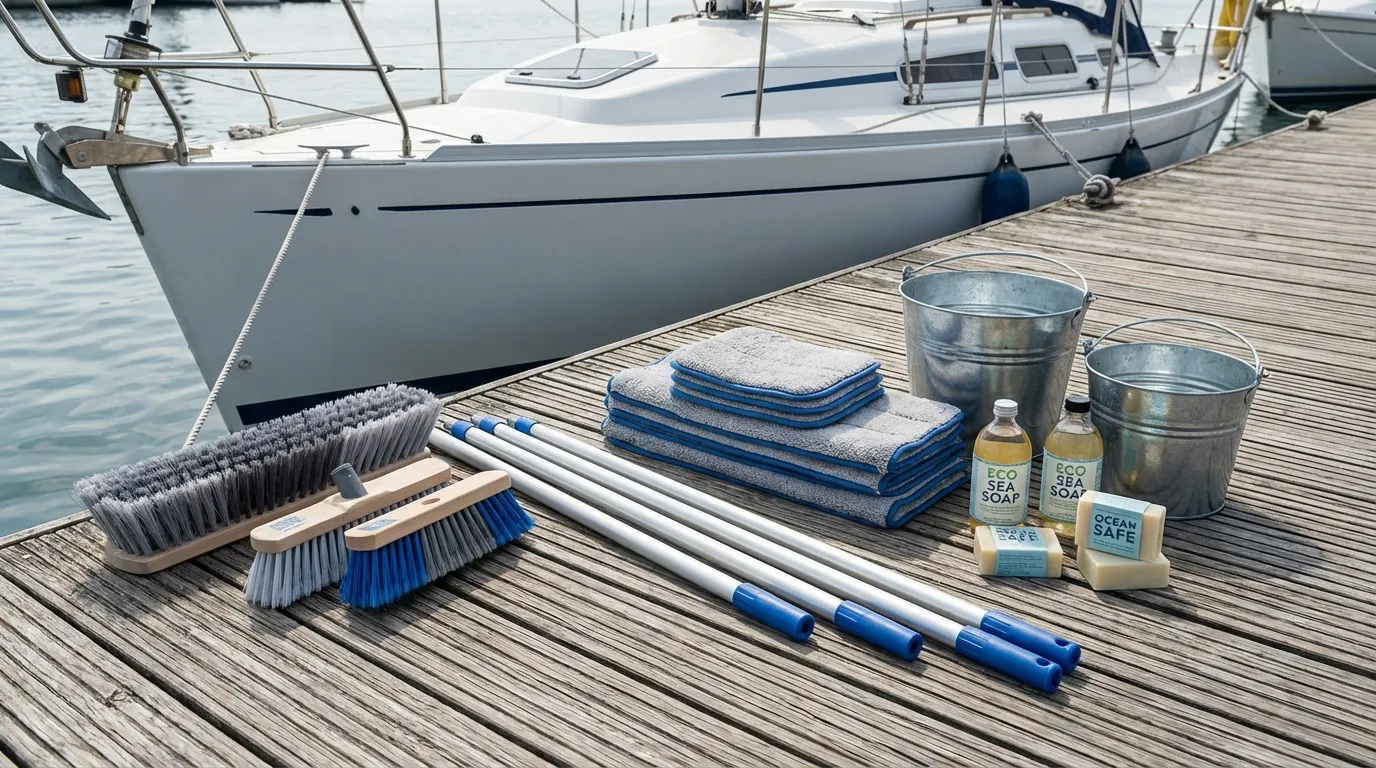
You don’t need dozens of products (seriously, you won’t use them). A smart setup covers the basics: a soft hull brush, a telescoping pole, a non-skid deck brush, microfiber pads, a marine vacuum, and surface-safe cleaners made for boats. Store tools dry and rinse them after each use so they last longer. Simple care means fewer replacements.
If you want help picking products that fit your boat type, retailers like First Choice Marine are often more reliable for marine-specific options made for real boating conditions, so you’re not guessing when matching cleaners to deck surfaces.
Common Questions People Ask
You’ll usually want a soft‑bristle hull brush for routine cleaning.
For grippy areas, a non‑skid deck brush works well.
A telescoping handle helps you reach farther.
Microfiber pads are handy for quick wipe‑downs.
And a marine‑rated vacuum handles the mess.
Most recreational boats do well with light hull cleaning every one to two weeks during the season (that’s enough). This usually keeps things tidy without much work. Boats kept in saltwater or warmer climates often need cleaning more often, so growth stays under control.
Can I use household cleaners on my boat?
Household cleaners aren’t recommended, it’s not a great idea (I think). Over time, they can strip wax, damage vinyl, and some formulas are hard on waterways. That’s why marine cleaners are made for boat materials and water use.
Usually, the safest way is using a non-skid deck brush with light pressure and a marine deck cleaner. In my experience, stiff brushes and high-pressure washers slowly wear down the texture. Why rush, take it easy, no blasting.
Are eco-friendly marine cleaning tools effective?
Yes, they work well; biodegradable cleaners and microfiber tools usually perform like traditional products, often cutting chemical runoff over time (you’ll see) while being gentler on surfaces.
Keeping Your Boat Clean and Ready to Go
A clean boat usually lasts longer, and you notice that fast during regular use. Boats that stay clean often run smoother and feel better to be on. Using the right boat cleaning tools and sticking to a simple routine helps protect the hull and deck, without wasting time or money you’d rather keep.
Marine-rated equipment often makes the difference. Cleaning gently but on a regular basis usually works better than doing a deep scrub once in a while. As you clean, you’ll spot small signs of wear that are easy to miss, and catching them early can help avoid bigger repairs later.
Whether for work or fun, a clean boat feels safer and easier to enjoy. Start with the basics, then upgrade tools when it makes sense, so you’re always ready for a good day on the water.
