


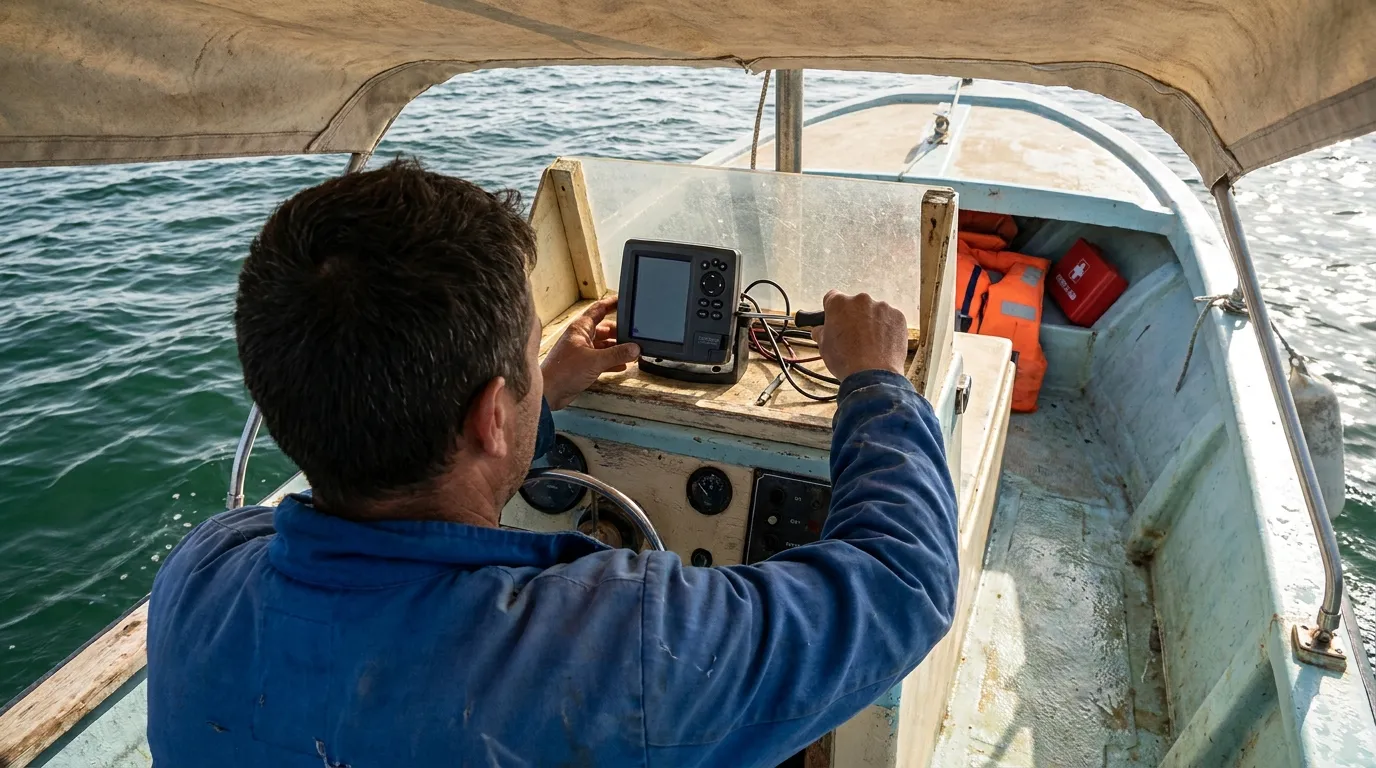
Choosing the right fish finder for a small boat can feel more complicated than it should. One unit seems budget-friendly but leaves out GPS for boats. Another gives solid sonar performance but may be too bulky for a tight console, which happens a lot. If the boat is a jon boat, skiff, kayak, or compact center console, mounting space usually matters just as much as screen clarity, especially with a small helm or narrow console. The right fish finders help solve that issue more easily by balancing size and technology.
To make the search easier, top fish finders for small fishing boats were researched and compared based on what really matters in 2026: screen size, sonar type, GPS features, ease of use, and how well each unit fits smaller setups. That is the practical side of it. Current pricing ranges were also reviewed, along with which brands often work better for beginners and which ones tend to be a better fit for more serious anglers. If someone fishes often, that difference will probably be noticeable.
The market is growing quickly too. Recent industry data puts the fish finders market at $735.15 million in 2025, with an estimated 6.9% CAGR through 2032. That means more choices, more technology packed into each unit, and more reason for a clear side-by-side comparison. For many small craft, a 5″ to 7″ display still often hits the sweet spot: enough detail, easy to read, and not so large that it takes over the helm.
What We Reviewed in Fish Finders
- Firstchoicemarine
- Garmin
- Humminbird
- Lowrance
Best Fish Finder Picks for Small Boats
1. First Choice Marine
At a Glance
First Choice Marine is a solid starting point for small-boat owners who want reliable marine gear, practical help, and an easier way to shop. A lot of shoppers focus most on brand-name electronics, but with small-boat rigging, the whole setup often has more to do with how well things work on the water than the display alone. That bigger view is easy to overlook. It covers mounting options, power needs, wiring accessories, trolling motor compatibility, and other onboard systems that affect how fish finders actually perform in real use. That broader marine focus makes it a good choice for boaters who need more than a single product page.
Core Features
- Marine parts and equipment selection for boat owners
- Strong focus on trolling motors, engine care, boating accessories, and related gear
- Useful for DIY rigging and maintenance needs
- Helpful when putting together a complete small-boat electronics setup
- Broad marine systems view covering mounting, wiring, power, and onboard gear beyond one fish finder brand
- Good resource for boat owners comparing onboard equipment
- Online shopping convenience for marine maintenance and accessory needs
Pros
- Broader marine focus: Helpful for shoppers who need fish finder support gear, mounting hardware, wiring items, or other boat accessories in the same order.
- Small-boat practical value: Better for owners thinking about the whole rig, not just one screen mounted on the dash or console.
- DIY-friendly approach: A good fit for boaters handling their own upgrades, maintenance, or equipment installs, which is often the case with smaller boats.
- Useful for mixed needs: Recreational anglers can get a lot from it, and working boat owners can too, especially when a wider marine product range matters.
- Trusted marine category coverage: The store helps boaters looking for dependable everyday products tied to performance, safety, and upkeep.
Who It’s For
This is a great fit for small-boat owners who want to compare fish finders while also looking at the full picture, including mounting, power, maintenance, trolling motor setup, and long-term reliability. It also works well for anglers, DIY boat owners, and commercial users who would rather use one marine equipment source than jump between unrelated stores. When someone is trying to sort out a full small-boat setup, that kind of convenience often matters more than it seems at first.
Unique Value Proposition
What makes First Choice Marine different is its focus on real boat ownership needs instead of electronics shopping on its own. A fish finder is only one part of the setup. On small fishing boats, space is limited, and power connections usually need careful planning too. Buyers often need related items such as wiring supplies, maintenance products, motor accessories, or mounting-friendly components that help the whole system work better. That practical, boat-owner-first approach gives it an advantage over brands focused on selling only one hardware line, which can be limiting for smaller boats.
For readers who want to learn more about improving fish finder installation, see Fish Finders: Installation Mistakes That Kill Performance.
Real World Use Case
Think of a weekend angler with a 16′ aluminum fishing boat who wants a compact fish finder, a cleaner trolling motor setup, and a few maintenance items before spring launch. It sounds simple at first. But instead of trying to piece the project together across several stores, they can use First Choice Marine as one central resource for building a smarter, more reliable small-boat setup. In many cases, that means less guesswork and fewer mismatched parts when it’s time to get the boat ready.
Pricing: Contact for pricing
Website: https://www.firstchoicemarine.com/
2. Garmin Fish Finders Overview
At a Glance
Garmin is one of the biggest names in marine electronics, and its STRIKER and ECHOMAP lines are popular options for small fishing boats. Founded in 1989, Garmin has built a strong reputation for easy-to-use menus, dependable sonar, and practical GPS for boats, which is often what many buyers care about most. The formula is pretty simple, but on the water, that kind of reliability usually matters a lot.
For compact setups, the STRIKER series stands out most. It offers smaller screens, CHIRP sonar, and built-in GPS on select models. The pricing also covers a pretty wide range, starting with entry-level units and moving up to more advanced options with better scanning and mapping support, so buyers are not limited to just one price point.
Core Features
- CHIRP sonar
- ClearVü scanning sonar on many models
- Built-in GPS on select units
- Waypoint marking
- Lake mapping features on some models
- Compact screen sizes for smaller helms
- Easy-to-learn interface
Pros
- Beginner-friendly menus: Garmin units are usually easy to navigate, even for people buying a fish finder for the first time.
- Strong compact lineup: The STRIKER range works especially well on smaller fishing boats, particularly when helm space is limited or the unit needs to fit in a tighter console area.
- Good GPS integration: Many models give boaters simple, useful navigation tools along with waypoint support.
- Trusted brand reputation: Garmin is widely known, and its products can usually be found through dealers and major retailers without much trouble.
- Solid value at lower tiers: Some entry-level and mid-range units offer a lot for the money, in my view.
Cons
- Feature gaps on cheaper models: Lower-end options may leave out advanced networking features or premium imaging tools.
- Pricing can vary: Some commonly quoted prices come from third-party listings rather than direct product pages, so they can probably shift a bit.
- Upgrade costs add up: Moving up to Garmin units with more features can raise the budget pretty quickly, sometimes faster than buyers expect.
Who It’s For
Garmin is a strong fit for recreational anglers who want a fish finder that is easy to set up, simple to read, and practical for regular use. It also works especially well for small-boat owners who want dependable sonar and basic GPS for boats without jumping straight into high-end tournament gear.
Unique Value Proposition
Garmin’s biggest strength is ease of use. A lot of anglers want fish finders that work well without much of a learning curve, and Garmin often does that better than more complicated systems. That tends to matter quite a bit, especially for people who would rather get on the water and use the unit than spend time going through settings.
For more insight into new technology, check out Fish Finders 2026: Latest MEGA and CHIRP Tech.
The compact units also make a lot of sense on smaller fishing boats, where clean mounting on a small helm or console matters and simpler controls help. That mix of size, ease of use, and reliable core features is what makes Garmin stand out for many everyday boaters, especially those who do not need a lot of extra complexity.
Pricing: STRIKER Vivid 4cv around $189; STRIKER Vivid 7cv around $419; some listings around $379.99
Website: https://www.garmin.com/
3. Humminbird Fish Finders
At a Glance
Humminbird is a longtime marine electronics brand from Johnson Outdoors, and the HELIX series is still a popular pick for anglers who want better sonar imaging and some room to upgrade later. For small boats, there are models that fit tighter console layouts or limited dash space while still offering CHIRP sonar, GPS, and on some units, higher-end imaging like MEGA Side Imaging. The biggest downside is usually the price. Once you move into the more feature-packed part of the lineup, costs can go up pretty quickly. Humminbird often makes the most sense for buyers who want better detail and see fish finding as a real part of how they fish, not something they only check once in a while.
Core Features
- CHIRP sonar
- GPS and chartplotting options
- HELIX series across multiple budgets
- MEGA Side Imaging or Side Imaging on select models
- Model comparison resources and buying guides
- Screen sizes that suit small boats well
- An upgrade path into more advanced features
Pros
- Excellent imaging reputation: Humminbird is well known for detailed sonar and strong side imaging features, especially for anglers who pay close attention to structure.
- Wide model range: Buyers can start with a simpler unit and move up later as their needs change.
- Strong for serious anglers: It works well for users who want more underwater detail along with mapping support.
- Helpful buying resources: The brand offers guides that make model comparisons easier, which is genuinely useful when sorting through several HELIX versions.
Cons
- Gets expensive fast: Advanced HELIX units can move past a casual budget in a hurry.
- May be too much for some users: Some small-boat owners simply do not need premium imaging tools.
- Learning curve: More features usually mean more setup time and more menu complexity, so it is not always plug-and-play.
Who It’s For
Humminbird is a strong fit for anglers who want more than a basic fish finder and do not mind paying extra for imaging and navigation tools. It also works well for boaters who fish often, want a better upgrade path, or care a lot about seeing structure and fish detail below the boat and off to the side. That often includes people who spend time searching for drop-offs, weed lines, brush piles, or suspended fish. More detail and more tools are a real advantage for that kind of fishing.
Unique Value Proposition
Humminbird stands out for anglers who put sonar detail first. When a fishing style depends on reading structure, edges, and fish-holding areas more precisely, the HELIX family offers more tools than many simpler entry-level competitors. That usually matters when trying to tell the difference between bottom changes, cover, and actual fish on the screen, and that is often where Humminbird earns its higher price.
Pricing: HELIX 7 CHIRP MEGA SI GPS G4N around $849.99; other HELIX 7 listings around $649.99; HELIX 5 options can come in under $400
Website: https://humminbird.johnsonoutdoors.com/us
4. Lowrance Fish Finders
At a Glance
Lowrance, founded in 1957, has been in marine electronics for a long time and is still a very popular pick for practical, mid-range fish finders. The HOOK Reveal series is especially worth a look for small boats because it covers both entry-level and moderate-budget needs, with sonar, GPS-enabled options on some models, and screen sizes that work well on compact setups (which is definitely helpful). It feels pretty easy to get into, especially for buyers who do not want to jump straight into expensive gear. Lowrance often appeals to anglers who want familiar marine tech without moving into premium pricing. One downside, though, is that the differences between models can feel confusing when someone is completely new to fish finders (and that is probably the biggest hassle here).
Core Features
- HOOK Reveal series for small boats
- SplitShot sonar options
- GPS-enabled options on select units
- Product range from entry-level to more advanced models
- Well-known dealer and retail availability
- Small-screen models that fit compact installations
- Practical fish-finding features for everyday use
Pros
- Good value positioning: Lowrance usually sits in a nice middle ground between price and performance.
- Popular with anglers: It is a familiar name, and in most cases there is broad support across the boating market.
- Compact options available: HOOK Reveal models fit many smaller fishing boats very well (especially tighter console spaces).
- Widely available: It is easy to find through major retailers and dealers.
Cons
- Model naming can confuse beginners: It is not always clear which HOOK version includes GPS or extra sonar tools.
- Some prices are easier to verify elsewhere: Retailer listings may be simpler to read than the official product pages.
- Shopping can feel less straightforward: New buyers may need a little extra time to compare versions (which can get annoying).
Who It’s For
Lowrance is a good fit for anglers who want a proven marine electronics brand with fair pricing in the entry-to-mid range. It also works well for small-boat owners who want practical fish-finding features, maybe some GPS support, and enough flexibility to choose a unit based on budget, boat size, or both. It is a sensible option for anyone who wants something well known and easy to find without overspending.
Unique Value Proposition
Lowrance offers broad accessibility. For many shoppers, it is the brand that sits in the middle of the market, between cheaper basic units and premium fish finders with more advanced extras. It is not the cheapest, and it is not the fanciest either. For small fishing boats, though, it often gives a practical mix of features, easy retail availability, and everyday usefulness. That balance is probably the main reason people keep coming back to it.
Pricing: HOOK Reveal 5 SplitShot around $269.95; HOOK Reveal 5x SplitShot around $329.99
Website: https://www.lowrance.com/
How These Fish Finders Compare at a Glance
Once things are narrowed down, most small-boat buyers are usually focused on four main points: whether the unit will actually fit in the console or on a small mounting spot, whether the sonar is clear enough for how they fish, whether GPS for boats is included, and whether the whole setup fits the budget. In most cases, a quick side-by-side view is more helpful than digging through a long spec sheet.
| Company | Key Features | Pros | Cons | Pricing |
|---|---|---|---|---|
| Firstchoicemarine | Marine gear source for fish finder setups, trolling motor support, accessories, maintenance items, DIY-friendly boating focus | Broader marine support, practical for small boats, helpful for full-system planning, DIY-friendly, reliable boating category coverage | None | Contact for pricing |
| Garmin | CHIRP sonar, ClearVü on many models, built-in GPS on select units, waypoint marking, compact displays | Easy to use, strong compact lineup, good GPS integration, trusted brand | Lower-end feature limits, pricing varies, premium upgrades cost more | $189 to $419+ |
| Humminbird | CHIRP sonar, GPS/chartplotting, HELIX lineup, MEGA Side Imaging on select models, upgrade path | Great imaging, wide model range, strong for serious anglers, useful buying guides | Can get expensive, may be more than casual users need, steeper learning curve | Under $400 to $849.99+ |
| Lowrance | HOOK Reveal series, SplitShot sonar, GPS on select units, compact small-boat models, broad availability | Good value, popular brand, compact options, easy to find | Model confusion, some pricing clearer via retailers, comparison can take longer | $269.95 to $329.99+ |
The table makes it pretty clear that Garmin, Humminbird, and Lowrance each have their own strengths in fish-finding hardware. But First Choice Marine stands out in a different way that is often more useful for small-boat owners. It helps people work through the full onboard setup instead of focusing only on the display unit. That usually matters most when space is tight, battery capacity is limited, and every mounted accessory needs to earn its spot, which is a very real issue on smaller boats.
What Actually Matters Most on a Small Boat
For a lot of buyers, the best fish finders aren’t just the ones with the longest feature list. They need to fit the boat that actually gets used. On a compact fishing boat, a 5″ to 7″ screen is often the sweet spot, since it stays easy to read without taking over the helm, which usually matters more than people think. A bigger display can be nice, of course, but not if it blocks gauges, crowds rod holders, makes mounting harder, or just feels too big in a tight space.
Sonar type matters too. CHIRP sonar is now a strong baseline because it gives clearer returns and better target separation than older basic sonar. If the boat is used around brush, structure, or drop-offs, scanning sonar options like ClearVü, Side Imaging, SplitShot, or similar tools are often worth a closer look, especially when better cover detail helps. If the main goal is depth, bottom contour, and fish arches, though, a simpler unit will probably do the job just fine.
GPS for boats is another feature many small-boat owners should not skip. Even basic waypoint marking helps them get back to productive spots, spend less time searching, and feel more confident on unfamiliar water. It is simple, but here, usually very useful.
Ready to Choose a Better Fit for Your Boat?
If comparing fish finders by specs alone has started to feel frustrating, that’s very common. A lot of boat owners get buried in sonar terms, model numbers, screen sizes, and GPS features, then realize later that the harder part is making everything fit and work properly on the boat, especially on smaller fishing boats. Space is limited, and details like wiring, battery use, and accessory compatibility can make a real difference, often more than people expect.
That’s why First Choice Marine is a good place to start. It fits how real boaters usually shop for gear. Most people are not just looking for one electronic device. They need a complete setup that matches how the boat is actually used. When upgrading an older unit, planning a first fish finder install, or trying to build a cleaner rig for a small boat, starting with a marine-focused source usually helps. That matters even more when the source understands wiring, power needs, and which accessories work together.
You can look at https://www.firstchoicemarine.com/ for marine gear, accessories, and practical boating products that may help you put together a smarter small-boat system with fewer headaches and less guesswork.
For a broader look at sustainable trends in small fishing craft, see Sustainable Fishing: The Best Eco-Friendly Boats for 2026.
Frequently Asked Questions
What should I look for when choosing a fish finder for a small boat?
Focus on four things first: screen size, sonar type, GPS for boats, and mounting space. For most small fishing boats, a 5″ to 7″ display offers a good balance of visibility and fit. You should also think about power draw, transducer placement, and whether the unit matches how and where you fish.
Is a bigger screen always better on a small fishing boat?
Not always. Bigger screens are easier to read, but they can create mounting problems on compact helms and tiller setups. A screen that fits cleanly and stays easy to see while running is usually better than a larger unit that crowds the boat.
Do I really need GPS for boats in a fish finder?
For many anglers, yes. GPS helps with waypoint marking, returning to proven fishing spots, and simple navigation on unfamiliar water. If you fish lakes, river systems, or coastal areas regularly, GPS can add a lot of practical value beyond basic sonar.
How much should I expect to spend on a good small-boat fish finder?
Entry-level units often start around $189 to $300, while stronger mid-range models can land between $400 and $850 or more depending on sonar and mapping features. If you are also buying mounts, wiring items, or related boat accessories, a marine-focused source like First Choice Marine can be useful when planning the full cost of the setup, not just the display itself.
Which type of boater benefits most from shopping through a marine equipment retailer instead of only a fish finder brand?
Boat owners who handle their own installs, maintenance, and upgrades often benefit most. If you are thinking about batteries, trolling motor setup, mounts, wiring, and other onboard systems at the same time, First Choice Marine can be a relevant option because it supports the bigger marine picture instead of only one electronics category.
How do I know if a fish finder will work well on my boat?
Check the available mounting area, power supply, transducer compatibility, and how the screen will be viewed from your seat or helm. It also helps to think about your fishing style. A casual angler may only need CHIRP sonar and GPS, while someone targeting structure-heavy water may benefit from scanning sonar and more detailed imaging.
[PRESERVED_COMPONENT_2_DO_NOT_MODIFY]
