


Boat flooding usually doesn’t start with a big wave crashing over the bow. Most of the time, it sneaks in quietly, which makes it easy to overlook. A hose clamp loosens, a seal slowly wears out, or rainwater collects in a spot that never fully drains. That’s when automatic bilge pumps matter most. They’re often the last thing separating a dry bilge from a boat that’s gradually taking on water, often when no one is nearby to see it happening.
A lot of boat owners depend on automatic bilge pumps and trust them to take care of things. Others lean toward manual bilge pumps because they feel more reliable when electrical systems start misbehaving, which happens more often than people think. The truth is, it’s not that simple. Both types can fail, just in different ways. Real-world testing and accident reports often point to the same issue: relying on only one kind is risky, especially for boats that sit unattended for days or even weeks.
Rather than staying abstract, this guide looks at how automatic and manual bilge pumps actually fail, whether at the dock or out on the water. It draws from real failure cases, verified data, and lessons marine safety experts learned the hard way. From my perspective, the answer is redundancy. Using both types together usually means one is still working if the other stops. If preventing flooding matters more to you than just checking a box, this guide was written with long-term ownership in mind.
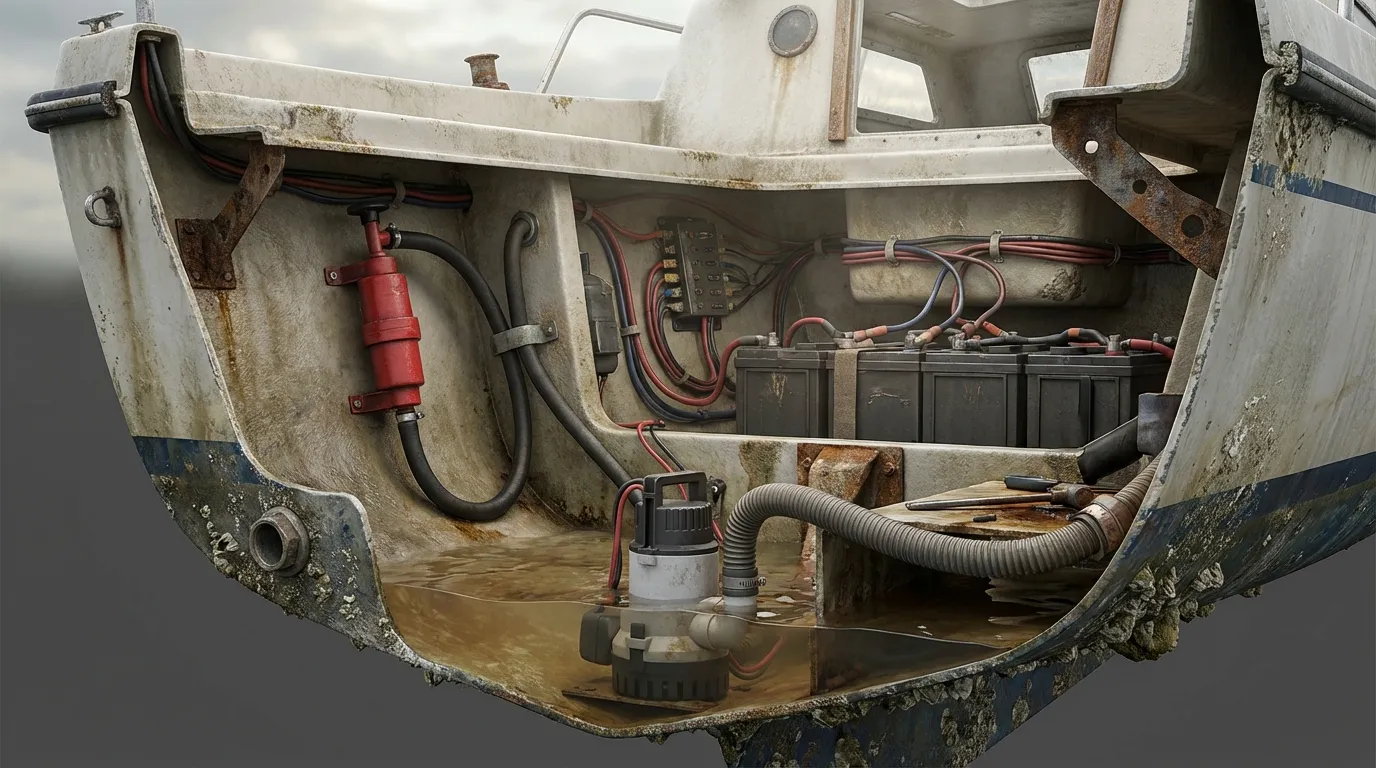
Why Automatic Bilge Pumps Fail When You Need Them Most
Automatic bilge pumps are popular for a reason. They turn on by themselves and keep working when nobody’s onboard, which feels reassuring. On paper, the idea is simple. For everyday water, most boats do fine with them. But real-world data shows they often move far less water than owners expect, and that gap usually goes unnoticed.
Marine safety testing shows actual pump output is much lower than the numbers printed on the box. Those ratings look impressive, and that’s often part of the issue. Losses come from long hoses, sharp bends, fittings, and voltage drop. On older boats especially, these losses stack up faster than most people think. And they build quietly, while everything still seems normal.
| Pump Rating | Advertised Output | Real-World Output |
|---|---|---|
| 2000 GPH | 2000 gallons per hour | ~1500 GPH at zero head |
| Shut-off head | 18 ft | ~14 ft |
The BoatUS Foundation confirmed this gap through lab testing of complete, real-world systems, not bare pumps running alone on a bench, which isn’t how boats are used. Same pumps, different setup, and very different results.
The laboratory confirmed our modeled predictions within 5 percent by running a real-life test using actual bilge pumps, corrugated hoses and plastic fittings. The advertised capacity numbers for the bilge pumps we tested are higher than their actual output and dramatically higher than the output of a complete bilge pump system.
Flow loss is only part of the problem. Automatic bilge pumps also fail in small, easy-to-spot ways. Float switches corrode or stick. Wiring stays live and slowly breaks down. Batteries drain at the dock. Debris clogs the intake. These problems stay hidden. BoatU.S. data shows 69% of boats sink while moored, often because these issues stay out of sight, right there at the slip.
Real Failure Scenarios That Sink Boats with Automatic Bilge Pumps
Many boat owners imagine sinkings as dramatic events caused by big storms. The data usually tells a different story. More than 66% of sinkings are preventable, and they often come from slow, quiet leaks that go unnoticed for hours, or even days. These problems don’t make noise or draw attention, so they’re easy to miss, especially if regular checks aren’t happening.
What makes this tough is how normal these situations are. They happen more often than people expect:
- You might have a small leak that slowly sends water into the bilge. The automatic pump keeps turning on, draining the battery little by little, until the battery dies and the pump stops.
- A stuck float switch is another common issue. When this happens, the pump never turns on. Water keeps rising past the pump level with no warning, which is usually the most dangerous moment.
- After a rough trip, debris can clog the pump intake. The motor still runs, but no water moves. This is frustrating and often hard to spot right away.
- Shore power loss is another risk. If power drops, the charger shuts off, the pump keeps cycling, and the battery eventually runs flat while no one is there.
Environmental risks add more concern. As Louis Heyes from Marine Industry News has pointed out, bilge water is often where oil, fuel residue, and other contaminants collect, creating a dirty mix in a tight space.
A sinking boat obviously poses major environmental risks, but more importantly, on a day to day basis, unmonitored bilge discharge is a problem. The bilge is where all contaminants collect.
These failures help explain why safety experts often talk about redundancy. Relying on a single pump, whether manual or automatic, leaves too much to chance, especially overnight. Better options are available. Pump types and how they differ are explained in the guide on understanding bilge pump types and choosing the right one, which walks through real-world examples.
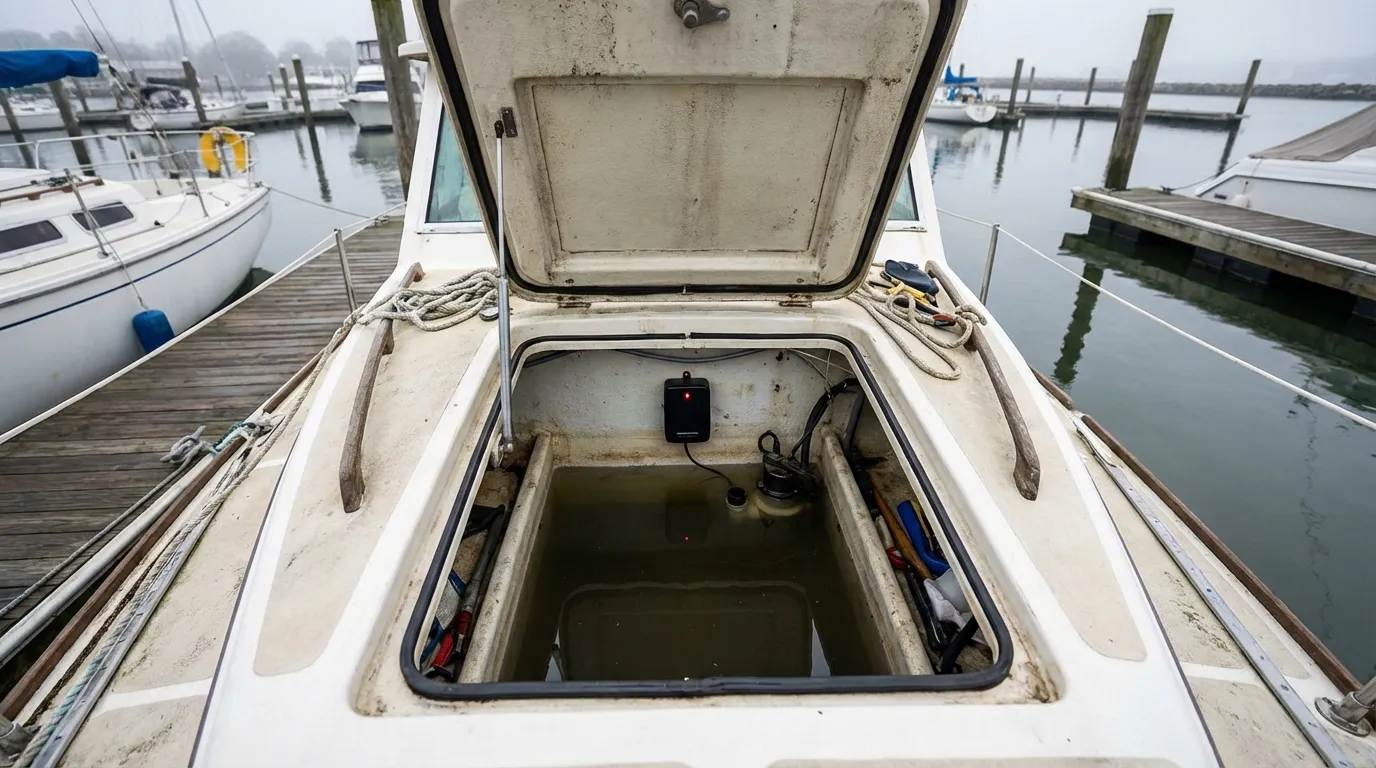
Designing Redundant Bilge Pump Protection That Works
One thing that often gets missed is how much early warnings can change what happens next. High-water alarms get skipped more than they should (that comes up a lot), even though they’re one of the most useful upgrades you can add. They warn you about trouble before pumps can’t keep up, which usually gives you time to respond instead of rushing around at the last minute.
Redundancy here is really about making sure one failure doesn’t turn into a bigger problem. It means building layers of protection instead of depending on the biggest pump you can fit. Marine testing and accident reports usually back this up. It’s a simple idea, and it works because no single part carries all the risk.
| Protection Layer | Purpose |
|---|---|
| Primary automatic pump | Handles daily seepage |
| Secondary automatic pump | Activates during high water |
| High-water alarm | Early warning before flooding |
| Manual bilge pump | Backup without power |
| Independent power source | Prevents total electrical failure |
Separation is the key detail. Pumps work better when they’re installed at different heights so they don’t all switch on at once. Each automatic pump should have its own circuit, and it often helps if one runs from a battery that isn’t tied to house loads. Different paths, chosen on purpose.
If you want more background, there’s also a piece on automatic bilge pumps installation and safety tips. It connects directly to this setup and adds hands-on detail, like how newer systems can alert you when run time goes up or voltage starts to drop.
Maintenance Mistakes That Defeat Even Good Systems
What usually causes trouble isn’t bad equipment, it’s the slow buildup of skipped maintenance. Even backup systems can fail when daily habits slip, and it happens more often than people think. The problems often start small, easy to ignore or put off, but they add up over time. Most people only realize it when something finally stops working.
Common mistakes include:
- Never testing float switches
- Ignoring changes in pump run time (those small differences really do matter)
- Letting debris collect in the bilge
- Using wiring that’s too small for the load
- Skipping seasonal inspections altogether
Bilge pumps sit in one of the harshest spots on a boat, so corrosion often builds quietly out of sight. A monthly check takes just a few minutes and can save thousands later, that tradeoff is hard to beat.
A simple checklist helps a lot. Start with the wiring, manually lift the float switches, clean the strainers, and listen closely. Changes in sound often point to problems. We covered this in a bilge pumps maintenance checklist for boat safety that sticks to basics, like noticing when a pump suddenly sounds rougher than it did last month.
Where Bilge Pump Technology Is Headed
Smart monitoring is often the clearest change right now, and it says a lot about where the bilge pump market is going. The market is growing fast, I think, mostly because people care more about safety and smarter systems are appearing on more boats than before.
| Metric | Value | Year |
|---|---|---|
| Global bilge pump market | $3.67B | 2024 |
| Projected market size | $5.33B | 2030 |
| Market growth rate | ~6.2% CAGR | 2024, 2030 |
High-water alarms and cellular alerts are appearing more often, even on smaller boats that used to skip this tech, which still surprises some people. These tools don’t replace pumps; they support them by sending early warnings before a small issue becomes serious. Environmental monitoring is also getting more attention, especially since keeping oil and fuel out of bilge discharge matters during everyday checks and good seamanship.
Common Questions People Ask
Are automatic bilge pumps enough on their own?
No. Automatic bilge pumps matter, I think, but when they fail it’s often hard to notice. A single failure can likely lead to flooding if there’s no backup or alarm while you’re away.
Should every boat have a manual bilge pump?
Yes, I believe every boat should have one. A manual bilge pump works as a backup since it runs without power, which helps when electrics fail. Still, it’s not smart to rely on it alone onboard.
Most boats do fine with at least two automatic bilge pumps at different heights, one higher, one lower, plus a manual backup. It’s usually simple and reliable, in my view; bigger or commercial boats add extra layers.
Small leaks and debris can cause frequent cycling that wears pumps out (yeah, it’s annoying). When float switches stick, pumps drain batteries, so I feel independent power and alarms really matter for you.
What is the best way to test a bilge pump system?
Why start with lights when sound tells more? Lift the float switches by hand, then add water to the bilge to hear it run during a test (this part matters). I think water tests work better than trusting lights, which mislead.
The Bottom Line for Safer Boat Ownership
Automatic and manual bilge pumps usually work best when they’re used together on the same boat. If one doesn’t keep up, the other can step in, and that overlap often makes the difference. It’s not exciting gear, but real-world testing and accident reports keep pointing to the same lesson. Having a backup is often the only proven way to protect against boat flooding, at least in my view.
What surprises many owners is how sinkings usually happen. They rarely happen all at once. Many occur quietly at the dock, and plenty likely could have been avoided with a better setup and basic maintenance. Why not start simple? Adding a second pump or a high-water alarm is a small change with a big payoff, and it’s usually affordable. Checking how the system works once a month also tends to catch problems early.
Boat flooding prevention isn’t about fear; it’s about being ready. With layered protection and regular checks, a bilge system has a much better chance of working during slow leaks or dockside issues, especially when no one is around to notice.
