


Boat trailer lights have a habit of failing at the worst possible times. Many times it happens right at the ramp you’ve used a hundred times. Other times it’s late at night, just as you’re ready to head home, cold, tired, and wet. There’s usually no warning. One minute everything works, and the next there are no lights at all. It’s frustrating, and anyone who tows a boat has likely dealt with it.
For boat owners, trailer electrical problems are less about if they’ll happen and more about when. Water and salt slowly break down connections, while vibration and age keep stressing wires and light housings that were never built for gentle conditions. Over time, the damage adds up. The good news is that these failures often follow the same patterns, and the same problems tend to show up again and again.
This guide examines the most common causes of trailer electrical failure. It focuses on bad grounds and corrosion, and it looks closely at how submersible lights often fail after repeated launches, especially with frequent use. The goal is practical, real-world help. You’ll learn how to spot problems quickly, often without special tools, and pick up simple fixes that work for weekend boaters and daily operators.
Reliable trailer lights help other drivers see you on the road and usually reduce unwanted traffic stops. They also make the drive home calmer and less stressful. That’s why this guide connects trailer wiring care to the bigger picture of marine electrical systems, helping protect your boat both on the road and at the launch.
Why Ground Problems Cause Most Trailer Light Failures
When trailer lights start acting strange, the ground is usually the problem. You might see lights flicker, brake lights that glow dim when they shouldn’t, or turn signals that only work on one side, which is always confusing. These patterns are common, and they often lead back to a bad ground, at least in my view, especially when several issues show up at the same time.
Many older trailers use the metal frame as the ground path. That can work at first, usually when everything is clean and new, but it rarely lasts. Over time, rust and layers of paint break up the connection and cause trouble. Aluminum trailers often have it worse because galvanic corrosion happens faster when different metals touch. It’s a real headache, and most people have dealt with it before.
What is causing the ground wire corrosion on the aluminum trailer is called galvanic corrosion and is an unfortunate side effect of having an aluminum trailer.
This kind of corrosion starts when different metals touch and get wet, and electricity can speed up the damage. A ground wire may look fine on the outside but fail where you can’t see it, which is often the most frustrating problem to track down.
Modern best practice is simple and proven. Instead of depending on the frame, run a dedicated ground wire to every light. Marine electricians wire trailers like boat systems because they deal with constant moisture and learned these lessons the hard way. That approach just works.
| Ground Method | Reliability | Maintenance Need |
|---|---|---|
| Frame grounding | Low | High |
| Dedicated ground wires | High | Low |
As the table shows, dedicated grounds usually last longer and need less fixing, which means less frustration for you.
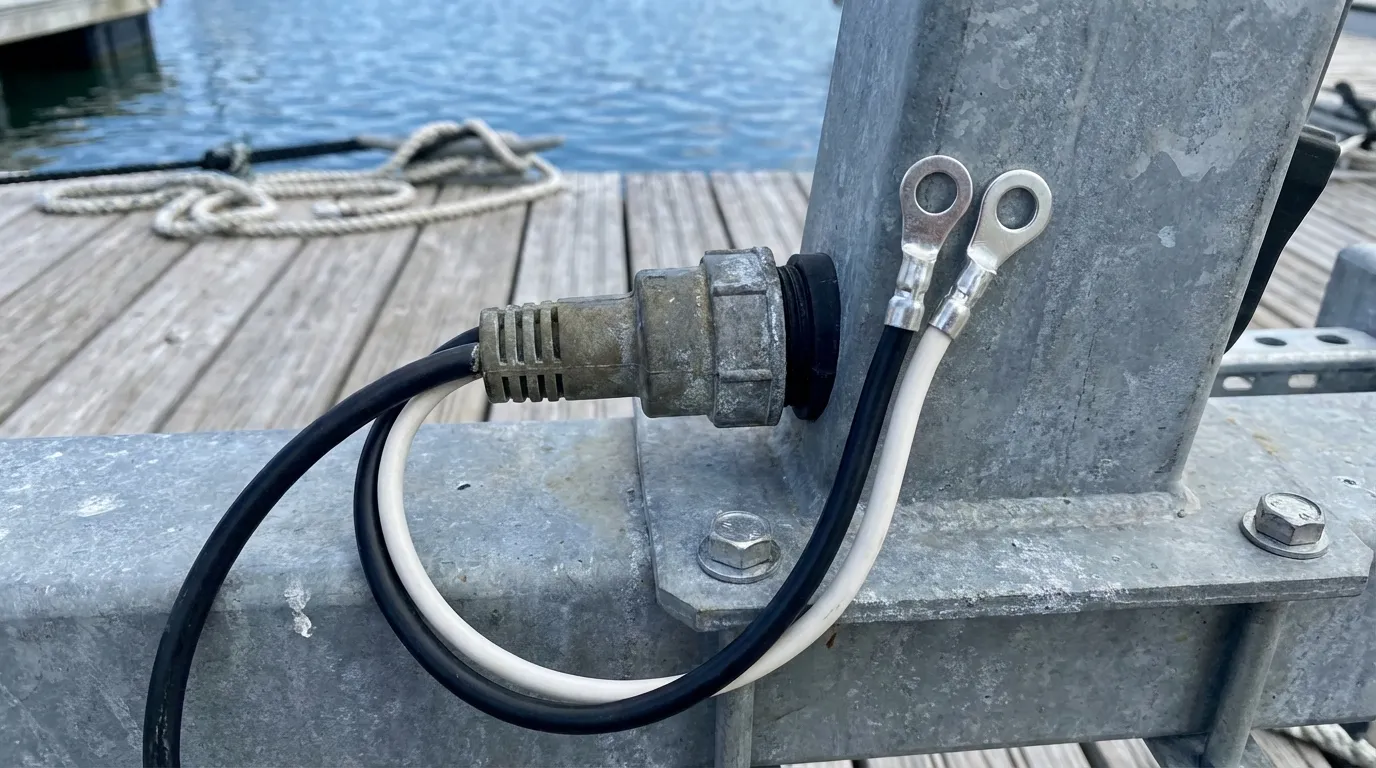
Corrosion: The Silent Killer of Trailer Wiring
Corrosion doesn’t usually look dramatic. Most of the time, it stays hidden inside connectors, completely out of sight, and that’s often where problems begin. Water sneaks in, salt sticks around, and copper slowly turns green. As resistance increases, issues often stay unnoticed until a light or brake suddenly stops working.
Aluminum trailers, in my view, go through corrosion cycles faster than many people expect. In a lot of cases, unprotected ground wires fail in about 18 months, which feels far too soon. Stray electrical current can speed things up, taking a small problem and turning it into a serious headache earlier than expected.
I’ve encountered stray current scenarios which have devoured stern drives, sail drives, and propellers in a matter of days, in some cases leading to flooding and the loss of the vessel.
That quote talks about boats, but the same science usually applies to trailers. Bad wiring creates stray current paths, and those currents eat through metal quickly. Once corrosion begins, it often keeps spreading unless something is done.
Prevention is the real answer here. A helpful step is sealing splices with heat-shrink connectors and dielectric grease. You’ll also notice that rinsing the trailer after saltwater use helps, especially when that exposure happens again and again.
Submersible Trailer Lights: Why Some Fail Early
Submersible lights sound foolproof, but they often aren’t. A common surprise is how many stop working right after a launch. When hot lights hit cold water, the fast temperature shift can pull water past weak seals and straight inside. It’s an easy mistake, but it can turn into an expensive one, I think.
A lot of these problems start with older incandescent bulbs. Their filaments break easily, housings start to leak, and corrosion shows up fast, especially in saltwater. That’s a big reason LED lights now dominate the market.
LED submersible lights are sealed units with no filament and much less heat. That helps them handle shock and vibration. In salt fog testing, unprotected lights can fail in under two weeks, while sealed LED units often last much longer in the same conditions.
Many failures still come down to basics: cheap connectors, skipped strain relief, or wires hanging where water collects, you’ve probably seen that. Each one cuts lifespan.
When upgrading, match the wire gauge, use marine‑grade wiring, and keep cables secured above the axle line, like running them tight along the frame instead of letting them dip.
Why You Should Never Trust the Trailer Frame as Ground
This really does deserve its own section. Honestly, many lighting headaches come from trusting the trailer frame for grounding. It can look fine at first, but it usually doesn’t turn out as clean as people hope. In most cases, that ground path isn’t very dependable, especially after the trailer has had some real use.
Especially with boat trailers, you cannot rely on the metal frame of the trailer for a secure ground.
Paint, rust, loose bolts, and frame movement all break continuity in small ways, and those little issues add up over time. After enough bumps, the weak spots often get worse. Aluminum frames also bring galvanic action into the mix, which often causes more problems than expected.
A dedicated ground wire system usually fixes this in a simpler way. Instead of using the frame, each light has its own return path to a ground point. Voltage stays steady, flickering happens far less, and tracking problems down is less annoying. This setup also makes later upgrades easier, like adding more advanced LED setups mentioned in the 2025 Marine Lighting Trends article.
A Simple Diagnostic Process That Actually Works
The fastest fixes usually come from not guessing at all. A clear, step‑by‑step check can save time, especially when lights fail without warning.
You will often find the issue right at the tow vehicle. Check the plug for corrosion or bent pins, then move to the trailer tongue connection and gently tug the wires. In many cases, loose wires show up first, and you can usually feel the issue right away.
What about grounding? One helpful approach is using a basic multimeter to measure resistance from the light ground back to the plug ground. High resistance often points straight to the problem.
Instead of chasing everything at once, work through one circuit at a time. If corrosion runs deep, replacing connectors usually lasts longer than cleaning them. This mirrors the Boat Trailer Maintenance guide, which often links light failures to wider bearing and brake upkeep, like swapping a badly corroded connector instead of fighting it.
Common Questions People Ask
Frequently Asked Questions
Why do my trailer lights work on and off?
Most of the time, it’s a grounding issue (yeah, frustrating). Road vibration can loosen contact points, which leads to flickering lights, and adding a dedicated ground wire usually fixes the problem.
Are LED trailer lights worth the cost?
Often, yes, they’re a good buy. LEDs last longer and resist water during rough use, so over time they can cost less than replacing incandescent lights.
Quick checks often help prevent roadside breakdowns, in my view. Do them twice a season because it’s easy; saltwater users usually inspect monthly.
Can corrosion spread inside wires?
Yes, it often moves under the insulation. If you see green copper, that’s when the wire section is replaced.
Is trailer electrical maintenance part of boating safety?
So yes, often, in most cases. Working lights help avoid road accidents and tickets. On the water, they’re usually as important as life jackets or a bilge pump for safety.
Keeping Your Trailer Reliable and Safe
Trailer electrical failures are annoying, but they’re usually pretty easy to figure out. Most of the time, they come from the same few problems, bad grounds, corrosion, or lights that just aren’t made very well (yeah, that kind of stuff). Once you notice the pattern, things start to click, at least from my experience.
So what helps? Dedicated ground wires fix a lot of issues. And sealing every connection, especially around plugs, helps keep water out. Upgrading to LED submersible lights and checking things often, after long trips or saltwater use, also makes a difference. Shortcuts are tempting, but they usually cause more trouble later.
Strong marine electrical systems don’t stop at the boat. The trailer matters too. Taking care of it often means fewer problems on the road and at the ramp.
If safer towing and fewer delays sound good, starting with the wiring is a smart move. A little effort now can save a lot of frustration later.
