


Marine batteries rarely fail at a good time. They usually quit before sunrise at the boat ramp, during a long drift on a windy point, or halfway through a workday when steady power matters most. For many boat owners using trolling motor batteries, the problem starts small and quiet: a loose terminal, a missed charging session, low storage voltage, or a battery left partly discharged for too long.
That’s why a clear routine helps. It’s simple, but it makes a real difference. Whether it’s a bass boat, skiff, center console, or commercial workboat, good battery care helps protect the trolling motor, electronics, and the time spent on the water. That matters even more for trolling motor batteries, since they often go through deep discharges and regular hard use, which usually wears them out faster.
This guide gives you a practical checklist that’s easy to follow without special training. Most people just want less guesswork, and that’s the point here. It covers charging habits, storage rules, inspection steps, safety basics, and the warning signs that show a battery needs more than routine attention. You’ll also get a few simple numbers worth remembering, along with realistic ways to build a maintenance habit that actually sticks.
Start With the Right Charging Habits for Trolling Motor Batteries
One of the fastest ways battery life gets shortened is when a battery sits discharged after a trip. With trolling motor batteries, that happens a lot because plenty of boaters plan to charge them “later” and then forget, and that is usually when the problems start. If the battery stays low for days or weeks, issues tend to show up quickly.
JD Power’s boating guidance says trolling motor batteries should be charged back to 100% after use and then charged again monthly during storage. Yuasa also recommends checking the voltage on stored batteries and recharging once it drops below 12.40 volts. In most cases, that routine is pretty simple to follow.
| Maintenance checkpoint | Recommended number | Source |
|---|---|---|
| Recharge after use | 100% | JD Power |
| Storage voltage threshold | 12.40 V | Yuasa |
| Routine storage recharge interval | Every 3 months | Yuasa |
| Minimum storage charge level | >50% SOC | EnerSys |
| Annual health verification | 1 time per year | Taylor & Francis maritime SoH review |
Those numbers give you a good place to start. The main thing is to avoid letting batteries sit at a low charge for too long. Lead-acid batteries, including flooded types and AGM models, can develop sulfation when they stay partly discharged, and that can cause real damage. As it builds over time, capacity drops, so the battery often stops holding power as well as it should.
It also helps to use a charger that fits your battery chemistry. A charger made for flooded lead-acid is not always the right match for AGM or lithium. For more detail on battery-specific care routines, this guide on Trolling Motor Batteries: Innovative Care and Maintenance Tactics covers maintenance tips that fit regular fishing use.
Your Pre-Trip and Post-Trip Inspection Checklist for Trolling Motor Batteries
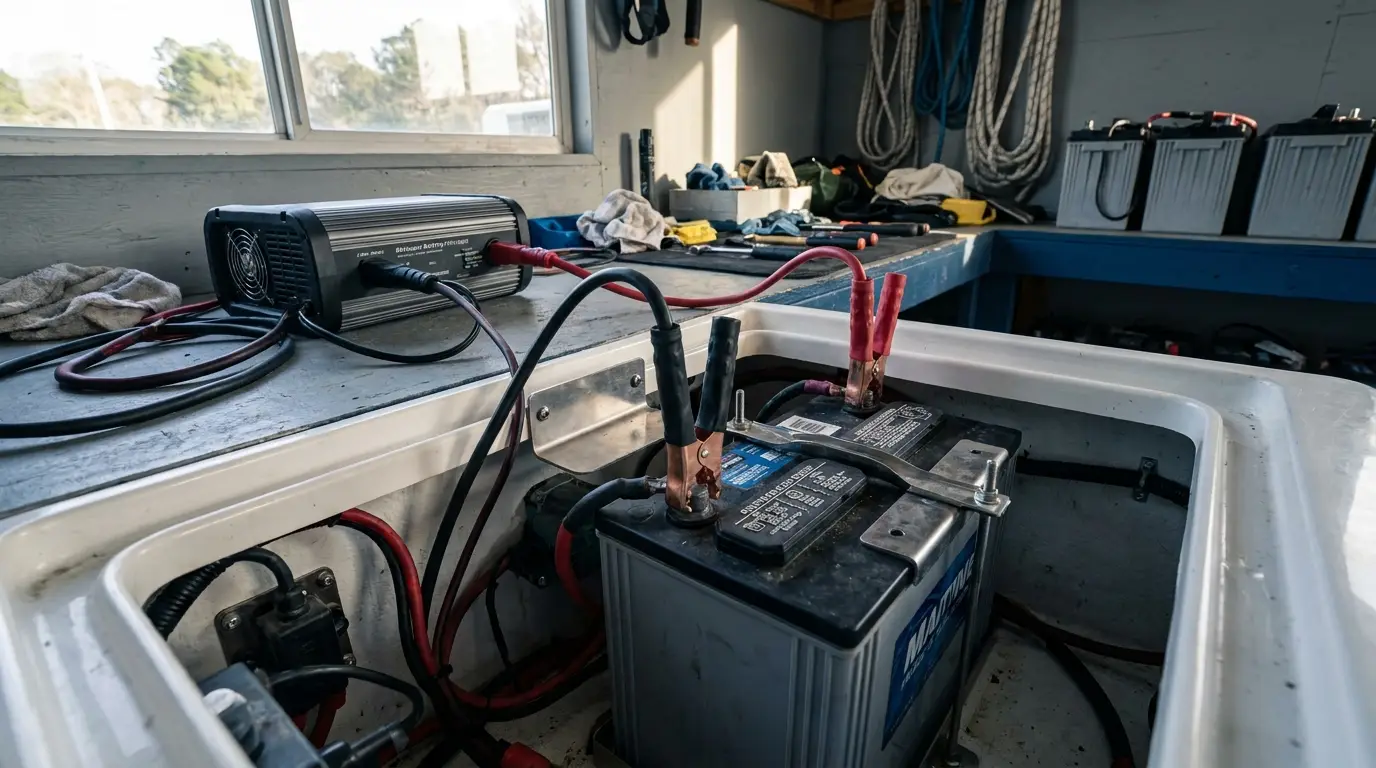
A good checklist usually works best when it’s short enough to use every time. Before heading out, check the battery hold-downs, make sure the cables are tight, and look at the terminal condition too. Watch for white or green corrosion, cracked insulation, swollen battery cases, leaks, and any signs of overheating around the charger leads. That’s the key part here. For flooded batteries, make sure the electrolyte is at the proper fill line before charging, and follow the battery maker’s instructions.
After the trip, a quick version of the same check is often enough. Then clean off moisture, dirt, and salt residue. Even a light layer of grime can trap moisture, which often leads to corrosion in this kind of setup. Use a soft brush, wipe the case dry, and keep the vent areas clear. It’s a simple habit that helps.
Here is a simple order that works well:
Before You Launch
- Start with a quick check of the battery voltage or charge indicator.
- You’ll usually want clean, tight terminals before heading out.
- Also make sure the straps or trays are secure so nothing shifts.
- Check cables for rubbing, cuts, heat damage, or wear, since that’s often easy to miss.
- Was the charger unplugged and stored safely?
After You Return
- Recharge it as soon as you can
- Wipe down the battery top and the nearby wiring
- During a quick check, you’ll often notice new corrosion, loose hardware, or anything else that looks off
- Pay attention to any drop in trolling motor run time
- Have you noticed charger fan noise or other operation issues?
And if you’re also dialing in your overall motor setup, we’ve covered Top Bow Mount Trolling Motors for Small Boats here. That often helps connect battery care to real on-water performance, especially on longer trips, and can make it easier to spot what’s affecting runtime or thrust.
Storage Rules That Prevent Off-Season Problems
A battery that seemed fine in fall can end up weak by spring if it was stored the wrong way. A lot of batteries quietly lose life during storage, which is frustrating but pretty common. Yuasa recommends recharging stored marine batteries every three months regardless of voltage. EnerSys advises keeping batteries above 50% state of charge and storing them in a cool, dry place above freezing. Battery Tender also suggests keeping lead-acid batteries at roughly 60% to 80% charge during winter storage, though plenty of boaters still choose to keep them fully charged with the right charger setup.
One useful routine is to remove unnecessary loads, disconnect cables if the boat will sit for a while, and check battery condition on a regular schedule. It is simple, but it usually makes a real difference. Small parasitic drains from electronics, switches, or accessories can slowly pull charge down over several weeks, even when everything appears to be off.
Common storage mistakes include:
- Leaving the battery in a discharged state
- Storing it in a damp area
- Forgetting that onboard electronics still draw power
- Using the wrong maintenance charger setting
- Ignoring voltage checks until spring
For recreational users, a monthly reminder is often a good idea, even if the battery chemistry allows longer intervals. In most cases, that is an easy way to avoid unpleasant surprises later. For commercial operators, battery checks fit best in the regular vessel maintenance log. Serious users should also consider annual capacity testing. Maritime battery health literature describes annual capacity testing as a key way to verify state of health, especially when reliability matters, such as boats that need to start dependably after long storage or before work runs.
Safety Matters More as Battery Systems Evolve
Marine battery maintenance is not just about getting more life out of a battery. It is also about safety. More boats now use lithium systems, and electrical loads keep growing, so charging practices often matter even more than they once did. On smaller boats in particular, that can become a real problem.
ABS guidance says marine battery charging systems should meet recognized standards, stay away from heat sources, avoid nearby flammable materials, and be watched continuously while charging. The U.S. Coast Guard gives similar advice for lithium-ion batteries: charge them only in regularly occupied spaces or areas under continuous monitoring, and avoid risky setups like daisy-chained power strips and extension cords, which can create problems quickly.
That applies to everyday boat owners too. Even a small fishing boat can become unsafe when a charger is installed badly, ventilation around the battery compartment is blocked, or damaged batteries stay in use too long. In most cases, that is worth checking before every trip.
Basic Battery Safety Rules
- Charge in a well-ventilated area
- Keep chargers away from fuel vapors, paint, flammable gear, and other ignition risks nearby
- Do not charge a swollen, cracked, or leaking battery
- Replace damaged cables and terminals right away
- Avoid makeshift extension-cord setups if charging is a regular part of the routine
When upgrading a full electric fishing setup, it usually helps to pair battery maintenance with the right rigging choices. It’s pretty simple, honestly. This overview of Essential Trolling Motor Accessories Every Boater Needs is helpful for anyone who wants cleaner, safer, and more dependable power connections, especially when comparing better cables, connectors, and setup options. In most cases, those details help the setup work better.
Build a Maintenance Routine by Battery Type
Not every battery needs the same care. Flooded lead-acid, AGM, and lithium batteries each have their own charging profile and maintenance needs. Flooded batteries usually need the most hands-on attention, since you may need to check electrolyte levels and watch venting closely, which takes a bit more work. AGM batteries need less maintenance, but they still usually do poorly if they stay discharged for too long. Lithium batteries are lighter and often charge faster, though they need the right charger settings and careful attention to overall system safety, which is probably not something to guess at.
Industry sources often put flooded and AGM marine batteries in the 3 to 6 year range, while lithium may last much longer. Still, those numbers can vary a lot depending on use, charging quality, and depth of discharge, so they are better treated as rough context than any kind of promise. In many cases, battery life depends more on how regularly the battery is charged and used than on the label alone.
A simple system is to keep a small note in your phone or glove box with four lines: last full charge, last inspection, resting voltage, and any change in run time. It does not take much effort, but it is useful. Over a season, that usually gives a much clearer view than guesswork. You can spot patterns earlier, often before a small issue turns into a bigger one.
Boaters shopping for supplies, chargers, or replacement components often use plain-language checklists and product categories from First Choice Marine to match maintenance parts to their setup. The point is not buying extra gear. It is making sure the basics are covered with the right marine-rated parts, such as chargers, terminals, or replacement cables.
When to Troubleshoot and When to Replace Trolling Motor Batteries
A battery can look fine and still work badly. If the trolling motor starts slowing down earlier than usual, the charger takes much longer than normal, or resting voltage drops too fast after charging, it’s probably time to troubleshoot. Start with the basics first: dirty terminals, loose lugs, weak charger output, damaged cables, hidden parasitic drains, and poor connections, which often cause problems.
Then it usually helps to ask a few practical questions:
Warning Signs You Should Not Ignore
- The battery case is bulging or cracked
- Terminals get hot during use or charging
- Run time dropped sharply in one season
- Voltage falls fast after a full charge
- The charger shows fault codes
- The charger never reaches full
If the connections and charging setup are already fixed but the battery still works poorly, replacement is usually the smarter move. In most cases, it’s an easy call. For many boaters, replacing one weak battery early often costs less than losing a full day on the water or putting extra strain on the rest of the bank. First Choice Marine can also be a useful place to compare marine parts and maintenance options while deciding whether to repair the system around the battery or replace worn parts. That kind of check is often a smart move, and in many cases a cheaper one too.
For boaters comparing newer propulsion systems and battery demands, this guide to Breaking Down the Best Electric Trolling Motors of 2026 can also help explain how motor performance affects charging expectations and overall runtime.
Frequently Asked Questions
How often should I charge trolling motor batteries?
Charge them as soon as possible after each use. During storage, a monthly check is wise, and many guides recommend periodic recharging at least every one to three months depending on battery type and storage conditions.
What voltage is too low for a stored marine battery?
A useful checkpoint is 12.40 volts for a stored lead-acid marine battery. If voltage drops below that, recharge it instead of letting it sit lower for long periods.
Should I disconnect my boat batteries during storage?
Yes, in many cases that is a smart step. Disconnecting cables helps reduce parasitic drain from electronics and accessories, especially if the boat will sit for weeks or months.
Can I use any charger on trolling motor batteries?
No. Use a charger that matches the battery chemistry and bank setup. Flooded, AGM, gel, and lithium batteries can require different charging profiles, and the wrong charger can shorten battery life or create safety issues.
Where can I find marine-rated battery care parts and charging accessories?
A marine-focused retailer like First Choice Marine can help you sort through chargers, trolling motor components, and related maintenance items that fit boating use better than general automotive parts.
What is the most common mistake that shortens trolling motor battery life?
The biggest mistake is letting the battery sit partly discharged after a trip. Prompt charging, clean terminals, and regular storage checks usually do more for battery life than any expensive add-on.
Put This Checklist to Work
Good battery care mostly comes down to timing and consistency. With trolling motor batteries, charging them right after use usually makes a bigger difference than many people expect. Batteries in storage should not be allowed to run too low. It also helps to check terminals, cables, hold-downs, and cases on a simple schedule, store batteries in a cool, dry place above freezing, and use the correct charger. Charging safety also deserves close attention, especially with lithium systems.
Better results do not require a complicated shop routine. A quick pre-trip check, a fast post-trip recharge, and a monthly storage reminder can prevent many of the failures people deal with. Pretty simple, really. Over time, habits like these can help protect run time, improve reliability, and cut down on surprise replacement costs.
If the current setup includes weak cables, worn trays, charger problems, or aging accessories, this is a good time to fix the system around the battery too. The battery is only one part of it. In this view, a more complete checklist helps make the boat more dependable when it is time to fish, work, or enjoy a day on the water.
