


If you run your boat in saltwater, brackish creeks, muddy rivers, or shallow flats, a basic flush is only part of the job. Plenty of owners think a quick rinse with motor flushers means the marine engine cooling system is fully clean. Sometimes that’s true. Sometimes it isn’t, and that’s often where problems start.
Salt can harden inside tight passages. Silt may settle in spots you can’t see. Small bits of grass or shell can slow water flow more than you’d expect. Then, before you know it, the telltale looks weak, the engine starts running hot, and you’re stuck dealing with preventing outboard overheating instead of spending the day on the water like you planned.
The good news is that smarter outboard motor flushing can do a lot more than a fast rinse through the system. In this guide, you’ll learn how to use motor flushers better and when boat engine flush adapters are worth using. You’ll also learn how to spot hidden blockage issues and when flushing alone is not enough. We’ll cover advanced saltwater engine maintenance steps too, including outboard cooling passage cleaning, better long-term reliability, and fewer surprises in the middle of the season.
Why Basic Motor Flushers Flushing Sometimes Falls Short
A standard flush works well for routine care, but some deposits simply do not rinse out that easily. The research used for this article points to a recommended flush time of 5 to 10 minutes, and many maintenance guides also suggest flushing after every saltwater excursion, which is usually a good habit. That gives you a solid starting point. Even so, it does not always mean every hidden passage in the cooling system gets fully cleared.
| Cooling System Check | Verified Guidance | Why It Matters |
|---|---|---|
| Flush duration | 5-10 minutes | Gives fresh water time to move through passages |
| Saltwater frequency | After every trip | Reduces salt buildup and corrosion |
| Best timing | While engine is still warm | May improve flow through more of the system |
| Service interval | Every 100 hours or annually | Flushing does not replace full service |
The table shows that flushing matters, but it is only one part of overall engine care. Warm-engine flushing gets more attention because heat may help loosen residue before it hardens. The technical team at Sportsman Boats Manufacturing also says flushing while the engine is still warm may help water move through more of the cooling system. That often makes sense because the thermostat is more likely to be open, at least in most cases.
Regularly flushing after saltwater use helps prevent salt buildup and corrosion by removing salt from the cooling system and extending engine life.
That advice is not just for offshore boats. River anglers, marsh fishermen, commercial operators, and plenty of others often deal with silt, sand, and organic debris. It is messy stuff, and pretty common. In that kind of use, plain flushing still helps, but some material can stay trapped in tight spots where it is hard to see or reach.
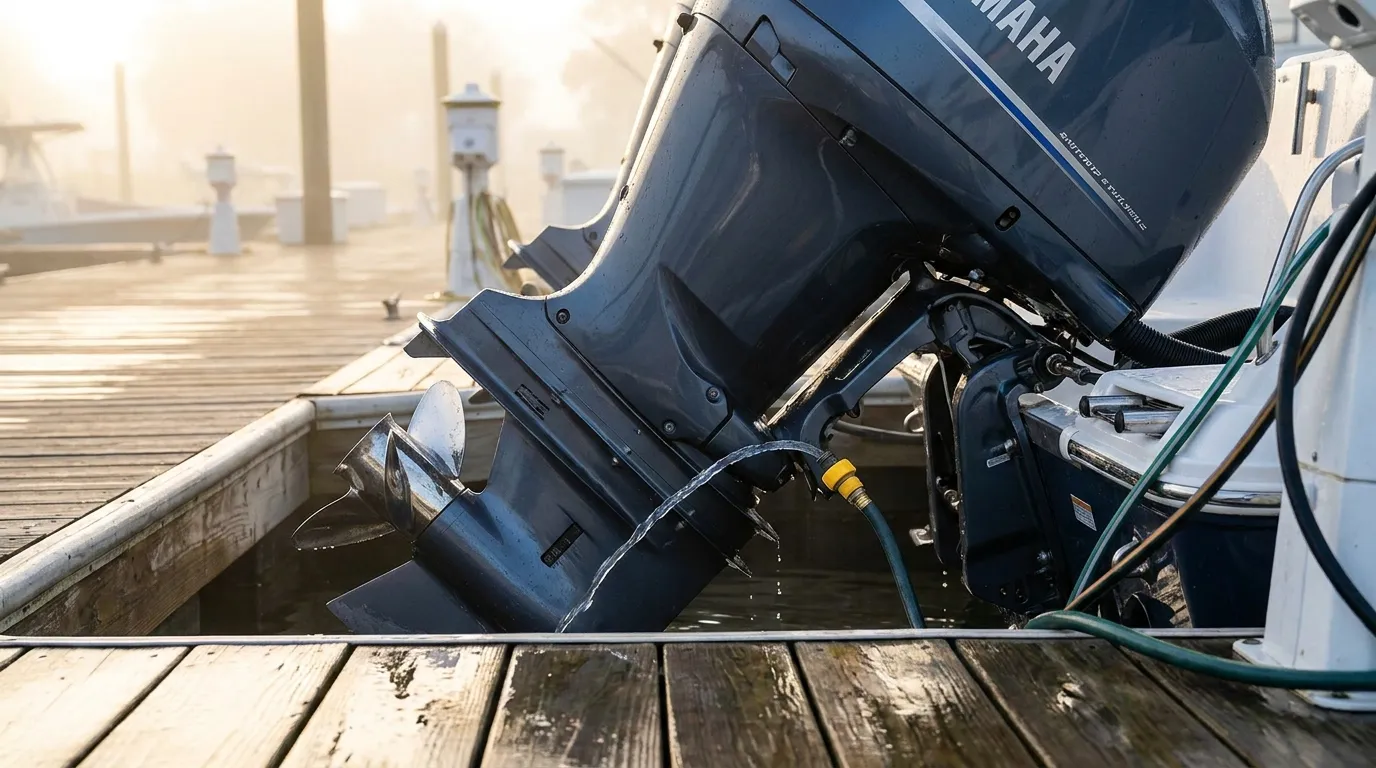
Flush Smarter: Advanced Motor Flushers Techniques for Outboard Engines
For better results, it helps to treat outboard motor flushing as a short process, not just one quick step. The first thing that usually matters is the hardware. Some engines work well with earmuff-style motor flushers that fit over the lower-unit intakes, and that detail matters. Others need a built-in port and a specific boat engine flush adapter. The setup really matters here, because poor water delivery can make it look like the system is flushing when it actually isn’t.
Here’s a simple advanced routine:
1. Flush as soon as possible
If you can, do it right after docking, since that’s usually the easiest time. In most cases, a warm engine just seems simpler to clean than one that’s fully cooled down.
2. Watch the telltale, not just the clock
A strong, steady stream means the water is moving, which is usually a good sign. But if the stream is weak or pulsing, even a little, it often points to a blockage, scale buildup, or pump trouble (which you probably don’t want).
3. Let the full flush cycle finish
Don’t stop after two minutes just because the outside looks clean, even if it’s tempting. The hidden passages often still need more time, even if you can’t see it.
4. Use fresh water after dirty freshwater runs too
This gets missed a lot, and pretty often. Mud, weeds, algae, or sand can cause the same kind of flow restriction as salt crystals. In most cases, dirty freshwater can cause it too.
5. Add a descaling product when needed
If you boat in salt water often, keep your engine in a slip, or think there’s some buildup, a de-salting flush chemical can help loosen mineral scale and stubborn salt residue, which is honestly pretty helpful. It usually works well as a backup.
This guide on motor flushers already covered setup and routine care, and it works well as part of a regular maintenance plan. That makes it easy to add to your routine and keep up without much fuss.
Hidden Cooling Blockages: What Motor Flushers Can and Cannot Fix
This is the part many owners do not hear about enough, and they probably should. It usually matters more than people expect. Motor flushers are great preventive tools, but they are not magic. When the problem is deeper in the marine engine cooling system, flushing may ease the symptoms without fixing the real cause, in most cases.
Common hidden trouble spots include:
Thermostat restrictions
If the thermostat sticks, water usually won’t flow properly through the engine, and that can cause problems for you too.
Poppet valve issues
A dirty or stuck poppet valve can affect pressure, especially at higher speeds, and it often reduces water flow too.
Internal scale in cooling jackets
Heavy salt or mineral buildup can often narrow passages over time, likely inside the jackets, I think.
Worn impeller or pump housing
If the pump isn’t moving enough water, even perfect outboard cooling passage cleaning at the flush point will not fix overheating, which is often the frustrating part.
A common real-world case is a boater who flushes after every trip but still gets an overheat alarm at idle. In that situation, the problem may not be laziness at all. It could be a clogged thermostat pocket or a weak impeller. Small parts, but still important. That’s why preventing outboard overheating usually means more than flushing alone. It also means checking for problems instead of just assuming everything is covered.
Flushing your outboard involves rinsing it with fresh water after EVERY saltwater excursion. This process is a simple yet powerful preventive measure.
The key phrase there is ‘preventive measure.’ Prevention helps a lot, but it does not replace inspection. If your telltale is weak, the engine temperature rises, or alarms keep coming back, the next troubleshooting step is covered in Engine Cooling Systems: Diagnosing Overheating at Idle or Cruise.
Signs You Need More Than Motor Flushers Alone
Sometimes the engine gives a quiet hint that a basic flush just is not enough anymore. The first warning signs are often small, and that is exactly why they are easy to miss.
You may notice signs like these:
- A telltale stream that feels weaker than usual
- Steam coming out instead of a clean stream of water
- Rising temperature at idle or at low speed
- Overheat alarms that come and go
- Salt crust around cooling passages or discharge points
- Poor performance after running in muddy water or around weeds
One common mistake is assuming every overheating problem starts with the pump. Another is thinking a longer flush will fix every overheating issue. In practice, both assumptions can waste time and usually lead to extra guesswork. Based on the service guidance summarized in the research, modern outboards still need regular scheduled service every 100 hours or once a year, whichever comes first. A flush helps between service visits, but it does not replace actual service.

Keeping notes is often a good habit here. If a weak telltale shows up once after a silty trip, flush again and watch it closely. But what if it happens on three trips in a row? At that point, it usually makes more sense to move ahead with an inspection. That is the decision covered in Engine Flush vs Cooling Service: When a Flush Isn’t Enough, which explains when a flush is no longer enough.
Choosing the Right Motor Flushers and Adapters
Not every engine should be flushed the same way. The best motor flushers should fit your intake layout, your water access, and the maintenance routine you really stick to, because that usually makes the biggest difference.
Earmuff flushers are still popular because they’re simple and affordable, and they work well for a lot of setups. For lower-unit intake flushing, they can be a good choice, but they need a strong seal over the intake and a steady, reliable hose water supply. Built-in flush ports are very convenient at home or at the dock, though some owners take that to mean the entire cooling system is clear. It isn’t.
Engine-specific boat engine flush adapters can make the job easier and more consistent over time. They’re especially useful if you want to add a de-salting product in a more controlled way, instead of just guessing about flow or coverage. If the boat gets heavy salt use, frequent marsh trips, or commercial duty cycles, that extra control is often worth it.
When parts and maintenance gear are bought online, brands and retailers focused on practical marine upkeep, such as First Choice Marine, can make it easier to match engine care items to how the boat is actually used. Additionally, you can explore more insights in Motor Flushers: Extend Outboard Engine Life or Save Time? for deeper comparisons.
Build a Preventive Routine That Actually Works
A routine that works usually stays pretty simple: flush often, check things regularly, and handle problems early when warning signs start to show. It does not need to be complicated, and that is one of the nice things about it. What matters most is staying consistent, especially if the boat is often used in saltwater or dirty conditions.
A practical plan looks like this:
- Flush after every saltwater trip
- Flush after muddy, silty, brackish, or weedy runs
- When possible, flush while the engine is still warm
- Watch telltale flow during the flush
- If you boat in salt often, use descaling additives on a schedule
- Inspect the thermostat, poppet valve, and impeller at service intervals
- Record overheating events so you don’t have to guess later
In many cases, this kind of routine is easier on the budget too. Small steps often add up, and here that is really the whole point. Research in this area includes a general annual boat maintenance estimate of 10% to 20% of purchase price. Good preventive care will not remove every cost, but it can usually help reduce surprise repairs and lost time on the water.
For a full checklist, see Motor Flushers: Step-by-Step Guide to Extend Engine Life, which expands on the flushing process.
Frequently Asked Questions
How long should I flush an outboard motor?
A common recommendation is 5 to 10 minutes. That gives fresh water time to move through the cooling system and helps remove salt, minerals, and debris. If your engine maker gives a different procedure, follow that first.
Should I flush my outboard after freshwater use?
Yes, if you ran in dirty, silty, brackish, or weedy water. Freshwater flushing is not only for saltwater engine maintenance. It also helps remove mud, sand, algae, and organic debris.
Can motor flushers fix an overheating outboard?
Sometimes they help, but not always. If the problem is a clogged thermostat, bad impeller, blocked poppet valve, or heavy internal scale, flushing alone may not solve it. Repeat overheating needs deeper inspection.
What does a weak telltale stream usually mean?
It often means restricted water flow somewhere in the cooling system. The cause could be debris, salt buildup, pump wear, or a thermostat issue. It is a warning sign worth checking right away.
Are flush chemicals better than plain water?
They can be, especially for frequent saltwater use or engines with suspected internal deposits. Plain water is the foundation, but de-salting or descaling products may help break down buildup that water alone does not fully remove.
Keep Your Cooling System Clear Before Trouble Starts
Advanced outboard motor flushing mostly comes down to paying attention. Yes, use motor flushers, and yes, flush after every saltwater trip. But it also helps to watch the water flow, think about where the boat is used, and remember that hidden cooling blockages often build up slowly over time. Shallow, sandy areas, for example, can be especially tough on the system.
The best boat owners usually are not the ones doing the most complicated repairs. They catch small problems early and deal with them before they grow. It’s pretty simple: flush while the engine is still warm and use the right boat engine flush adapters for that setup. And what if the telltale flow looks weak? That’s usually a sign, not just a small annoyance. If the same symptoms keep coming back, don’t just keep flushing and hope that fixes it, because it probably won’t. At that point, real cooling-system diagnosis makes more sense before an overheated engine turns a simple maintenance issue into a much bigger repair.
That puts boat owners in a much better position to protect the marine engine cooling system, improve saltwater engine maintenance, and often spend more days on the water with confidence.
