


A dirty hull does more than ruin the look of your boat. It can slow you down, hurt fuel economy, and make basic maintenance feel like more work than it should be. Algae slime, barnacles, yellow waterline marks, and rust stains all show up for different reasons, and each one brings its own kind of hassle. Because of that, there isn’t one bottle that solves every mess. Some boat bottom cleaners work fast on stains but can be too harsh for certain surfaces. Others are safer for regular cleaning, but they hardly do much against heavier marine growth.
This guide looks at what really works, what doesn’t, and how to pick the best boat hull cleaner for your needs. It covers the difference between cleaners for algae, shell growth, waterline stains, and rust, so you don’t have to guess. It also explains when a marine growth remover helps and when scraping makes more sense, while helping you avoid damage to gelcoat, paint, or metal parts. If a practical boat bottom cleaning products review sounds better than marketing hype, this article will help you spend less, clean smarter, and protect your hull over time.
What Different Boat Bottom Cleaners Are Really Designed to Do
A common mistake boat owners make is using the wrong cleaner for the wrong kind of buildup. A product that works well as a waterline stain remover boat owners count on may do almost nothing for barnacles, which is frustrating but true. And a cleaner made for slime and light algae can still leave rust stains or mineral scale behind. If the cleaner does not match the mess, the results usually make that obvious.
According to Practical Sailor’s testing and maintenance guidance, acid-based formulas work best on stubborn yellow-brown waterline stains, rust stains, and mineral deposits. They are also the harshest option in the group. For lighter staining and regular upkeep, gentler cleaners made with oxalic acid or citric acid are often enough, and they are much less aggressive. Hard shell growth is different, though. In that case, chemical action is usually not the main answer. Physical removal is still the standard.
| Problem | What Usually Works Best | Risk Level to Hull Finish |
|---|---|---|
| Light algae and slime | Mild marine soap or light acid cleaner | Low |
| Yellow waterline stains | Oxalic or stronger acid-based hull cleaner | Medium |
| Rust stains | Targeted rust stain remover marine formula | Medium |
| Barnacles and shell growth | Scraping plus follow-up cleaner | Medium to High |
| Heavy mineral scale | Strong acid-based cleaner | High |
Start by checking what is actually on the hull. Light scum after a weekend on the water calls for a mild cleaner in most cases. If the hull has been collecting buildup for months, a stronger product and a more careful process may be needed, without going straight to the harshest option. We covered cleaning categories and safe use in this guide on boat bottom cleaners.
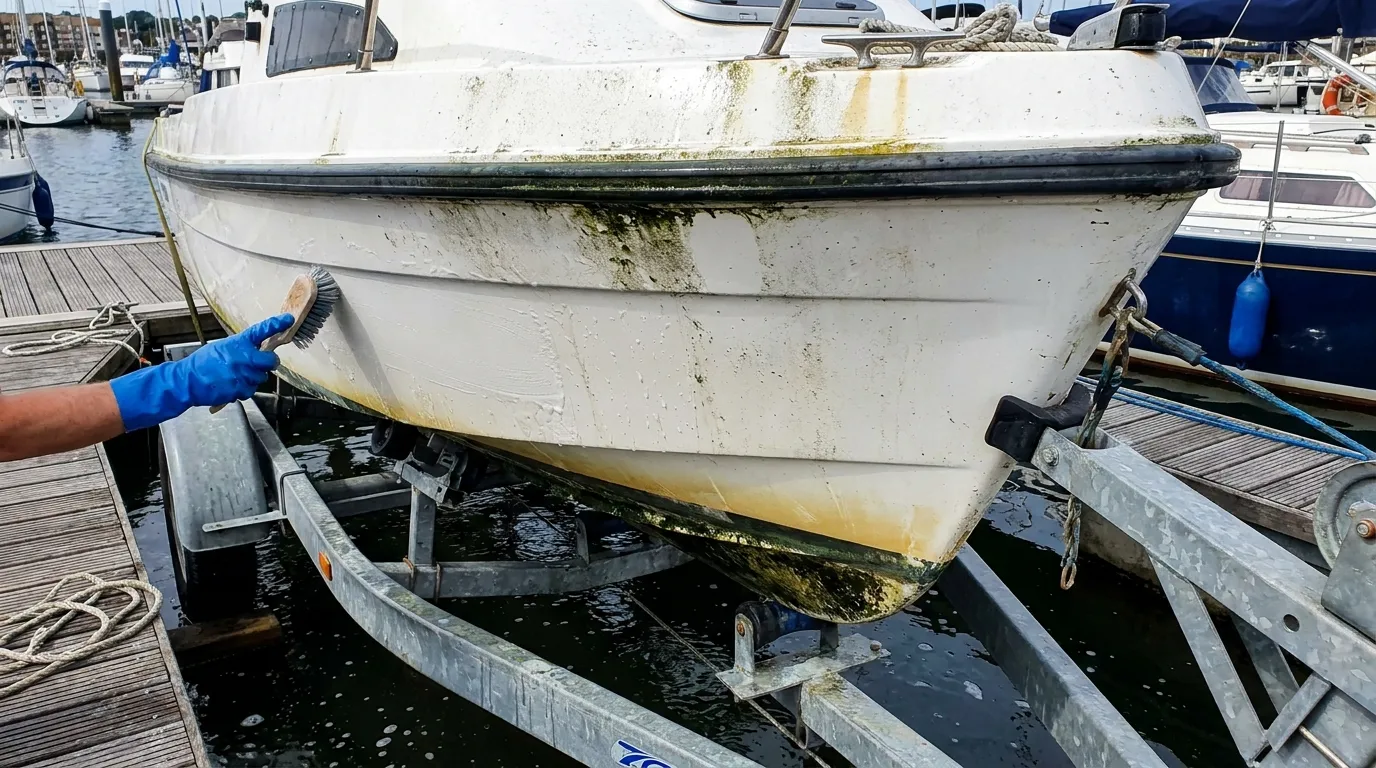
Best Boat Hull Cleaner Choices by Type of Stain or Growth
Online boat bottom cleaner reviews usually group everything together, which really isn’t very helpful. It’s much more useful to sort products by the type of stain or growth they’re actually made to remove, since that makes it a lot easier for you to find the right one.
For algae and slime
For soft green or brown growth, a mild marine growth remover or hull wash is usually enough for regular cleaning. It works well for frequent cleanups and is less likely to dull gelcoat or affect painted bottoms.
These products also rinse off more easily, which helps, and they’re usually safer around trailers and nearby hardware too.
For waterline stains
Acid-based products usually work best here. A common waterline stain remover boat owners use contains oxalic acid or a stronger acid blend (the strong stuff). These formulas break down yellow, brown, orange, and other marks caused by minerals, scum, and organic buildup. They work fast too. Just don’t leave them on longer than directed.
For rust stains
A marine rust stain remover works better than regular soap on rust. These stains usually come from metal fittings, runoff, trailer contact, or stored gear. Spot-treatment formulas go after those orange streaks directly, so you don’t need to wash the entire hull again.
For barnacles
Need to get barnacles off a boat hull? Don’t expect a spray-on cleaner to do the whole job by itself; it won’t. Barnacles stick hard, so in many cases you’ll still need plastic scrapers, careful hand tools, and a bit of patience. What the cleaner really does help with is the ring and stain left behind after the shell comes off, along with any leftover residue.
You’ll usually get better results by matching the right cleaner with the right brush, pad, or scraper. And this companion article on boat cleaning tools reviewed can help you avoid tools that scratch gelcoat.
How to Remove Barnacles From Boat Hull Surfaces Without Causing Damage
Barnacles are where a lot of DIY jobs start to go wrong. Frustration sets in fast, and people grab metal putty knives, aggressive sanding, or harsh cleaners for the whole bottom. That is usually when things start going the wrong way. The damage can cost more to repair than the barnacles ever would. Not ideal.
First, rinse the hull and check how firmly the growth is attached. If the boat has been out of the water for a while, some barnacles may have dried out and loosened a bit. A plastic scraper is usually the best way to start. Keep it at a low angle and let the edge lift the shell instead of digging into it. On painted bottoms, move slowly, because it is very easy to pull antifouling paint off with the barnacle.
Once scraping is finished, look at what is still there. Even if the shell is gone, a rough ring or chalky patch may remain. At that point, a cleaner can help. A marine growth remover with a mild acid can break down leftover scale and discoloration. If mineral residue still will not come off, move up to a stronger spot cleaner. Testing a small area first is a good idea, especially if the other option is making a bigger problem.
Common mistakes include using stainless blades on gelcoat, leaving acid cleaners on too long, or pressure washing too close to the hull. Pressure washing works well on loose algae and can remove it fast. It can also strip paint and force water into damaged areas. In practice, the best results usually come from scraping first, then spot treatment, a thorough rinse, and later prevention with bottom paint or more frequent haul-out cleaning.
What Removes Waterline and Rust Stains Fast but Still Protects Gelcoat
Waterline stains look bad, but cleaning too aggressively can cause problems too. Strong acid formulas remove yellow and brown marks fast, and Practical Sailor’s comparisons show these stronger products usually work best on stubborn stains and mineral scale. But there’s extra risk if they’re used carelessly.
For light staining, it usually makes more sense to try an oxalic- or citric-based cleaner first instead of going straight to the strongest option. For seasonal maintenance, that is often enough and is usually easier on the finish. It’s a better choice for newer boats, light-colored gelcoat, and owners who keep up with regular cleaning. For orange streaks under fittings or around drains, a dedicated marine rust stain remover usually works better, since general hull cleaners may need several passes.
Keep the process controlled. Wet the area first, apply the product on a cool surface, and leave it on only for the recommended time before rinsing well. Working in small sections helps. Gloves and eye protection are a good idea every time, and products should never be mixed. If a stain fades but does not disappear completely, repeat the treatment once instead of scrubbing hard, since that is usually where gelcoat damage starts.
Old antifouling layers or repaint prep make cleaner choice even more important. Harsh chemicals and aggressive pads can affect how well future coatings stick. Boat owners should also review boat bottom paint best practices before doing heavy cleaning, which can help avoid extra prep work later.
When Eco-Friendlier Cleaners Make Sense
Not every hull needs the strongest chemical on the shelf, and many do not. If the boat gets cleaned often, stays on a trailer, or only has light scum and early staining, a milder cleaner usually gives better value. It is easier on your hands, gentler on nearby surfaces, and easier to control, which can make routine cleaning a lot less messy.
That matters even more now as many boaters want products that still work well but are safer to handle and less likely to cause runoff issues. Citric and oxalic formulas, biodegradable wash options, and lower-fume products are often a good fit for regular maintenance cleaning, without quite as much harshness. They are not always the fastest choice for deep, baked-in stains, but for lighter buildup they can be a practical way to avoid being too rough on the hull.
The direction in marine maintenance is fairly clear: use the least aggressive product that still gets the job done. That helps protect gelcoat, preserve painted surfaces, and lower the chance of damage to nearby metal, bunks, or trailers. For anyone trying to build a lower-impact maintenance routine, First Choice Marine fits into that wider move toward practical marine care products and education instead of quick fixes, which can create problems of their own.
A Simple Buying Guide for the Best Boat Hull Cleaner
Shopping for boat bottom cleaners should start with how you’ll really use them, not with marketing claims. Begin with your hull material and bottom finish. Gelcoat, painted bottoms, aluminum, and mixed-material boats each need a different amount of care.
Then look at the fouling itself. Is it soft algae, hard scale, rust, or shell growth? That changes what will work best. Here’s a simple filter:
Choose a mild cleaner if:
- You clean often
- The stain is fresh, light, or new
- You’re working on gelcoat (which can be sensitive) and want to keep the risk low
- The mess is algae slime, scum, or light waterline discoloration (nothing too heavy)
Choose a stronger acid-based cleaner if:
- The stain is dark and has been there for a while.
- You’re dealing with rust, lime, or hard mineral buildup.
- Milder cleaners already didn’t work.
- And you can test it carefully on a small spot, then rinse it off quickly (don’t let it sit).
Choose tools and prep items too
A cleaner by itself won’t do the whole job. Soft brushes, plastic scrapers, microfiber towels, gloves, and plenty of rinse water all help, including the small stuff. If the boat stays in the water, long-term savings usually come more from prevention than from stronger chemicals. Regular cleaning and proper antifouling help, and checking the hull during haul-out can cut the need for harsher treatments later.
Frequently Asked Questions
What is the best boat hull cleaner for heavy waterline stains?
A strong acid-based cleaner is usually the most effective for old yellow-brown waterline stains. Still, start with the mildest product that may work, especially on gelcoat, and always test a small area first.
Can chemical cleaners remove barnacles from boat hull surfaces by themselves?
Usually not. If you need to remove barnacles from boat hull areas, physical scraping is the main step. The cleaner is mostly for residue, staining, and leftover scale after the shells are removed.
Are boat bottom cleaners safe for painted hulls?
Some are, but not all. Painted bottoms can be damaged by harsh acids, stiff pads, or aggressive scraping. Check the label for compatibility and test a small hidden spot before cleaning the whole area.
What is the difference between a marine growth remover and a waterline stain remover boat product?
A marine growth remover is usually aimed at organic buildup like slime, algae, and light scum. A waterline stain remover boat formula is more focused on yellowing, rust, mineral deposits, and hard discoloration.
How often should I clean my boat bottom?
That depends on where and how you store the boat. Boats kept in the water need more frequent checks, while trailered boats often only need periodic washing. Cleaning early and often is easier than waiting for hard growth and deep staining.
The Bottom Line for Cleaner, Safer Hull Maintenance
The best boat bottom cleaners are not the ones making the biggest promises on the label. They’re the ones that match the problem you’re dealing with. For algae, slime, and regular upkeep, mild cleaners are usually enough, and starting there makes sense. Acid-based products work better for waterline stains, rust, and mineral scale, but they need careful use. And if hard shell growth has built up, even a strong cleaner will not handle the whole job without slow, patient physical removal.
Start mild and test first. Then move to a stronger product only if the surface really needs it. That habit helps protect gelcoat, lowers the chance of damaging bottom paint, and saves time you’d otherwise spend fixing problems you could have avoided. It also helps to keep the right tools nearby, avoid rough scraping on finished surfaces, and deal with growth before it sits for months.
For boat owners, the smartest routine is pretty simple. Clean regularly. Use the right chemistry for the job, then rinse well. Good storage and solid bottom protection also help prevent buildup. With that approach, the hull stays cleaner, moves better through the water, and is easier to maintain season after season.
