


Turn the key and hearing nothing is enough to remind any boater how much marine batteries matter. A weak battery can ruin a fishing trip, slow down work on the water, or leave important electronics without power (and that’s never fun). For many boat owners, battery trouble feels like it comes out of nowhere. But early failure usually comes back to a few clear reasons.
The good news is that marine battery life is not just random luck. It has a lot to do with charging, storage, installation, and everyday use. Heat, deep discharge, vibration, corrosion, and wrong charger settings can shorten battery life much faster than many boaters realize (sometimes by a lot). The battery type also plays a part, whether it’s flooded, AGM, gel, or lithium.
This guide explains what actually wears marine batteries out and the warning signs worth noticing. It also covers simple habits that can help batteries last longer, plus testing, storage, and buying tips to help protect your investment and lower the chances of getting stranded (which you definitely don’t want).
The biggest causes of early marine battery failure
Most marine batteries that fail do not wear out from age alone. They usually die early because stress builds up over time, and it can add up faster than people expect. Undercharging is the problem that comes up most often. If a battery stays below a full charge for too long, sulfation starts to form on the plates. Once that happens, the battery has a harder time taking a charge and holding that charge.
Overcharging causes problems too. Too much voltage creates heat, boils off water in flooded batteries, and can damage internal parts along the way. Heat by itself is already hard on batteries. A battery may still seem fine, but it can wear out faster in a hot engine compartment or while sitting in direct summer sun, even on a normal day out on the water.
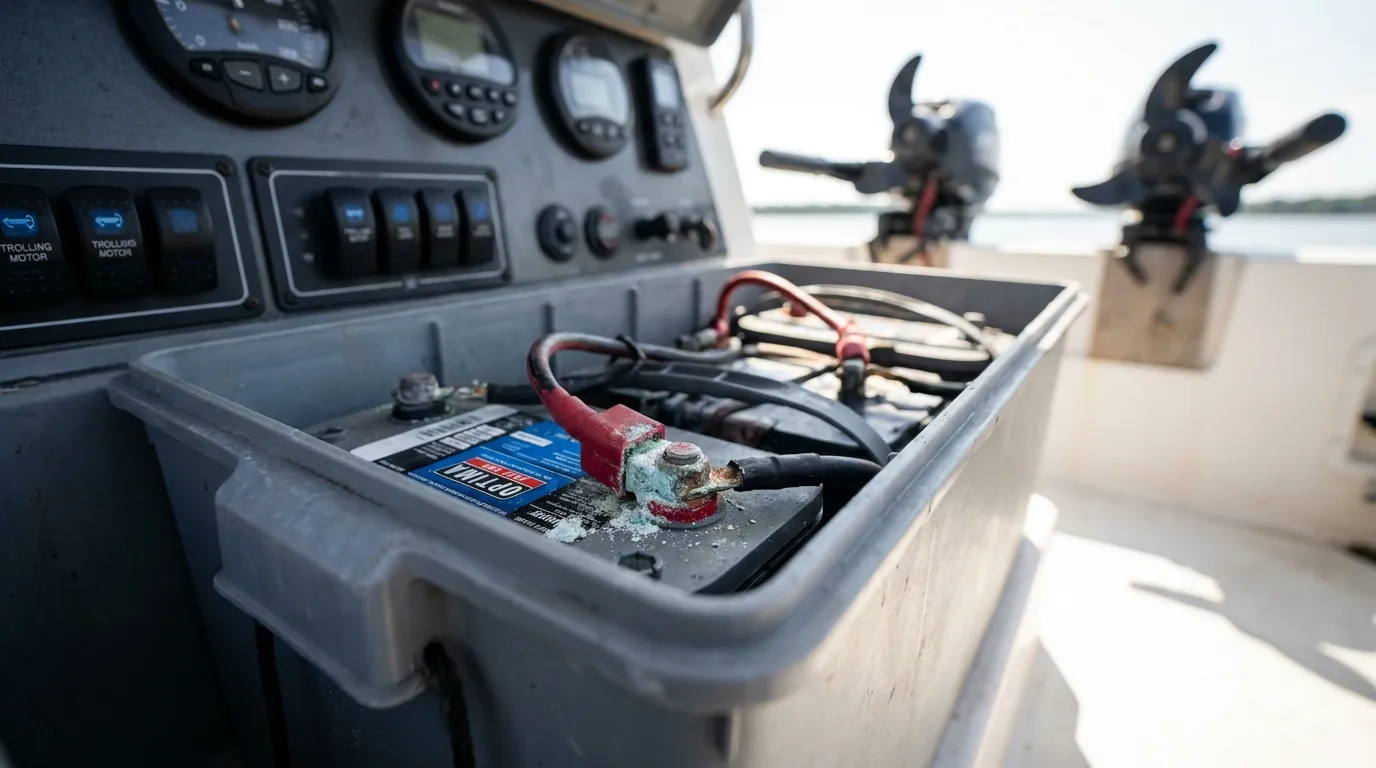
Boats also put batteries through a lot of vibration. Rough water and engine movement can loosen internal connections and shake plates apart if the battery is not secured the right way. Corrosion at the terminals adds resistance, which may seem small at first but can lead to weak starts and charging problems.
Here is a simple breakdown of the most common battery killers.
| Cause | What It Does | Prevention |
|---|---|---|
| Undercharging | Creates sulfation and power loss | Recharge fully after each trip |
| Overcharging | Causes heat and internal damage | Use the right smart charger settings |
| Heat | Speeds up chemical wear | Improve ventilation and avoid hot storage |
| Vibration | Damages plates and connections | Use proper hold-downs and trays |
| Corrosion | Raises resistance at terminals | Clean and protect connections regularly |
For a wider look at battery basics, that is covered in A Beginner’s Guide to Marine Batteries: Selection and Maintenance.
Charging habits that quietly shorten marine battery lifespan
A lot of battery problems start while charging. Many boaters think a quick top-off is enough. It isn’t. Marine batteries need the right charging profile, and they also need enough time to fully charge (that part matters). If charging gets cut short, the battery may seem fine for a while, but internal damage keeps building over time. Quietly.
A simple routine helps:
1. Match the charger to the marine battery type
Flooded, AGM, gel, and lithium batteries each need their own charging settings, so you can’t swap them around. A charger that works well for one type can damage another, so check the battery label and the charger manual before you connect anything.
2. Recharge marine batteries soon after use
Don’t leave a battery partly drained for days, because that’s rough on it and can shorten marine battery life pretty fast. After getting back from the water, recharge it as soon as you can. It’s a simple habit that really helps.
3. Avoid draining the battery too much unless it’s made for that
Starting batteries really don’t like getting run down. It’s that simple.
Deep-cycle batteries can wear out faster too if they get drained too far, again and again. With many lead-acid batteries, you’ll usually get a longer life if they stay above about 50% state of charge.
4. Use smart chargers, not guesswork
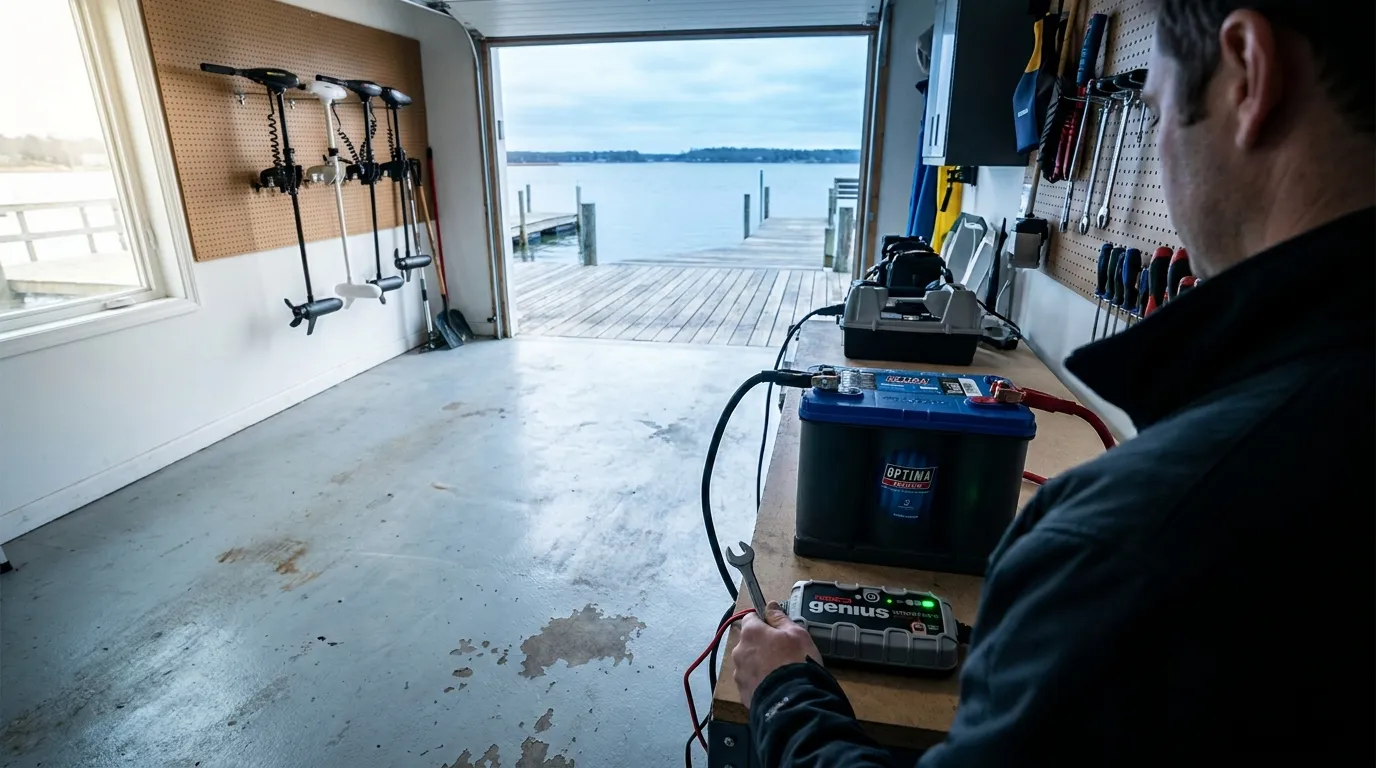
Smart chargers adjust the voltage during bulk, absorption, and maintenance, which is what makes them useful. That lowers the risk of overcharging and helps batteries stay in better shape during the off-season, while also taking some of the guesswork out of the process.
For a more detailed look at charging and routine care, that’s covered in Marine Batteries Care: Best Practices for 2025.
Storage mistakes that drain life during the off-season
A battery can lose months of useful life while the boat sits parked. Winter storage and long idle stretches trip up a lot of owners, mostly because it’s easy to miss. The usual mistake is simple: the boat gets put away, and the battery is expected to still be fine by spring.
What actually happens is slower and harder to notice. Batteries slowly lose charge over time, and parasitic loads from bilge pumps, stereo memory, GPS units, and other onboard systems can drain them even faster, even when nothing seems to be on. If the voltage stays low for too long, sulfation starts to build and capacity drops. That can leave a battery looking okay at first glance but working much worse later.
Before storage, fully charge the battery. If the setup allows it, disconnect loads or use a battery switch. Store the battery in a clean, dry, ventilated area. It doesn’t need warmth, but it also shouldn’t be left sitting in standing water. Extreme heat can shorten its life too.
For longer storage periods, use a good maintainer matched to your battery chemistry. That keeps the battery charged without overcharging it. Flooded batteries should have their water level checked before storage, and if access is easy and safe, it makes sense to check again during storage. It’s a quick job that can help prevent trouble later.
A common example shows up at spring launch. The boat ran fine in the fall, but the battery spent winter half charged with electronics still connected. By launch day, it may show voltage and still fail under load. Periodic testing often gets missed, but it can catch that problem early. We covered that in Marine Batteries Load Testing: Detect Hidden Power Loss.
Installation and wiring issues that many boaters miss
A good battery can still fail early if the installation is off. Loose hold-downs let it bounce around in rough water, and that wears it down fast. Cables that are too small add resistance and create heat. Dirty terminals or weak connections also cut charging efficiency and can make the engine harder to start.
A lot of boats end up with battery systems that were put together over time. A fish finder gets added, then extra lights, then a trolling motor upgrade, and it adds up fast. Before long, that can turn into a messy setup with shared grounds, weak fusing, and cables that no longer match the load. The result is an electrical system that feels strained.
A few installation habits can make a big difference:
Secure the marine battery properly
Use a marine-rated tray with hold-down hardware. It should not move at all, and it must not slide or tip over.
Keep terminals clean and tight
Clear away corrosion. Tighten connections the right way, not too much, and use terminal protection if needed.
Use the right cable size
For long cable runs and high-draw equipment, use thicker wire. A cable that’s too small wastes power and can create extra heat.
Separate starting and house loads when possible
This helps protect your engine’s starting power. Electronics, pumps, and accessories should stay on the house side.
For rigging issues, Marine Batteries Wiring Mistakes That Kill Performance covers common setup problems and is worth checking out.
Choosing the right marine battery chemistry for longer service life
Marine batteries do not all wear out in the same way. If the battery type does not match how the boat is really used, it may need to be replaced much sooner than expected. A weekend angler running a trolling motor has very different needs from a commercial operator who keeps electronics on for long hours (different job, different demand).
Flooded lead-acid batteries are usually the lowest-cost option. They can work well, but they need more upkeep and are easier to damage if they are not cared for. AGM batteries are sealed, handle vibration better, and because of that are a common choice on recreational boats. Lithium batteries cost more upfront, but in the right setup they can be lighter, charge faster, and last through more charge cycles over time.
The right choice depends on engine starting needs, accessory load, the charging system, and budget. On boats that sit for long periods, a low-maintenance battery often makes more sense. If heavy loads are part of every trip, longer cycle life may matter more than the initial price.
A simple marine battery maintenance routine that prevents expensive surprises
Helping a marine battery last longer does not have to be hard. You do not need special tools on every trip, and that makes the routine easier to stick with. What matters most is doing a few simple checks that you will actually keep doing on a regular basis.
Before heading out, inspect the battery for swelling, cracks, loose cables, and corrosion. Make sure the hold-down is secured firmly too. With a flooded battery, check the electrolyte level only when it is safe and makes sense to do it. It also helps to confirm that the charger or onboard charging system is working the way it should, since even a quick check can help stop problems later.
After the trip, recharge the battery sooner instead of waiting. If the trolling motor worked hard, leaving it until next weekend is not a smart idea. Once a month, check the resting voltage and pay attention to whether cranking seems slower than usual or electronics start acting oddly. Those issues often show up before a battery fails completely.
If the battery has already been in service for a few seasons, schedule a load test before peak season starts. That small bit of maintenance may help you avoid a missed trip, a tow, or trouble with sensitive electronics. Regular battery care also helps protect the rest of the boat, including pumps, navigation equipment, and engine starting.
You can find maintenance supplies, charging accessories, and general boat care gear through First Choice Marine if you are putting together a more complete preventive maintenance routine.
Frequently Asked Questions
How long do marine batteries usually last?
It depends on the battery type and how it is used. Many lead-acid marine batteries last around 3 to 5 years, while lithium can last much longer. Poor charging and storage habits can cut that life down fast.
What is the biggest thing that shortens marine battery lifespan?
Leaving a battery undercharged is one of the biggest causes of early failure. Low charge over time leads to sulfation, which reduces capacity and starting power. Heat and overcharging are close behind.
Should I disconnect my boat battery when the boat is not in use?
In many cases, yes. Disconnecting the battery or using a battery switch can reduce parasitic drain from electronics and onboard systems. It is especially helpful during long storage periods.
Can a marine battery test good on voltage and still be bad?
Yes. A battery may show normal voltage but still fail under load. That is why load testing is useful, especially before a long trip or at the start of the season.
Is it okay to use a car battery charger on marine batteries?
Sometimes, but only if the charger settings match the battery chemistry and voltage requirements. A charger without the right profile can overcharge or undercharge the battery. Smart marine-compatible chargers are usually the safer choice.
Keep your marine batteries ready for the next trip
Marine batteries do a lot of work, and most problems start well before they actually fail. Undercharging, overcharging, vibration, poor wiring, heat, and off-season neglect all wear down battery life, and that damage can add up fast. The good news is that a few simple habits can help you avoid each of these issues.
Start with the basics by choosing the right battery type, securing it properly, charging it fully after use, and keeping it clean and dry. During storage, disconnect unnecessary loads and use the right maintainer. Before the season starts, do a load test instead of making a guess.
These steps do more than protect the battery. They also help the engine start reliably, keep electronics working the way they should, support safety systems, and save time once you’re out on the water. For fewer surprises and more reliable performance, make battery care part of your regular marine maintenance. That extra bit of attention can add real years to marine battery life and help each trip go more smoothly.
