


Boat ownership is rewarding, but engine trouble can turn a great day on the water into an expensive headache quickly. Even a small issue can lead to a repair bill you did not see coming. It helps to know the basics of boat engine repair costs before anything breaks. It also helps to know which jobs a careful DIY owner can handle and which ones should go to a professional shop (and that line matters).
Good boat engine maintenance lowers the risk of major breakdowns. It can save you from towing bills, extra damage to other engine parts, and even missed fishing trips. At the same time, not every repair is safe to do at home. Modern outboards and inboards have electronics, fuel systems, cooling parts, and timing components that often need special tools and training (not just a basic toolbox).
In this guide, you’ll learn what common boat engine repair jobs usually cost and what maintenance you may be able to do yourself. You’ll also get a better sense of where DIY can go wrong. We’ll cover warning signs, practical ways to save money, and how to tell when calling a marine technician may actually cost less over time (yes, even if the shop rate hurts at first).
Why Boat Engine Repair Costs Keep Rising
Boat engine repair is not just about swapping out one bad part. A big part of the bill usually comes from diagnostics, labor time, shop overhead, and finding the right marine-grade parts, not just from the repair itself. Current market data shows the global boat repairing market reached $8.11 billion in 2025 and is projected to rise to $8.79 billion in 2026. That kind of regular growth shows continued demand for engine and propulsion work, routine service, and repairs on older boats, and those jobs can add up fast.
| Boat Repair Cost Driver | Current Figure | Why It Matters |
|---|---|---|
| Global boat repairing market, 2025 | $8.11 billion | Strong repair demand can keep shop schedules full |
| Global boat repairing market, 2026 | $8.79 billion | Growing market often means rising service activity |
| Average outboard engine price, 2024 | $12,777 | Higher-value engines justify careful maintenance |
| Example diagnostic scan | $185 per engine | Even finding the problem can cost real money |
| Example large-engine labor rate | $185 per hour | Labor is often the biggest part of the bill |
There’s also a clear reason repairs feel more expensive now: engines cost more than they used to. NMMA reported 278,000 outboard engines sold in 2024 with a total retail value of $3.6 billion. High-horsepower outboards made up a large share of that value. So when an engine is expensive and packed with electronics, guessing on a repair becomes a much bigger risk, and a costly one for both the owner and the shop.
Smart owners usually focus on prevention first. Simple maintenance, done on schedule, can help avoid higher labor charges later. For anyone trying to keep the rest of the boat in better shape too, these boat maintenance tips cover that as well. Small steps now can make a real difference later.
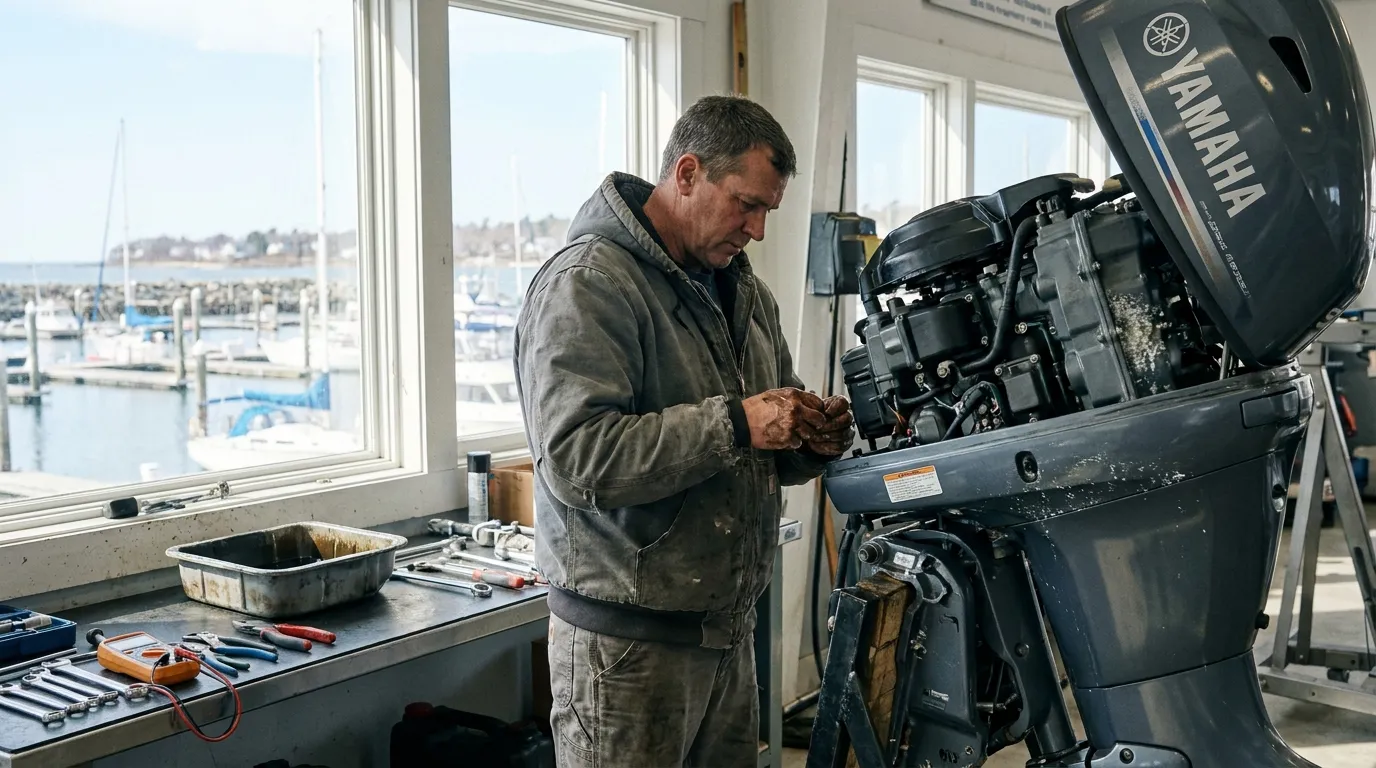
Boat Engine Maintenance Jobs You Can Usually Do Yourself
Routine boat engine maintenance is often one of the safer ways owners can save money. These jobs are usually repeatable, fairly low risk, and clearly explained in the engine manual. If the work is done slowly, with the right parts, and each step is checked twice, a lot of it can be done at home, which is nice. It still makes sense to take your time.
DIY-friendly jobs often include oil and filter changes, gear lube changes, spark plug replacement, cleaning battery terminals, replacing the fuel-water separator, and doing visual checks on hoses, belts, clamps, and wiring. For most owners, that is pretty manageable. Flushing the engine after saltwater use is another easy habit that helps protect the cooling system, and it usually only takes a few minutes. Corrosion prevention sprays and marine grease can also help reduce wear over time.
A real service rate sheet gives helpful context here. One 2025 marine shop listed gasoline engine oil and filter service at $185 per engine plus materials. That gives owners a clear picture of a standard job many of them can follow and plan for. If basic tools, a drain system, and the correct oil and filter are already on hand, doing that work yourself can save a decent amount over a season.
Simple jobs still need care. Follow the manual and keep the work area clean. Service dates are worth writing down for later. Photos before removing parts can make reassembly easier, and hoses can be labeled if needed. Use only marine-rated products. For many owners, careful step-by-step maintenance can mean real savings instead of costly mistakes.
Boat Engine Repair Jobs That Can Cost More Than Expected
Some repairs look minor at first, then get expensive fast. A water pump problem is a common example, and it often catches people by surprise. If it only needs routine impeller service, the cost may stay fairly manageable. But if overheating has damaged other parts, the total can go up quite a bit. One 2025 rate sheet listed water pump service at $315 plus materials. Another listed related water pump and thermostat labor at $185 per hour plus materials, which can add up quickly.
Diagnostic work can hide costs too. A check-engine alarm, rough idle, or sudden power loss might come from fuel delivery, sensors, ignition, charging issues, or internal wear, so the cause is not always clear right away. One shop charged $185 per engine just for a diagnostic scan. That fee may still be worth it, since replacing the wrong part can waste money and leave the real problem unfixed.
Typical mid-level repair areas that can surprise owners include:
Cooling system problems
Blocked passages and bad thermostats can cause overheating pretty fast. Failed impellers can cause it too. If the alarm keeps coming back after basic service, stop guessing and look deeper.
Fuel system issues
Dirty injectors, carburetor trouble, bad fuel, failing pumps, and fuel leaks can cause stalling, weak performance, and even a serious fire risk, so it’s something to take seriously.
Charging and starting faults
A weak battery is usually easy to figure out. A bad stator, regulator, corroded harness, or an intermittent short is not, and yeah, that can get tricky fast. If more help is needed, this guide to marine electrical system maintenance can help explain how the larger system works.
Many owners save money by handling the basics first. If the symptoms point to a larger failure, calling a pro early can make good sense.
What You Should Not Try to Fix Yourself
There’s a real line between routine service and risky boat engine repair. Cross it without the right tools or know-how, and a problem that might have been fixed can turn into a full engine replacement. It’s serious.
So don’t try these jobs yourself. They’re best left to a qualified marine technician:
ECU and fault-code diagnosis
Modern engines depend on sensors, computers, and brand-specific software (that part matters). A generic guess usually isn’t enough. If your motor shows alarms or fault codes, proper testing should come first. We covered this in our guide on engine diagnostics for boats, which explains why accurate code reading matters (so you know what’s really wrong).
Timing belt or timing system work
A 2025 service card listed timing belt service at $185 per hour plus materials (not cheap). It takes real skill, and if the timing is off, it can cause serious internal damage, which you really want to avoid.
Lower-unit internal repairs
Seals, gears, bearings, and shafts need real care, with no room for guesswork. If reassembly is even a little off, leaks, gear failure, or lost propulsion can happen.
Compression, leak-down, or internal engine damage
If there’s a blown head gasket, a scored cylinder, a valve issue, or other internal engine damage, this usually isn’t a simple weekend trial-and-error job. It really isn’t.
Fuel leaks and fire-risk repairs
A strong fuel smell, wet fuel lines, or stalling under load all need professional attention (no messing around). No shortcuts here.
So the simple rule is this: if the job involves engine timing, fuel pressure, internal parts, or advanced electronics, DIY stops making sense (that’s the line). Better to step back.
How to Decide: DIY or Call a Boat Engine Repair Pro?
The choice usually comes down to three things: cost, risk, and your skill level. A quick way to figure it out is with four questions: Do I have the service manual? Do I have the right tools? Can I test the repair when I’m done? And if this goes wrong on the water, what happens?
If the answer to that last one is ‘engine damage,’ ‘fire risk,’ or ‘loss of control,’ call a pro. For commercial boaters, offshore anglers, or anyone running long distances, that risk is too high to mess with.
Here’s the simple filter:
Good DIY jobs
Fluid changes, plug replacement, flushing, and battery care are pretty easy. Corrosion control too, plus basic prop removal and routine visual checks you can do yourself.
Borderline jobs
Impeller service, thermostat replacement, winterization, and basic troubleshooting are routine jobs. If you have experience, these can be DIY if you follow the manual closely and don’t wing it.
Pro-only jobs
ECU faults, tricky wiring failures, fuel injection work, lower-unit rebuilds, timing jobs, and internal engine repair are jobs best left to a pro (seriously). For related tasks, check out fiberglass boat hull repair techniques to understand structural repair differences.
The same idea applies to nearby systems too. Poor prop performance can feel a lot like an engine problem, so learning about boat propeller care and repair may help you avoid a wrong diagnosis and save yourself some hassle.
Cost-Saving Habits That Actually Work
Avoiding repairs from the start is usually the least expensive way to go. Boat engine maintenance does not have to be fancy or hard, but it does need to happen on a regular schedule.
A written plan for oil, filters, gear lube, plugs, and seasonal service can make a big difference. After saltwater trips, flush the engine. Use fresh fuel, and add the correct fuel stabilizer before storage. Check the battery before launch day instead of waiting for problems to appear. Every few trips, look for loose clamps, cracked hoses, and signs of corrosion, because small checks like these can prevent a lot of trouble later.
It also helps to keep a small onboard kit with spare plugs, basic hand tools, fuses, and clean rags. Keep maintenance records by date and engine hours so fixing problems is easier later, and those records can also help if the boat is sold one day.
Buying good marine parts from a trusted source usually saves more than choosing the cheapest option. A cheap filter or the wrong impeller can quickly turn into a much larger repair bill. Many boaters use retailers such as First Choice Marine for reliable parts and maintenance supplies for routine engine care and other onboard systems.
Frequently Asked Questions
How much does basic boat engine repair usually cost?
Basic service can range from a modest parts-only DIY cost to around $185 plus materials for common shop tasks like oil and filter service. More advanced work rises quickly when labor, diagnostics, and extra parts are involved.
Is boat engine maintenance worth doing yourself?
Yes, if you stick to low-risk jobs and follow the service manual. Oil changes, filter swaps, flushing, and battery care are often good DIY tasks that can save money over time.
What is the biggest mistake boat owners make with engine repair?
Many owners keep replacing parts without proper testing. That can waste money and delay the real fix, especially with cooling, fuel, or electrical problems.
When should I stop using the engine and call a mechanic?
Stop right away if you have overheating alarms, repeated stalling, fuel smells, metal noises, or loss of power under load. Running the engine longer can turn a small repair into major damage.
Can poor maintenance shorten engine life?
Yes. Skipped oil changes, dirty fuel, corrosion, and ignored warning signs all increase wear. Consistent boat engine maintenance helps engines run better, last longer, and hold value.
The Bottom Line for Smarter Boat Engine Repair
Boat engine repair costs are a lot easier to understand once you split them into two groups: routine maintenance and higher-risk repair work. Routine care is where many owners can save real money. It covers the practical stuff (the hands-on basics). Oil changes, filters, spark plugs, flushing, battery checks, and corrosion prevention are all reasonable DIY jobs for careful boaters. Staying on top of these jobs helps your engine stay reliable and lowers the chance of bigger failures later.
Once a repair gets into electronics, fuel systems, internal parts, timing, or overheating that’s hard to diagnose, the risk changes. Paying for a diagnostic scan or skilled labor can feel expensive at first (and yeah, nobody loves that bill). Still, it usually costs less than damaging a $12,000 engine by guessing or using trial and error.
The best plan is pretty straightforward. Learn your engine, follow the manual, keep records, and be honest about your limits. Start with the safe maintenance jobs. If symptoms show up early, act fast and bring in professional help before a small issue turns into a bigger one. That helps keep costs under control, protects valuable time on the water, and keeps the boat ready for the next trip.
