


Salt, moisture, and electricity can turn a solid boat into a constant repair project. Corrosion is more than a rough, ugly surface. It weakens steering parts, damages wiring, eats away at props, locks fasteners in place, and shortens the life of expensive engines and accessories, sometimes before owners even notice. Not cheap. For recreational boaters, that can mean lost weekends. For commercial operators, it can lead to real downtime and higher costs.
The good news is that marine corrosion prevention isn’t just for big yachts or professional yards. With smart habits, the right products, and regular checks, most boat owners can prevent a lot of damage before it gets serious. That matters even more for people who fish in saltwater, keep a boat at a marina, trailer it a lot, or rely on trolling motors and electronics. A few simple steps can go a long way.
This guide explains what causes corrosion, how to spot the early warning signs, and which prevention methods work best for hull hardware, engines, electrical systems, trailers, and onboard gear. It also covers common mistakes, useful product types, and a simple maintenance routine that feels realistic to stick with over time, instead of becoming another long list that gets ignored. Need practical help too? If dependable marine parts are part of the plan, resources from First Choice Marine can fit into that routine.
Know What You Are Fighting
Corrosion starts when metal reacts with water, oxygen, salts, and other chemicals in the marine environment, and saltwater makes that reaction happen faster. Add mixed metals or stray electrical current, and the damage can get worse very quickly. Put simply, a boat is packed with parts that want to trade electrons. Once that process begins, the metal starts to wear away.
Boat owners should understand the main types. General surface corrosion appears as rust, dull areas, or white powder on metal. Galvanic corrosion begins when two different metals touch in an electrolyte like seawater. Stray current corrosion is the most aggressive in many cases. It can destroy underwater metal parts much faster than people expect.
Several broad trends explain why corrosion is such a common issue for boaters.
| Corrosion Risk Factor | Why It Matters | Typical Impact |
|---|---|---|
| Saltwater exposure | Salt speeds electrochemical reactions | Faster damage to metal and wiring |
| Dissimilar metals | Creates galvanic activity | Pitting on props, shafts, and fittings |
| Poor electrical grounding | Can cause stray current corrosion | Rapid loss of underwater metals |
| Trapped moisture | Keeps surfaces wet for long periods | Hidden corrosion under clamps and panels |
Early inspection is important. Check for bubbling paint, green buildup on terminals, white crust on aluminum, rust tracks around fasteners, and pitting on props or trim tabs. Catch those signs early, and the repair is usually minor. Leave them too long, and the cost rises fast. For deeper reading on long-term protection, see Advanced Techniques for Marine Corrosion Prevention: Protecting Your Investment.
Start With the Basics: Clean, Dry, and Protect
One of the easiest and best ways to prevent corrosion is simple: don’t let salt and moisture stay on the boat. After every trip, rinse everything with fresh water. Pay extra attention to the engine, lower unit, trailer, cleats, rails, hinges, battery areas, and trolling motor mounts. Salt can keep causing damage long after the day is over.
Drying matters just as much. Water that sits under seat bases, inside lockers, around pumps, or beneath wiring bundles can become hidden trouble if it stays there too long. Use ventilation whenever possible. Open compartments after cleaning. If the boat stays outside, make sure the cover sheds water properly and doesn’t hold damp air inside.
Then protect it. A marine corrosion inhibitor leaves a thin film on exposed metal and electrical connections, helping protect the areas that take the most abuse from salt, spray, and daily use. Apply it to battery terminals, fuse blocks, engine linkages, fasteners, and trailer plug connections. Marine grease also helps, especially on moving metal parts and places that get splashed a lot. Wax or other protective coatings help painted surfaces too, creating a barrier between the metal and the elements.
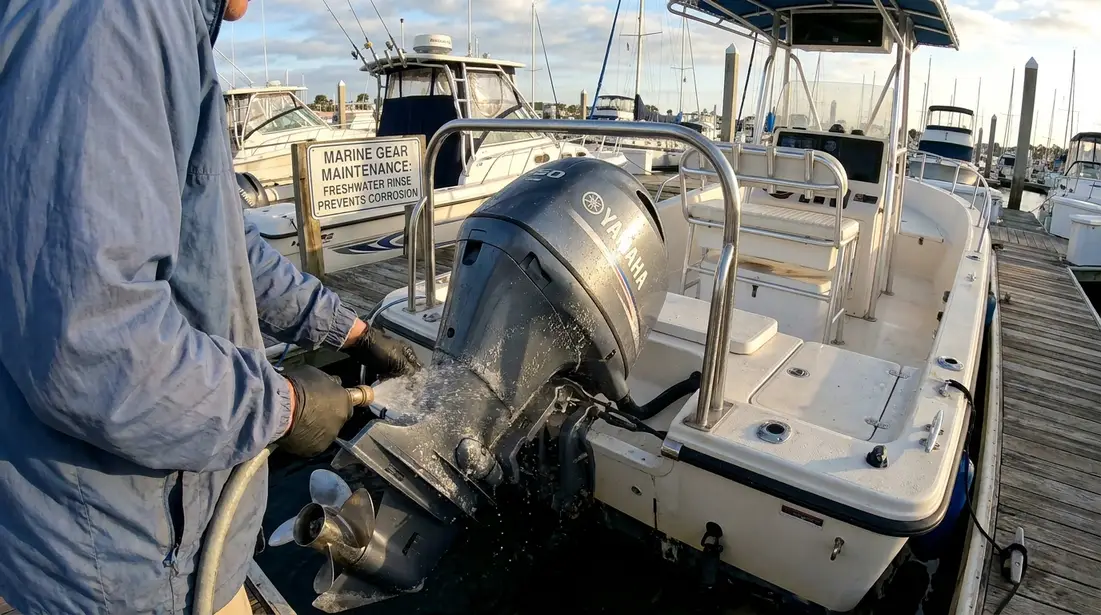
A simple post-trip routine works best:
After each outing
- Rinse with fresh water
- Flush the engine if the maker recommends it
- Wipe down metal hardware
- Check battery terminals and exposed wiring
- Dry wet storage spaces
These steps do more to prevent marine corrosion than many people think. Simple stuff. They’re easy, cheap, and proven over time.
Use Sacrificial Anodes the Right Way
Sacrificial anodes are one of the most important tools for stopping marine corrosion. They wear away first and help protect more valuable parts like prop shafts, trim tabs, lower units, rudders, and transducers. But they only work if they match the water type and the way the system is set up.
In saltwater, zinc anodes are common. Aluminum anodes work there too, and in brackish water as well, which is why many boat owners use them today. For freshwater, magnesium anodes are often the best choice. Pick the wrong one, and protection can drop or the anode can wear out too quickly.
A good inspection routine is simple. Check for heavy loss, uneven wear, paint on the surface, or a weak attachment. Replace an anode when about half of it is gone. If one still looks new after months in the water, that can be a warning sign. It may not have solid electrical contact.
Common mistakes are easy to avoid:
Anode mistakes that cause trouble
- Painting over anodes
- Using the wrong anode material for your water type
- Ignoring bonding issues
- Replacing metal hardware without checking system compatibility
- Assuming trailer boats never need anodes
Real-world example: a center-console owner kept replacing a pitted prop every two seasons, but that wasn’t the actual problem. A painted-over anode on the lower unit, along with a loose bonding connection, was causing the damage. They were small problems, but together they added up. After both were fixed, the new prop lasted much better.
If you handle your own boat maintenance, a detailed checklist from DIY Guide to Marine Corrosion Prevention: Techniques for 2025 can help you build a better routine.
Protect the Electrical System Before It Protects Nothing
Electrical systems can turn into a hidden corrosion hotspot. Boat owners usually pay attention to the metal they can see, but many failures start inside terminals, crimp points, switches and ground connections, where trouble grows quietly. Salt air, vibration and moisture work fast together. Then you get resistance, heat and corrosion.
Start with battery care. Keep terminals clean, tight and coated with marine terminal protectant. Use heat-shrink marine connectors instead of automotive ones because they hold up better in the harsh, wet conditions boats face all the time. Support wires so they don’t rub through insulation. Check bilge pump wiring, navigation lights, trolling motor leads and trailer connectors regularly. Those areas get wet a lot.
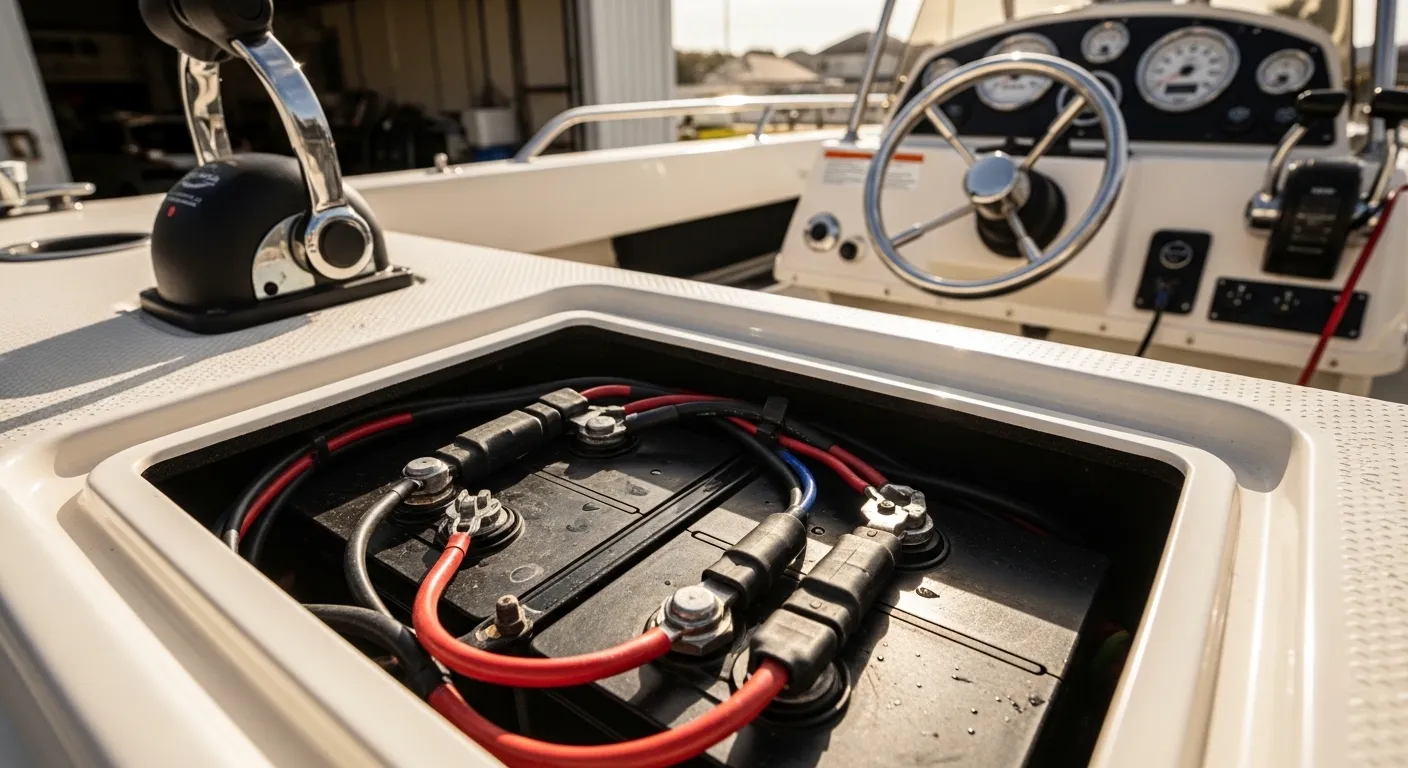
Stray current corrosion needs special attention. If underwater metals are being eaten away very quickly, the cause may be a wiring fault, a poor ground or leaking shore power sending trouble where it shouldn’t be. Don’t ignore that warning. It can damage expensive parts fast.
Use a simple rule: every electrical repair should also help prevent corrosion. Seal each connection. Support each wire. Check nearby grounds. Battery condition matters too, because weak batteries can strain charging systems and make other electrical problems appear sooner. If that area needs work, A Beginner’s Guide to Marine Batteries: Selection and Maintenance is a useful next read.
Focus on High-Risk Areas Most Owners Miss
Some parts of the boat get checked all the time. Others stay out of sight until something goes wrong. Smart boat owners pay extra attention to the hidden spots where trouble often starts. That’s where small issues build up.
Start with the trailer. Springs, hubs, light grounds, winch parts, and safety chains take constant spray and road shock, and even a little rust there can turn into a roadside problem later. Those areas are easy to miss. Rinse the trailer after saltwater use. Use marine-grade grease where needed.
Next, inspect steering and control cables. Corrosion inside cable ends or around fittings can make the controls stiff, rough, and unsafe before it’s clear anything is wrong. Also check engine mounting bolts, transom hardware, trim and tilt parts, hose clamps, and fuel system clamps on a regular basis. These small details matter here.
Don’t forget onboard accessories. Trolling motors, fish finders, battery chargers, pumps, and LED lighting all have metal parts and wiring that sit in damp conditions for long periods. Corrosion in these systems starts small in many cases, then leads to strange performance problems that are frustrating and hard to trace.
Seasonal storage matters too. Before long storage, clean the boat well, dry the compartments, protect exposed metal, and remove any standing water. Boats stored near the coast need extra attention because salty air keeps attacking metal even when the boat is just sitting still.
Build a Simple Prevention Plan You’ll Actually Use
The best corrosion plan is the one you’ll actually stick with. Keep it simple, make it repeatable, and base it on how the boat is really used. A full-time commercial workboat needs a closer schedule than a freshwater weekend fishing rig. Both still need a plan.
Here’s a simple plan:
Monthly
- Check anodes
- Inspect battery terminals, wiring, props, shafts, and lower-unit surfaces
- Spray corrosion inhibitor on exposed hardware
Every 3 to 6 months
- Check bonding and ground points
- Re-grease key parts with marine-grade grease
- Check trailer electrical connections and hubs
- Touch up damaged paint or protective coatings
Before storage or heavy season use
- Clean and dry the boat well
- Replace worn anodes
- Fix loose clamps, cracked connectors, or rusted fasteners
- Test pumps, lights, and charging systems
Keep a small box with the basics: corrosion inhibitor, dielectric grease, marine bearing grease, fresh-water hose tools, terminal cleaner, heat-shrink connectors, spare anodes, and replacement stainless fasteners matched for marine use. This saves time and helps spot problems early before they turn into bigger issues.
Frequently Asked Questions
What is the best way to prevent corrosion on a boat?
The best approach is a mix of fresh-water rinsing, drying, protective sprays, proper anodes, and regular inspections. No single product can do it all. Good habits after each trip make the biggest difference over time.
How often should boat anodes be replaced?
Check them at least monthly during active use and replace them when they are about 50 percent worn. In harsh saltwater conditions, they may wear faster. Uneven wear or no wear at all can also signal a bonding or contact problem.
Can freshwater boats have corrosion problems too?
Yes. Freshwater is usually less aggressive than saltwater, but corrosion still happens. Moisture, mixed metals, poor wiring, and neglected battery terminals can still damage parts over time.
Are automotive sprays and connectors okay for marine use?
Usually not the best choice. Marine products are made to handle moisture, salt, vibration, and UV exposure better than standard automotive products. If you are comparing options, First Choice Marine carries marine-focused maintenance categories that fit this kind of preventive work.
What causes corrosion around marine batteries and wiring?
Battery acid vapors, salt air, loose connections, and trapped moisture are common causes. Corrosion often begins at terminal ends and creeps into the wire. Clean terminals, use sealed connectors, and protect the area with marine-safe products.
Where can boat owners find parts and supplies for marine corrosion prevention?
Look for marine-specific anodes, greases, sealants, terminal protection products, and replacement electrical parts from specialized marine suppliers. For boat owners who want maintenance parts, engine care items, and onboard system supplies in one place, First Choice Marine is a relevant example to review alongside your regular service checklist.
Keep Corrosion From Owning Your Boat
Corrosion may be common, but it doesn’t have to eat up your maintenance budget or take time away from your days on the water. The basics are simple: wash off salt, dry hidden spaces, protect exposed metal, inspect wiring, and choose the right anodes. Do it regularly enough and small problems stay small instead of turning into expensive repairs.
Preventing corrosion works best as a habit, not a one-time fix. A quick 10-minute rinse and inspection today can help prevent a broken fitting, a failed bilge pump circuit, or prop damage later. That applies to any boat: bass boat, center console, work skiff, or trailer boat.
This week, start with the high-risk zones. Check the anodes, battery terminals, trailer connections, and engine hardware. Replace worn parts, protect exposed surfaces, and write down a maintenance schedule that’s easy to follow. Nothing fancy. A steady routine keeps marine corrosion from turning into a bigger problem.
