


Seeing a boat start sliding the wrong way on a launch ramp can flip excitement into panic in seconds (often faster than people expect). The trailer winch, along with the straps and safety chains, is doing far more than it seems. This gear holds thousands of pounds in place while towing and during launch and retrieval (that’s a lot of force). Even so, many boat owners don’t think much about it until something fails. That’s usually when trouble starts.
Trailer care is more than tires and bearings. The winch and all the parts that keep the boat attached are load‑bearing safety gear, not optional add‑ons. When one part gives out, damage follows fast. Boats can slam into concrete, vehicles can get hit, and people can get hurt too (no one wants that). The good news? Most of these problems can be avoided with simple, regular upkeep.
This guide explains everything in clear, everyday language (no jargon overload). You’ll learn how load ratings really work, where common failure spots show up, and when it makes sense to upgrade, like replacing worn straps or a winch that’s too small. The tips here work just as well for weekend anglers as they do for commercial operators who rely on their trailers every day (rain or shine).
Understanding Load Ratings and Why They Matter
Most issues start when weight slowly climbs higher than planned. Every winch, strap, and chain has a set limit. When real loads creep close to that limit, risk rises quickly. Keep some breathing room and things work better. That’s not just advice, it’s how gear stays reliable and does its job.
With winch straps, the number that matters most is the Working Load Limit (WLL). Industry rules use a 3:1 safety margin, which means the WLL is one‑third of the breaking strength. A strap that breaks at 10,000 pounds has a WLL of about 3,333 pounds. Using the bigger number on the label is where problems usually begin.
Winches work the same way, with a bit more cushion. Many trailer pros suggest keeping the boat under about 75 percent of the winch’s rated capacity. That takes stress off the gears, bolts, and inner parts. Cranking feels easier, wear slows down, and the setup stays predictable.
| Component | Typical Rating Rule | What It Means for You |
|---|---|---|
| Winch Strap | WLL = 1/3 of break strength | Avoid loading beyond the WLL |
| Trailer Winch | Use ≤75% of rated capacity | Longer life and safer loading |
| Safety Chains | Rated to trailer GVWR | Weakest link sets the limit |
Safety chains are less forgiving. The whole setup is only as strong as the weakest part, including hooks, bolts, and mounting points. One underrated hook sets the limit for everything. No shortcuts here.
Common Failure Modes You Should Watch For
Trailer problems usually give off warning signs long before anything actually breaks. They often start as small issues that get brushed off because they don’t seem like a big deal at first. Over time, those quiet problems add up.
Winch straps are a good example. Sun exposure slowly weakens the fibers, even when the strap still looks okay. Under real weight, that hidden wear can lead to a sudden tear. Saltwater speeds this up and does more damage than most people expect.
Steel winch parts fail in a less obvious way. Rust builds up inside the housing and weakens gears or pawls from the inside out. During loading, that kind of damage can cause rollback, which is never a good surprise. This is why many boaters switch to synthetic straps instead of steel cable. It’s a tradeoff, but for many people, it makes sense.
Safety chains often fail because the parts don’t match. Chains with low ratings, light-duty hooks, or twisted links all lower strength. Another common mistake is not crossing the chains under the trailer tongue. If the coupler fails, crossed chains create a cradle that helps keep the trailer off the pavement.
A respected marine safety writer puts it plainly:
Wait until your boat is touching the water before disconnecting the winch strap and the safety chain.
For a wider look at trailer issues beyond winches and chains, there’s also a detailed guide on boat trailer maintenance.
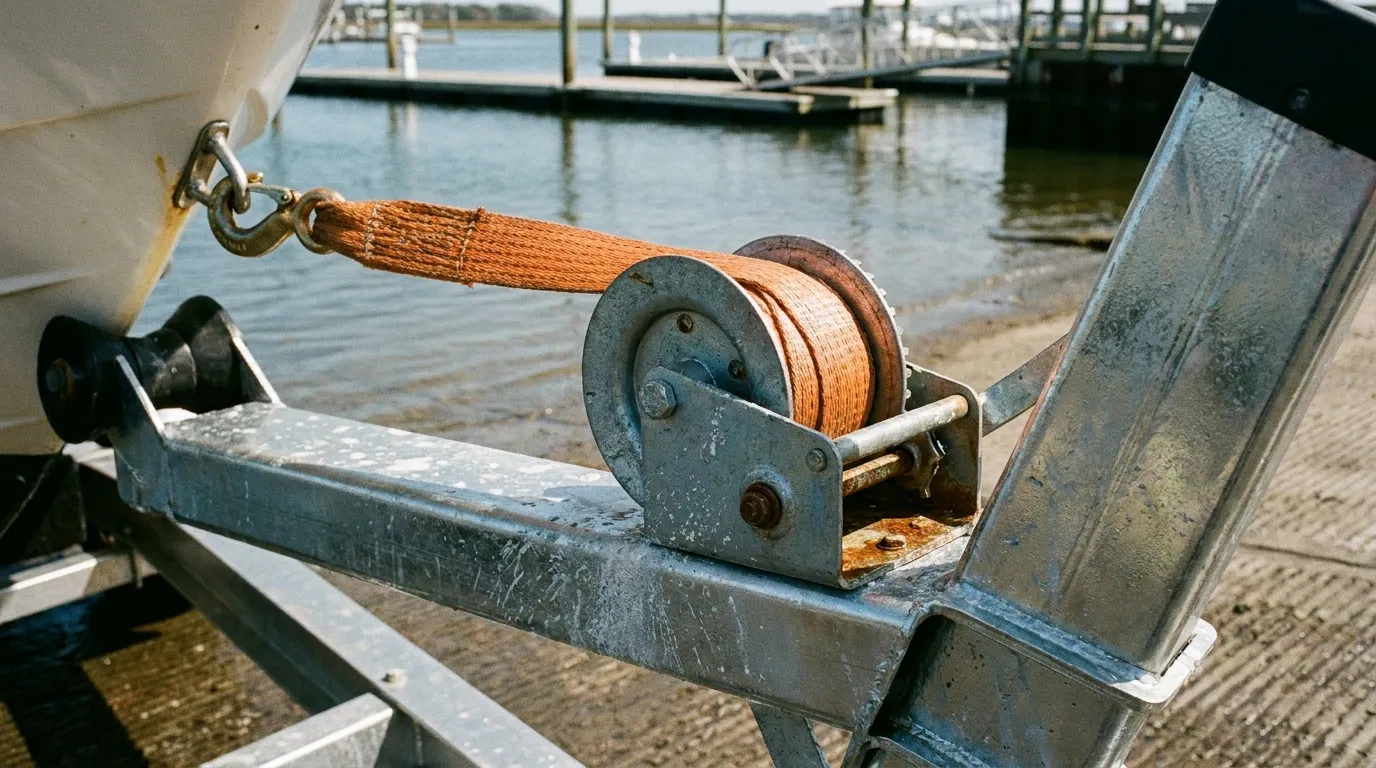
Choosing the Right Winch for Your Boat
Picking a boat trailer winch often comes down to how you actually use your boat day to day. Size matters, but habits, load weight, and ramp conditions matter just as much (this is where real life comes in). What looks right on paper doesn’t always match how loading and unloading really works at the ramp.
Small fishing boats and lightweight skiffs usually do fine with a manual winch and a wide synthetic strap. Smooth gears make cranking easier over time, and a comfortable handle grip helps more than most people think (your hands will feel it). Cheaper winches with thin gears tend to wear out fast, turning a normal load-up into a headache.
Boats over 5,000 pounds often need higher-capacity winches or electric options. Electric winches ease the strain on backs and shoulders after long days and make solo loading or steep ramps less stressful.
Where you boat also matters. Saltwater use calls for corrosion-resistant finishes and sealed parts. Freshwater setups still need protection, but parts usually last longer with slower wear (it’s easier on your gear).
Upgrades often start at the mounting points. A stronger winch needs a base that can handle it, and reinforcing the winch post may help avoid issues later. Trailer wiring and lights deserve a look too. Pairing winch upgrades with regular inspections helps overall safety. Another article covers electrical failures and corrosion problems tied to trailer safety planning.
Safety Chains: Small Parts With Big Responsibility
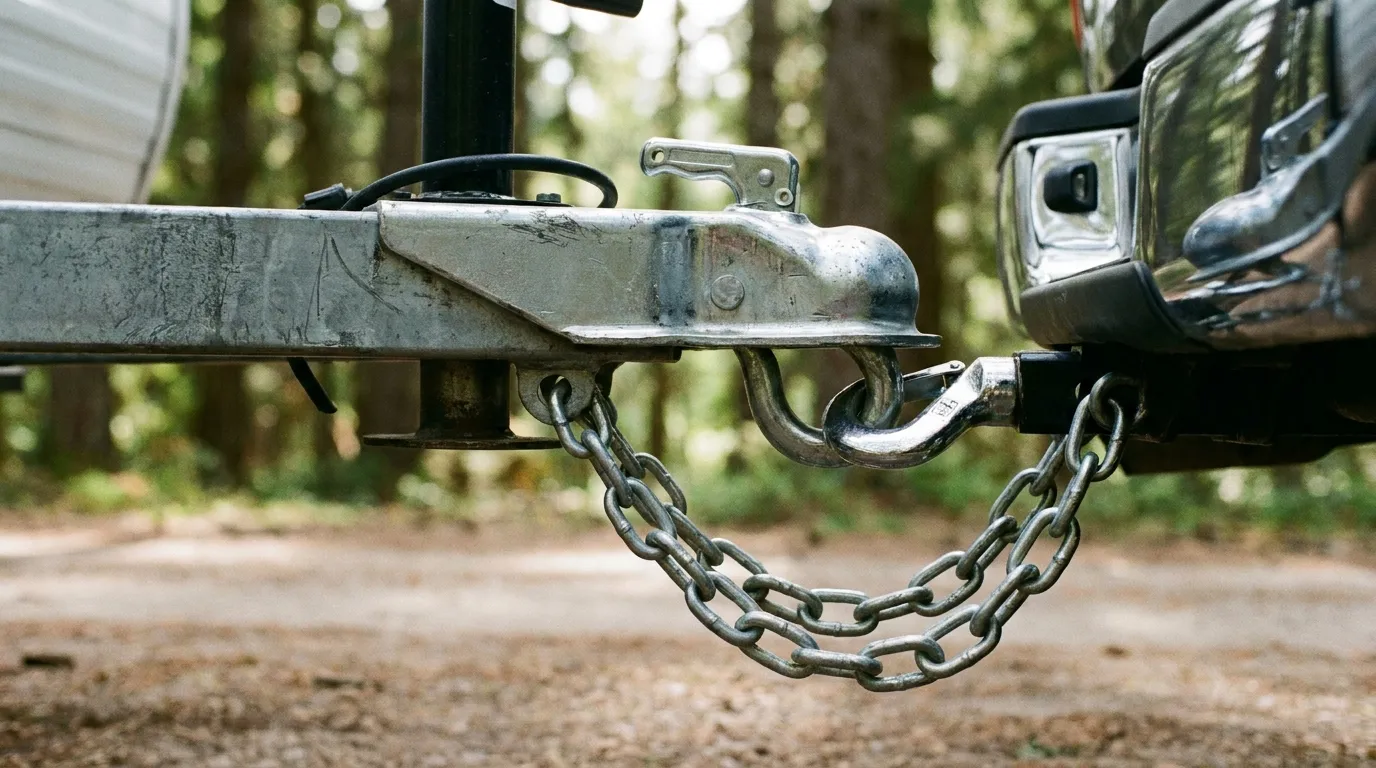
Coupler failures don’t happen often, but when they do, safety chains are what keep the trailer attached and help the driver stay in control. They don’t get much attention, but in that moment, they’re the backup that really counts.
The chains should be rated at or above the trailer’s Gross Vehicle Weight Rating, and the hooks need to meet that same rating. Using strong chains with weaker hooks misses the point, since the hook is often the first thing to fail.
Crossing the chains under the trailer tongue adds an extra layer of protection. That crossover creates a catch point, so if the coupler slips, the tongue is more likely to stay off the pavement instead of scraping or digging into the road.
Changing chain links can cause trouble. Cutting or bending them weakens the chain. A safer choice is rated shackles or adjusting the mounting points to get the right length.
There’s also a separate boating safety equipment guide that explains how safety chains work with other trailer parts and onboard gear.
Smart Upgrade Tips That Pay Off
The upgrades that last are often the small ones. Consistent changes over time lower risk without turning into a big teardown, and clear gains don’t require a full overhaul.
Winch straps are a good example. After a couple of seasons, replacing them every two to three years makes sense, and sooner if you notice fraying or fading. Synthetic straps are usually a better choice than steel cable since they store less energy if they snap, which makes a failure less dramatic and easier to handle.
Capacity matters too. Moving up to a winch rated well above your boat’s actual weight gives smoother control and less long-term wear. Extra margin means less strain on everything involved.
Safety chain kits with clearly stamped ratings remove guesswork during inspections, especially on crowded ramp days. And if you launch often or work solo, an electric winch can save time and effort your back will thank you for.
Platforms like First Choice Marine are often reliable for practical marine parts and clear guidance, helping you upgrade carefully without buying more than you need.
Frequently Asked Questions
How do I know if my winch strap is underrated?
Check the Working Load Limit on the strap tag. Compare it to your boat weight, not the trailer weight. If the numbers are close, the strap is likely underrated.
Should I use steel cable or a synthetic winch strap?
Synthetic straps resist corrosion and are safer if they fail. Steel cables last a long time but store more energy and can snap back dangerously.
How often should safety chains be replaced?
Inspect them every season. Replace chains if you see rust, bent links, or worn hooks. There is no fixed timeline, condition matters most.
Do electric winches drain my vehicle battery?
They draw power while running, but normal use is short. With a healthy vehicle battery and engine running, drain is minimal.
Is crossing safety chains really necessary?
Yes. Crossing chains creates a cradle that helps control the trailer if the coupler fails. It is a simple step with real safety benefits.
Putting It All Into Practice
Boat trailer safety comes down to weight and motion working together, with no space for shortcuts. Every mile you tow puts winches, straps, and chains under load. Skip one part and the whole setup lets you know fast.
Clear, honest numbers make the difference. What does the boat really weigh once fuel and gear are onboard? Matching ratings with some breathing room, not right at the limit, feels more stable. Before long trips, quick inspections spot wear early, and swapping parts before they fail saves time you’d rather spend elsewhere.
Upgrades feel like visible insurance: smoother winches, new straps that hold tight, and the right chains. Together, they ease strain at highway speeds and make towing feel more relaxed.
Regular upkeep and smart picks turn loading and towing into routine. Less stress at the ramp, more time on the water, that’s why the trip began.
