


Random electrical problems on a boat can push anyone to the edge. One day the lights work perfectly. The next, they flicker or shut off with no warning, which can test even a calm skipper’s patience. Sometimes a pump kicks on in the middle of the night, usually right after you finally fall asleep. A chartplotter or radio may reset for no clear reason. In many cases, the device itself isn’t the real problem. More often, it’s a hidden ground fault somewhere in the system. These faults are hard to spot, easy to miss, and usually sneakier than people expect. If you’ve ever faced these odd failures, understanding marine electrical troubleshooting right from the start can make all the difference.
Marine ground faults are one of the most common reasons boats act electrically “possessed,” and they’re often the most frustrating kind. They show up on everything from small fishing boats to sailboats and large commercial vessels. Clear warning signs are rare. Instead, these faults usually cause slow damage to equipment over time. They also speed up corrosion in wiring and metal parts, which turns into a quiet and expensive problem. Safety risks come with that too, and those risks are often underestimated when everything seems mostly fine.
This guide is here to explain what’s really going on without making it complicated. It walks through marine electrical troubleshooting in clear, manageable steps. You’ll learn how ground faults usually start, why they often come back, and how to track them down and fix them properly instead of just covering up symptoms (that difference usually matters). It also covers common wiring mistakes that lead to repeat failures. The goal is to help readers feel more comfortable around a boat’s electrical system and know when it’s time to pause and get help.
Along the way, you’ll find real-world data, expert insight, and hands-on tips you can use right away, without getting buried in theory. No fluff. Whether it’s a weekend fishing boat or a working vessel, the focus stays practical and easy to apply. Simple. Useful.
Understanding What a Marine Ground Fault Really Is
A ground fault usually shows up when electricity starts flowing where it shouldn’t. Instead of staying inside the wire, current leaks into the boat’s ground system or nearby metal. This can happen in both DC systems and AC shore power setups, which often surprises people at first.
Boats are tricky because of the environment they live in. Water and vibration slowly turn small weaknesses into real problems. Constant movement means wires can rub against sharp edges as the hull moves through waves. Moisture creeps into connections and often never fully dries out. Corrosion builds little by little, resistance increases, and current starts searching for an easier path to ground. From what I’ve seen, this is usually why these faults show up even on boats that seemed perfectly fine last season.
Some verified benchmarks help explain why small issues can cause big symptoms. They help a lot when you’re trying to track down a strange electrical problem.
| Electrical Check | Normal Reading | What It Means |
|---|---|---|
| 12V battery at rest | 12.6 volts | Battery is fully charged |
| Neutral to ground voltage | 0 volts | Proper bonding with no leakage |
| AC leakage current | 0 amps | No ground fault present |
| Voltage drop under load | Under 15% | Healthy wiring with low resistance |
When readings move outside these ranges, things start acting strange. Breakers might trip, GFCIs can shut off without warning, and electronics may act unpredictably, especially when loads change, like when a pump turns on.
Marine electrical expert Nigel Calder often says these faults are easier to find than many people expect, which surprises a lot of owners.
Anytime an electrician tells you it's going to tear the boat apart to find the fault, there's a problem here. We can figure out what the fault is with a whole lot more easily just by using some meters and doing a whole bunch of testing.
That’s good news for DIY boat owners. With patience and a clear process, many wiring problems can be found without ripping the boat apart or removing every panel. You don’t need a mess to fix it.
Common Causes of Boat Electrical Ground Faults
Ground faults usually don’t appear out of thin air. On most boats, they come from a familiar set of problems that show up again and again, especially on older vessels. These issues usually build over time. They’re slow‑moving patterns that get worse year after year, not sudden electrical shocks out of nowhere.
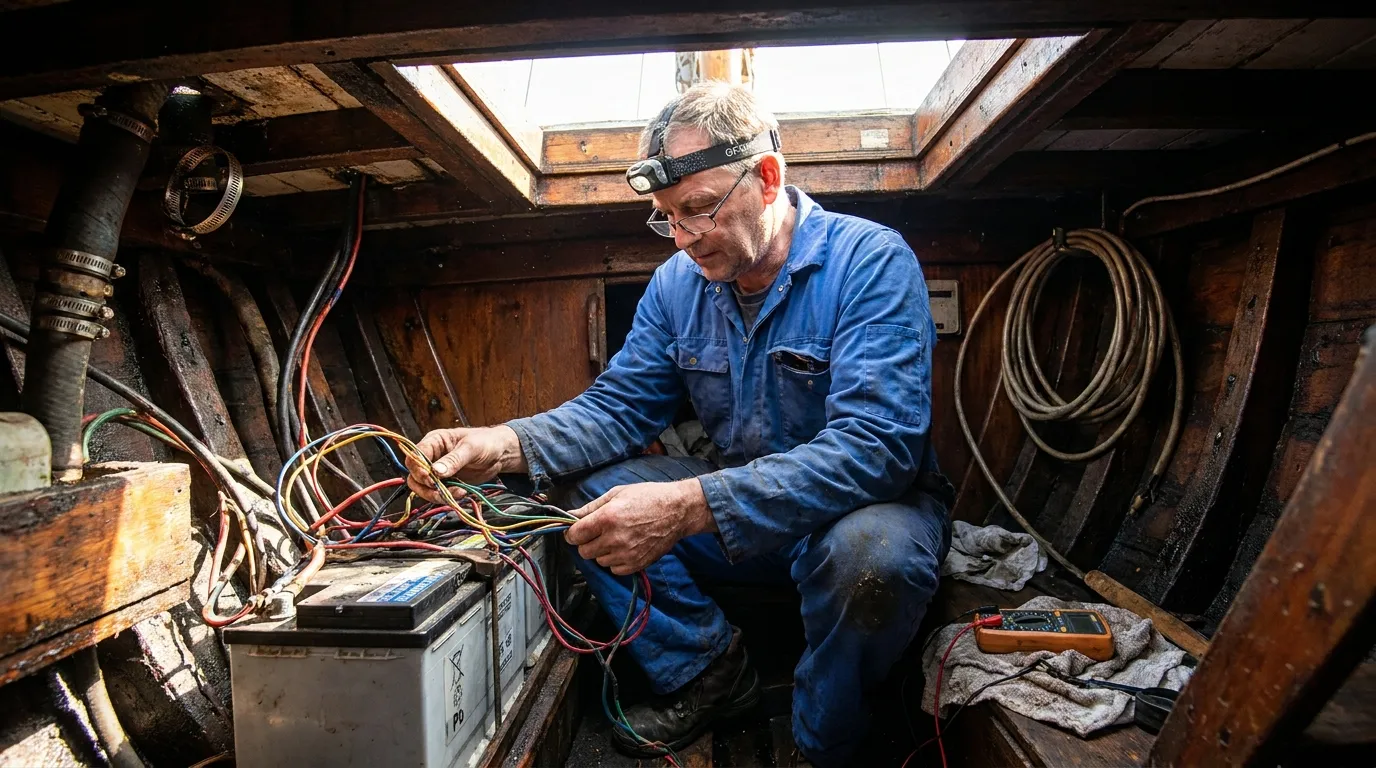
Chafed insulation is one of the most common starting points. Boat wiring often runs through tight, unfriendly spaces, behind panels, under decks, or through bulkheads. With constant motion and vibration, the outer jacket slowly wears away. As that protective layer thins, bare copper can end up touching metal. When that happens, current can leak into the hull or bonding system, and trouble often follows.
Corrosion is another frequent cause, and one of the hardest to deal with. Salt air and moisture attack terminals and ground bus bars, especially those carrying heavier loads. As corrosion builds up, resistance goes up too. That extra resistance creates heat and voltage drop, and electricity starts looking for a path it was never meant to take.
Improper neutral and ground bonding also shows up often, especially after owner‑made changes. In AC systems, those connections should only bond at the power source, like the shore pedestal or generator. When they’re bonded onboard instead, current flows where it shouldn’t.
Failed shore power cords and wet AC appliances can make things worse. Even a small leak, around 0.106 amps, can trip protection devices and slowly speed up corrosion over time.
Marine electrical safety experts point to these as serious problems, not small annoyances.
Grounding problems pose serious risks. They can lead to electrical shocks and damage.
For readers who want to learn more about system layout and upkeep, there’s also an overview that covers the basics of marine electrical systems troubleshooting, and you can read the related Marine Electrical Systems: Troubleshooting Common Issues for deeper insights.
Step-by-Step Marine Electrical Troubleshooting for Ground Faults
Finding a ground fault usually goes smoother when you follow a calm, step-by-step process. Guessing wastes time, and swapping parts without testing often just burns money, I’ve watched that happen plenty of times. It’s tempting to rush when you just want the boat running again, but quick fixes often lead to bigger headaches later.
Start by confirming the issue is real. Fully charge the batteries, then check voltage with everything at rest. On a 12V system, around 12.6 volts is the normal goal. Lower readings can hide other problems, like weak batteries, and send you after the wrong issue, especially when you’re in a hurry. From experience, this simple check prevents a lot of unnecessary stress.
Next comes circuit isolation. Switch all breakers off, then turn them back on one by one, taking your time. When something trips or fails, that breaker, and the wiring connected to it, usually becomes the main suspect. It’s a basic move, but it often points you in the right direction faster than expected.
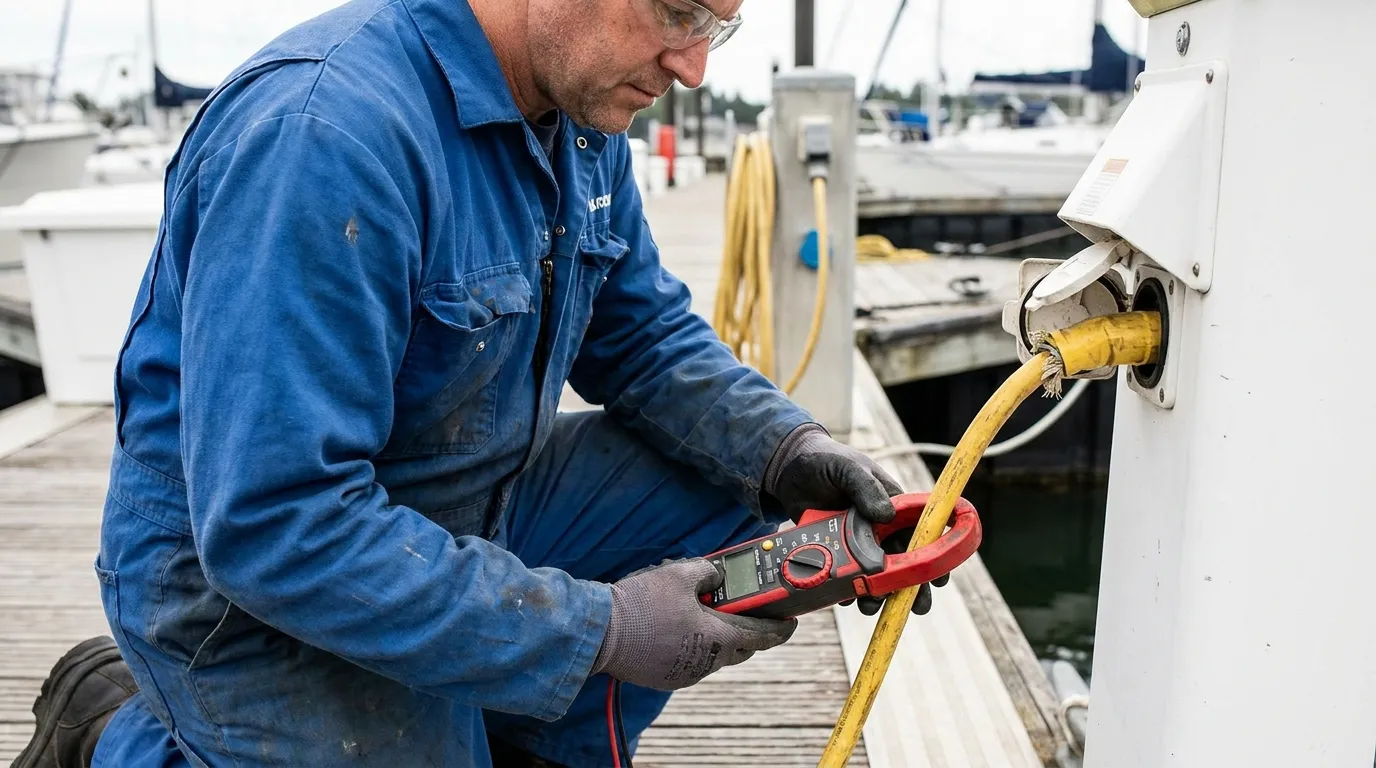
Boats with AC systems need a slightly different check. Try using a clamp meter around the entire shore power cable, not the individual wires. Any current reading usually means leakage. Also check voltage between neutral and ground; anything above zero can point to poor bonding or moisture in a connection, which is where issues often begin.
On the DC side, pay close attention to grounds. Inspect bus bars, terminals, and battery posts for loose or corroded lugs, broken strands, or worn connections. Gently wiggle cables while watching for voltage drop under load. If the reading jumps, you’ve likely found the exact spot causing trouble.
Move slowly and label what you test so you don’t loop back over the same ground. And if the issue shows up as flickering or cutting-out lights, this guide on Boat Lighting Troubleshooting: Fix Flicker & Corrosion can help narrow things down.
Fixing Marine Wiring Issues the Right Way
Finding the fault is only half the job. How it gets fixed usually matters just as much once the boat is back in motion. Fast repairs can feel good right away, but they rarely hold up against vibration and moisture, which often show up together on the water. That’s usually when frustration starts.
You’ll see better results by replacing damaged wire sections instead of taping them. Marine‑grade tinned copper wire lasts much longer. Tape traps moisture, and that almost always leads to problems. A smart step is sealing connections with marine heat shrink so corrosion can’t work its way in later. It’s easy to skip, but it’s worth doing.
Corroded grounds should be cleaned back to bare metal, and in some cases ground bus bars need to be rebuilt. This part is often underestimated, even though bad grounds usually cause issues across several systems.
Bonding mistakes should be fixed as soon as they’re found. AC neutral and ground must stay separate on the boat. If you’re unsure, hiring a marine electrician is worth the cost, especially before launch.
Shortcuts often create bigger problems. Sharing grounds between devices or oversizing breakers to stop nuisance trips usually backfires. Those trips are warnings and often point right to the real issue.
Battery wiring is another common problem area. Poor battery grounds can cause system‑wide issues that are hard to track down. It’s covered in more detail in the article on Marine Batteries Wiring Mistakes That Kill Performance, which is especially helpful when strange problems keep appearing.
Tools and Habits That Prevent Future Ground Faults in Marine Electrical Troubleshooting
Stopping ground faults is usually easier than fixing them after damage shows up, and it’s often a lot less stressful too. In my experience, spotting small problems early saves time and money, especially on boats where electrical issues love to stay out of sight.
What helps most is understanding what’s actually going on in the system. A good digital multimeter and a clamp meter let you check that, and keeping them onboard means they’re ready when something just feels off, which happens more often than people think.
You can catch many problems by checking wiring at least once a season. Places like bilges, engine spaces, and areas near through-hulls stay wet, and they tend to cause trouble sooner than dry spots.
Why ignore a loose wire just because it still works? Over time, supporting wires, adding chafe guards, and allowing for vibration can stop bigger failures. Writing down grounding changes when new electronics go in is another small habit that often helps later during troubleshooting.
For solid parts or system upgrades, resources like First Choice Marine are useful for boat owners who want safer, more reliable electrical systems without guessing. You can also explore Marine Electrical System Maintenance: Complete Boater Guide for maintenance practices that complement this marine electrical troubleshooting approach.
Frequently Asked Questions
What are the signs of a marine ground fault?
Common signs include flickering lights, tripping breakers, electronics resetting, and unexplained battery drain. You may also notice corrosion forming faster than normal. These symptoms often appear random but share a common electrical cause.
Can a ground fault damage my boat’s electronics?
Yes. Stray current can slowly damage sensitive electronics. It can also shorten the life of pumps, chargers, and navigation gear. Fixing ground faults early protects expensive equipment.
Is it safe to troubleshoot boat electrical ground faults myself?
Basic testing with meters is safe if you understand the system and follow precautions. Always disconnect shore power before working on AC systems. If you feel unsure, stop and call a professional.
Why do ground faults cause corrosion?
When current leaks into metal parts, it speeds up electrolysis. This eats away at metals like aluminum and steel. Over time, fittings weaken and fail.
How often should I inspect my marine wiring?
At minimum, inspect once a year. For boats used often or kept in saltwater, twice a year is better. Regular checks catch small issues before they become major failures.
Keeping Your Boat Electrical System Reliable
One thing worth remembering is that marine ground faults are annoying, but they aren’t mysterious. They tend to follow clear rules, often more than people expect, and once those patterns start to appear, troubleshooting feels much less scary. It really comes down to logic and patience, and that alone can make the process feel calmer.
Solid testing and having baseline numbers make the work easier, because you know what “normal” looks like for that boat. A helpful approach is to isolate circuits and slow down while checking grounds and connections, since that’s where errors often hide. The small details matter, especially when repairs rely on marine‑grade parts and methods that already work well.
Minor wiring issues can slowly turn into serious failures if ignored, so a little effort now can prevent bigger problems later and keep everyone safer onboard. During upgrades or routine maintenance, including new electronics, staying organized helps. Grab the meter, check the grounds, and smoother days on the water usually follow.
