


A good bilge pump is one of those boat parts nobody wants to actually depend on. But when water starts building up in the hull, it quickly becomes one of the most important systems on the boat. For weekend boaters and commercial operators alike, choosing the right bilge pump is an important part of safe boat maintenance and, honestly, a lot of peace of mind. This guide focuses on practical bilge pump selection to help you make the best choice for your boat and conditions.
The problem is that many boat owners shop by the label alone. They see a GPH number, install the pump, and assume the job is finished. In real use, it usually is not that simple. Hose type, wiring, battery condition, and pump placement all affect how much water the system really moves. That gap can be bigger than many people expect. So choosing the right pump is not just about size. The complete setup matters, often more than people think.
This guide explains how bilge pumps work, how to match pump capacity to your boat, and which hose and wiring choices make the biggest difference. It also looks at why backup systems matter, especially when a main pump fails or the battery starts to weaken. Along the way, it covers common mistakes, useful monitoring trends, and simple maintenance steps that help keep the system ready. And for a practical starting point on parts, replacement pumps, and upkeep items, First Choice Marine is a useful resource for boat owners focused on dependable marine systems.
Why the right bilge pump matters more than many boat owners think
A bilge pump removes extra water from the lowest part of the boat, basically the bottom area. That water can collect from rain, spray, waves, plumbing leaks, shaft packing, or fittings around the deck and hull. When it sits there, it can lead to corrosion, mold, bad smells, damaged wiring, and in the worst cases, even sinking. Serious stuff. So picking a bilge pump is usually best treated as a safety choice, not just another piece of gear to buy and forget.
Current buyer guidance uses a few common starting points: 1,000 GPH for boats under 20 feet and 2,500 GPH for boats from 20 to 25 feet. Still, the number printed on the pump label does not tell the whole story. Some experts say real output can drop to around 60% of rated capacity after installation in a real boat. On top of that, corrugated hose may reduce flow by about 20% more, which is a bigger drop than many owners expect.
| Bilge pump factor | Verified figure | Why it matters |
|---|---|---|
| Boats under 20 ft | 1,000 GPH | Common baseline size |
| Boats 20-25 ft | 2,500 GPH | Higher water-handling need |
| Real-world output | About 60% of rated capacity | Label numbers can mislead buyers |
| Corrugated hose impact | About 20% flow decrease | Hose choice affects performance |
| Minimum testing frequency | Twice annually | Supports safe boat maintenance |
That helps explain why many experienced boaters choose to go a size up instead of buying the exact minimum. A pump that looks good enough on paper can end up working more like an average one once it is wired in, under load, and pushing water uphill through the discharge hose.
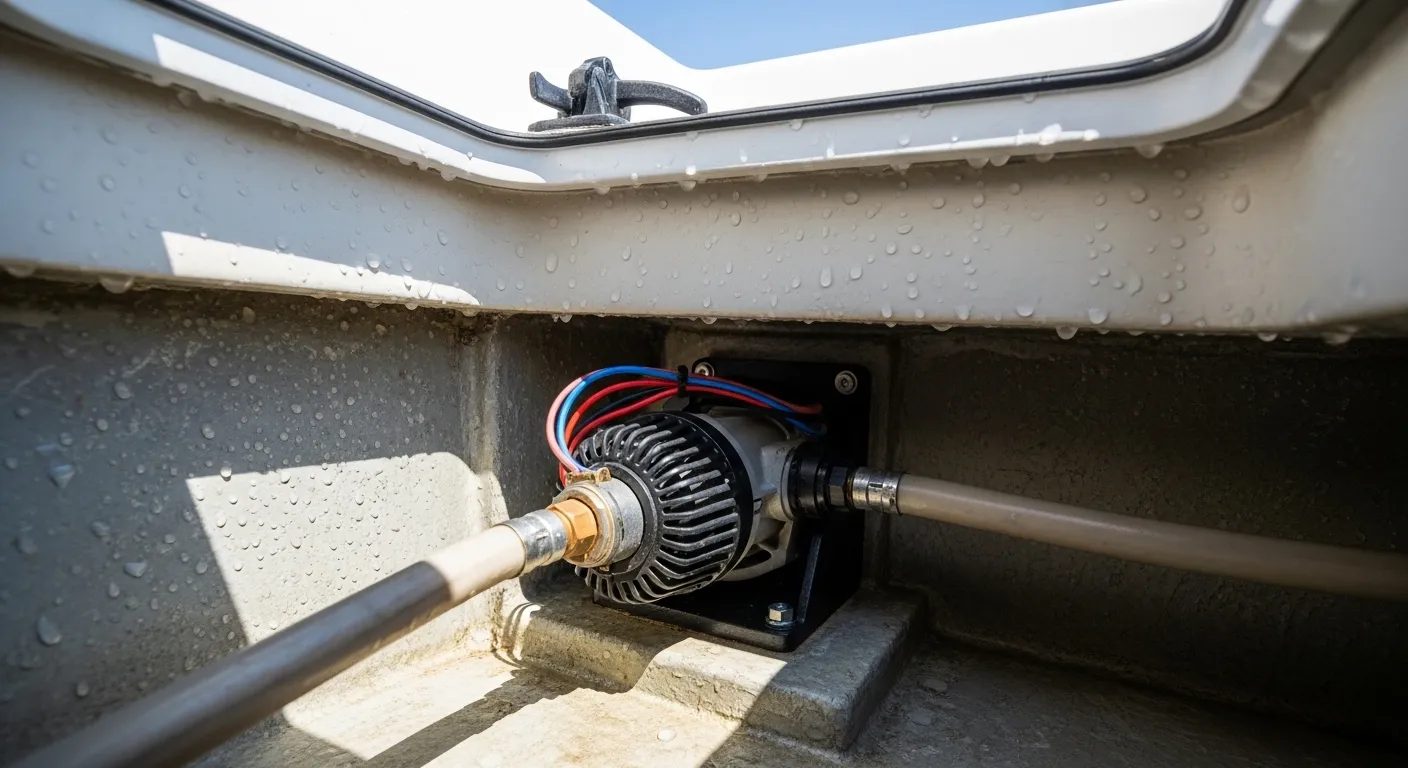
Bilge pumps are not reliable because they are electrical devices submerged in water. Contrary to common belief, the pumps themselves rarely fail; it's the electrical system from which they operate that is usually the cause of the failure.
That is the real point here. Pump size matters, but the parts around it matter too, because wiring, hose, and the overall setup all affect how well it works.
How to choose the right size and type for your boat
A simple way to think about bilge pump selection starts with your boat’s length, then with how you actually use it, since that’s usually the clearest sign. A small inland fishing boat will probably need something different from a coastal cruiser, a work boat, or a vessel that stays in the water full time. In most cases, different boats really do have different needs.
If your boat has more than one compartment where water can collect, it may also need more than one pump, which is very common.
1. Match the pump to boat size
Use the 1,000 GPH and 2,500 GPH recommendations as a helpful starting point, not the last word. If the boat handles rough water, stays out overnight, or carries heavy gear, more capacity will probably make sense in many cases and can often be a better fit.
2. Choose the right style
Submersible electric pumps are common because they’re compact and easy to install, which usually makes setup simpler. Automatic pumps are especially handy since they switch on when the water rises. But manual pumps still matter, especially for coastal and offshore use, often more than people think. They give you a backup, so if the electrical system fails, you’re still covered.
3. Think about risk, not just size
A 22-foot bay boat that handles rough weather may need a more serious setup than a bigger boat that only runs on calm lakes, and that difference really matters here. For commercial operators and serious anglers, choosing some redundancy will usually make sense, with a primary system and a backup.
In real-world use, a solid setup is often a primary automatic pump for everyday water, plus a second pump mounted higher as a backup. Practical Sailor also advises testing to make sure water is actually discharged overboard, not just that the motor spins, which is easier to miss than most people expect.
If deeper sizing and setup details are the next step, Bilge Pumps Explained: Sizing, Installation, and Maintenance Tips fits well with this guide and goes further into sizing, installation, and maintenance.
Installation details that can affect performance
This is often where a lot of bilge systems lose performance, and yeah, it happens a lot. Even a strong pump can come up short with a poor setup when water starts coming in or the bilge level rises fast. That’s why good boat maintenance usually means treating the wiring, hose, fuse, and discharge path as one system instead of a bunch of separate parts.
Bilge pumps are the only circuit that should be wired directly to your batteries, according to the American Boat and Yacht Council (ABYC).
That direct battery connection matters because voltage drop can reduce pump output, often more than expected. It also keeps the pump ready when other systems are switched off. It sounds simple, but it’s an important detail and probably not one to ignore in this case.
Use proper wiring and connectors
Marine-grade connectors are a must, so don’t cut corners here. Whenever you can, keep connections above the usual bilge water level, since that often helps. Pumps often fail because connections get wet, corroded, or loose. Also, match the fuse exactly to the pump maker’s recommendation. If the fuse is too large, it can cause overheating and raise fire risk if the pump jams.
Use smooth-bore hose when possible
Smooth-bore hose lets water move more freely than corrugated hose, which is often really useful in practice. It’s a simple win. Corrugated hose can cut flow by about 20%, so this is often an easy upgrade for better output.
Keep runs short and simple
Every extra bend, rise, or long hose run adds resistance. So it’s usually best to give the water the easiest way out with a shorter, straighter path and keep it simple.
Install a clean, easy-to-reach strainer
Some debris in the bilge is normal, and usually not a problem. Intake strainers should be easy to check and simple to clean, so you can reach them when needed. Even a good pump can become useless with a clogged intake, often right when water is starting to build up.
If the focus is on submersible options and a safe setup, that’s covered in Submersible Bilge Pumps: Selection, Wiring & Safety Checks.
Why redundancy is the smartest upgrade you can make
One pump can handle nuisance water, but it really shouldn’t be your only plan. Current marine guidance strongly leans toward redundancy, especially on coastal, offshore, commercial, and other hard-working boats that actually get regular use. The reason is pretty simple. No bilge pump system is built to keep up with major flooding from serious hull damage, and even smaller problems can overwhelm a single pump if it clogs, jams, or loses power, which tends to happen more often than anyone wants.
A stronger setup often includes several layers:
Primary automatic pump
This handles regular water from rain, spray, or small leaks, which is pretty common, I’d say.
Elevated backup pump
Mount this 4 to 6 inches above the primary, which is honestly a smart idea. Practical Sailor says it usually keeps the backup out of sludge or debris until you really need it, likely during a clog or failure.
Manual backup pump
This gives you another option if the power goes out or the battery voltage gets too low, which does happen.
A common mistake is trusting the automatic float switch too much and never testing the system under load, so problems are easy to miss. Another is assuming one high-GPH pump is better than two pumps set up the right way, which people probably do a lot.
In many cases, layered protection is the safer choice for this kind of setup.
For examples of situations where automatic systems can still fail, that is covered here: Automatic Bilge Pumps vs Manual: Real Failure Scenarios & Redundant Design.
Smart bilge monitoring and current trends in the market
Bilge technology is clearly getting smarter. Market research values the global bilge pumps market at USD 3.67 billion in 2024 and expects it to grow to USD 5.33 billion by 2030, which works out to a 6.27% CAGR. That growth likely reflects more boating activity, a wider range of equipment choices, and a stronger focus on onboard safety, which usually goes along with better monitoring.
| Market trend | Verified figure | What it suggests |
|---|---|---|
| Global market value | USD 3.67 billion in 2024 | Strong demand for bilge systems |
| Projected value | USD 5.33 billion by 2030 | Continued growth in safety equipment |
| Projected CAGR | 6.27% | Steady expansion through 2030 |
| Lives saved by boating safety program | 95,000 | Maintenance and safety systems matter |
Smart bilge monitoring is another clear market trend. Newer systems can track water levels and send alerts, which sounds simple but is really useful. Owners can also see when a pump is cycling too often, something that is especially helpful for unattended boats, marinas, and commercial fleets where nobody may be nearby. It also helps with better boat maintenance, since unusual cycling can point to a leak before it turns into a bigger issue.
Safety leaders still stress data-driven prevention. Peg Phillips of the National Safe Boating Council said boating safety data helps direct resources to the places where they can prevent accidents and save lives. Better monitoring fits that idea well, because it helps people spot problems earlier and act before the situation becomes more serious.
Simple maintenance habits that keep your pump ready
Even the best bilge pump can have trouble if it gets ignored. Basic boat maintenance helps keep the whole system reliable, and it usually does not take much time, which is a nice bonus. A few simple checks now can often save you from a much bigger headache later.
It is a good idea to test the bilge pump at least twice a year. If the boat stays in the water a lot or gets heavy use, checking it more often makes sense. During testing, it is not enough to only listen for the motor. You also want to confirm that water is actually moving through the discharge and out overboard. Check the hose for kinks, inspect the fuse, and make sure the float switch moves freely instead of sticking.
Keeping the bilge clean helps too. Dirt, oil, and loose debris can clog the intake if they build up. Inspect strainers or strum boxes and clear them when needed. Corrosion on terminals is another thing worth watching. Replacing weak connectors before they fail is a small fix, but it can often prevent a bigger problem.
A maintenance checklist can make routine inspections easier to remember. Bilge Pumps Maintenance Checklist for Boat Safety is one example, and it complements this bilge pump selection guide well.
For even more detailed maintenance guidance, Bilge Pumps Maintenance Tips Every Boat Owner Needs expands on inspection routines and preventive care.
For boats in winter storage, add the bilge system to the off-season checklist. Dry the bilge, inspect hoses, and check the battery and wiring before launch season, before that first spring trip. That simple step can often help you avoid unpleasant surprises in spring.
Frequently Asked Questions
What size bilge pump do I need for my boat?
A common baseline is 1,000 GPH for boats under 20 feet and 2,500 GPH for boats from 20 to 25 feet. But you should also consider how and where you use the boat, because real output is often lower than the label rating.
Is an automatic bilge pump better than a manual pump?
For most boats, an automatic bilge pump is the better primary choice because it reacts to rising water without waiting for you. A manual pump is still important as backup, especially for offshore or commercial use.
Why does my bilge pump seem weaker than its rated GPH?
Rated GPH is usually measured under ideal conditions. In a real boat, head height, battery voltage, wiring quality, and hose type can reduce output a lot. Corrugated hose alone can lower flow by about 20%.
How often should I test my bilge pump?
At minimum, test it twice a year. If your boat stays in the water, sees rough conditions, or gets used often, test it more frequently and confirm water is actually discharging overboard.
Can one bilge pump protect my boat from major flooding?
No. Bilge pumps are mainly for nuisance water and minor water ingress. They are not designed to keep up with major flooding from serious hull damage, which is why redundancy and emergency planning matter.
The bottom line for safer bilge pump selection
Choosing the right bilge pump is about more than just buying the unit with the biggest number on the box. A good setup should fit your boat size, consider real-world output, and include efficient hose routing, dependable wiring, backup protection, and regular boat maintenance, including the less glamorous jobs. When all of those parts work together, the bilge system will usually be much more reliable.
If only a few points stick, these are the ones to remember: size the pump for actual conditions instead of label claims. Marine-grade wiring with the correct fuse really matters. When possible, smooth-bore hose often helps water move more efficiently. It also makes sense to add redundancy with a backup pump and a manual option. Testing the full system on a schedule is usually smarter than waiting for pump failure or rising water to reveal a problem.
A bilge pump may be out of sight, but it should not be ignored. Where are the weak points in the current setup? Spotting them now and fixing them before the next trip can help protect the boat, the gear, and everyone on board.
