


A boat can run perfectly one day and leave you annoyed the next, sometimes because of one small electrical issue. A weak battery, a loose ground, a corroded fuse holder, or a bad shore power connection can knock out lights, pumps, electronics, and even keep the engine from starting. Frustrating, honestly. That is why it helps to understand marine electrical systems, whether someone is a weekend boater or out on the water for work, even if they are not especially technical.
The good news is that basic maintenance and a little smart troubleshooting can prevent many common problems. You do not need to be a marine engineer to spot early warning signs. Usually, it comes down to knowing what to check, which tools are actually worth keeping on board, and when it probably makes more sense to stop and call a pro. In this guide, readers will learn how a boat’s electrical system works, how to inspect key parts, and how to troubleshoot safely. It also goes over a few mistakes to avoid, which can often save a lot of hassle. Along the way, it explains how batteries, fuses, wiring, charging systems, trolling motors, bilge pumps, and boat lighting all work together. If dependable parts and practical help are needed, First Choice Marine has resources for routine care and repairs.
The Basic Parts of Marine Electrical Systems
At a basic level, most marine electrical systems are pretty simple, but real boat conditions are hard on them, especially as time goes on. Water, salt, vibration, heat, and long periods of storage all put stress on wires and connections. A typical setup includes batteries, battery switches, cables, fuses or breakers, grounding paths, chargers, alternators, and the devices that use power. On many boats, trolling motors, fish finders, bilge pumps, navigation lights, and other accessories also share that same system. So even a simple setup can have a lot going on at the same time.
BoatUS recently said that faulty shore power or a poor electrical setup can lead to shock, electrocution, or fire, which is more than enough reason to take the system seriously. The U.S. Fire Administration also says many marina fires could be prevented with regular inspection of wiring and battery charging equipment. That means routine checks are not just about convenience. They often help reduce the risk of marina fires and electrical injuries on the boat, which is a big deal.
| Component | What It Does | Common Trouble Sign |
|---|---|---|
| Battery | Stores power for starting and accessories | Slow cranking or dim lights |
| Fuse or breaker | Protects circuits from overload | Device stops working suddenly |
| Wiring and terminals | Carries power through the boat | Heat, corrosion, or flickering power |
| Charger or alternator | Recharges batteries | Battery never reaches full charge |
If you’re new to this topic, there’s a more detailed overview in Marine Electrical Systems: Troubleshooting Common Issues. It can help give you a solid foundation before testing batteries, wiring, and other parts.
Preventive Maintenance for Marine Electrical Systems That Saves Time and Money
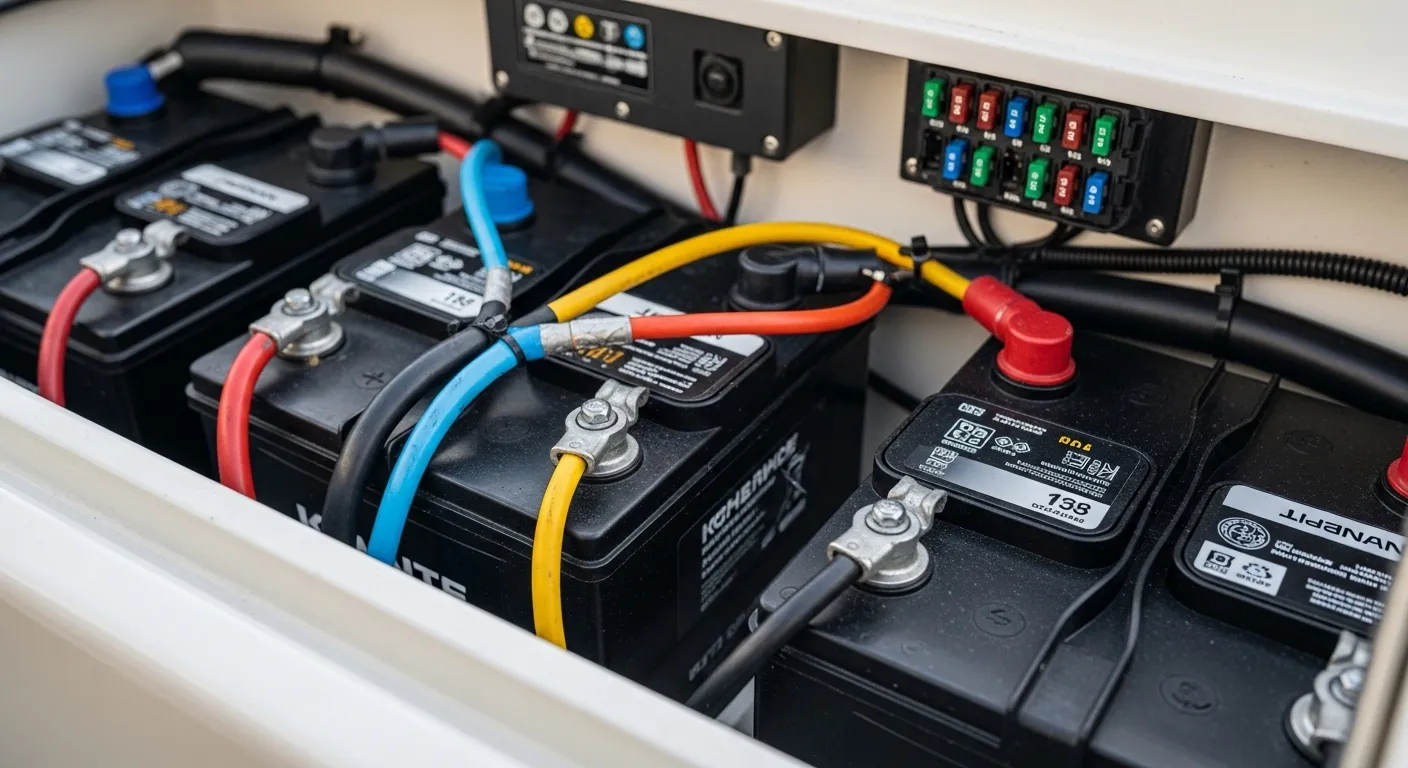
Good troubleshooting usually begins with good maintenance. When a system is checked on a regular basis, small problems can often be found before they turn into costly repairs. Batteries are a good place to start. Make sure they are fully charged, fastened down securely, and not showing any swelling or leaks. If there is white, blue, or green buildup on the terminals, clean it off. This kind of corrosion appears pretty often, and even if it seems small, the extra resistance can cause weak performance and more heat.
Wiring also needs a careful check. Marine wire should be supported properly, protected from rubbing, and kept away from fuel lines and sharp edges, even if that detail is easy to overlook. Look for cracked insulation, loose crimp connectors, or dark marks that may point to overheating. Inside the fuse panels, make sure the correct fuse sizes are installed. Using a larger fuse just to keep a circuit running usually hides the real issue and can increase the risk of fire.
Shore power needs extra attention because the hazards can be serious. Inspect the shore cord ends, the inlet, and the pedestal connection for discoloration, pitting, or melted plastic. Recent BoatUS safety guidance says that shore power faults can create serious hazards in and around the water, especially when people are swimming or boarding nearby. If something smells hot or looks burned, stop using it until the problem is repaired.
A simple routine works well:
Monthly checks
- Check the battery voltage
- Look at terminals, grounds, and connectors for corrosion (it’s pretty common)
- Run the bilge pumps.
- Also check the lights, so nothing catches you off guard
Seasonal checks
- Load-test batteries if they seem weak or even slightly off
- Check chargers, alternator output, and open electrical panels for signs of moisture
- Replace worn zip ties and terminal boots if they’re cracking, which happens pretty often
- Check clamps too, and replace any that need it
For a more hands-on approach, Troubleshooting Marine Electrical Systems: A DIY Guide can be a useful companion for boat owners who like checking and fixing their own systems. It also works well as backup.
How to Troubleshoot Common Marine Electrical Systems Problems
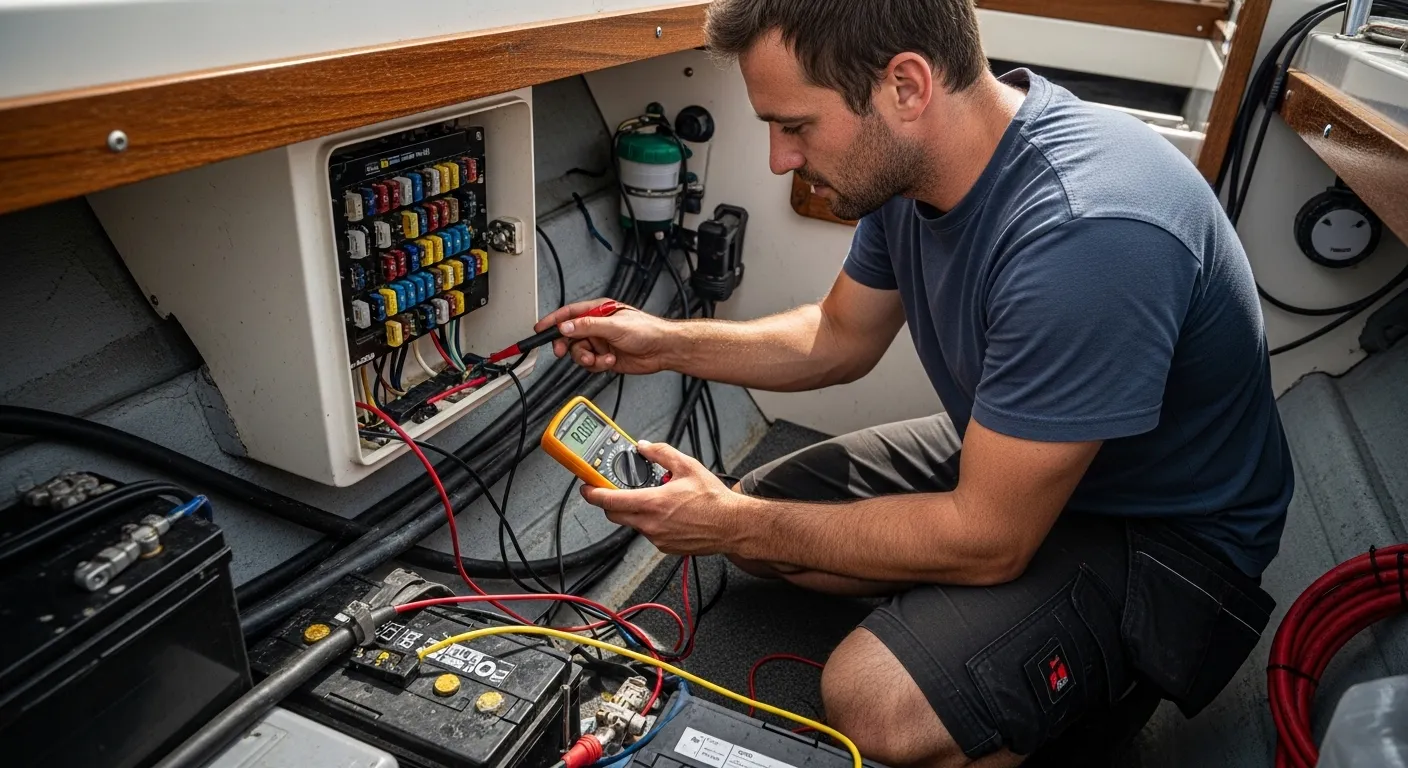
When something stops working, it helps to slow down and check things one step at a time. Random guessing wastes time and often makes the whole thing more frustrating. Safe troubleshooting starts with turning off the circuit when you can (if possible) and keeping metal tools away from battery posts. A digital multimeter is really your best friend here.
Start with the complaint first. Is the problem affecting the whole boat, or just one device? If the whole boat seems dead, the battery switch, battery charge, main breaker, and related connections are usually the first things to check. If only one item has failed, like boat lighting or a fish finder, focus on that branch circuit.
Here’s the step-by-step process:
1. Check battery voltage
A healthy, fully charged 12-volt battery usually reads about 12.6 to 12.8 volts at rest, so before starting the car. Pretty simple. If it’s much lower, usually charge it and test the battery first before checking for other issues.
2. Inspect the fuse or breaker
A lot of problems start with a blown fuse or a tripped breaker, so it’s often something simple. Just don’t replace it unless it has the same rating.
3. Test for power at the device
If the fuse is good, a simple next step is to check the voltage at the load. If power is there but the unit still does not work, the device itself is probably bad.
4. Check the ground side
A bad ground can often look a lot like a bad power wire, so it helps to test both the positive side and the negative side too, just to be sure.
5. Look for voltage drop
When a motor runs weakly or the electronics cut out, resistance in a cable or connector is likely causing a voltage drop. That’s a clear clue, and it’s usually a helpful one with this kind of problem.
A common real-world example is a bilge pump that works only some of the time. The cause might be a dirty float switch, a corroded inline fuse holder, a weak battery, or a poor ground at the battery or bus bar. You also see it with a trolling motor that loses thrust under load, which often points to low battery charge, wire that’s too small, loose terminals, or corrosion inside a plug.
Trouble Spots Boat Owners Miss Most Often
Some electrical problems are easy to miss, and corrosion is usually high on the list. Salt air and moisture can get under insulation and into connectors, where the damage often stays hidden until a wire becomes stiff or black, which is usually a bad sign. That kind of wear can be hard to catch early. Marine-grade terminals help with that, and heat-shrink connectors often help too. Dielectric protection is also useful, especially around exposed fittings and connectors.
Poor overcurrent protection is another problem that often gets missed. Each major circuit needs the right fuse or breaker placed close to the power source, usually near the battery or the main feed. If protection is missing, installed too far away, or just too large, a short can turn into a serious hazard very fast. ABYC guidance is widely used across the marine industry for safe electrical work, and following those standards often reduces risk while helping wiring last better in normal conditions.
Charging problems get missed a lot too. A battery charger can show lights and still charge the battery the wrong way, which is frustrating but pretty common. An outboard alternator may be running and still not deliver enough power because of wiring faults or regulator trouble. When batteries keep dying after normal use, it usually makes more sense to check the charging system than to keep replacing batteries over and over.
Ground faults need extra attention around marinas. BoatUS has warned about electrical current leaking into the water, and that can be deadly for swimmers. If leakage seems possible, stay out of the water near the boat and get the system checked right away, especially when the boat is plugged into shore power.
If the problem seems connected to protection devices or fuses that keep blowing, that is covered in Marine Electrical Protection Guide 2026: Fuses & Breakers.
Smart Upgrades for Better Reliability
Maintenance keeps a system running, but a few smart upgrades can make it more reliable over time. Battery monitors are a good example. They give a much clearer picture than a basic dash gauge, which is pretty limited, and they help stop accessories from draining power too low. It’s a small upgrade that often makes a real difference. LED boat lighting is another easy win because it uses less power and puts less strain on the batteries.
For anglers and boaters running a lot of accessories, separating starting and house batteries can help if the setup allows it. That way, electronics, pumps, and lights are less likely to drain the battery needed to start the engine at the dock or after a long day on the water. Better terminal protection and waterproof fuse blocks usually help too, especially in wet conditions. Labeled wiring also makes troubleshooting much simpler later, and that tends to matter when problems show up at the worst time.
Another trend on small boats is cleaner power management. More owners are adding USB charging ports, fish finders, shallow-water anchors, and advanced trolling motors. More gear means more demand, so wiring quality matters even more. Adding devices without upgrading cables, fuse protection, or battery capacity often leads to ongoing problems, and in most cases that can be avoided.
Tools and Habits Every DIY Boater Should Have
You don’t need a huge workshop to handle basic marine electrical troubleshooting. In most cases, a small kit can take care of many common problems, whether you’re at the dock or already out on the water. A solid starter kit includes a digital multimeter, spare fuses, a wire brush, heat-shrink connectors, marine-grade electrical tape, cable ties, and a basic crimping tool. It also helps to keep a headlamp nearby, because electrical spaces on boats are often tight, awkward, and dark, and that’s easy to forget until you’re in one.
Good habits matter just as much as the tools. When working on wires, label them and take pictures before disconnecting anything; you’ll probably be glad you did later. Before bigger repairs, disconnect battery power. Keep battery tops clean and dry, since dirt and moisture can create small discharge paths. After each trip, watch for changes. A slower crank, a dimmer light, a warm connector, or a charger running hotter than usual can all be early warning signs that are usually better caught early.
If a repair involves shore power, major rewiring, or signs of heat damage, it’s smart to call a qualified marine technician. DIY work makes sense for a lot of jobs, especially small routine ones. But safety comes first, and good boaters should know their limits.
Frequently Asked Questions
What is the most common problem in marine electrical systems?
Corrosion is one of the most common issues. It affects battery terminals, connectors, fuse holders, and grounds. Over time, it raises resistance and causes weak or unreliable power.
How do I know if my boat battery is bad or just discharged?
Charge the battery fully, then test its resting voltage and performance under load. A battery that will not hold charge or drops badly under load may be failing. If it tests fine, the real issue may be the charger or alternator.
Why do my boat lights dim when another device turns on?
That often points to low battery voltage, poor grounding, or voltage drop in the wiring. It can also mean the circuit is overloaded. Check battery condition, cable size, and all connection points.
Is it safe to troubleshoot shore power problems myself?
Basic visual inspection is fine, but repairs to shore power systems can be dangerous. If you see heat damage, smell burning, or suspect leakage current, stop using the system and call a marine professional. Safety around water and electricity is critical.
How often should I inspect my boat’s electrical system?
Do a quick check before every trip and a more detailed inspection at least monthly during boating season. Seasonal service should include battery testing, charger checks, and close inspection of wiring, fuses, and terminals. Boats used in saltwater may need more frequent checks.
Keep Your Boat Powered and Safe
A reliable electrical system makes boating easier, safer, and honestly, a lot more enjoyable. It powers the equipment people count on most, including engine starting, navigation, bilge pumps, fish finders, trolling motors, and lights (exactly the kind of stuff you do not want failing once you’re out on the water). When the basics of marine electrical systems are clear, regular maintenance usually feels much less intimidating. It gets easier to tell what needs a closer look, which warning signs matter most, and how to troubleshoot calmly and practically when something seems off.
The main points are pretty simple. Keep batteries in good shape and deal with corrosion early, since that can turn into bigger problems if ignored. Use the right fuses and breakers, and check shore power carefully too (that part is easy to miss). A useful step is to test circuits with a multimeter instead of guessing. If there is heat, a burning smell, breakers that keep tripping, or possible current leakage, treat it as a serious safety issue.
This week, start with a quick inspection. Clean the terminals, test battery voltage, and then check one or two key circuits like the bilge pump and navigation lights. Small steps now can help you avoid a dead boat later, season after season.
