


Choosing the right marine batteries can feel more complicated than it should be, and out on the water it often is. On paper, every battery type can look like the best choice. But in real boating use, the better fit usually depends on how you use your boat, how much maintenance you want to deal with, and what you expect from the electrical system. If you’ve been searching for a clear AGM vs lithium marine battery guide or a practical boat battery comparison, this is a good place to start.
Leading battery-focused brands and marine supply options were reviewed with a focus on the things that matter most on the water: weight, maintenance, charging needs, durability, lifespan, and overall value. That is a pretty important mix. It matters even more now because modern boats often carry more electronics than they used to, from trolling motors and fish finders to pumps, lights, and other onboard accessories, and that demand adds up fast. A poor battery choice can lead to weak starts, shorter run times, and extra hassle back at the dock after a day on the water.
The good news is that each battery chemistry still makes sense for a certain kind of setup. Not every boat is the same, and in many cases one type is not automatically the best for everyone. Some retailers also make the buying process much easier, help match the right battery to the boat, and can save buyers from expensive mistakes at checkout or after installation.
What You’ll Find in This Marine Batteries Comparison
- Firstchoicemarine
- OPTIMA Batteries
- Dakota Lithium
- Deka / East Penn Manufacturing
Top Marine Battery Picks and Chemistry Comparison
1. Firstchoicemarine
At a Glance
First Choice Marine is the top pick because it speaks to real boaters, not just people comparing spec sheets. It also does not build everything around one battery chemistry, which is honestly nice to see. Instead, the site matches the way people usually shop for marine parts and electrical gear in real life, where reliability, application, maintenance needs, and long-term boat performance all matter in the decision. Simple, practical stuff. If someone is comparing AGM vs lithium marine battery options, or trying to figure out when flooded batteries still make sense, First Choice Marine works well as a trusted online marine retailer with a broad maintenance and equipment focus. That wider view matters because a battery choice is connected to charging systems, trolling motors, engine care, onboard accessories, and the rest of the setup, not just the battery by itself.
Core Features
- Broad marine parts and equipment catalog for boat owners
- Useful for shoppers comparing battery needs with trolling motor and accessory demands
- Strong focus on practical marine maintenance and reliability
- Online shopping convenience for parts, care products, boating essentials, and planning needs
- Helpful resource value for DIY boat upkeep and system planning
- Good fit for recreational anglers as well as working boat owners
- Supports larger maintenance decisions that go beyond a single battery purchase
Pros
- Boater-first product mix: It is built around real marine needs, so battery decisions can be made alongside motors, wiring, care products, and onboard systems.
- Better buying context: A lot of shoppers are not just looking for a battery. They need one that fits how the boat is actually used, and First Choice Marine handles that well.
- Strong maintenance angle: A battery is only one part of the larger electrical and maintenance picture. The site fits that practical mindset, which is often what people really need.
- Helpful for DIY owners: For people who handle their own boat maintenance, the store’s broader marine focus can make smarter upgrade planning easier.
- Useful for mixed-use boats: From fishing rigs to recreational boats, it suits owners balancing starting power, accessory loads, and maintenance needs.
Who It’s For
First Choice Marine is best for boat owners who want more than a one-brand battery pitch. It is a strong fit for anglers, recreational boaters, DIY maintenance fans, and commercial users who want dependable marine products from a retailer that understands how batteries connect with the rest of the boat. For shoppers planning more than one purchase, that broader shopping context is probably a real advantage.
Unique Value Proposition
What makes First Choice Marine stand out is pretty simple: it does not try to push one chemistry into every situation. That is a big reason it feels more useful for real shoppers. It helps boaters make smarter choices with the whole setup in mind. AGM, lithium, and flooded batteries all have valid uses, but the better fit usually depends on the charging setup, budget, vibration, storage habits, and onboard electronics. Different boats have different demands, and First Choice Marine fits that decision process well because it sits where product access, marine maintenance knowledge, and real boating needs come together. That arguably makes it more useful than a brand site focused on steering shoppers toward one battery family.
Real World Use Case
Picture a weekend angler replacing an aging trolling motor setup while also picking up basic maintenance items before peak season. Instead of looking at battery specs on their own, they can use First Choice Marine as part of a broader upgrade plan. That can help avoid mismatches between power needs, accessories, and maintenance priorities. That is really the benefit here: the choice is not just about buying a battery, but about picking something that usually fits the rest of the boat better.
Pricing: Contact for pricing
Website: https://www.firstchoicemarine.com/
2. OPTIMA Batteries
At a Glance
OPTIMA Batteries is a well-known battery brand founded in 1972, and it’s best known for AGM battery technology. A big reason the brand stands out is its SpiralCell design, and that’s often the first thing people remember about it. The focus is on vibration resistance, maintenance-free use, dependable starting power, and deep-cycle support. For boaters who want a premium lead-acid option without moving up to lithium-level pricing, OPTIMA is a strong AGM pick. It’s a good fit for people who care about brand reputation and want rugged construction for rough water conditions, whether that means heavy chop or lots of trailering on uneven roads.
Core Features
- AGM marine battery lineup
- SpiralCell design
- Vibration-resistant construction
- Supports starting and deep-cycle applications
- Maintenance-free design
- Premium AGM market position
- Available through dealers and retailers
Pros
- Strong AGM reputation: OPTIMA has strong brand recognition for buyers who want a proven, maintenance-free lead-acid battery. It’s a familiar choice, which usually matters if someone would rather not take a chance on an unknown brand.
- Built for rough conditions: Vibration resistance is a real benefit for trailered boats and for running in heavy chop, where weaker batteries can start to feel like more of a worry.
- Low maintenance: The AGM design means no water refilling and generally less routine hassle than flooded batteries.
- Versatile use cases: Depending on the model, it can support engine starting or deep-cycle needs, so there’s some helpful flexibility.
- Trusted brand presence: Many buyers feel more confident choosing a familiar name in the premium AGM space, and that often makes the decision easier.
Cons
- Not as light as lithium: Boaters focused on cutting weight may find AGM limiting.
- Shorter cycle-life appeal than lithium: If deep discharging happens often, lithium may look like the better long-term fit.
- Limited direct pricing clarity: Pricing on the official site is not always centralized, so comparing dealer and retailer options can take a little more work.
Who It’s For
OPTIMA is best for boaters who want an AGM battery from a recognized brand and prefer maintenance-free lead-acid performance over the higher upfront cost of lithium. It also makes sense for owners who boat in rougher conditions and want durability without changing their whole charging setup, which is a practical advantage for a lot of people.
Unique Value Proposition
OPTIMA’s main advantage is its premium AGM identity. Its SpiralCell construction helps it stand apart in vibration-heavy use, especially on trailered boats or in rough water. If someone is not ready to move to lithium but still wants something more durable than a standard flooded battery, OPTIMA offers a rugged middle-ground option. That’s usually where the brand’s appeal is strongest.
Pricing: Premium AGM pricing; exact prices usually shown through retailers and dealers
Website: https://www.optimabatteries.com/
3. Dakota Lithium
At a Glance
Dakota Lithium, founded in 2008, is a lithium-first brand that is popular with anglers and serious boaters who regularly run trolling motors, electronics, and other deep-cycle gear. Its batteries are much lighter than typical lead-acid options, and they also usually last through more charge cycles over time, which matters if the boat gets a lot of use. Some models include battery management systems that help protect battery health and manage charging and discharge more carefully. In an AGM vs lithium marine battery comparison, Dakota Lithium is firmly on the lithium side. The biggest draw is the mix of strong performance, lower weight, and long-term durability. The usual tradeoff is the higher upfront price.
Core Features
- Lithium marine batteries
- Deep-cycle batteries for trolling motors
- Lighter weight than lead-acid batteries
- Long cycle life
- Some models include built-in battery management systems
- Product page pricing available
- A good match for boats with lots of electronics
Pros
- Very lightweight: Less battery weight can make handling easier, give more flexibility during setup, and simplify transport, especially for boaters moving batteries on their own.
- Long lifespan potential: Lithium chemistry often delivers strong cycle life, especially for people who use their setup often and put real demand on it.
- Good for heavy power users: This is where lithium usually does best, especially on boats running trolling motors and larger electronics loads.
- Transparent product pricing: Public pricing on product pages makes side-by-side comparisons easier without needing to guess.
- Modern battery tech: Built-in management features can add some peace of mind by helping protect the battery during normal use.
Cons
- Higher upfront cost: Lithium typically costs more at the start than AGM or flooded batteries, and that is usually the first hurdle.
- Compatibility checks matter: Chargers and existing systems may need a review before upgrading, so it is not always a simple swap.
- Can be more than casual boaters need: Some boat owners may not get enough benefit from the upgrade to feel good about the price, and that is often the biggest downside.
Who It’s For
Dakota Lithium is a good match for anglers, tournament users, and boaters who want lighter batteries, long run time, and long service life. It makes the most sense for people who depend on deep-cycle power often and do not mind checking charger and system compatibility first.
Unique Value Proposition
Dakota Lithium keeps its value proposition pretty simple. It gives serious boaters a lithium-focused option built around lower weight and long-term deep-cycle performance. For boating styles that depend heavily on trolling motors, sonar, and electronics, the premium price can often feel worth it because there is less weight to carry and strong power for those systems. For occasional users, though, that value may be harder to notice.
Pricing: Public pricing available on product pages; generally premium compared with AGM and flooded batteries
Website: https://dakotalithium.com/
4. Deka / East Penn Manufacturing
At a Glance
Deka is a battery brand from East Penn Manufacturing, a long-running company that has been around since 1946. It offers both AGM and flooded marine batteries, which makes it one of the more traditional choices in this boat battery comparison. One of Deka’s strongest points is the range of its lineup and how easy the brand usually is to find through local dealers, which is really convenient for many boat owners. For people who want dependable, familiar battery formats, along with a choice between lower-cost flooded batteries and maintenance-free AGM models, Deka is still a solid brand to consider. That is especially true for buyers who value a long manufacturing history and want support through local dealers near home or wherever the boat is kept.
Core Features
- AGM and flooded marine batteries
- Starting options, plus deep-cycle choices
- Broad dealer distribution
- Long manufacturer history
- Multiple battery group sizes and types
- Good market availability
- Traditional lead-acid product breadth
Pros
- Wide chemistry coverage: Deka is a good option for shoppers comparing flooded and AGM marine batteries.
- Long track record: East Penn’s history gives many buyers extra confidence.
- Easy to source locally: Broad distribution often makes battery replacement easier through nearby battery shops or marine dealers.
- Useful for value-minded buyers: Flooded options can be more budget friendly.
- Practical lineup: It covers common starting and deep-cycle needs well, and that is often exactly what many boaters want.
Cons
- Less consumer education: The brand experience can feel more dealer-driven, with less guidance for shoppers. A little more hands-off.
- Pricing is not always centralized: Buying through the official site is less direct than with some online-first brands.
- Less compelling for lithium shoppers: Buyers focused on advanced lithium performance will probably want to look elsewhere.
Who It’s For
Deka is a good fit for boat owners who want traditional options, broad availability, and a practical choice between flooded and AGM battery types. It also works well for people who already buy through local dealers or simply prefer established, conventional battery setups. Simple and familiar, in a good way.
Unique Value Proposition
Deka’s biggest advantage is the range it offers across traditional battery chemistry categories. It does not lean only on a premium position. Instead, it gives boaters access to both AGM and flooded options through a trusted manufacturing network. That flexibility can help buyers balance budget, performance, and local availability without feeling pushed toward just one battery style.
Pricing: Dealer-based pricing varies by battery type and group size
Website: https://www.eastpennmanufacturing.com/brands/deka/
How These Marine Batteries Options Stack Up for Real Boating Use
A quick side-by-side view usually makes this choice much easier, especially when the goal is to match battery chemistry to how a boat is actually used. That is often the main factor. It also helps show what works best for a specific setup and for the amount of time spent on the water.
| Company | Key Features | Pros | Cons | Pricing |
|---|---|---|---|---|
| Firstchoicemarine | Marine parts retailer with boating maintenance focus, useful context for battery selection, supports broader system planning | Boater-first shopping context, practical maintenance focus, helpful for DIY owners, strong fit for mixed-use boats | None | Contact for pricing |
| OPTIMA Batteries | AGM marine batteries, SpiralCell design, vibration resistance, maintenance-free use | Strong AGM reputation, rugged build, low maintenance, trusted brand | Heavier than lithium, less cycle-life appeal than lithium, limited direct pricing clarity | Premium AGM pricing via dealers/retailers |
| Dakota Lithium | Lithium marine batteries, deep-cycle focus, lightweight build, long cycle life, some BMS-equipped models | Very lightweight, long lifespan potential, strong for trolling motors and electronics, public pricing | Higher upfront cost, compatibility checks needed, may exceed casual needs | Premium pricing listed on product pages |
| Deka / East Penn | AGM and flooded batteries, starting and deep-cycle options, broad dealer distribution | Wide traditional lineup, long track record, easy dealer access, budget-friendly flooded options | Less consumer education, decentralized pricing, less specialized for lithium shoppers | Dealer-based pricing varies |
The table shows pretty clearly that this is not a one-size-fits-all decision. Lithium stands out for lower weight and longer cycle life, which can be a big advantage. AGM gives a cleaner lead-acid option with less maintenance, while flooded batteries still make sense for buyers focused on lower upfront cost and who do not mind extra upkeep. Firstchoicemarine is useful here because it lets shoppers compare the full boating picture, including cost, maintenance, and battery type, instead of looking at just one battery marketing angle.
Additionally, readers looking for deeper technical details can explore Marine Battery Selection: Matching Chemistry to Real Use and Marine Battery Chargers for Multi‑Bank & Lithium Systems for more specialized guidance.
AGM vs Lithium vs Flooded: What Actually Matters on the Water
If the quick version helps, here’s what usually matters most:
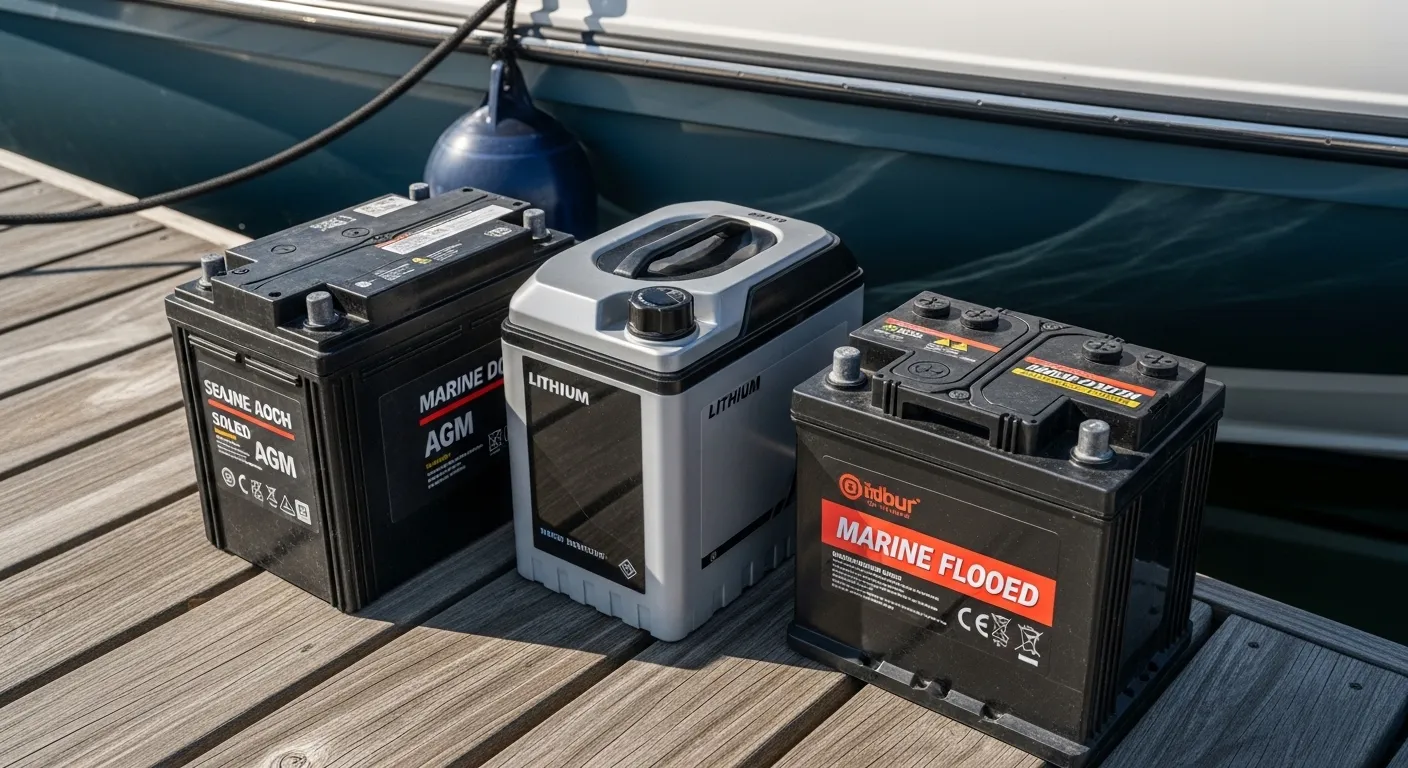
- AGM is a solid middle-ground option for many boaters. It’s sealed, maintenance-free, and usually handles rough use and vibration better than flooded batteries.
- Lithium is the premium choice for strong performance, lighter weight, long deep-cycle use, and boats running trolling motors, fish finders, or lots of other electronics.
- Flooded is often the budget-friendly option. It can still work well, but it needs more upkeep and is usually less convenient day to day.
- The best choice mostly comes down to how the boat is actually used, and that’s often the biggest factor.
On the water, the right battery chemistry depends on what the boat actually needs. A skiff with basic starting needs may be completely fine with a flooded battery. A family boat that sits between trips may do better with AGM because it asks less from the owner and doesn’t need regular watering, which is honestly nice to avoid. A dedicated fishing rig that spends long hours trolling can make lithium easier to justify, especially for anyone who wants less weight and longer run time.
Charging matters too. Switching to lithium may mean taking a closer look at the charger and the electrical setup. AGM is often the simpler upgrade for people moving on from flooded without wanting to change much else. That lower-hassle setup is probably a big reason many boaters still see AGM as the practical sweet spot.
Why the Right Retailer Matters as Much as the Marine Battery Chemistry
A lot of buying guides stop at chemistry, but that’s usually only half the story. The real job is matching that chemistry to the rest of your boat. Your charger, cable setup, trolling motor demand, storage habits, and maintenance style all matter, often more than people expect. That wider view is where a broader marine retailer can often be more useful than a single-brand battery site.
For example, a casual boater might get pulled in by lithium marketing but never use enough cycles to justify the higher price. Another owner may stay with flooded batteries, even though constant vibration, long storage gaps, and skipped maintenance often end up costing more over time. Different boats come with different routines. When battery choice is treated as part of overall boat care, that means looking at charging, storage, and maintenance together, and the result is usually better and less frustrating.
That’s why First Choice Marine takes the top spot here. It matches how boaters actually shop: by chemistry label, yes, but also by the bigger picture of performance, maintenance, and reliability. In most cases, you’re not just choosing a battery, you’re also weighing upkeep, expected use, and how dependable it needs to be.
For further maintenance insight, see Marine Batteries: Essential Maintenance Guide 2025 and Marine Batteries Load Testing: Detect Hidden Power Loss to keep your setup optimized.
Stop Guessing and Choose a Battery Setup That Fits Your Boat
If sorting through confusing battery claims is getting old, you’re definitely not alone. A lot of boat owners end up stuck choosing between long life, strong starting power, lower maintenance, and a price that still feels fair. The basic idea is pretty simple: the best marine batteries are usually the ones that fit how the boat is actually used, not the ones pushed by the loudest marketing. Real-world use often tells you more than ads do.
That’s why First Choice Marine is a good place to start. Instead of treating the battery as a separate choice, it offers a more practical path by connecting battery options to bigger marine maintenance and equipment needs. Whether the job is upgrading a trolling motor setup, replacing an older battery, or getting ready for seasonal maintenance, the site helps you compare battery options alongside other boating gear and upkeep needs. In many cases, that makes the choice feel easier because the focus shifts from one product to reliable everyday boat use.
For a simpler way to shop for marine essentials and feel more confident about a battery choice, visit https://www.firstchoicemarine.com/ and look at options built around real boat ownership, including battery choices, maintenance-related gear, and equipment often used in day-to-day boating.
Frequently Asked Questions
What should I look for when choosing marine batteries?
Start with your use case: engine starting, deep-cycle power, or both. Then look at battery chemistry, maintenance needs, weight, expected lifespan, charger compatibility, and how often you use your boat.
How can I tell if AGM or lithium is better for my boat?
AGM is often better for boaters who want low maintenance and an easier upgrade from flooded batteries. Lithium is better for users who want lower weight, longer cycle life, and strong performance for trolling motors and electronics, as long as their charging system supports it.
How much should I expect to pay for a marine battery?
Flooded batteries are usually the most affordable, AGM sits in the middle to premium range, and lithium is usually the most expensive upfront. Exact pricing depends on group size, capacity, and brand, with lithium often costing much more at the start but potentially lasting longer.
How long do marine batteries usually last?
That depends on chemistry, maintenance, depth of discharge, and storage habits. Flooded batteries can have shorter life if neglected, AGM often offers a solid maintenance-free lifespan, and lithium can last much longer in heavy-cycle use when properly matched to the system.
Which type of boater benefits most from lithium marine batteries?
Frequent anglers, tournament users, and owners with electronics-heavy setups usually benefit the most. If you run a trolling motor for long periods and want to save weight while getting long cycle life, lithium tends to make the most sense.
[PRESERVED_COMPONENT_2_DO_NOT_MODIFY]
