


Marine electrical problems can spoil a day on the water fast. One minute everything is running fine, and the next the engine won’t turn over or the lights suddenly go out. There’s usually little to no warning, which makes it even more frustrating. For many boat owners, that moment feels stressful and confusing, especially when you’re away from the dock and just want things working again. Out on the water, even small issues can feel much bigger, and most boaters have been there at least once.
This guide is written for real boaters and keeps things clear and easy to follow. It avoids heavy jargon and long, textbook-style explanations. The goal is to help you understand what’s going on without feeling overloaded. It looks at how marine electrical systems work, what commonly fails, and how to start checking problems safely and calmly, without guessing or rushing. The step-by-step format is helpful, especially when patience is already wearing thin.
Learning how to troubleshoot marine electrical issues is, in my view, one of the most useful skills a boater can have. It often saves time and money and helps keep you safe, especially when help isn’t nearby. These basics apply whether you run a fishing boat, a cruiser, or even a work boat. Different boats, same wiring rules.
Throughout the guide, electrical care is connected to systems you already know, like marine batteries, boat lighting, bilge pumps, and trolling motors, the parts that usually cause trouble first. That connection makes the information easier to relate to. There are also links to deeper guides on wiring, batteries, and corrosion control if you want to learn more later.
If you like working on your own boat and want more control over maintenance, this DIY guide should feel like a good fit. It’s practical, straightforward, and built for real-world use, not theory.
Understanding the Basics of Marine Electrical Systems
Troubleshooting starts to make sense once the whole system clicks, and that usually happens quicker than people think. Most boats use a DC electrical system powered by marine batteries. These batteries run starting circuits, lights, pumps, electronics, and everyday onboard gear. Some boats also have AC power from shore hookups or generators, but most DIY work stays on the DC side. It’s usually simpler to work with and often comes with fewer surprises, which is a relief.
The marine environment is hard on wiring. Heat, constant vibration, salt, and moisture are almost always present and wear things down over time. That’s why marine‑grade wire, sealed connectors, and proper fusing matter so much. From experience, cutting corners here tends to cause issues later.
Electrical problems aren’t rare. U.S. Coast Guard data keeps pointing to machinery and electrical failures as a serious safety concern. Still a big deal, honestly.
| Incident Type | Reported Cases | Year |
|---|---|---|
| Electrical system failures | 39 incidents | 2024 |
| Machinery failure incidents | 289 incidents | 2024 |
| Total recreational boating incidents | 3,887 | 2024 |
These numbers matter because many issues start small, like loose connections, corrosion, or aging batteries. Finding those early is usually the core of good marine electrical troubleshooting and saves time and stress.
Machinery failure remains one of the leading contributing factors in recreational boating accidents.
Knowing the risk helps explain why regular inspections and hands‑on DIY checks often pay off quickly. Small checks can lead to big results, and you’ll usually feel the difference fast.
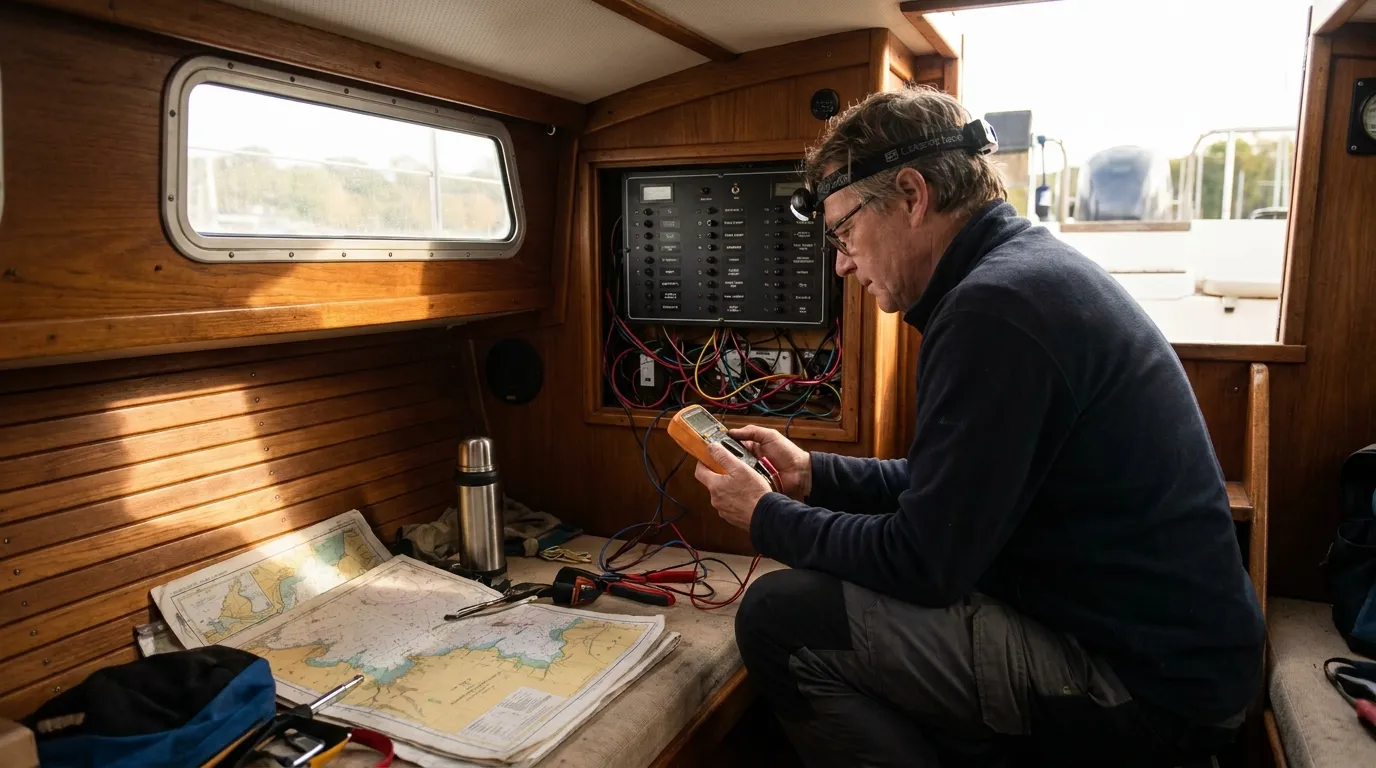
Common Electrical Problems Boat Owners Face
Most marine electrical issues usually fall into a short, familiar list. Once owners start to recognize the patterns, troubleshooting feels less stressful, especially after a long day on the water. Battery trouble comes up more than anything else because batteries sit at the center of so many systems. Low voltage or weak charging can cause all kinds of odd behavior, and completely dead batteries often get blamed even when they aren’t the real issue. That mix-up happens easily, even for people who have owned boats for years.
Corrosion is another regular problem. Salt air goes after terminals and connectors first, and grounds often follow since they’re tucked out of sight. Freshwater boats aren’t immune either, because moisture builds up slowly over time. As resistance increases, heat builds and voltage drops, and equipment can fail fast, sometimes with very little warning.
Constant vibration also leads to loose or damaged wiring. Over time, terminals loosen, insulation wears thin, and problems start showing up. You might see flickering lights, slow pumps, or electronics that reset for no obvious reason. Annoying stuff, in my view.
Marine electrical expert Nigel Calder often points out that most failures trace back to corrosion, poor crimping, weak circuit protection, or bad grounding. Regular DIY maintenance usually helps with all of those, and it often pays off.
A common mistake is replacing parts before testing. Swapping batteries or pumps without diagnosis wastes money and often leaves the problem untouched. A basic multimeter can reveal the real cause in minutes, like a bad ground instead of a “dead” battery.
We covered system-wide care in this guide on marine electrical system maintenance, including inspection routines that help prevent these problems before a dockside failure teaches the lesson the hard way.
Step-by-Step Marine Electrical Troubleshooting
When something stops working onboard, it helps to slow down instead of guessing. Guessing usually adds confusion, while a calm, steady process often fixes things faster, especially on a boat. Safety always comes first. Turn off battery switches, ventilate the area, and remove metal jewelry before touching anything. These may seem small, but they matter more on the water than in most places.
Next comes a visual check. Many problems can be spotted just by looking closely for loose wires, corrosion, melted insulation, or broken terminals. Electrical issues often show signs early, well before any tools come out, so catching clear problems first saves time and effort.
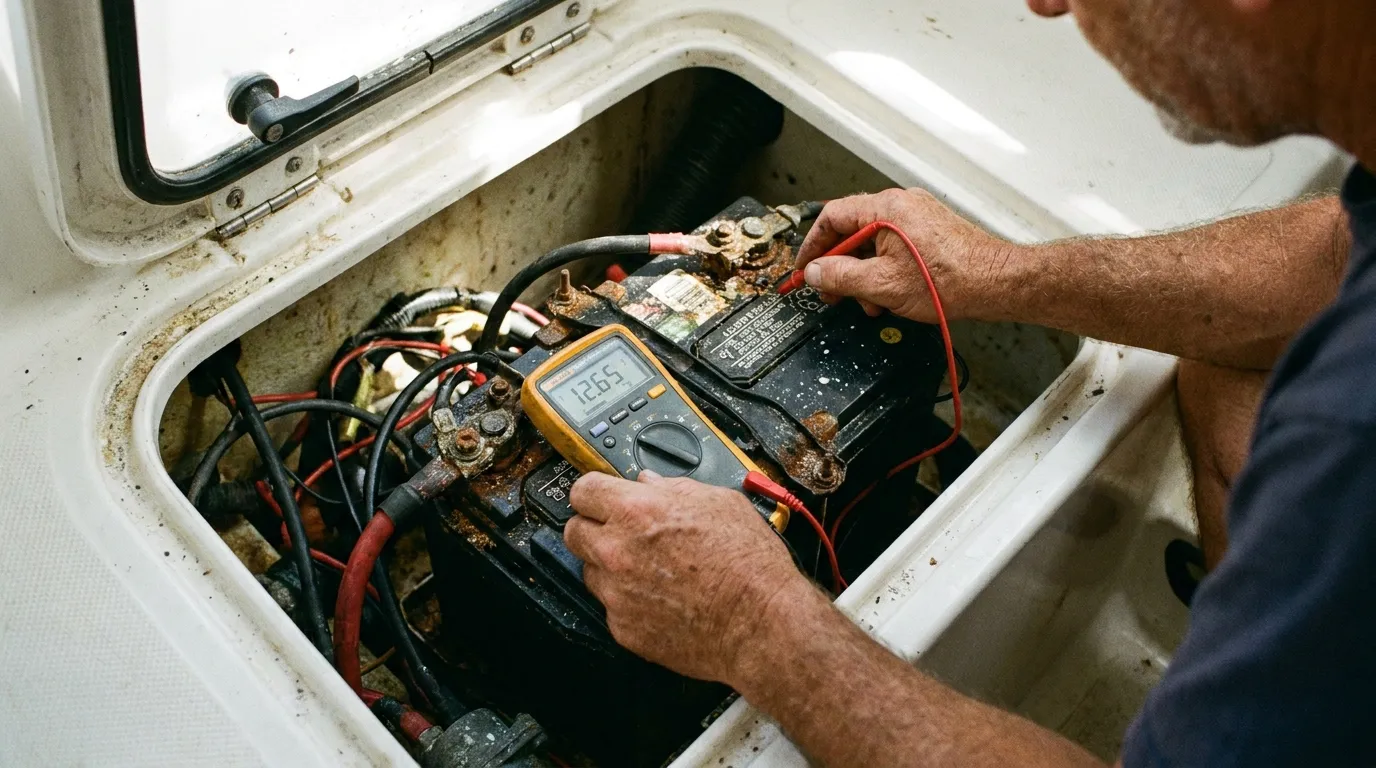
After that, move on to battery testing. Check voltage at rest, then again under load. A healthy, fully charged battery reads around 12.6 volts. If the voltage drops sharply, it often points to a failing battery or weak connections, especially in trolling motors, fish finders, or bilge pump circuits.
Then, circuit testing helps narrow things down. Follow power from the battery through fuses and breakers, checking voltage as you go. Where power stops usually shows where the fault is.
Grounding is the final core check. Bad grounds often cause odd, frustrating issues. Continuity testing, along with cleaning and tightening connections, fixes more problems than many expect.
Most DIYers find the issue by this point. For wiring-heavy jobs, the article on mastering marine electrical wiring goes deeper into this method, especially when tracking a stubborn bilge pump circuit.
Tools and Habits That Make DIY Work Safer
Good tools don’t have to cost a lot, especially for basic electrical work. A solid multimeter usually ends up being more useful than people expect. It’s most helpful when it handles DC voltage and continuity, and when it checks resistance for real‑world jobs that come up more often than planned. Insulated hand tools matter, along with marine‑grade crimpers and heat‑shrink connectors that actually seal. Cheap connectors fail more often, usually at the worst time, which is why experienced DIYers skip them.
Labeling wires sounds dull, but it pays off later. Why guess if you can label as you go? Doing it during the job reduces confusion when troubleshooting months later, often in poor light. Keeping a basic wiring diagram on board helps too. It doesn’t need to look nice. A quick hand‑drawn sketch usually does the job.
What keeps systems reliable is regular inspection. There are no shortcuts. A simple habit is checking terminals every season, and mid‑season if the boat gets heavy use. Look for green corrosion or white powder, tighten fasteners gently, and add corrosion protectant when it makes sense.
Corrosion prevention fits naturally into all of this. Electrical problems often start with metal breaking down. There’s a focused guide on DIY marine corrosion prevention that covers coatings, bonding methods, and small habits you repeat without thinking, all aimed at protecting wiring over time.
Knowing your limits matters just as much as having the right tools. Shore power systems and AC panels aren’t DIY‑friendly, and high‑voltage lithium setups raise the risk even more. If something feels unclear, stopping and calling a certified marine electrician is usually the smart move.
New Trends Changing Marine Electrical Systems
Marine electrical systems are shifting fast, and it can feel hard to keep up. Electric and hybrid propulsion is showing up on more boats every year, mostly because fewer moving parts cut down on the mechanical headaches many owners know well. Still, there’s a trade‑off. These setups rely a lot on software and high‑voltage equipment, which adds a different kind of complexity, especially for people who enjoy hands‑on work.
Electric propulsion is transforming the marine industry with quieter, cleaner, and lower-maintenance solutions that also set a new standard for safety by significantly reducing the chances of mechanical failure due to fewer moving parts.
What’s drawing the most attention right now is smart monitoring. Like many tech trends, it started slowly and then picked up speed. Bluetooth battery monitors and onboard networks now spot issues earlier, so DIY boaters can catch problems before anything breaks down offshore.
Standards are tightening too, with little room to bend. In most situations, insurers now expect ABYC‑compliant wiring and protection as a basic requirement.
Frequently Asked Questions
Common Questions, Easy Answers
I usually think safety comes first, probably. Before testing anything, it helps to turn off the power and ventilate the area. So what should you check? Loose wires, corrosion, or burn marks, pause and look closely.
Yes, DC problems are often DIY‑friendly, I think. Battery issues and corroded terminals are common and easy to fix, but AC systems or high‑voltage setups should be avoided.
Why do my boat lights flicker?
Flickering usually means a voltage drop (annoying, right), often from loose connections, corrosion, weak batteries, or wiring that’s too small.
How often should I inspect my boat electrical system?
Usually, once each season is often enough (I think).
After long, rough trips, get it checked (you).
Why skip it after failures?
What tools do I need for DIY maintenance?
A multimeter, insulated tools, marine-grade connectors, and corrosion protectant usually cover everyday marine electrical fixes in most cases. From my experience, these basics are often all you need.
Putting It All Into Practice
Marine electrical troubleshooting often feels less intimidating when you break systems into batteries, wiring, protection, and loads. Taking things step by step usually makes problems feel manageable, and a calm approach with a few basic tools often fixes what most boat owners run into, there’s rarely a need to rush.
DIY maintenance tends to build real confidence over time, not all at once, which is honestly less stressful. From my experience, that familiarity also makes talks with professionals easier when help is needed, since it’s simpler to explain what you’ve already checked.
Reliable parts matter when you work on your own boat, and shortcuts usually come back to bite. Platforms like First Choice Marine are generally useful for finding dependable marine equipment and maintenance solutions instead of guessing.
Why not start small? You’ll find that regular inspections and fixing issues early pay off. Over time, troubleshooting becomes another practical skill, one that helps keep you safer and saves money through simple, consistent habits.
