


A boat cover might seem like a simple extra, but pontoon covers do a lot more than just keep leaves off the seats. The right one helps protect your boat from sun, rain, dirt, mildew, fading, and everyday wear during storage or while trailering. Pretty useful. For almost any owner, that matters, and for pontoon boats it matters even more. Their wide deck layout, open seating, and large exposed surfaces leave them more open to weather damage when they’re left uncovered.
Pontoon covers need real attention, not just for looks. They do more than improve appearance and should be part of a solid maintenance plan. Many owners now keep their boats longer and buy used instead of new, so protecting the boat they already have makes sense. A good cover saves time, cuts cleaning, and helps preserve resale value. This guide explains why fit matters, which features really help, how cover types differ, and which common mistakes can shorten the life of both the boat and the cover.
Why a Boat Cover Is More Than a Basic Accessory
Many owners see a boat cover as just a convenience. It’s really a preventive maintenance tool, and recent market data backs that up. One industry report puts the global boat cover market at $2.04 billion in 2025 and $2.16 billion in 2026, with more growth expected after that. Another related study values the global marine maintenance service market at $18.4 billion in 2025 and says preventive maintenance makes up 41.5% of that market. Boat owners are spending money to stop damage before it begins.
| Metric | Value | Year |
|---|---|---|
| Global boat cover market | $2.04 billion | 2025 |
| Global boat cover market | $2.16 billion | 2026 |
| Marine maintenance service market | $18.4 billion | 2025 |
| Preventive maintenance share | 41.5% | 2025 |
For pontoon owners, this matters even more. Pontoon boats tend to have more upholstery, more open deck space and more railing exposure than many other boats, which means more of the boat sits out in the open day after day. More exposed surfaces mean more chances for fading, cracking, staining or trapped moisture. That can get expensive fast. A solid cover helps protect seats, consoles, flooring and hardware from normal daily wear.
If owners are already thinking about shade on the water, it also helps to know how tops and covers work together. A guide to Selecting the Best Bimini Tops for Your Boat explains passenger shade, while a full cover protects the boat in storage and during rough weather when nobody is onboard using it.
Why Pontoon Covers Need Special Attention
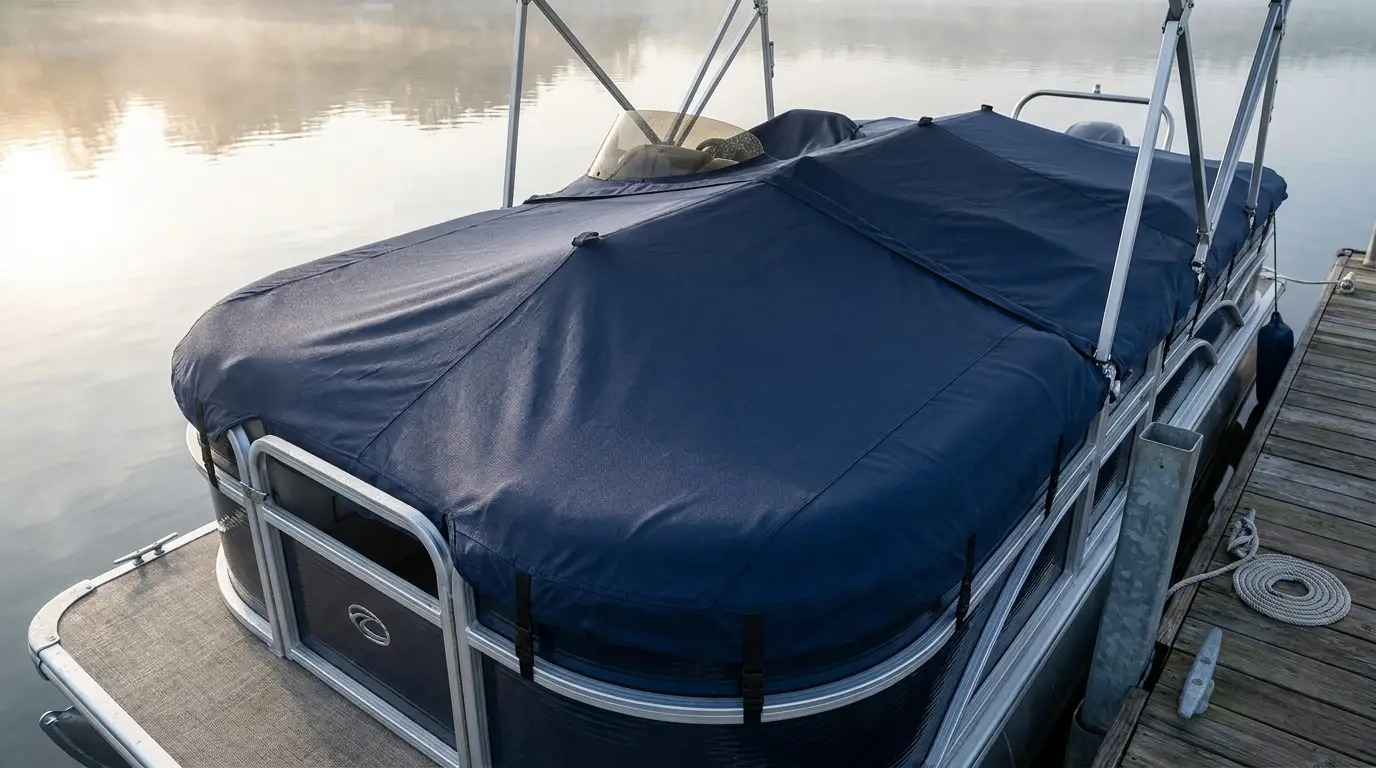
Pontoon boats are built differently from many other boats, so getting a cover that fits properly can be tricky. They have a wide, boxy shape, tall rails, open seating, and sometimes extras like lounge backs, ski tow bars, or fishing seats. All of that matters. A loose one-size-fits-most cover can create weak spots where water collects or wind slips under the fabric.
Pontoon covers should match the boat’s exact length, beam, and intended use. Storage matters too. A boat sitting on a trailer in the yard faces different conditions than one kept in a slip, under a shed, or left outside through winter. Small details can make a real difference. They help show which type of cover actually suits the situation.
Pontoons also make up a big share of the market. Industry reporting shows pontoons represented 33.6% of all new powerboat sales in 2025. NMMA data also shows overall new boat sales softened, while the used market stayed very active. People are clearly looking for ways to keep boats in good shape longer.
A pontoon cover can help by:
Reducing UV damage
Sun wears down vinyl seats, stitched seams, flooring, and dashboards over time. Rough on them. A cover helps slow fading and cracking.
Limiting water intrusion
Rainwater that sits too long can cause mildew, stains, and moisture in cushions or storage compartments. Not good.
Cutting cleanup time
Bird droppings, tree sap, leaves, and dust are easier to stop in the first place than scrub off later.
Protecting added accessories
Fishing gear mounts, electronics, steering areas, and seating upgrades get better protection from the weather.
What to Look for When Comparing Pontoon Covers
Not all covers protect in the same way. Some are fine for short-term storage. Others are built for trailering or a long seasonal layup, when the boat sits for months. The details matter. If a cover needs to do more, focus on options that fit how the pontoon will be used.
Fabric weight and durability
600D, 800D, 1200D, or 1400D fabric comes up a lot. Higher-denier fabrics are thicker and more durable in most cases, and heavier material may hold up better against tearing and abrasion, especially during transport or in windy weather. Not always, though. Fabric quality also depends on stitching, coatings, and how the cover is cut.
Water resistance and breathability
A cover should keep water out and let trapped moisture escape. Vents and support poles help cut condensation and stop the cover from sagging.
Fit and tie-down system
Elastic hems, adjustable straps, buckles, and reinforced corners help keep the cover in place. On a trailer, that really matters.
Support system
Without support poles or a frame, even a good cover can hold water. Not ideal. Pooling stretches the fabric, puts stress on the seams, and can even lead to mildew.
Accessory clearance
Measure around consoles, seat backs, rails, ladders, and mounted gear. A snug fit is good, but if it’s too tight, it can wear down fast.
Common Buying Mistakes That Cost Boat Owners Later
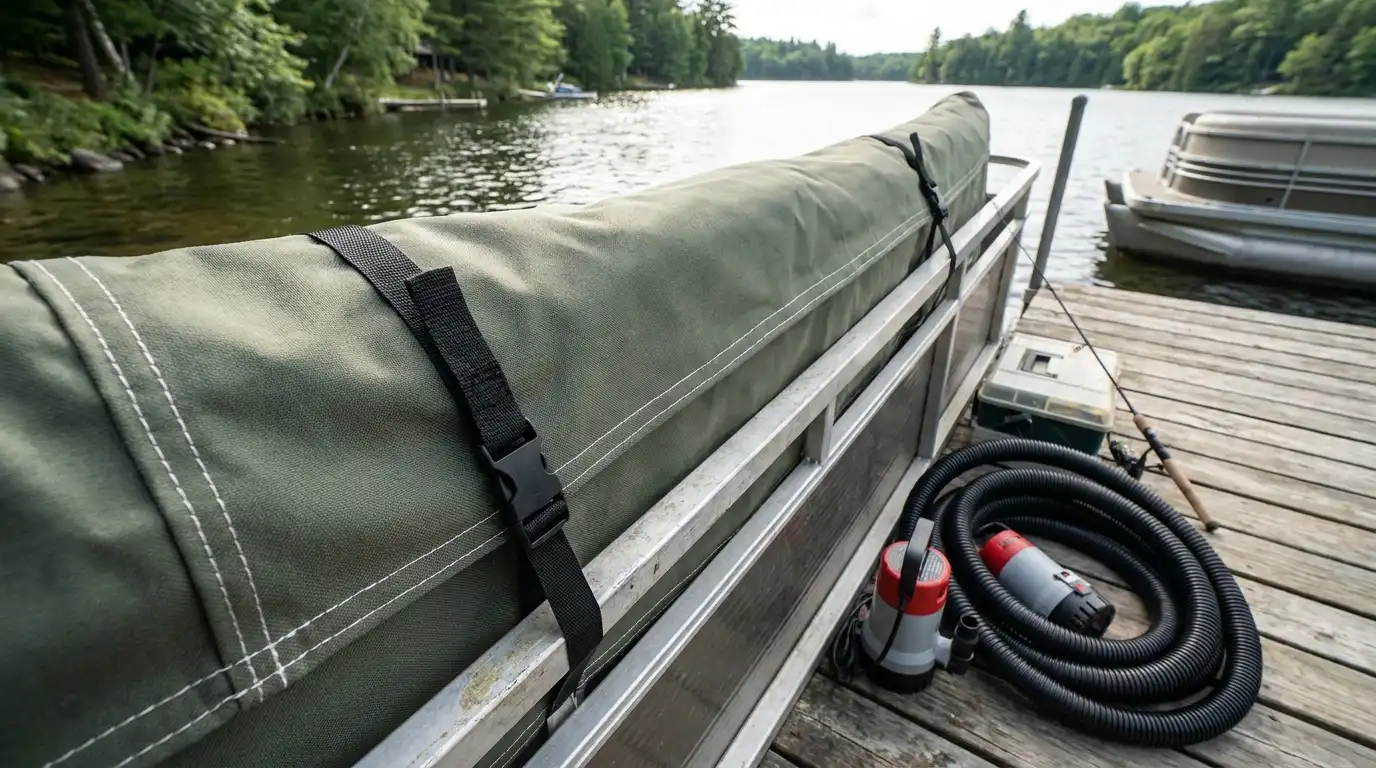
A lot of cover problems begin before the cover ever goes on the boat. One bad buying choice can lead to loose fabric, trapped moisture, torn seams, or standing water after the first storm. A bad start can become expensive fast.
The biggest mistake is buying by guesswork. Owners round the length up or down, ignore beam width, or forget accessories, and that can lead to a poor fit. Shopping by price alone causes problems too. A cheap cover may look fine in the package, but if it falls apart after one season, it was never a real bargain.
How the boat is used matters too. A storage cover does not always work as a trailerable cover, and towing a boat with one that was not made for highway wind can rip fabric and damage hardware. It is a simple mistake, and a costly one.
Commercial users and fishing hobbyists need to watch for this as well. Some boats sit outside for long periods between jobs or trips, and poor ventilation can create mildew and odor problems fast. Owners who want to protect appearance and long-term value should treat cover choice the same way they treat oil, pumps, or corrosion control. It is part of maintenance, not just storage.
Many owners also make cover use part of a regular boat maintenance routine and broader care planning. Less exposure can mean fewer repairs later, and that can save money, time, and frustration over the long run.
How the Right Cover Helps Resale and Long-Term Ownership
Boat value isn’t just about engine hours. Condition matters too. Buyers notice upholstery wear, worn flooring, faded trim, mildew smells, stained consoles, and weathered hardware before they look closely at much else. In 2025, U.S. pre-owned boat sales reached 867,059 units and a value of $10.8 billion. That’s a huge market. Pre-owned boats also made up 79.7% of total boat unit sales, so many buyers are shopping used, and appearance shapes that first impression right away.
If the owner plans to sell or trade the boat later, a good cover helps protect the parts people notice first. Clean seats, bright finishes, and dry storage areas give buyers more confidence. A well-kept boat feels cared for before anyone even starts the engine. That first impression can shape how buyers view the whole boat.
Owners care about that protection for different reasons. A recreational owner wants fewer cleanup issues. A fishing angler wants gear ready to use. For a small commercial operator, less downtime and a cleaner look for customers matter just as much. The right cover supports each of those needs.
Helpful product support and maintenance-focused gear are also available through First Choice Marine, especially for owners building a full care plan around storage, protection, and routine upkeep.
Choosing the Best Cover for Your Storage Style
Start with one thing: where your boat spends most of its time. The way you store it changes which kind of cover will work best.
If your boat stays on a trailer outdoors, pick a trailerable cover with strong straps, reinforced stress points, and a snug fit that stays in place through travel, weather, and daily outdoor use. At the dock, a mooring cover should come off easily and still keep water out well. For off-season storage, heavier material is important. Support poles and moisture control are important too.
NMMA reports 12 million registered boats in the U.S., and 95% of them are under 26 feet and towable. That means many owners keep boats at home, tow them regularly, and leave them out in sun, road grime, and changing weather. In that kind of setup, cover quality matters a lot.
A simple checklist before buying:
Measure carefully
Check the full length, beam width, rail height, and any accessories.
Match the cover to the use
Storage, mooring, and trailering each do a different job. They need different covers.
Plan for airflow
Vents and supports help prevent mildew.
Think beyond the season
Better cover can cost more at first, but over time it may help you save on cleaning, repairs, and even replacement. It’s worth thinking about.
If you’re comparing maintenance products and want a dependable source for marine parts and accessories, Selecting the Best Bimini Tops for Your Boat is another helpful resource alongside First Choice Marine.
Frequently Asked Questions
How long should covers last for a pontoon boat?
A pontoon cover can last several seasons, but life span depends on fabric quality, sun exposure, fit, and how often it is used for trailering. Covers that are cleaned, dried, and stored properly usually last longer than covers left dirty or sagging with pooled water.
Are custom pontoon covers worth it?
For many owners, yes. Research data shows custom covers make up 42.5% of the global boat cover market in 2025, which suggests strong demand for better fit. If long-term protection and cleaner fit matter to you, custom can be worth the added cost.
Can I trailer my pontoon with any cover on it?
No. Some covers are made only for storage or mooring. If you plan to tow your boat on the highway, choose a cover specifically designed for trailering, with proper straps, reinforced areas, and a secure fit.
What features matter most in pontoon covers?
Start with fit, fabric strength, water resistance, and ventilation. Support poles, elastic hems, adjustable tie-downs, and reinforced seams also help a lot, especially if the boat sits outdoors for long periods.
Where can I find pontoon covers and other boat care products?
A marine-focused retailer like First Choice Marine can be a practical option when you are comparing covers along with other upkeep items such as cleaners, engine-care products, and storage accessories. That can make it easier to build a complete maintenance setup instead of buying parts one at a time from different places.
Do pontoon covers help preserve resale value?
Yes, because they help protect visible condition. In a large used-boat market, buyers notice seat condition, mildew, fading, and overall cleanliness right away. A well-protected boat often shows better and can inspire more confidence.
Protect Your Boat Before Damage Starts
Choosing the right cover is one of the simplest ways to protect your boat, yet it gets missed all the time. A good cover shields your pontoon from UV rays, rain, dirt, mildew, and the wear that builds up when a boat sits out in the open. It does more than many people expect. It also reduces cleanup time, helps hold its value, and makes regular maintenance easier to stay on top of.
Pick a cover based on fit and how the boat is really used, not just on price. Measure carefully. Think about where the boat is kept. Then decide if a mooring cover, a storage cover, or a trailerable cover makes the most sense. Look for durable fabric, secure tie-downs, ventilation, and proper support so the cover can do its job in real-world conditions.
Pontoon covers matter even more because they leave so much seating and deck space exposed. A bad cover can cause nearly as many issues as having no cover at all, which defeats the purpose fast. A solid cover keeps the boat cleaner, helps it last longer, and keeps it looking better season after season. Treat the cover as a key part of boat care, not an afterthought, and it’ll pay off every time the boat sits between trips.
