


A good day on the water can turn rough pretty fast when the sun keeps beating down. Too much heat tires passengers out. It can fade seats, crack vinyl, put extra strain on electronics at the helm, and make the whole ride less comfortable. Repairs there can get expensive in a hurry. That’s why many boat owners start thinking of bimini tops and boat covers as practical gear, not just comfort add-ons. They help protect people, and they help protect the boat too.
A bimini top gives open shade without closing the boat in. It folds away when it’s not needed, and that usually makes long runs and fishing trips easier, especially on family outings or long afternoon rides. The details still matter, though: size, fabric, frame, and mounting setup all affect how well it works. A bad fit can block sight lines at the helm. It can also shake in the wind and wear out sooner than expected. In most cases, that’s the kind of problem people notice pretty quickly.
This guide explains how to choose the best bimini tops for different boat types and how they compare with other boat covers. It also looks at which materials usually matter most and which installation mistakes are worth avoiding. You’ll also see how to match a top to how the boat is actually used, whether that means fishing, cruising, or family trips. Simple stuff, maybe, but still useful.
Why Bimini Tops Matter More Than Many Boat Owners Think
Bimini tops often get seen as just another simple accessory, but they usually do a lot more for comfort and protection than many boat owners realize. According to NMMA, U.S. boating and boating-related spending on aftermarket accessories and outings reached $24.5 billion in 2024. That gives a pretty clear sense of how many boaters are paying for upgrades that make time on the water easier and more comfortable, which honestly fits what most people want from a long day outside. The wider watercraft accessories market is growing too, with estimates of $8.7 billion in 2026 and $15.73 billion by 2036.
| Market Measure | Value | Year/Range |
|---|---|---|
| U.S. boating aftermarket accessories and outings spending | $24.5 billion | 2024 |
| Global watercraft accessories market size | $8.7 billion | 2026 |
| Projected CAGR | 6.1% | 2026-2036 |
| Projected global market size | $15.73 billion | 2036 |
Those numbers fit with what plenty of owners notice after a few long days on the water. A little shade often makes a very noticeable difference. Some consumer guidance says a bimini top can lower cockpit temperatures by around 15 to 20 degrees. Better canopies with UPF 50+ fabric may also block 98% of UVA and UVB rays. Standard UV-protection fabrics often block 90% to 95%, which is still a lot.
So a well-chosen top can help protect passengers, seats, consoles, and even some onboard gear during long hours in the sun. That can make a real difference, especially on bright afternoon runs or all-day outings. If visibility and deck safety are also part of a warm-weather upgrade plan, related updates like 2025 Marine Lighting Trends: How LED Technology is Transforming Boating Safety can help the setup work better together. 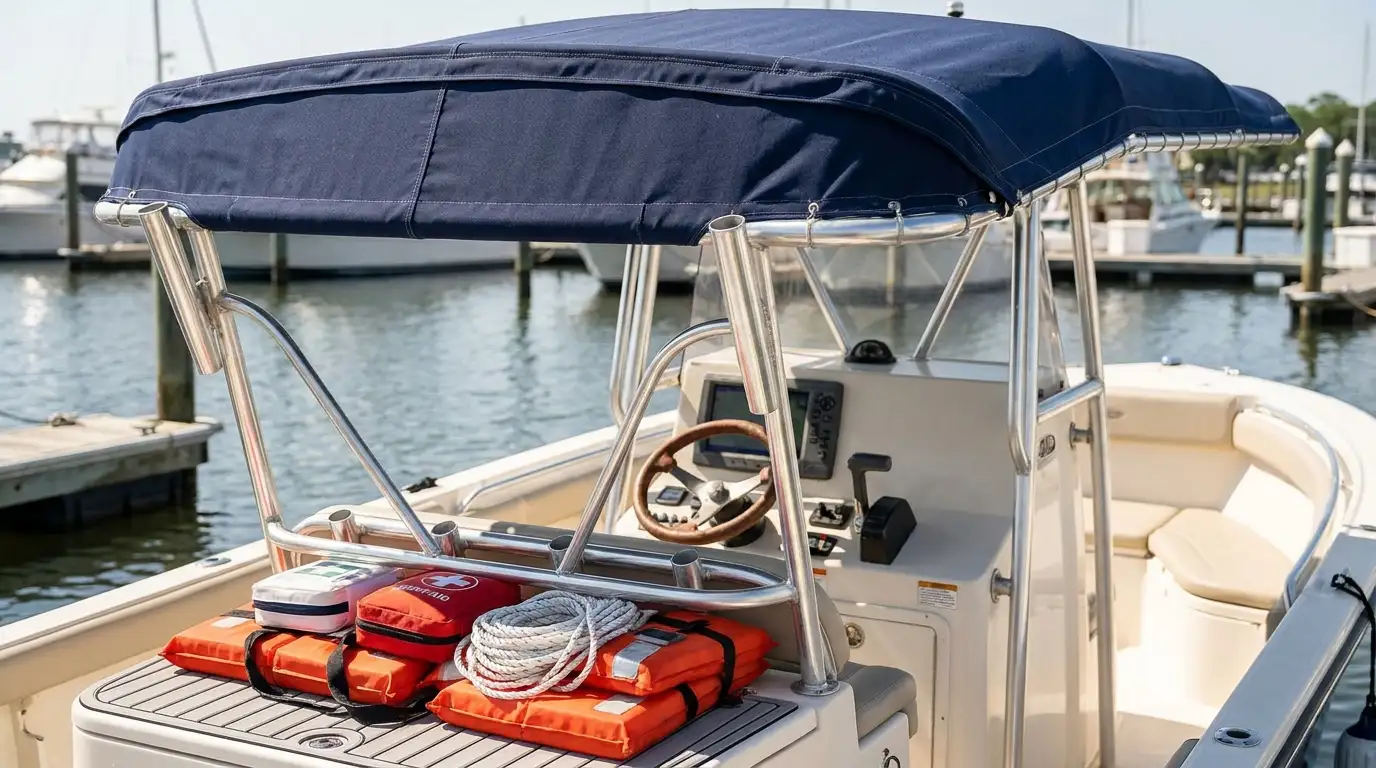
Start With Fit for Bimini Tops: Width, Height, Length, and Boat Layout
The first thing to look at usually is not color or price. It’s fit. A bimini top needs to fit your boat’s beam, the height you want under the canopy, and the length of the area you actually want to cover with shade. That’s where a lot of buying mistakes start, honestly, and pretty often.
Start with width. Most tops are sized by beam range, so measure the width at the mounting points instead of only at the widest part of the boat. Then move to height. You want enough headroom to move around comfortably, but not so much that the top sits too high, catches wind, or looks out of place. It’s usually a balance.
And length matters too. A longer canopy gives more shade, but it can also get in the way of casting, boarding, or moving around the console. Boat layout matters more than many people expect. If the seating, console, or access points do not line up well with the top, that becomes obvious fast.
Fishing boats with bimini tops
Fishing boat owners often want shade over the helm and seats, which makes sense. But they still need room to cast, so a shorter design or a folding one usually works best. Pretty simple.
Pontoon boats
Pontoons usually offer more shade, which is nice. Families often prefer a wider, longer canopy, so more seats stay covered at once, and that’s probably helpful.
Center console boats
These boats need careful placement, so the top usually won’t block movement around the console or get in the way while you’re actively fishing. That really matters.
Commercial or charter boats
For commercial or charter boats, durability and quick setup usually matter most. The top should handle frequent use, repeated folding, and the kind of daily work these boats get.
If the boat is being rigged for fishing but still needs to stay comfortable, articles on 2026 Fishing Boats: The Latest Innovations Redefining Angling can also help show how shade and layout often fit with deck access, so moving around stays easier.
Choose the Right Fabric and Frame for Bimini Tops and Your Water Conditions
Once the fit is right, it helps to check the material quality. That is often where one bimini top looks like a bargain at first, while another turns out to be the smarter buy over time.
The main fabric options usually include marine polyester, coated fabric, higher-end solution-dyed materials, and similar choices. It is pretty straightforward. Better fabric often keeps its color longer, resists mildew better, and handles sun exposure with less fading. Breathability matters too, often more than people expect. When fabric traps moisture, it can lead to mildew and stale smells if the boat is stored wet.
Practical marine guidance also says that sun exposure slowly reduces water repellency and UV protection over time. So even a durable canopy still needs care in most cases. Cleaning the fabric and treating it again can help it last longer.
For the frame, most buyers compare aluminum and stainless steel:
Aluminum
Aluminum is common because it’s lighter and usually costs less, which really helps. It also resists corrosion well, so it often works for many recreational boaters.
Stainless steel
Stainless costs more, but it gives you premium strength and durability. It’s often a good choice for saltwater use, bigger boats, and commercial work, especially offshore.
And the small parts matter too. Hinges, deck mounts, straps, support poles, and storage boots can make a real difference. Weak hardware usually fails before the fabric does. That’s one reason many boat owners buy from marine-focused suppliers like First Choice Marine, when they want something that likely fits product quality and real boating use better.
Safety and Use of Bimini Tops: Shade Should Never Hurt Visibility
A bimini top should make boating more comfortable, not less safe. One of the clearest points in marine safety guidance is that the setup needs to keep visibility clear from the helm and must not block navigation lights (that part’s pretty basic, honestly).
It sounds simple, but people often get this wrong. If a top sits too low, the driver may have to duck or keep looking around the fabric edge. If it extends too far, it can get in the way of antennas, rod holders, or lights. On some boats, a poorly placed frame can even make movement harder while docking. It may also be a problem in an emergency, which is usually the worst possible time for that.
Common mistakes to avoid:
Mounting too far forward
This can block access to the console, which is annoying. It may also reduce visibility a bit.
Buying only by boat length
Boat length alone usually isn’t enough. Beam, seating layout, and the mounting position often matter more in most cases. Really.
Ignoring folded position
Some tops look good when open but can feel awkward once folded, which happens a lot. Also make sure it stores easily without blocking controls, walkways, or access.
Choosing low-grade hardware
Cheap straps, fittings, or hinges can loosen quickly in chop or while trailering, and that gets frustrating fast.
A common success story often starts with an owner buying for real use, not just looks. So a family cruiser may choose a longer canopy for all-day shade over the seating area. An angler might pick a 3-bow top that folds quickly and stays clear of rods, which matters on the water. It’s a simple choice, and it often works out better when the setup fits the job they’re actually doing.
How Bimini Tops Compare With Other Boat Covers
Bimini tops and boat covers often get talked about together, but they do different jobs. A bimini top is mainly used for shade while boating or while relaxing at anchor, which is how many people use it most. Most boat covers, by comparison, are made for storage and weather protection when the boat is not being used.
That is why many owners end up buying both. The bimini helps protect people and cockpit surfaces during the day, especially around the seating area and helm. A separate cover protects the whole boat from rain, dirt, leaves, and wear while it is in storage or even just parked for a while.
The broader boat cover market also shows steady demand. One estimate puts the boat cover market at $3.8 billion in 2025, with growth to $6.2 billion by 2034. That fits with what many boat owners already see: protective gear is becoming a regular part of maintenance, not just an extra purchase. This often comes from people wanting to prevent sun wear, water pooling, and dirt buildup before those small problems turn into bigger ones.
If the boat gets trailered often, it helps to think about whether the top is built for running at speed, low-speed cruising, or sitting at anchor. Not every top handles road travel or rough conditions the same way, and some are likely not designed for highway towing at all. You will also want to think about nearby deck systems, like anchors or storage, since those are easy to overlook. For example, the right Anchor Lines: How to Choose the Right One for Your Boat can make it easier to move around the bow under a shaded setup.
A Simple Buying Checklist Before You Order
Before you order, it helps to slow down and go through a quick checklist. That often saves money and avoids frustration, which is a pretty good reason to do it.
Start with the basic things that are easiest to miss. Measure your mounting width carefully, then figure out how much headroom you really need and mark the shaded area you want to cover. This small step often helps more than people expect. It also helps to think about how the boat is actually used, whether that means fishing, cruising, charter work, or family days at the sandbar. Another easy thing to miss is clearance, so make sure the top will not block lights, rod holders, or the view line from the helm.
The material details are worth checking too. Marine-grade fabric with strong UV and mildew resistance, along with solid stitching, usually lasts better. Frame tubing and hardware should fit both your water type and your budget. If the boat spends a lot of time in saltwater, corrosion resistance can become important very fast. You will also want to check how the top stores when folded and whether a boot is included.
Many DIY owners also prefer a seller that carries related marine parts and maintenance gear in one place. An online marine parts retailer can make that easier when pairing a top with cleaners, hardware, or other deck accessories. Some owners also review 2026’s Smartest Boating Trends: Rigging Your Boat for the Future while planning larger upgrades around comfort and deck layout.
Frequently Asked Questions
What size bimini top do I need for my boat?
Measure the width where the mounts will go, then choose the canopy length and height based on the shaded area you want. Do not buy based only on boat length. Beam, layout, and helm position matter more.
Are bimini tops and boat covers the same thing?
No. Bimini tops provide open-air shade while you are using the boat. Boat covers are mainly for storage and weather protection when the boat is parked, trailered, or stored.
What is the best fabric for bimini tops?
A good marine-grade fabric should resist UV, mildew, fading, and water. Higher-end fabrics usually last longer in strong sun, especially if you clean and retreat them as needed.
Can I install a bimini top myself?
Yes, many boat owners can do it with careful measuring and basic tools. The key is proper mount placement, strong hardware, and making sure the top does not block visibility or navigation lights.
Where can I find bimini tops and related boat care parts?
Many owners prefer marine-focused retailers that also carry hardware, cleaners, and maintenance items. First Choice Marine is one example worth checking if you want bimini tops, boat covers, and other boating accessories from a parts-focused source.
How do I know if a bimini top is built for long-term use?
Look at the full package, not just the canopy. Strong stitching, corrosion-resistant fittings, a stable frame, and fabric with real UV and mildew resistance are all signs of better long-term value. First Choice Marine can also help boat owners compare these details when shopping for protective gear and accessories.
Make Your Shade Setup Work for the Long Haul
The best bimini tops do much more than just look good at the dock. They give real shade, help protect passengers, cut down heat, and can help protect your boat’s interior over time. The right option should fit your beam, work with your layout, use durable marine-grade materials, and still stay out of the way of the helm and main walk-through areas when safety matters most, especially while you’re underway. That’s usually what makes a setup feel like a smart choice.
If only a few things matter most, start here: measure carefully, match the top to how the boat is really used, choose better fabric and hardware when the budget allows, and keep clear visibility from the helm, because that’s often the biggest factor. It also helps to remember that bimini tops and boat covers are not doing the same job. One protects people out on the water, while the other protects the boat when the day is done, usually back at the dock or on the trailer.
A little planning now can often save you from buying twice later. Choosing a setup that fits the boat, the usual water conditions, and the way it gets used can mean more comfort and better value season after season. That’s worth remembering.
