


Choosing the right oil for boat engines looks simple at first. Then you see the shelf: two-stroke oil, four-stroke oil, FC-W, TC-W3, synthetic blends, plus different viscosity grades. It gets confusing fast. It also matters more than many boat owners realize. Pick the wrong oil and the result can be extra wear, poor performance, hard starts, corrosion and expensive repairs.
Boat engines work hard. They run under steady load, deal with moisture and can face salt, heat and long idle periods, so the oil needs to do more than give basic lubrication. It has to protect internal parts, stay stable as temperatures rise and help resist rust and corrosion over time. Marine oil is not the same as car oil, even when the bottle looks very similar on the shelf.
This guide makes the buying process easier. It explains how to match oil to the engine type, what those certifications really mean, how viscosity affects protection and which mistakes to avoid when buying oil or topping off. For anyone who wants a broader primer, there is also First Choice Marine’s helpful article on Choosing the Right Oil for Boat Engines: A Comprehensive Guide. Here, the focus stays on practical buying choices to use before the next trip.
Start With the Engine Type When Choosing Oil for Boat Engines
Don’t start with the brand. Start with the engine. Once boat owners know what engine they have, the oil choices narrow down fast, and that usually means picking between oil for a two-stroke outboard and oil for a four-stroke marine engine.
According to NMMA, those oils follow separate certification paths. TC-W3 applies to many two-stroke water-cooled marine engines. FC-W and FC-W Catalyst Compatible apply to four-stroke marine gasoline engines. NMMA explains that difference clearly in this verified statement.
NMMA considered it necessary to develop a marine engine oil category specifically for marine four-stroke engines.
Marine engines need something different from car engines, not just a slightly different take on the same thing.
The sales data shows why this matters. NMMA reported 267,000 U.S. outboard engine sales in 2025 with a total value of $3.5 billion and an average retail price of $13,081. When engines cost that much, using the right oil is a basic part of protecting that investment.
| Metric | Value | Year |
|---|---|---|
| U.S. outboard engine sales | 267,000 units | 2025 |
| Market value | $3.5 billion | 2025 |
| Average retail price | $13,081 | 2025 |
| Year-over-year sales change | -3.9% | 2025 |
A simple rule works well here: match the engine type first, then choose the oil that matches the required marine certification. Don’t begin with whatever bottle is cheapest or easiest to grab.
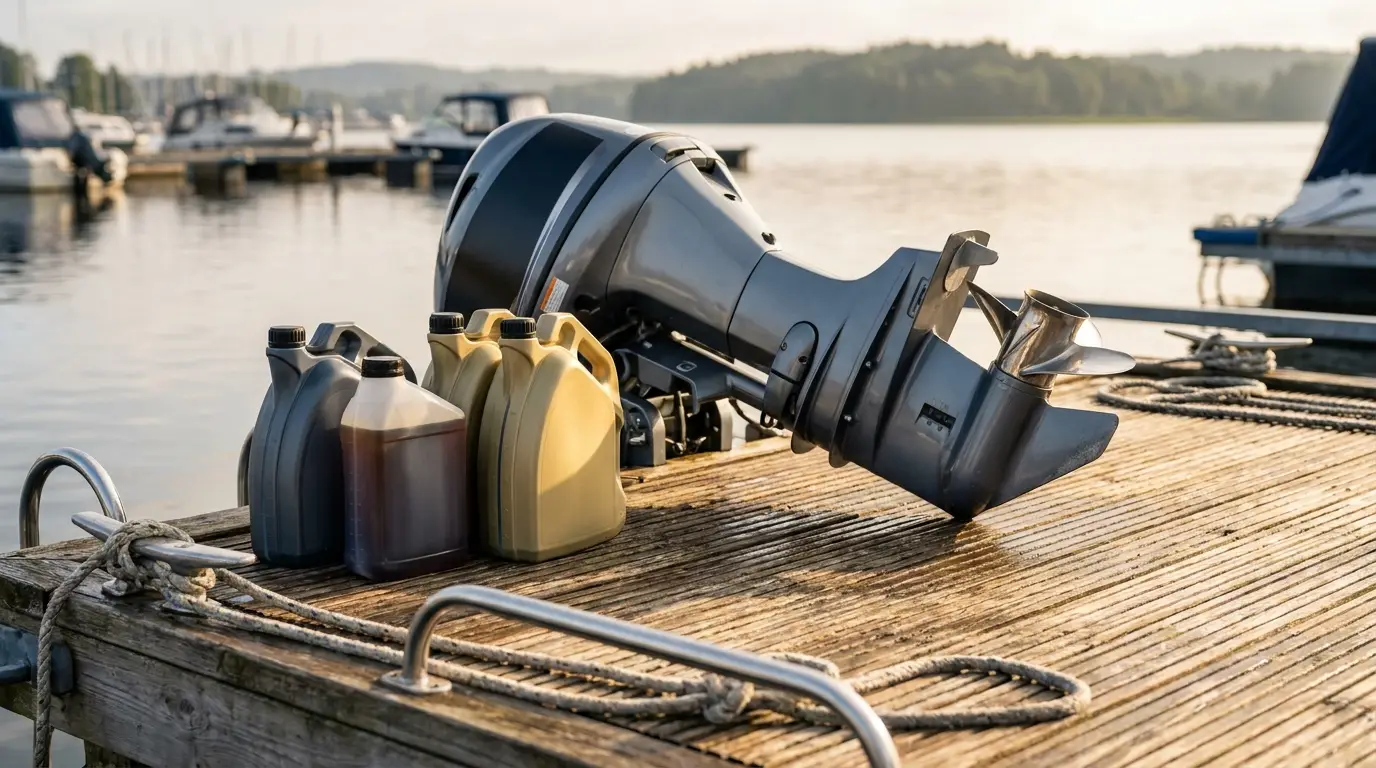
What FC-W, FC-W CAT, and TC-W3 Really Mean for Oil for Boat Engines
These labels show whether the oil was made and tested for marine use. For many buyers, that’s the main thing to check when picking oil for boat engines.
TC-W3 for many two-stroke outboards
Older and current two-stroke outboards that call for TC-W3 need that spec, not just any oil. For water-cooled marine two-strokes, TC-W3 oils fit how those engines actually run on the water. Cleaner burning. Better protection in those conditions.
FC-W for four-stroke marine engines
Made for marine four-strokes, FC-W oils stand up better than standard automotive oils under steady high loads, moisture, and corrosion. According to Mercury Marine technical guidance, marine oils reduce friction, protect against wear, and help fight internal corrosion.
FC-W CAT for catalyst-compatible engines
Some newer four-stroke engines need catalyst-compatible oil. Use FC-W CAT when your manual calls for it. Don’t guess. Just use the right oil. NMMA states:
The NMMA FC-W Catalyst Compatible® specification is intended to support the industry in providing long term durability, power and overall consumer satisfaction with marine engines.
This matters even more now because newer outboards are getting more specialized. If you’re updating performance hardware too, treat oil as part of the full system, not as something separate. The same kind of thinking shows up in guides like Boat Engine Parts: What to Expect in the Growing Market for 2026, where matching parts matters just as much as product quality.
How to Choose the Right Viscosity for Oil for Boat Engines
Once the certification is clear, the next step is viscosity. A lot of boat owners get stuck here. They see grades like 10W-30 and 25W-40 and start trying to figure out which one makes the most sense.
The simple answer? Use the viscosity the engine maker recommends for the boat engine.
Current marine guidance may point to 10W-30 or 25W-40 for four-stroke applications, but not every engine wants the same oil. Horsepower, operating temperature, and engine design all matter.
A larger four-stroke outboard pushed hard in summer may need something different from a small kicker motor that mainly runs in cooler weather. Different engine, different needs.
Use this step-by-step process:
1. Read the owner’s manual
Check the certification and viscosity as well. If the manual says FC-W 10W-30, that’s the answer.
2. Check for temperature guidance
Some manuals give different options for cooler or warmer weather. Follow those directions.
3. Consider how you use the boat
Long runs, heavy loads, towing, and hot climates can make the heavier option a better fit, if the manual allows it.
4. Stay consistent between changes
Switching things around without a clear reason can make maintenance tracking harder.
Take a real-world example: a fishing boat owner with a modern four-stroke outboard might think a car oil with the same 10W-30 grade is close enough. But the marine version has additives and testing for moisture, corrosion, and high-load marine use. Same viscosity number, different job.
Common Buying Mistakes With Oil for Boat Engines
Most oil problems don’t come from bad luck. They often start with the wrong assumption. That’s it. These are the mistakes boat owners make most when buying oil for boat engines.
Assuming automotive oil is the same
This is probably the biggest one. Marine engines don’t run in the same conditions as car engines. They face water exposure, corrosion risk, and long stretches at high throttle. Even when the viscosity number matches, the oil can still be different.
Ignoring certification labels
A lot of buyers look only at brand and price. Check the certification first. An FC-W or TC-W3 label means the oil meets a marine standard. No label? Stop and verify it before buying.
Mixing up two-stroke and four-stroke oils
It still happens. At the dock, a rushed top-off isn’t the time to guess: two-stroke and four-stroke oils are not interchangeable. An easy mistake.
Missing catalyst requirements
If your engine needs FC-W CAT, standard FC-W may not be enough, especially with newer engines that can be less forgiving.
Buying too far ahead without checking shelf condition
Oil lasts a while when stored well, but older bottles left in damp sheds or hot compartments aren’t ideal. It’s better to buy only what will be used within a reasonable time.
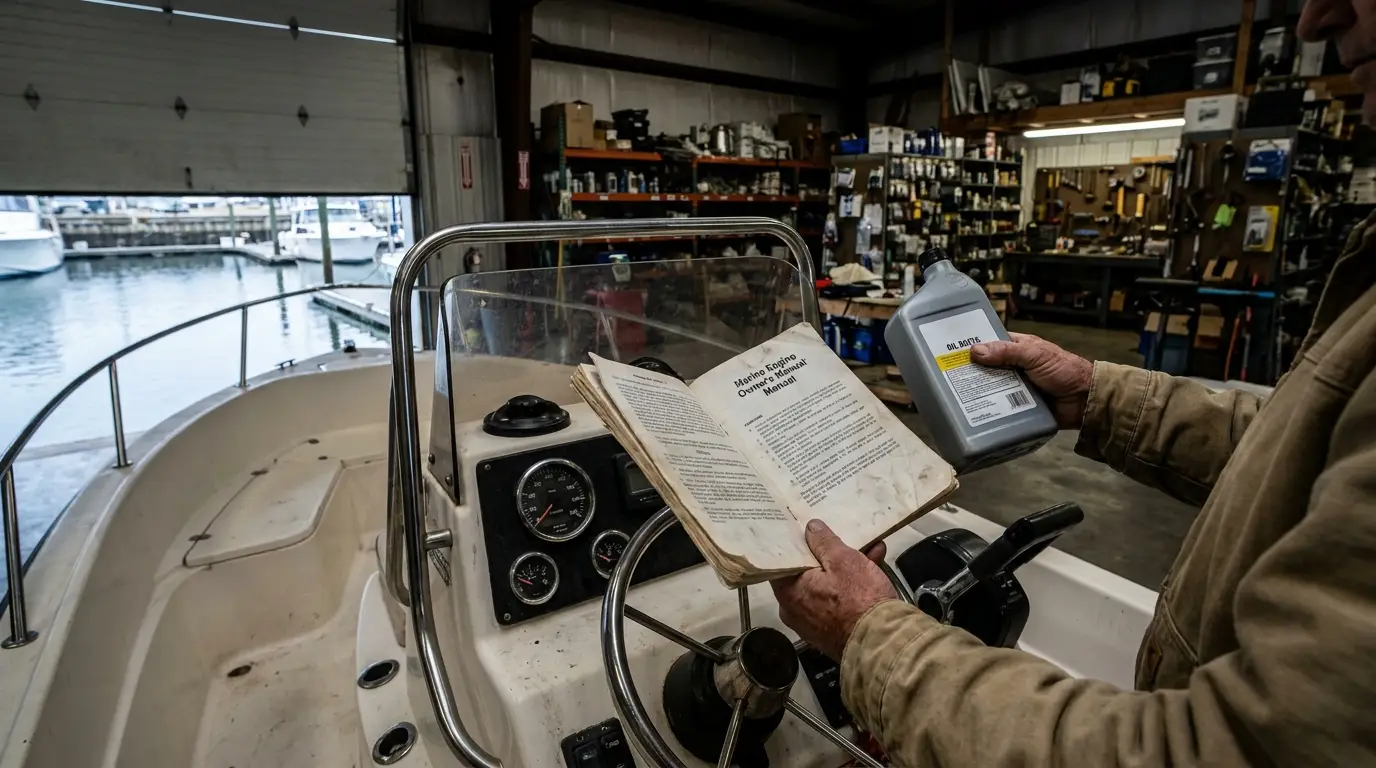
Trends Shaping Oil Choices for Modern Boat Engines
Marine oil is getting more application-specific. The one-size-fits-all approach is fading fast, and newer engines, especially higher-horsepower outboards, need a much more precise match. It’s not optional.
NMMA noted that 2025 outboard unit sales dipped, but the market remained stable. Resilient pricing helped, while higher-horsepower segments stayed strong. More powerful engines need closer attention to shear stability, corrosion protection, and exact certification. Those details matter.
Interest in environmentally minded and bio-based lubricants is growing as well. Still, engine requirements need to come first, because if a greener oil doesn’t meet the specification your engine requires, it’s simply the wrong choice.
At the industry level, demand remains strong. Marine lubricants market estimates range from $6.0 billion in 2023 to $8.368 billion in 2025, with forecasts climbing higher through 2033. That shows boaters and commercial operators are paying more attention to lubrication and engine care.
A Simple Buying Checklist for Oil for Boat Engines
When you shop for oil for boat engines, keep it simple and easy to repeat. That’s often the best way to avoid expensive mistakes.
Use this quick checklist
- Identify whether your engine is two-stroke or four-stroke
- Read the manual to see which certification it needs
- Check whether it needs catalyst compatibility
- Match the exact viscosity grade on the list
- Confirm that the product is made for marine use
- Buy enough for the oil change and a small extra amount for top-offs
- Store unopened oil in a cool, dry place
If you’d rather get maintenance supplies from one trusted source, First Choice Marine is a handy way to compare marine parts, engine care items, and boating accessories. It can also help you plan for the rest of the systems onboard. For example, steady charging supports electronics and helps with reliable starts, so many owners also check Battery Chargers for Boats: How to Size and Install for Long Life.
Find the right oil and keep using it the same way each time.
Frequently Asked Questions
Can I use car oil in a boat engine?
Usually, you should not unless your engine maker clearly allows it. Marine engines face different loads, cooling conditions, and corrosion risks. Marine-certified oil is designed for that environment.
What is the best oil for boat engines?
The best oil for boat engines is the one that matches your engine type, required certification, and viscosity grade. For many engines, that means TC-W3 for certain two-strokes or FC-W/FC-W CAT for four-strokes, but your manual is the final word.
What happens if I use the wrong marine oil?
Using the wrong oil can lead to extra wear, poor lubrication, deposit buildup, and even damage to emission-related parts in newer engines. You may also risk warranty problems if the oil does not meet required specs.
How do I know if my engine needs FC-W CAT oil?
Check the owner’s manual or the engine label. If it says catalyst-compatible oil is required, use FC-W CAT and do not substitute based on guesswork alone.
Where can I buy marine engine oil and related maintenance parts?
A marine-focused retailer is usually the safest choice because the product range is built around boating needs. First Choice Marine is one example where boat owners can look for engine care items, maintenance products, and other onboard essentials in one place.
Should I keep extra oil on the boat?
Yes, carrying a small spare bottle is smart, especially on longer trips or with older engines that may use some oil between checks. Just make sure it is the same certified oil you already use and store it securely.
Make the Smart Choice Before You Leave the Dock
Choosing oil for boat engines doesn’t have to feel technical or stressful. Keep a few basics in mind, and the choice gets much easier: match the oil to the engine type, check the correct marine certification, then confirm the viscosity. In that order, a lot of the confusion starts to clear up.
Look past the bottle too. The right oil can help an engine start more easily, run more smoothly, keep internal parts cleaner, and last longer over time, whether that’s a small fishing skiff used on weekends or a commercial boat putting in long days on the water. Different boat. Same need.
Before the next oil change or top-off, take a minute to check the manual and read the label. Confirm the certification is right. Check that the viscosity matches. Make sure the oil is made for marine use. Fast checks like these can save a lot of money on repairs later.
For anyone building a more reliable maintenance routine, the marine parts retailer at First Choice Marine and its educational content can also help keep the rest of the boat in shape. Owners interested in steering and navigation upgrades can also browse Best GPS for Boats: Chartplotter Buying Guide for additional onboard planning ideas. Start with the right oil, stay consistent, and give the engine the protection it was built to use.
