


A boat repair can seem easy at first, and then the real questions come up. Do you need a strong adhesive, a flexible marine sealant, or both? Is the repair below the waterline, where the choice often matters most? Will that part need to be removed again later? And which brand actually fits the job best: 3M Marine, Sika, BoatLIFE, Novagard, or something else?
That is where many boat owners get stuck. A bad product choice can turn a small fix into a bigger problem fast. If a sealant is too weak, leaks can show up around a hatch, fitting, or seam. If it is too strong, future service can become a headache when hardware needs to come off. A product that works very well on fiberglass also may not be the best choice for aluminum, and it can often do poorly on wood or plastic too.
The good news is that this usually becomes much simpler when the focus stays on the job itself, not just the name on the tube. In this guide, readers will learn how to match the adhesive type to the repair, how cure time and removability affect real-world results, and where the major brands usually fit best. It also covers common mistakes, newer buying trends, and smart ways to shop through trusted marine parts sources like First Choice Marine. Short and practical. So for anyone who wants a repair that lasts while still making later maintenance easier when it is time to reseal or remove parts, this guide will help.
Start With the Marine Sealant Repair, Not the Brand
The best marine adhesive is not always the strongest choice. More often, the better option is the one that fits the repair surface, handles the amount of movement involved, and works with the kind of service the fix will need. That last part is what people usually miss.
There is a reason this matters. Even in a softer sales year, the boating market is still sizable. According to NMMA data, 215,237 recreational boats were sold at retail in the U.S. in 2025, and 77,434 of those were fishing boats. At the same time, the global marine adhesive market reached USD 574.26 million in 2025 and is projected to grow to USD 600.53 million in 2026. The takeaway is pretty simple: many owners are maintaining boats carefully and repairing them instead of replacing them, which is probably not surprising.
| Metric | Value | Year |
|---|---|---|
| U.S. recreational boat retail sales | 215,237 | 2025 |
| U.S. fishing boats sold | 77,434 | 2025 |
| Global marine adhesive market | $574.26 million | 2025 |
| Projected marine adhesive market | $600.53 million | 2026 |
So when it comes to real repairs, start with these questions:
Is the marine sealant bond permanent or serviceable?
A permanent bond works well for parts that stay in place and are not meant to come off. But for deck fittings, access panels, and hardware, a serviceable bond is often better if you may need to remove them later.
Is the area above or below the waterline?
For below-waterline jobs, stronger water resistance is usually needed, and often better sealing over time too, since that area matters.
What material are you bonding with marine sealant?
Fiberglass, gelcoat, wood, aluminum, and plastic can all react in pretty different ways, often more than you might expect.
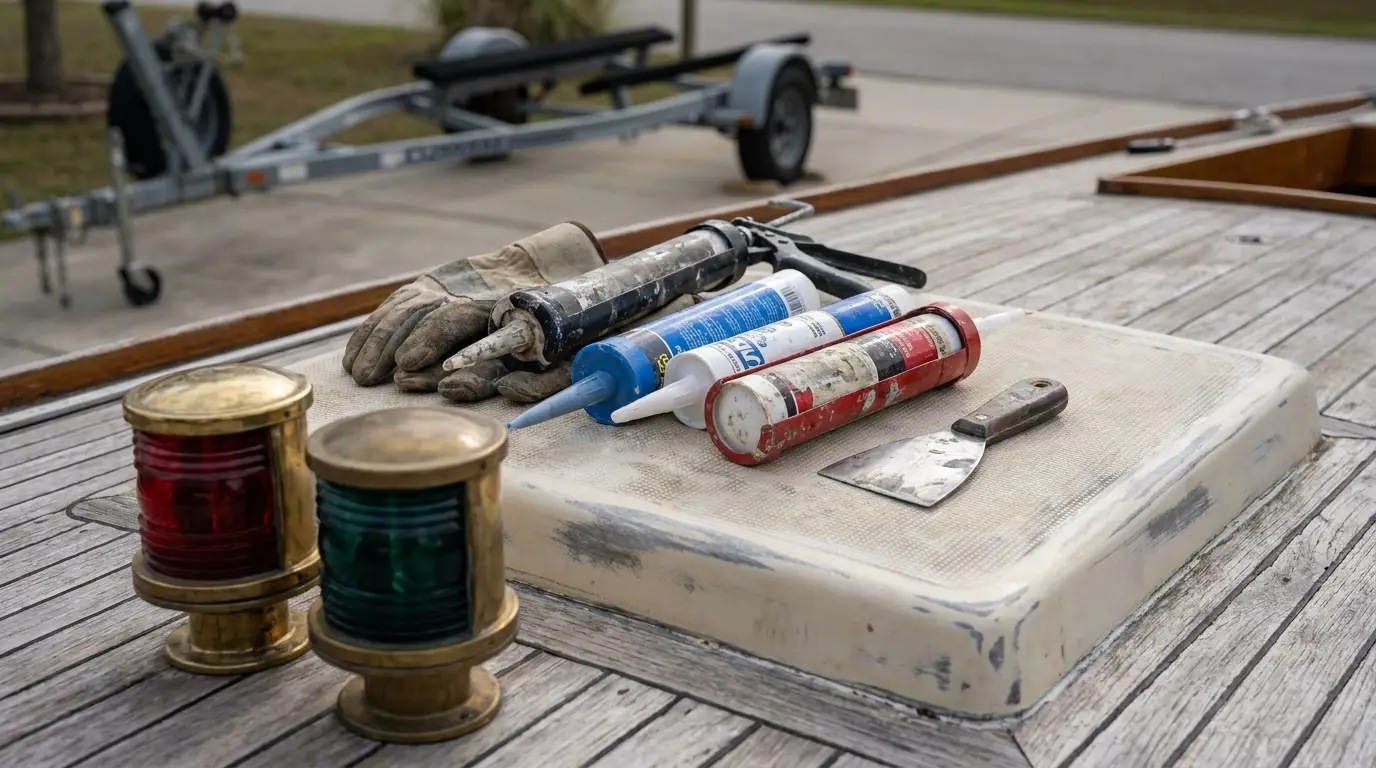
If a broader look at sealing jobs would help, this guide on Choosing the Right Marine Sealants for Your Boat is usually a good place to start.
How Marine Sealant Brands Fit Different Repair Jobs
Each major brand usually has its own lane, and that’s often easy to spot. That’s where it works best. But that doesn’t mean one brand wins every time. It just means each product family is made to handle a different kind of problem, depending on the job.
3M Marine
3M Marine is often the first name boaters think of, and for good reason. Its range includes permanent jobs and some semi-permanent ones too, which makes it useful. The best-known example is 3M Marine Adhesive Sealant 5200. People usually use it when they need a very strong, waterproof bond, especially below the waterline or around fittings where leaks really are not an option. Still, it is not the right choice for every job. Full cure can take up to 4 days, and the technical sheet lists a 24-month shelf life from the date of manufacture.
That makes 5200 a real commitment. It works well for some repairs, but it is often more than a job really needs.
For fittings and exposed areas, 3M 4200FC and 4000UV are often better options. 4200 is easier to service later, so parts can be removed with less trouble. 4000UV is made for UV-heavy topside use, with semi-permanent sealing that suits sun-exposed surfaces.
Sika
Sika stands out because it covers a wide range of uses and works across many different substrates. Its marine systems are made for leisure boats, yachts, and larger vessels, so it fits a pretty broad mix. Sika also puts a strong focus on elasticity, which is especially useful on boats, where parts move, flex, and vibrate, and often do all three.
As Practical Sailor testing discussed by Darrell Nicholson points out, some products do very well on one substrate but less well on another. That makes Sika worth a closer look if a repair involves mixed materials.
BoatLIFE Marine Sealant Options
BoatLIFE Life-Calk is still a solid option when polysulfide chemistry often makes more sense. It’s sold for use above and below the waterline, and for bonding wood, fiberglass, glass, and metal, which makes it pretty useful. Overall, it comes across as quite flexible.
After curing, it can be sanded and painted while still staying flexible. Its listed tack-free time is 24 hours at 75°F and 50% relative humidity, and one current retail listing shows a starting price of $18.99, which gives a helpful rough baseline.
For owners looking for a proven marine sealant that’s easier to finish neatly, it still feels like a familiar pick. In many cases, it’s a known option that can be smoothed, sanded, and painted without too much fuss.
Novagard
Novagard takes a more careful approach. There’s less marine-specific technical info here than with 3M Marine, Sika, or BoatLIFE, and that’s worth remembering. It’s well known for silicones and hybrid adhesives. But if there isn’t a clear marine product sheet for the exact job, it’s usually best not to guess. Before trusting it for an important boat repair, like a hull or deck fix, the product data is where to look.
A Simple Way to Choose the Right Marine Sealant
If you’re in the shop or looking online, this step-by-step filter is pretty easy to follow. It usually keeps things simple and helps you avoid buying based on guesswork, which honestly happens a lot.
Step 1: Define the repair area
Is it a hatch, transducer, rub rail, deck fitting, window frame, or hull seam? A transom fitting usually needs something different than a topside trim piece, since they’re in different spots. It’s often a different kind of job.
Step 2: Decide if you may need future removal
This is where a lot of DIY repairs go wrong, and it happens pretty often. If the part may need servicing later, it’s usually better not to grab the strongest adhesive on the shelf right away. Fawcett Boat Supplies guidance generally points boaters to more removable products for serviceable fittings, while stronger polyurethane options often make more sense when the bond is meant to be permanent.
Step 3: Match the marine sealant chemistry to the environment
Choose a product made for marine moisture, flex, and UV exposure, since that usually matters here. If paintability is important, BoatLIFE can be a good option, I think. For strong UV exposure, especially in direct sun, 3M 4000UV may work better. In short, if one system needs to handle several materials, Sika is often worth considering.
Step 4: Check cure time and working time
Some products skin over quickly, while others stay workable a little longer. A few also take more time to reach full strength, which can be frustrating. This usually matters most when the weather is changing or the boat needs to go back into service soon.
Step 5: Prepare the surface well
Even the best marine sealant can fail if the surface is dirty. Start by cleaning and drying the area, then lightly prep the material the way the product sheet recommends, because that extra minute is often worth it.
If the repair needs a hard filler or a structural rebuild instead of flexible sealing, read Marine Epoxy for Boat Repairs: When to Use It, Where It Fails, and How to Get Long-Lasting Results. Epoxy is different from sealant, and people often confuse the two.
Common Marine Sealant Mistakes That Cause Redo Work
Most adhesive failures are usually not true adhesive failures at all. In many cases, the real issue starts earlier, when the wrong product gets picked for the job.
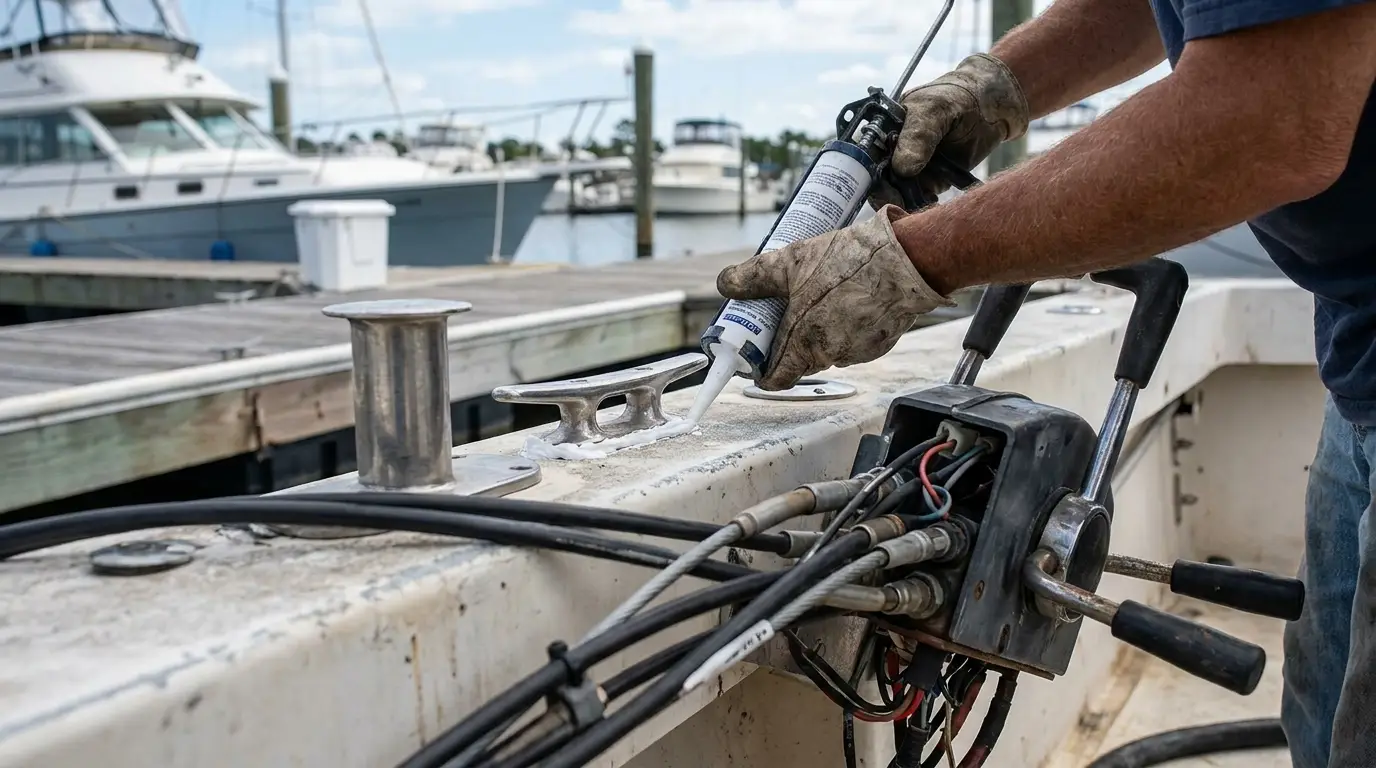
One very common mistake is using a permanent adhesive in a spot that may need service later. A cleat base, inspection plate, or hardware mount may need to be taken off at some point, and that is completely normal. If something made for permanent bonding gets used there, the next repair can become slow, expensive, and frustrating very quickly. It often causes more trouble than the original install ever needed to.
Another issue is treating silicone, polyurethane, and polysulfide as if they all do the same job. They do not. Some hold up better in UV exposure. Some handle movement better, and some fit certain materials better. Others can be a bad choice near fuel or with particular plastics, and that is easy to miss. This mix-up happens a lot because the products can look very similar at first.
Trusting a brand name more than the actual product data is another problem. This often comes up with Novagard in particular. The brand may offer quality adhesive technologies, but if there is no marine-specific technical sheet for the exact product, being cautious is the safer choice. A boat is not a generic construction project, and it usually should not be handled like one.
Poor prep is the last major problem. Old sealant, oil residue, or damp surfaces can ruin an otherwise solid repair. And near propulsion or moving hardware, it also helps to know what maintenance needs are nearby, such as corrosion control, which often gets overlooked. We covered that here in this article on Advanced Techniques for Marine Corrosion Prevention: Protecting Your Investment.
What Buying Trends Mean for Boat Owners
Buying marine adhesive has become much more specific. Boaters are paying closer attention to UV resistance, removability, and substrate match, which is probably overdue, instead of just grabbing one tube and using it for every job.
That shift is not surprising. New boat sales softened in 2025, falling 8.8% from 236,070 units in 2024 to 215,237 units in 2025. When owners keep boats longer, maintenance decisions usually matter more. Repairs need to last over time, but they also often need to leave room for future service and upgrades, especially when parts may be worked on again later.
Brands are adjusting to that. 3M is still separating permanent, semi-permanent, above-waterline, and other products more clearly, making it easier to match the adhesive to the job. Sika is putting more focus on flexible systems for fiberglass, timber, aluminum, and steel. BoatLIFE still works well for owners who prefer polysulfide for classic repair jobs. Across the industry, there is also more attention on lower-emission and compliance-friendly formulas, even if some sustainability claims still deserve a careful look, in my view.
The marine sealant aisle is more specialized now. That can be a good thing for your boat, I think, but usually only if you slow down and choose with some care instead of guessing.
Smart Shopping and Marine Sealant Storage Tips
Once the right product family is clear, the next step is to buy smart. Clear product descriptions, current stock, and advice on whether something fits the job usually make the choice much easier. A marine-focused retailer such as an online marine parts store can also make things simpler, since the range is built around boating needs instead of general household repairs, with options that will often suit common marine jobs better.
Storage matters too, even though it is easy to overlook. Adhesives and sealants do not last forever. For example, 3M Marine 5200 lists a 24-month shelf life from the date of manufacture. If a tube has been sitting around too long, performance can drop, so the result probably will not be the same.
Some easy habits help:
Buy close to the time of use
Only buy what you need, which is usually enough. And buy it close to when you plan to use it.
Keep tubes sealed and stored properly
Heat and moisture can often shorten how long they’ll stay usable in most cases.
Read the label before opening
Check the cure time and surface notes, since that often matters, and see if the product is paintable.
Test your plan before applying a full bead
Dry-fit the part first; it usually helps. There’s less mess and, I think, less stress for you too.
Frequently Asked Questions
What is the difference between a marine adhesive and a marine sealant?
A marine adhesive is mainly for bonding parts together. A marine sealant is mainly for keeping water out while staying flexible. Some products do both, but one job usually matters more than the other, so always read the product description carefully.
Is 3M Marine 5200 the best choice for every boat repair?
No. It is a strong option for permanent, watertight bonding, but it can be too aggressive for parts that may need later removal. Many boat owners use 4200 or 4000UV instead when they want a more serviceable repair.
When should I choose Sika over other brands?
Sika is a smart choice when you need a product line that works across several boat materials and repair types. It is especially useful when flexibility and movement matter, such as on boats that see vibration, wave impact, and changing temperatures.
Why do some boat owners prefer BoatLIFE Life-Calk?
BoatLIFE appeals to owners who want polysulfide chemistry, paintability, and lasting flexibility. It is often used on classic repairs where a neat finish and chemical resistance matter.
Can I trust Novagard for marine repairs?
Possibly, but only after checking the exact product data. Right now, marine-specific information is more limited than with 3M Marine, Sika, or BoatLIFE, so it is best to confirm that the product is truly intended for your repair area before using it on a boat.
Where can I compare marine adhesives and sealants for my boat?
A marine-focused seller like First Choice Marine can be a helpful place to compare products that are actually relevant to boating jobs. It also helps to pair product shopping with educational guides so you match the sealant to the repair instead of just buying by brand name.
Put the Right Marine Sealant on the Right Job
The best marine adhesive is usually the one that fits the repair, the material, and whatever that part of the boat may need later. If a job calls for permanent strength, 3M Marine products like 5200 are probably a good fit. But when removability matters more, or UV resistance is the bigger concern, a different 3M option may make more sense depending on where the part sits on the boat. For wider material compatibility, Sika is a solid brand to compare. If a flexible, paintable polysulfide marine sealant is needed, BoatLIFE still looks like a smart choice. And with Novagard, doing a little extra product verification is still a good idea, just to be safe.
What tends to trip people up is rushing the basics. The substrate needs a careful look. Future service needs matter too. You will also want to read the cure times and prep the surface well. It sounds simple, but those steps often matter more than people expect in this kind of repair. Skip them, and there is a good chance the repair will need to be done again sooner than planned.
For anyone sorting through options for an upcoming repair, First Choice Marine is a practical place to start. It supports the product side of boat maintenance while also helping with the education side. That makes it easier to compare products, read about how they cure, and sort out what usually works best for the repair at hand. A little extra care now can help avoid doing the whole job over later, which means more time on the water instead of fixing the same issue twice.
