


A good day on the water gets even better with the right music, a weather radio, or just clear sound at the helm. Choosing a marine sound system takes more thought than buying car speakers and hoping they hold up. Boats have to deal with spray, sun, salt, vibration, and tight battery limits. That’s a big difference. Something that sounds great in a driveway can fail quickly once it’s out on the water.
Plan before you buy. The best marine sound system for your boat depends on where you use it, how loud you want it, how much power you have, and how your deck is laid out. A small fishing skiff needs something very different from a pontoon, center console, or wake boat. Different setup, different needs.
This guide covers the buying factors that matter most. It explains how to match speakers and amps, how to think about battery load, and where popular brands like Fusion Marine, JL Audio, KICKER, Infinity, JBL Audio, and Wet Sounds fit for different uses. If you’re doing the upgrade yourself, the article also helps you avoid costly mistakes before you cut a single hole in the boat.
Start With Your Boat Type and Marine Sound System Listening Style
Don’t start by choosing a brand. Start with an honest look at how the boat really gets used. A marine sound system should fit what the boat needs to do.
For a small aluminum fishing boat or skiff, a simple setup works best. One head unit and two marine speakers is enough for most people. The goal is clear sound at low to medium volume, easy controls, and low battery draw. On a pontoon, people may want music that reaches a bigger seating area, so four to six speakers and zone control can make more sense. Wake and ski boats are different. They may need tower speakers, a subwoofer, and amps because riders need to hear the sound farther back.
Offshore center consoles are different too. They need strong output, plus gear that can handle harsh spray and long hours in the sun. Cabin cruisers can benefit from separate cockpit and cabin zones. Different boats have different needs.
That range of use cases is part of a growing market. According to The Business Research Company, the marine audio market is estimated at $1.81 billion in 2025 and $1.87 billion in 2026, with growth continuing to $2.16 billion by 2030.
| Marine Audio Metric | Value | Year |
|---|---|---|
| Global market size | $1.81B | 2025 |
| Global market size | $1.87B | 2026 |
| Projected market size | $2.16B | 2030 |
| Projected CAGR | 3.6% | 2025-2030 |
Those numbers suggest more boaters are upgrading for comfort, entertainment, and better onboard systems. Buyers also have more choices right now, which makes smart planning matter even more before they begin choosing equipment.
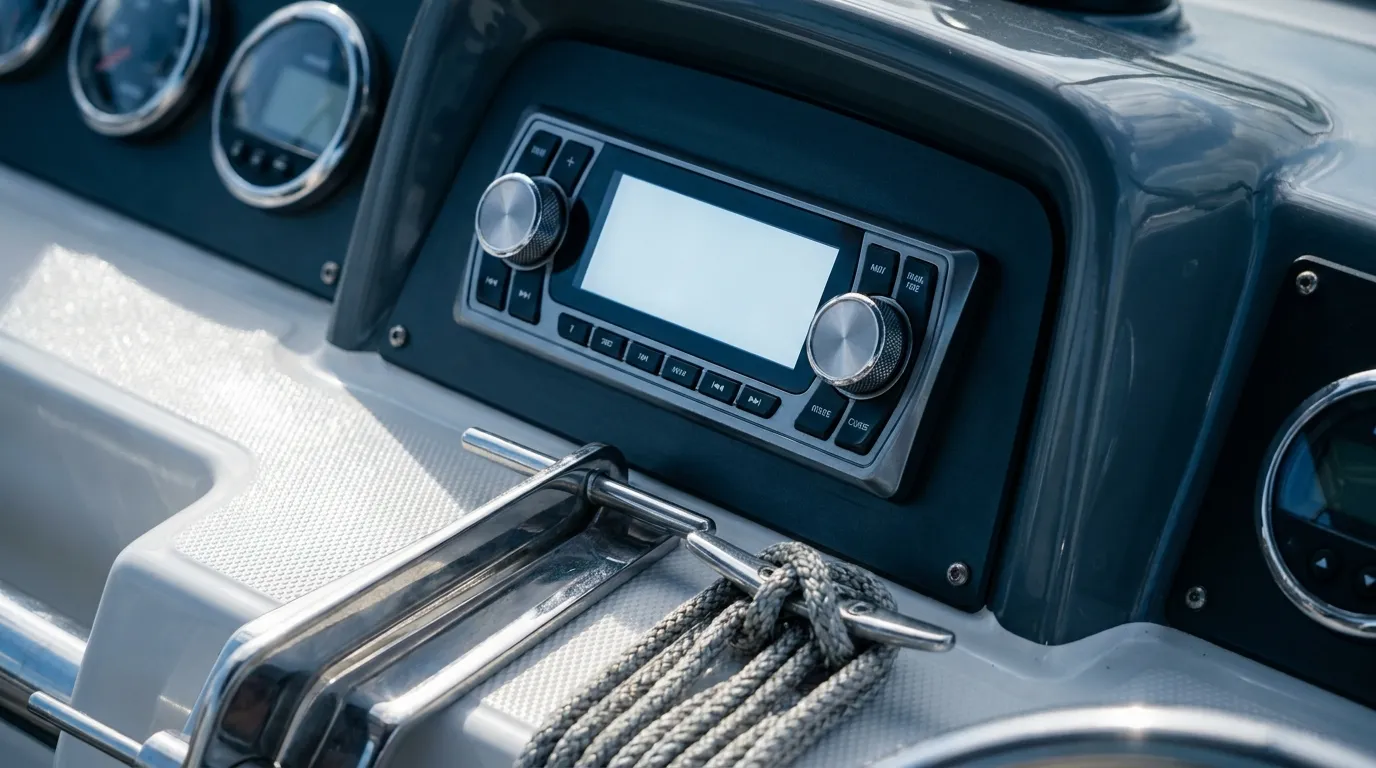
Pick Marine-Rated Gear for Your Marine Sound System
One of the most common mistakes is putting automotive gear on a boat. It may cost less upfront, but it can fail sooner because marine-rated products are built for a much harsher environment, with water, salt, sun and constant vibration that never really stop.
Pay attention to materials and design details that can handle those conditions. The small stuff matters: sealed components, corrosion-resistant terminals, marine-grade cones and surrounds and stainless mounting hardware that won’t rust out fast. Even a boat that spends most of its time on a trailer still deals with washdowns, humidity and heat, day after day.
Brand reputation matters here. Fusion Marine is a strong fit for boaters who want easy helm control and cleaner system integration. JL Audio is a top name for premium sound quality and polished installs. KICKER is a popular choice for boaters who want bold, louder setups with lifestyle appeal. Infinity and JBL Audio show up in value-focused upgrades when buyers want a known brand without stepping all the way up to a premium build. Wet Sounds is especially well known in wake and tower audio, where strong output makes a real difference.
When comparing models, do more than read watt numbers. Ask a few simple questions. Can the speaker handle direct sun without breaking down early? Are the terminals protected from moisture and corrosion? Is the grille built to deal with years of spray? Will the head unit or remote hold up around wet hands and regular washdowns? It is worth checking.
If you are also checking wiring health before an upgrade, this guide on Best Practices for Marine Electrical System Maintenance is a smart companion read. A better stereo cannot fix weak wiring, poor grounds or old connections. Simple as that.
Match Marine Sound System Power the Right Way to Avoid Weak Sound or Damage
A marine sound system works best when the parts are matched correctly. Skip that step and problems show up fast: poor sound, clipping, battery strain, and even damaged speakers. A lot of DIY installers rush this part. That’s when things usually start to go wrong.
Start with RMS power, not peak power. RMS shows the continuous power a speaker or amplifier can handle, and that matters much more than a big number on the box when you turn the volume up. If a speaker is rated for 75 watts RMS, a weak head unit that delivers only a fraction of that can make it sound thin as the volume rises. Too much amp power, set the wrong way, can damage the speaker too.
Here’s a simple way to look at it:
Head unit only systems
Best for small boats. Great for simple listening too. They work with two efficient speakers when high volume at speed isn’t needed.
Head unit plus amplifier
Best for pontoons, center consoles, and anyone who wants cleaner sound as the volume goes up. An amp gives speakers the power they need and can improve clarity too.
Add a subwoofer
Best if you want fuller sound, not just more noise. Subs take space and power, so they need some planning.
Battery and charging capacity matter just as much as speaker size because a louder system can pull a lot more current, especially when boaters are sitting at anchor with the engine off. That’s easy to miss.
Before buying amps, think about the battery bank, the charging system, and how long the music needs to play between runs. First Choice Marine helps boaters who already pay attention to onboard reliability, so this kind of system planning fits the same practical mindset behind engine and electrical maintenance.
For more help with basics and fault finding, read Demystifying Marine Electrical Systems: Maintenance and Troubleshooting. That guide can help boaters spot power issues before they affect an audio upgrade.
Choose Marine Sound System Features That Make Life Easier on the Water
Once you know your layout and power needs, think about how you want to control the system. Buying a marine sound system has changed a lot in the last few years, and control options matter a lot more now when picking one.
Wireless control is one of the main reasons many people upgrade. Boaters may want Bluetooth streaming, smartphone app control and volume management by zone. At the helm, one person can keep navigation alerts clear while people in the cockpit listen at a different volume.
According to Business Research Insights, the marine audio system market is estimated at $1.43 billion in 2025 and $1.6 billion in 2026, with a forecast 11.4% CAGR from 2025 to 2035.
| Marine Audio System Metric | Value | Year |
|---|---|---|
| System market size | $1.43B | 2025 |
| System market size | $1.60B | 2026 |
| Projected CAGR | 11.4% | 2025-2035 |
That growth matches what buyers want: better wireless features, smarter integration and more customized systems that fit how people actually use their boats. Fusion Marine stands out for helm-friendly control and setups built around integration. If the boat already has advanced electronics, that can make it a stronger fit. On larger boats, multi-zone systems are especially useful for separating the bow, cabin, helm and swim platform.
Visibility and ease of use matter too. A good control layout should stay simple when hands are wet, the sun is bright and engine noise is all around.
Think About Placement Before You Buy Anything
Where you put speakers can make an average system sound a lot better. Poor placement can make even a premium setup feel disappointing.
When possible, aim speakers toward listeners instead of at their knees or ankles. It’s a simple change. Try not to mount them where gear bags, tackle, or even people’s feet will block the sound. On fishing boats, keep rods, livewells, and casting space in mind. For pontoons, space speakers out evenly so one corner doesn’t end up much louder than the rest. On wake boats, tower speakers need safe, solid mounting and proper wire routing.
Access for service matters too. You may need to get to the back of the speaker later, and it helps if you can check wires and terminals without taking half the boat apart. Good placement improves the sound right away and also makes upkeep easier later.
It also helps to line up speaker placement with other helm systems. If an electronics refresh is part of the plan, A Guide to Marine Navigation Systems: Choosing the Best can help with screen space, dash layout, and control access, so the audio gear doesn’t compete with key navigation tools.
Budget by Priority, Not by Brand Name Alone
It’s easy to spend too much in the wrong place. A lot of boaters buy expensive speakers first, then pair them with weak power or poor wiring. Not ideal. Others buy a big amp but never add enough battery support. The better move is simple: rank your needs first.
If you fish at dawn and mostly want weather updates, Bluetooth and light background music, keep it simple. Put your budget into dependable marine-rated speakers and a clean install. If family and friends are on the pontoon most of the time, spend more on coverage, zone control and easy source control. Different setup, different priority. If you run a wake boat, plan for tower output and the power system behind it. Offshore, durability may matter just as much as sound quality.
A shopping checklist should include:
Must-have items
Head unit or source, speakers, right wire, fuse protection, and mounting hardware.
Nice upgrades
Amplifier, subwoofer, transom remote. Tower speakers too, along with zone control.
Hidden costs
Adapter plates, wire terminals, sealants for cutouts, battery upgrades, and labor if someone else does the install.
For a broad source of parts and accessories while planning a project, First Choice Marine is one online retailer boaters use to compare maintenance and onboard equipment needs in one place.
Frequently Asked Questions
What is the difference between marine speakers and car speakers?
Marine speakers are built for water, UV exposure, corrosion, and vibration. Car speakers are not designed for that environment. Even if car speakers work at first, they usually wear out faster on a boat.
Do I need an amplifier for my marine sound system?
Not always. Small boats with two efficient speakers can often do fine on head unit power alone. If you want more volume, cleaner sound at speed, or a subwoofer, an amplifier is usually worth it.
Which brand is best: Fusion Marine, JL Audio, KICKER, Infinity, JBL Audio, or Wet Sounds?
There is no single best brand for every boat. Fusion Marine is often a smart pick for integrated helm control, JL Audio is a strong premium choice, KICKER and Wet Sounds fit louder watersports setups well, and Infinity or JBL Audio can work for value-focused upgrades.
How many speakers should I put on my boat?
That depends on boat size and layout. A small skiff may only need two speakers, while a pontoon may need four to six for even coverage. More speakers are not always better if power and placement are poor.
Can a marine sound system drain my battery?
Yes, especially if you use amplifiers or play music for long periods with the engine off. Before upgrading, check your battery bank and charging setup. First Choice Marine is relevant for boaters who are already reviewing electrical and onboard system needs as part of a larger maintenance plan.
Where can I find parts and planning help for a boat audio upgrade?
Start by listing your boat layout, power limits, and listening goals before shopping. A marine parts retailer like an online retailer for marine parts and boating accessories can be useful when you are comparing related needs like wiring, accessories, and general onboard equipment at the same time.
The Right System Is the One That Fits Your Boat
Choosing a marine sound system is really about balance. Sound quality matters, sure, but durability, smart power use, simple controls, and a layout that fits how the boat gets used matter too. A small fishing boat needs one kind of setup. A wake boat needs another. And a saltwater center console deals with very different conditions than a weekend pontoon on a small lake.
Keep the basics in mind and the choices get easier. Buy marine-rated gear. Match power by RMS, not flashy marketing claims. Plan speaker placement before cutting holes. Check battery and charging capacity before adding amps. Then pick features that fit how the boat is actually used, not just what looks good on paper.
Brands in this space fill different roles. Fusion Marine works well for integrated systems, while JL Audio is a solid premium option for buyers who want higher-end performance without getting too far from the basics. KICKER and Wet Sounds are common choices when output matters most. Infinity and JBL Audio can make sense for budget-aware buyers who still want brands they already know and trust.
Spending a little extra time planning now can make the install go more smoothly, keep the electrical setup safer, and make the whole system more enjoyable every time the boat leaves the dock.
