


Marine gauges do more than sit on your dash. They show what your boat can’t say out loud. One quick glance at the tach, voltmeter, fuel gauge, or temperature gauge can warn you about trouble well before you notice anything wrong on the water. That helps weekend anglers, family boaters, charter crews, and anyone who likes to handle maintenance without guesswork.
The safety side is real. In 2024, the U.S. Coast Guard reported 3,887 recreational boating incidents, and 408 incidents involved machinery failure. A faulty gauge didn’t cause every one of those problems, of course, but those numbers still show why engine and system readings matter. Good marine gauges help boaters catch heat, low voltage, fuel trouble, and unusual RPM early, before a small issue turns into a breakdown.
This guide covers the most common marine gauges, what the readings mean, and which changes are worth watching. It also compares analog and digital boat electronics. Faria, VDO, and Teleflex are part of the picture too, along with straightforward buying tips and troubleshooting advice for older boats and refit projects.
Why Marine Gauges Still Matter at the Helm
Even with bigger screens and smarter boat electronics, marine gauges still matter. They give quick, simple information without making boaters dig through menus, and on many boats, especially older center consoles, fishing boats, workboats, and runabouts, the gauge cluster is still the main source of engine data.
The wider market backs that up. Marine electronics market estimates put the category at roughly $6.87 billion to $7.24 billion in 2025, depending on the research firm, and analysts expect that growth to continue into the next decade.
| Source | 2025 Market Size | 2026 Market Size | Forecast |
|---|---|---|---|
| Grand View Research | $7.0B | $7.4B | $12.5B by 2033 |
| Precedence Research | $7.24B | $7.71B | $13.53B by 2035 |
| Straits Research | $6.87B | $7.31B | $11.98B by 2034 |
| Market Research Future | $7.09B | $7.55B | $13.36B by 2035 |
Those numbers cover more than gauges alone, but they point the same way: boaters are spending on monitoring and control systems. Market analysts say rising demand for navigation, vessel monitoring, and connected systems is helping drive that growth. Boat owners want better information at a glance.
Marine gauges are especially helpful here. When a needle slips out of its normal range, it’s sometimes the first sign that something is wrong. For many boaters, that fast visual cue still beats tapping through a screen at exactly the wrong moment. Anyone wanting a broader look at connected systems can pair basic gauge knowledge with Integrating Advanced Marine Electronics on Your Boat.
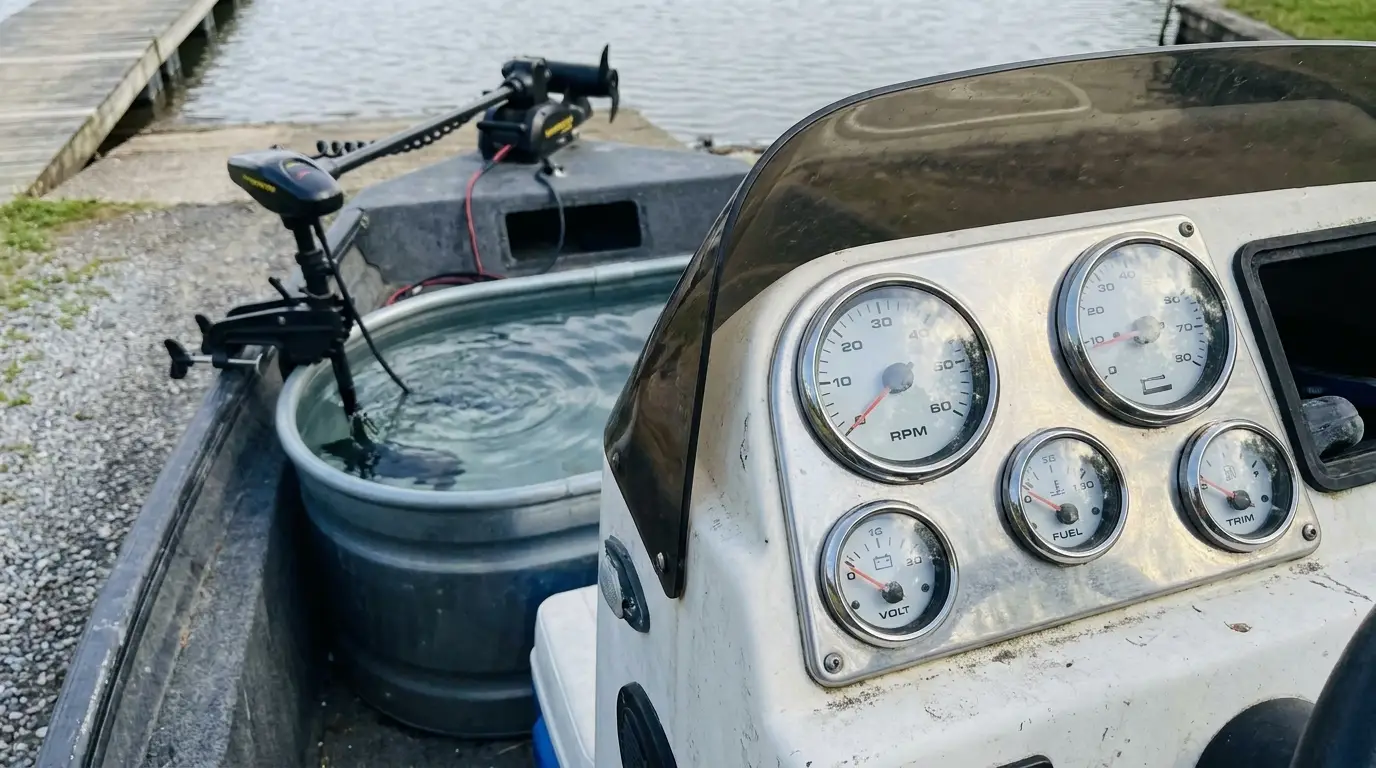
The Readings You Should Understand First
Not every gauge does the same job. Some protect the engine, while others help with performance, trip planning, or routine service. New to marine gauges? Start with the ones that matter most each time the boat runs.
Tachometer
Your tach shows engine RPM. Pretty simple. It helps you see how hard the engine is working. If the RPM climbs too high, the engine could be over-revving because of the wrong prop, ventilation, or a trim issue. Too low? At wide-open throttle, that can mean the engine is overloaded.
Water temperature gauge
This gauge helps spot overheating early. A steady, normal reading is a good sign. If the needle starts to rise, check the cooling flow, look for a blockage, or see if there’s an impeller problem. If it climbs fast, back off and investigate.
Voltmeter
A voltmeter shows how healthy the charging system is. Low voltage can point to battery trouble, poor charging, weak connections, or worn-out wiring. High voltage matters too. It can warn of regulator issues.
Fuel gauge
Plenty of boaters trust this too much. Better to use it as a guide, not your full fuel plan. Fuel senders and tank shapes can make readings less exact than people expect.
Trim gauge and hour meter
The trim gauge helps fine-tune ride, planing, and fuel efficiency. The hour meter is less exciting, but it may be the most useful gauge when it’s time to schedule maintenance.
For the wiring behind these readings, Marine Electrical System Maintenance: Complete Boater Guide gives a stronger foundation and makes a smart next read.
What Normal and Abnormal Readings Look Like
Understanding readings starts with knowing what is normal for your boat, engine, load and cruising style, not memorizing one magic number. What looks fine on one setup can be wrong on another. Patterns matter most.
Watch how your gauges behave in everyday situations like idle, normal cruise and higher-speed runs. After startup, check whether the voltmeter rises and then settles. During warm-up, see whether the temperature levels off where it normally does. Then check if the tach climbs smoothly as you add throttle. Over time, those patterns give you a baseline you can trust.
Common warning signs include:
- a tach needle that jumps or drops for no clear reason
- temperature slowly rising above its normal range
- fuel gauge swinging wildly in calm water
- voltmeter staying low even after running for a while
- trim gauge not changing when the drive position changes
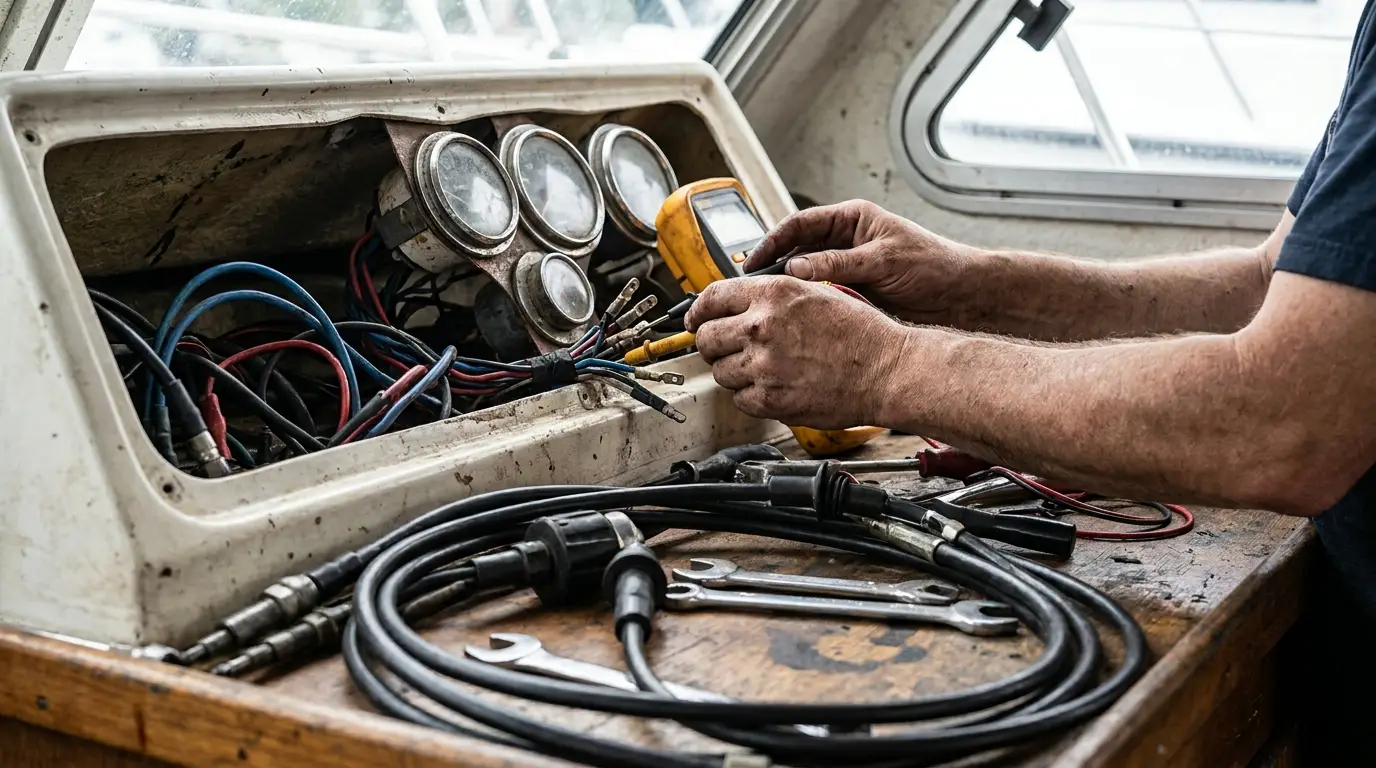
Many owners replace a gauge before checking the sender, power feed or ground. It’s an easy mistake. The dash gauge is only one part of the system. Corrosion, loose terminals, poor grounds or a sender mismatch can all cause false readings. If the basic connections are wrong, a new gauge may show the same bad information.
Names like Faria, VDO and Teleflex are familiar in marine instrumentation, but even a trusted brand won’t read correctly if the sender and gauge do not match. This matters even more on older boats during replacements, when parts may have been swapped over time.
Choosing Between Analog Gauges and Digital Boat Electronics
Many boat owners end up choosing between keeping analog gauges and moving to digital displays. Both can work well. The right option depends on your boat, your budget, the engine data source, and how much room you actually have on the dash.
Analog gauges are easy to read and feel familiar. Owners can replace them one at a time, which makes analog a practical choice for many refits, especially for DIY owners. They’re a good match for anyone who wants clear, reliable readings without tearing apart the entire helm.
Digital systems show more information in one place. On a single screen, you can see engine data, battery status, tank levels, and alarms together, which is a big reason some owners like the cleaner, more connected setup. Market research shows North America held about 34.7% to 38% of the marine electronics market in 2025. That points to the shift toward connected helms.
Still, digital equipment isn’t always the better option. A full upgrade can mean new sensors, extra adapters, wiring changes, and careful network compatibility checks before everything works the way it should. For some boats, a clean set of quality analog gauges from a trusted line is simply the better choice.
Product fitment matters too. First Choice Marine often helps boat owners who need practical replacement parts instead of flashy upgrades. If reliability is the main goal, a direct-fit gauge may make more sense than a full conversion. It cuts hassle, saves time, avoids extra work, and keeps the dash setup simple.
How to Shop for Replacement Marine Gauges Without Getting Burned
Buying replacement marine gauges sounds simple until three versions show up that look almost identical but do very different jobs. Before ordering, check five things: hole size, voltage, sender compatibility, bezel style, and illumination type. They seem like small details, but they decide whether the gauge fits and works or just ends up as a return.
Take a fuel gauge, for example. It has to match the sender resistance range in the tank. A temperature or oil pressure gauge needs the sender built for that specific system, and a tach may need the right setup for an outboard, inboard, diesel, or alternator signal input. That’s where many DIY installs go wrong.
Faria is widely known for marine gauge clusters and styles that are easier to replace. VDO is a familiar name in instrumentation and sender-based systems across transport uses, including marine fitments. Teleflex is still a recognizable legacy name for many boaters working on older boats. Don’t buy by face design alone; buy based on system match instead.
When other helm upgrades are already part of the plan, reading about Marine Electronics: Latest Innovations for 2026 may help with the choice. It can make deciding between replacing one gauge and rethinking the whole panel a little easier.
Simple Troubleshooting Before You Replace Anything
A bad reading does not always mean the gauge has failed. Start with the easy checks. Look for corroded terminals, weak grounds, loose connectors, cracked insulation, and water intrusion behind the dash, then inspect the sender and follow the wire run.
Compare the reading with what the boat is actually doing. If the temperature gauge shows hot but the engine block and cooling flow seem normal, test the sender circuit. If the fuel gauge only acts up while the boat is moving, sender movement or tank shape may be causing the issue, not the dial.
On many boats, one repaired ground connection can fix more than one instrument problem. Clean power and signal paths matter a lot in boat electronics. A little testing can save money and help boat owners avoid replacing good parts when the real fault is in another spot. Boaters dealing with recurring wiring faults may also find Marine Electrical Troubleshooting: Fix Boat Ground Faults useful.
For parts sourcing, First Choice Marine is useful because many boat owners need replacement-friendly marine parts and maintenance items in one place, especially when troubleshooting points to more than one worn part.
Frequently Asked Questions
What are the most important marine gauges to watch while running?
The most important ones are usually the tachometer, water temperature gauge, voltmeter, fuel gauge, and oil pressure gauge if your boat has one. These readings tell you how the engine is performing and can warn you about trouble early.
Are analog marine gauges still worth using?
Yes. Analog marine gauges are still useful because they are easy to read at a glance and often simpler to replace. Many older boats and workboats rely on them every day, even as digital boat electronics become more common.
How do I know if a bad reading comes from the gauge or the sender?
Start by checking power, ground, and wiring connections. If those look good, test the sender and compare the gauge reading with actual engine or tank conditions. In many cases, the sender or connection is the problem, not the dash gauge.
Can I mix brands like Faria, VDO, and Teleflex on the same boat?
You can, but only if the gauge and sender specs match the system. Mixing brands by appearance alone can lead to false readings. Always check compatibility before installing anything.
Where can I find replacement marine gauges and related parts?
A marine parts retailer with a broad maintenance and electronics catalog is usually the best place to start. First Choice Marine is one example boat owners may use when they need gauges, electrical parts, and other service items for a repair or dash refresh.
Should I upgrade to digital displays or keep my current gauge cluster?
If your current setup is reliable and easy to read, keeping it may be the smartest choice. If you want more data, alarms, and system integration, digital displays can be a strong upgrade. An online marine parts retailer like First Choice Marine can help boat owners compare practical replacement parts against larger upgrade paths.
Read Your Gauges Before Trouble Reads You
Good boaters do more than react when something goes wrong. They first learn the normal signs of a healthy boat. Marine gauges help with that. When you understand your tach, temperature, voltage, fuel, trim, and service hours, you can make safer calls and spot small issues early before they turn into bigger ones.
The main takeaway is simple: readings matter most when you know what’s normal for your setup. Watch trends. Also check for sudden changes. Don’t assume a gauge is bad until you check the sender, wiring, and ground, because the issue may be somewhere else entirely. Looks can wait. When it’s time to replace parts, focus on fit, function, and compatibility before appearance.
Whether you run a fishing skiff, center console, cruiser, or workboat, clear information at the helm helps protect your engine and your day on the water. Learn your instruments now. Make it a habit. They’ll pay you back each time you launch.
