


You can pick the right oil for your boat engine without guessing. This guide is for recreational boaters, fishing owners, commercial operators and DIYers who want to protect expensive marine engine parts, avoid wear and handle oil changes with more confidence. It keeps things specific, too. Instead, the tutorial lays out a simple step-by-step way to match oil to your engine, your use and your boating conditions.
Boat engines work harder than car engines. Long loads, high RPM, moisture, salt exposure and seasonal storage all add up. The wrong oil can shorten the life of bearings, rings, cam surfaces and other internal marine engine parts, especially when the engine keeps running in tough conditions over time. The good news is simple: choosing the right oil comes down to a handful of checks, like your manual, viscosity, certification, engine type and how you actually use the boat.
The steps below show what to check first and how to read the label. They also explain when FC-W and FC-W Catalyst Compatible matter, how climate and usage affect your choice and how to avoid common mistakes, the kind that can lead to hard starts, weaker protection and faster engine wear.
Before you start with marine engine parts maintenance
What you’ll need:
- Your engine owner’s manual
- The engine make, model, year, and horsepower
- The current oil label or service record, if available
- A clean rag and a flashlight
- Access to the oil fill cap and dipstick
- A notepad or phone to write down viscosity and certification details
Helpful to have:
- A replacement filter if you plan to change the oil now
- A drain pan or extraction system
- A trusted marine parts supplier such as First Choice Marine
Tip: If there’s more than one engine onboard, check them one at a time. Don’t assume both engines use the same oil, even if they seem similar.
Step 1: Identify your engine type and exact model for marine engine parts
Check the engine tag or serial plate, then confirm whether the engine is a four-stroke outboard, inboard gasoline engine, sterndrive, or diesel. The right oil depends on that, and the requirements are not the same.
Most gasoline four-stroke marine engines need marine oil that matches the manufacturer’s viscosity requirement and has the correct marine certification. If the engine has catalyst or emissions hardware, the oil needs to match even more closely. Do not guess.
Write down these details:
- Brand
- Model
- Serial number
- Horsepower
- Engine year
- Four-stroke gasoline or diesel
- Whether the engine has a catalyst system
Doing this helps owners avoid expensive mix-ups. Many oil mistakes happen when people shop by brand name alone instead of checking the exact engine spec. Marine engines can be less forgiving because newer designs may need specific additives, better viscosity retention, and compatibility with after-treatment parts.
Grand View Research values the marine lubricants market at USD 8,368.1 million in 2025, with growth to USD 8,693.8 million in 2026. Engine oil alone makes up 49.6% of that market. That says a lot.
| Metric | Value | Year |
|---|---|---|
| Marine lubricants market size | USD 8,368.1M | 2025 |
| Marine lubricants market size | USD 8,693.8M | 2026 |
| Engine oil share of marine lubricants market | 49.6% | 2025 |
| U.S. recreational marine retail spending | USD 54B | 2025 |
For boat owners, oil is not a minor detail. It is a core maintenance decision. For more industry context, see Latest Trends in Marine Engine Parts: Market Set to Reach $16.92 Billion by 2031.
Step 2: Open the owner’s manual and match the exact oil spec
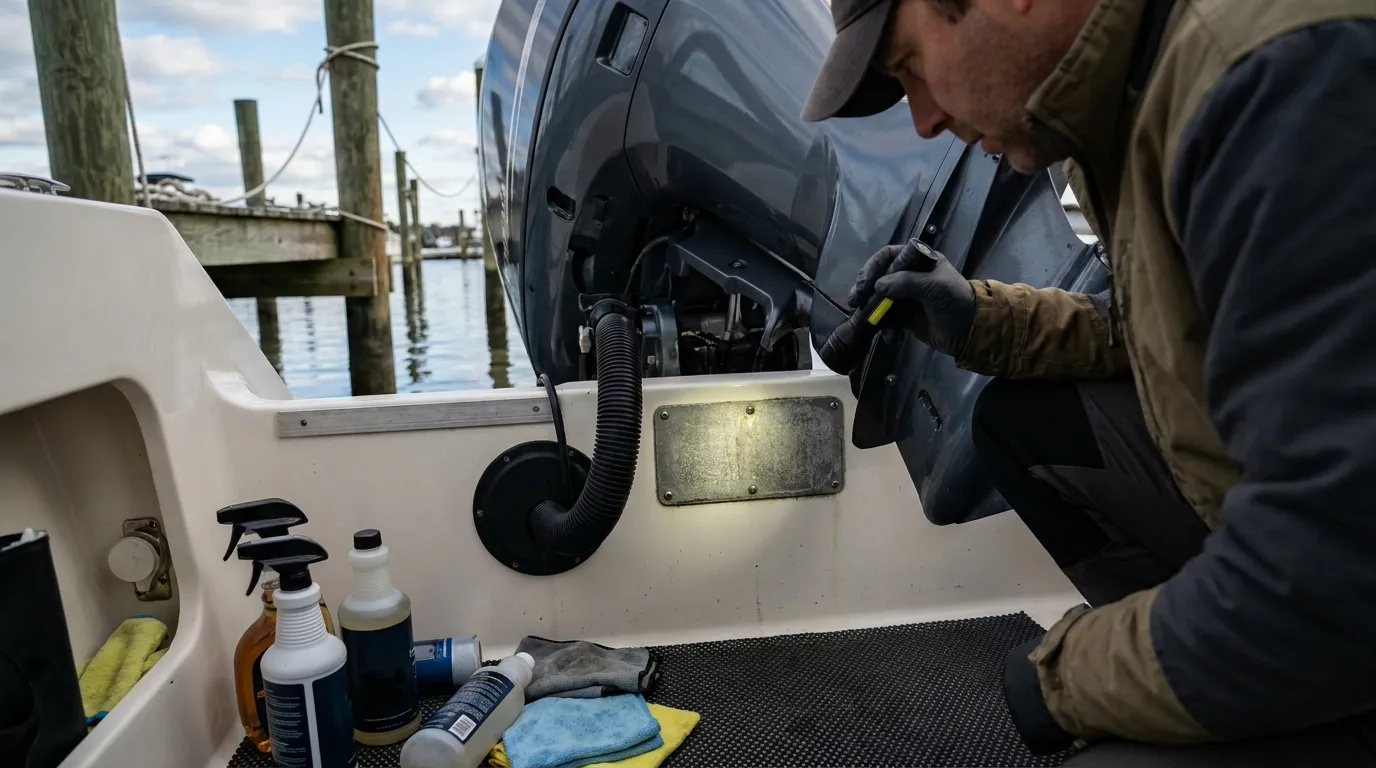
Before buying anything, open the manual and go to the oil spec page. Check the exact viscosity grade, the certification requirement, and any note about ambient temperature or catalyst-compatible oil. Start there. The manual gives you the baseline, and general advice does not beat it.
John Tiger from Boats.com says it clearly:
Consult your owner’s manual for the exact oil specification, but in almost every instance the manufacturer will require that engine oil meets the FC-W certification.
In practice, check these items:
- Recommended viscosity, such as 10W-30 or 25W-40
- Required certification, such as NMMA FC-W
- Any note about FC-W Catalyst Compatible
- Oil capacity with filter change
- Filter part number
- Service interval in hours or months
A lot of people make the same mistake and grab whatever is already sitting in the garage. Automotive oil can look similar on the shelf, but marine engines deal with more corrosion risk, more aeration, and longer storage periods. Yamaha and Mercury technical guidance both stress that marine-specific oils are made for those conditions, so the label matters more than it may seem at first.
If you’re also planning a service, it helps to review a full Marine Oil Change Kit Guide: Clean, Easy Engine Servicing. That makes it easier to match the oil, filter, and tools at the same time. It also helps avoid ordering part of the job now and the rest later.
Troubleshooting note: If the manual is missing, use the engine model and serial number to get the correct spec before buying oil. Do that first. Internet forum guesses are not a reliable source for something this specific.
Step 3: Check for NMMA FC-W or FC-W Catalyst Compatible on the label
Read the bottle closely. For four-stroke-cycle, water-cooled gasoline marine engines, look for NMMA FC-W certification first. If your engine uses a catalyst system, you may need FC-W Catalyst Compatible instead.
John Tiger has a simple rule that’s easy to remember:
Always look for the FC-W symbol, and when you get your outboard serviced, make sure FC-W oil is going in the motor.
That marine-specific certification matters because it links to how the oil performs in real marine use. NMMA also states:
A candidate oil must meet the viscosity grade requirements of SAE J300.
NMMA also notes:
An oil of any SAE viscosity grade can be certified to be NMMA FC-W by running a complete demonstration program.
Certification and viscosity work together. One does not replace the other. An oil can have FC-W certification and still need to match your engine’s required grade.
Common FC-W grades listed in current registries include:
- 10W-30
- 10W-40
- 20W-40
- 20W-50
- 25W-40
Common mistake: seeing ‘synthetic’ on the label and stopping there. It’s an easy trap. Synthetic alone is not enough. The oil still needs the right marine certification and the right viscosity.
If you want more context on how lubrication helps with long-term corrosion control, see Marine Lubricants for Marine Engine Corrosion.
Step 4: Choose viscosity based on the manual, then check your climate and workload
Once you know the approved grades, use the exact viscosity your engine maker lists first. Then look at where and how you use the boat. Many owners can make a better choice here without going outside the manual, especially when climate and workload affect what makes the most sense.
Use this simple way to decide:
If you boat in cooler weather
A lighter approved grade like 10W-30 can help with easier cold starts and quicker oil flow at startup, if the manual allows it.
If you boat in hotter weather or run heavy loads
In engines made for it, a heavier approved grade like 25W-40 may hold viscosity better in high heat and on long runs. It stays steadier then.
If you troll for long hours or run offshore with marine engine parts under stress
Choose a premium marine-specific oil, such as a synthetic blend or full synthetic if approved, since long hours and steady load put extra stress on your marine engine’s internal parts. Good call.
If the boat sits for months
Choose strong corrosion protection and marine formulas built for storage. When the boat is out of the water for the off-season, rust protection matters just as much as lubrication when it goes back into use.
Mercury guidance lists 10W-30 and 25W-40 as common four-stroke options, depending on engine design. How the boat is used matters, but the approved spec still comes first.
Step 5: Match the oil to your boating conditions and maintenance plan for marine engine parts
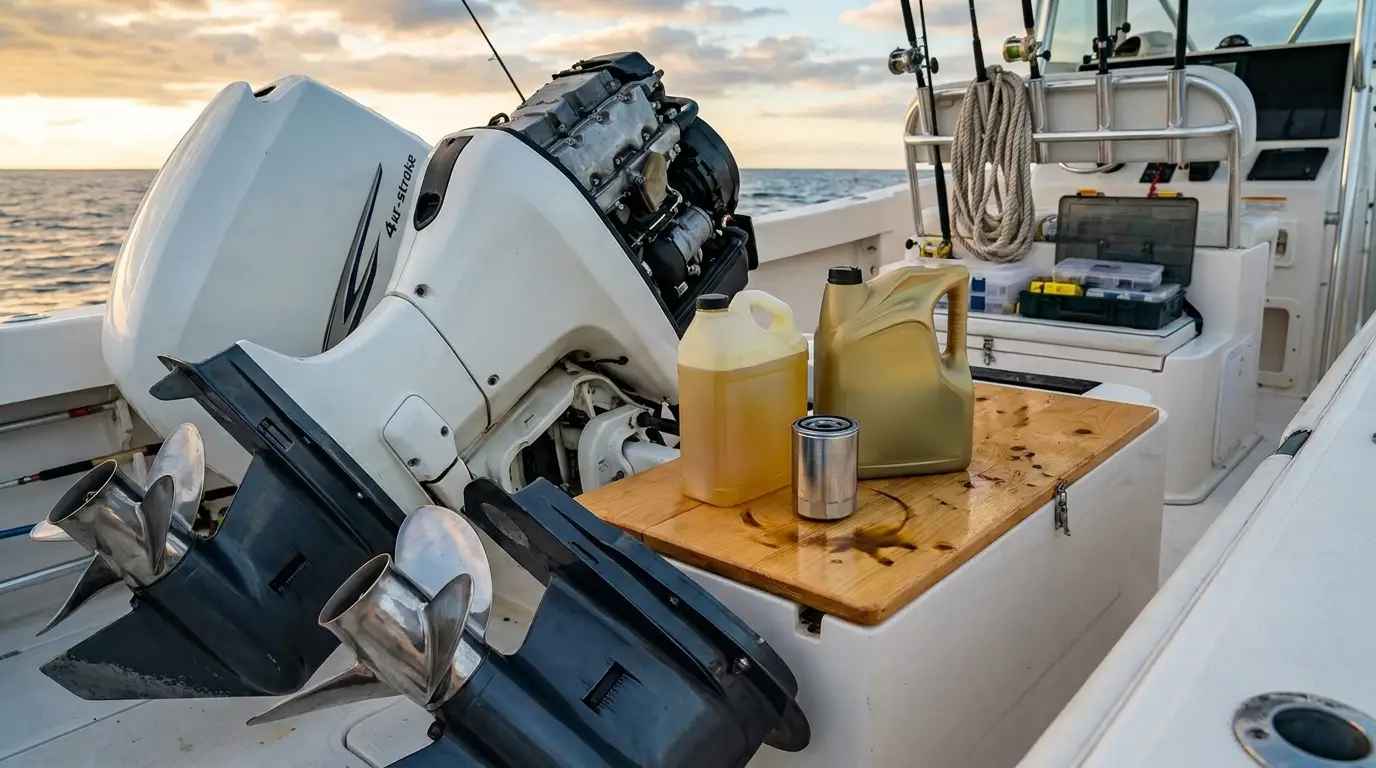
The best oil for your engine depends on how the boat really gets used, not just what the label says.
Start with a few practical questions:
- Do you run in saltwater for most of the season?
- Are your trips short, or do you do long high-speed runs?
- Does the engine spend a lot of time idling or trolling?
- Do you store the boat for long stretches?
- Are you trying to protect older marine engine parts in a high-hour engine?
For a weekend freshwater owner with a newer four-stroke, a basic approved FC-W oil in the right grade may be all that’s needed. For a guide boat, charter boat, or commercial boat that racks up hours quickly, the needs are different. Those engines can benefit from premium marine formulations with better wear and corrosion protection.
Oil change intervals matter too. Clean oil protects parts better than expensive oil left in the engine too long. Choose the oil, match it with the right filter, then check related service items. If the engine is due for wider maintenance, review Essential Guide to Marine Engine Tune-Up Techniques so ignition, fuel, and lubrication can work together.
Tip: Keep a simple log with engine hours, oil brand, viscosity, date, and the filter used. It’s a small habit that makes future service easier and can help spot patterns, like oil getting dark faster or higher consumption.
Step 6: Avoid the most common oil-buying mistakes with marine engine parts
A lot of engine problems start with shortcuts. Avoid these common mistakes.
Using automotive oil because it’s cheaper
Marine oils handle water exposure, foaming, corrosion resistance, and high-load running over long stretches. They may cost less up front, but saving a bit here can cost a lot more later in worn marine engine parts.
Picking viscosity by guesswork
Don’t assume thicker is better. At startup, thicker oil can change flow. Under load, thinner oil can lower protection. Stay within the approved range.
Ignoring catalyst requirements
If the engine calls for FC-W Catalyst Compatible oil, use it. The wrong oil can affect emissions parts and, over time, durability.
Mixing oils without a plan
Topping off with a different product in an emergency is one thing. Over time, mixing oils is okay only if the manufacturer says the blend is acceptable.
Forgetting the filter on marine engine parts service
Old oil with a clogged or cheap filter isn’t a full service. Oil and the filter work as one system, so skipping either part leaves the job half done.
First Choice Marine is a handy online marine parts retailer for comparing replacement oils, filters, and other maintenance items that help with routine engine care.
Frequently Asked Questions
Can I use car oil in my boat engine?
Usually, you should not treat boat oil like car oil. Marine engines face moisture, corrosion, sustained load, and foaming issues that automotive oils are not built around. For four-stroke gasoline marine engines, use the marine-certified oil your manual calls for.
What does FC-W mean on marine oil?
FC-W is an NMMA certification for four-stroke-cycle, water-cooled gasoline engine lubricant used in marine applications. It tells you the oil has met marine-specific performance standards. You still need to match the viscosity grade listed by your engine maker.
Is synthetic marine oil better than conventional oil?
It can be, if your engine maker approves it. Synthetic and synthetic-blend marine oils often offer better wear protection, viscosity retention, and corrosion resistance, especially for heavy use, hot climates, or seasonal storage.
How do I know if I need FC-W Catalyst Compatible oil?
Check your owner’s manual first. If your engine has a catalyst or emissions after-treatment system, the manual may call for FC-W Catalyst Compatible oil specifically. Do not assume standard FC-W is enough if the engine requires the catalyst-safe version.
Where can I buy the right oil and other engine service items?
A marine-focused supplier can make the process easier because you can match oil, filters, and related maintenance products in one place. First Choice Marine is one example boat owners can use when looking for engine care items and other marine engine parts.
Should I change oil based on hours or once a season?
Follow the engine maker’s interval, which is usually based on hours, time, or both. If you boat lightly, once a season may line up with the schedule, but high-hour use may require more frequent changes. Dirty or aged oil loses its ability to protect internal parts well.
How to verify you chose the right oil and what to do next for marine engine parts
A short checklist helps confirm you picked the right oil. First, make sure the bottle matches the viscosity listed in your manual. Then check that it has the marine certification you need, such as FC-W or FC-W Catalyst Compatible. Also make sure the oil suits your climate, your usage, and your service plan. Then write down what you bought so the next oil change is easier.
After the next run, inspect the engine area for leaks. On a level surface, check the oil level again. Listen as well. Make sure the engine sounds normal at idle and under load. If service is due soon, buy the filter and any other related marine engine parts at the same time so everything is ready.
Start with the manual. Verify the certification. Match the viscosity. Then choose oil made for real marine use, not just shelf marketing. That gives your engine a better chance at a long life, cleaner operation, and fewer costly repairs.
