


Picking boat engine oil seems simple at first. Then the numbers, letters, and labels start showing up everywhere, and suddenly one bottle says 10W-30 while another says 25W-40. One mentions FC-W. Another says TC-W3. If you’re standing in the garage or at the dock trying to figure out what your engine actually needs, you’re definitely not alone.
The right choice comes down to a few clear checks. Start with your engine type, the marine oil certification it requires, and the viscosity grade listed in the owner’s manual. That part is important. After that, the decision gets much easier. Use the wrong oil and you can end up with extra wear, weaker protection, hard starts, and costly repairs, especially when the engine is working hard for long stretches on the water. Use the right one, and the motor is better protected against heat, moisture, load, and long hours.
This guide keeps things practical. It explains how to match oil to the engine, what marine certifications really mean, how the season and your boating style can affect the choice, which mistakes to avoid, and how to build a simple oil-change routine. It’s all meant to help protect your investment.
Start With Engine Type, Not the Brand Name
First, figure out what kind of engine you have before you pick a brand. That matters most.
For most boaters, the match looks like this:
- Four-stroke marine engines: use oil that meets NMMA FC-W
- Four-stroke marine engines with catalysts: use FC-W(CAT)
- Two-stroke outboards: use TC-W3
That basic split takes away a lot of the guesswork. According to NMMA data, outboard boats made up 64.6% of total retail boat units in 2025 year to date, so many owners shopping for boat engine oil are starting with outboards.
| Marine engine data point | Value | Year |
|---|---|---|
| U.S. recreational boating annual sales | $57.7 billion | 2023 |
| Outboard boats share of retail units | 64.6% | 2025 |
| U.S. outboard engine sales | 267,000 units | 2025 |
| Average outboard retail price | $13,081 | 2025 |
Those numbers show why maintenance matters. Engines cost a lot, and oil is one of the least expensive ways to help protect them. As Scott Berry of NMMA put it:
All NMMA-registered marine oils are listed on the NMMA website.
Products marketed for marine use do not all give the same certified protection. If you want a broader look at how oil categories compare, this Choosing the Right Oil for Boat Engines: A Comprehensive Guide is a useful next read.
What FC-W, FC-W(CAT), and TC-W3 Really Tell You
Marine oil labels can look technical, but the main terms are simpler to understand than they seem.
For four-stroke boat engines, FC-W is the main marine standard. In plain terms, it means the oil was made for marine use, not regular car use. That matters because marine engines run under heavy load for long stretches and deal with moisture and corrosion in ways car engines don’t. It’s a different setting.
Scott Berry summed it up clearly:
FC-W®- for oils designed for use in four-stroke marine engines.
For four-stroke marine engines with catalyst systems, FC-W(CAT) is the spec to look for. It matters even more now because newer marine engines use more emissions-control technology, and if your manual calls for FC-W(CAT), stick with that exact spec. Don’t swap in standard FC-W just because the names look close.
TC-W3 means something different. It’s for two-stroke outboards, and those engines manage oil differently from four-stroke engines, so using the wrong product can cause serious running problems. It’s an easy mistake with a bad result.
After you confirm the certification, check viscosity. Common grades include 10W-30, 10W-40, 20W-50 and 25W-40. NMMA certification manuals also set viscosity thresholds at 100 degrees C, including more than 8.5 cSt for SAE 30 and more than 11.5 cSt for SAE 40. Most boat owners don’t need to memorize those numbers. The useful point is simple: viscosity is linked to heat protection and film strength.
When your owner’s manual says 25W-40, use 25W-40. If it says 10W-30, use that instead. That’s the best place to start, every time.
Match Oil to How and Where You Boat
Two boats with the same engine can still have very different lives. That’s why smart boaters look past the label and think about how they actually use the boat.
A boat used for long fishing days and hours of trolling puts an engine through long, steady use. One that runs offshore, carries heavy loads, or uses a higher-horsepower outboard can keep the engine under more stress. Saltwater adds even more strain. Moisture and corrosion never take a day off.
That’s another reason marine oils differ from automotive oils. According to Mercury Marine technical guidance, marine oils protect against wear, friction, shear, and internal corrosion in marine conditions. That added protection matters, especially when hard use meets damp air or salt.
A simple way to think about it:
Light seasonal use
For a small freshwater fishing boat on short trips, use the exact certified oil and viscosity listed in the manual, and change it on time.
Heavy recreational use
Wake boats, offshore center consoles and guide boats often benefit most from closely tracked intervals and attention to the exact marine certification, especially with heavy use.
Commercial or near-commercial use
Charter boats, work boats and guide rigs need tighter standards. More engine hours leave less room for shortcuts.
One common mistake is topping off with whatever oil is close by. Another is assuming a car oil with the same viscosity grade will do the job. It may not give the same corrosion protection or marine-specific performance. If seasonal layup is part of the plan, these winterization tips for your boat engine go well with a proper oil plan.

Common Oil Buying Mistakes That Cost Boat Owners Money
Most oil mistakes don’t look dramatic at first. The engine may keep running fine, and that’s why these problems can quietly turn expensive. They’re easy to miss.
One big mistake happens when a boat owner ignores the owner’s manual because a friend suggested a different product. The manual sets the target for certification and viscosity, so it needs to come first. No guesswork there.
Another common slip is focusing only on brand marketing. Even a trusted brand can sell several different types of oil, and the only thing that matters is whether that exact oil matches the engine. That’s the part that matters.
Many owners also miss catalyst requirements on newer engines. If the engine uses after-treatment equipment, FC-W(CAT) may be required. It sounds like a small detail, but it can have a big effect. Newer boat owners get caught here a lot because it’s easy to miss.
Some owners push oil change intervals too far. Low engine hours can seem safe, but that doesn’t always protect the oil, especially when moisture, fuel dilution and long storage periods are still working against it. It may look fine. Sometimes it isn’t.
It’s also easy to miss the signs that oil trouble has already started. Milky oil, a burnt smell, a rising oil level or unusual metal in drained oil all deserve attention. Oil choice alone may not fix that kind of problem, and a closer check may be needed. In those cases, Engine Diagnostics for Boats: Interpret Fault Codes Easily can help owners understand what the motor is trying to say.
For parts, fluids and maintenance supplies, many owners use First Choice Marine as a practical resource when putting together a boat care routine.
Build a Simple Oil Routine You Can Stick To
The best oil routine is the one you’ll actually keep up with. Keep it simple.
Use a small notebook, a note on your phone, or a service tag, and write down the oil type, viscosity, certification, date, and engine hours every time you change it. That gives you a clear record and helps you avoid mix-ups later.
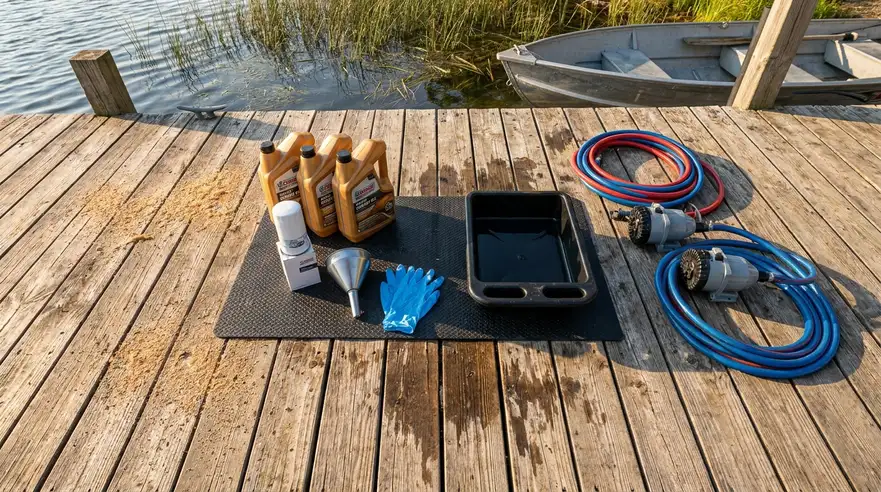
Before you need anything, keep the right supplies on board or in your garage. That means:
- The exact boat engine oil your manual calls for
- The right oil filter if your engine uses one
- Clean funnels and drain tools
- Absorbent pads for spill control
- A safe container for used oil
Set your oil-change triggers next. Many owners go by engine hours, season, and storage timing. Maybe your engine doesn’t have many hours on it yet. Even then, end-of-season service can still make sense because dirty oil should not sit inside the motor for months.
If you like doing your own maintenance, Marine Oil Change Kit Guide: Clean, Easy Engine Servicing can help you organize marine engine care products and tools in one place. That can make regular care feel less complicated and easier to keep up with.
Frequently Asked Questions
Can I use car oil in a boat engine?
It is not a good idea unless your engine maker clearly says it is acceptable. Marine oils are made for wet conditions, corrosion risk, and long high-load operation. Even if the viscosity matches, the additive package may not.
What does FC-W mean on boat engine oil?
FC-W is an NMMA certification for four-stroke marine engines. It shows the oil was designed for marine use, not just automotive use. Always pair that certification with the exact viscosity your owner’s manual lists.
How do I know if I need FC-W(CAT) oil?
Check your owner’s manual first. If your engine has a catalyst or exhaust after-treatment system, it may require FC-W(CAT). Do not guess here, because catalyst-compatible oil can be a specific requirement on newer engines.
Is 10W-30 or 25W-40 better for my boat?
Neither is automatically better. The right one is the grade your engine manufacturer specifies. Temperature, engine design, and load all affect this choice, so using the listed grade matters more than picking what sounds heavier or stronger.
Where can I find boat engine oil and marine maintenance supplies?
Many boat owners look for a marine-focused retailer instead of sorting through general auto parts listings. First Choice Marine is one example of an online marine parts and maintenance source where you can shop for engine care items, oils, and related service products more easily.
How often should I change boat engine oil?
Follow your engine maker’s service schedule first. In general, many owners change oil based on engine hours, at least once per season, or before long storage. If you are unsure what supplies you need, a marine-focused store like an online retailer for marine parts and maintenance can help you pull together the basics for a cleaner, more organized service routine.
The Bottom Line for Better Engine Protection
Choosing the right boat engine oil does not have to be confusing. Check your owner’s manual first and confirm your engine type. Then match the required certification, whether that’s FC-W, FC-W(CAT) or TC-W3. Keep it simple. After that, use the exact viscosity grade listed for your motor.
Also think about how the boat is actually used. Long runs, saltwater, heavy loads and seasonal storage can make oil choice and oil-change timing matter more than you might expect. Avoid common mistakes like using automotive oil, mixing products before checking specs or ignoring warning signs in used oil. Those problems are easy to miss.
Boat engines are expensive. NMMA reports the average outboard engine retail price reached $13,081 in 2025, so the right oil helps protect a major investment. Keep records. Use certified products. Stay consistent. Over time, that routine can mean easier starts, smoother operation and fewer repair bills down the road.
