


Choosing the right anti fouling paint can save money, reduce drag, and help a boat perform better through the season. It also helps keep the hull cleaner, may improve fuel economy, and usually means less time scrubbing slime and growth at the dock, which is a pretty nice bonus. For many boat owners, though, the real challenge is figuring out which paint really fits their boat, their water, and how they use it day to day.
This guide is here to make that easier. Instead of treating every boat like it needs the same coating, it focuses on the things that often matter most: boat speed, how long the boat sits still, saltwater or freshwater conditions, haul-out timing, local rules, and budget. It also examines the main types of anti fouling paint, where copper still makes sense, when newer low-friction options might be a better fit, and a few common mistakes that can shorten paint life and lead to higher costs later. First, it starts with the basics.
For a broader look at coating choices, Anti-Fouling Paint Selection and Application: Balancing Performance with Eco-Friendly Options is a useful companion read. And for boaters shopping for parts and maintenance gear, First Choice Marine is also a helpful resource if they are comparing options.
Why antifouling paint matters more than many boaters think
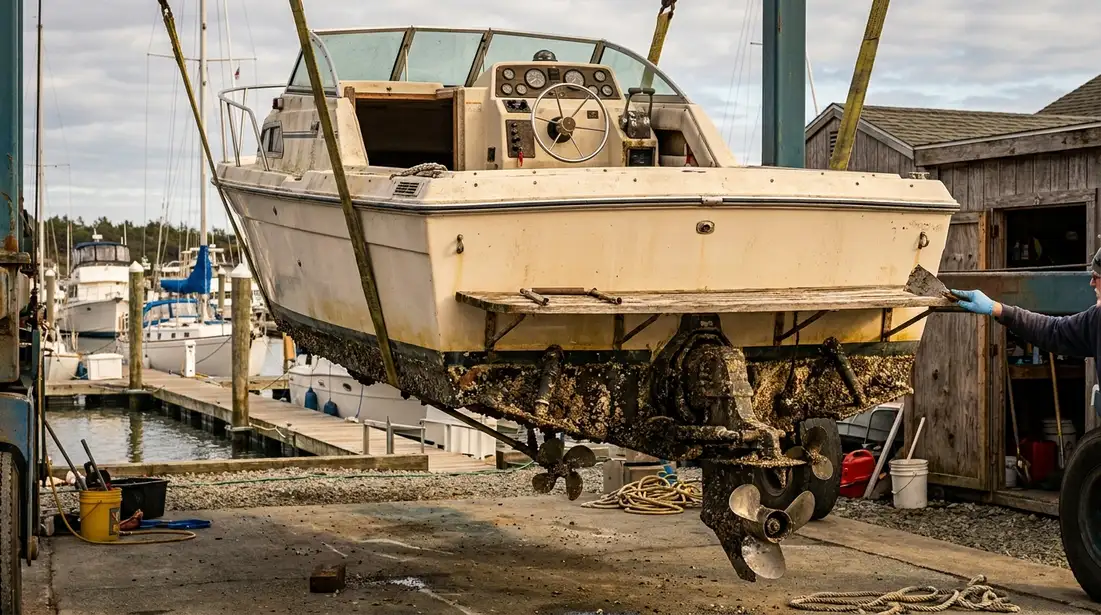
A lot of owners assume antifouling paint is mainly about appearance. In practice, though, it also affects efficiency, handling, and long-term costs. As marine growth builds up on the hull, water flow under the boat gets rougher, and that often matters more than people expect. The added drag makes the engine work harder, so fuel use often goes up. It can also change how a boat feels underway, especially when it comes to steering and overall response.
Research shows the effect can be substantial. Evac reports that unmanaged hull fouling can raise fuel consumption by 20% to 40%. A 2024 industry paper cited by Safety4Sea says the penalty may be around 40% without antifouling coatings on the hull and in niche areas such as sea chests and propeller zones. BIMCO also found that propeller polishing alone led to reported fuel-consumption reductions of 0.5% to 25%, which is still a very wide range.
| Biofouling Metric | Value | Year |
|---|---|---|
| Fuel consumption increase from unmanaged hull fouling | 20% to 40% | 2024 |
| Fuel penalty without antifouling coatings | About 40% | 2024 |
| Fuel-consumption reduction after propeller polishing | 0.5% to 25% | 2024 |
These figures help explain why the antifouling coatings market reached USD 9.48 billion in 2023 and is projected to grow to USD 16.4 billion by 2030. That is a big shift. Boat owners and operators are paying closer attention because hull protection is tied to fuel costs and emissions, not just bottom growth. In many cases, the goal is simply to keep the hull cleaner so the boat can move through the water more efficiently.
Copper-containing antifouling coatings are a proven efficacious technology to reduce biofouling on recreational and commercial vessels.
Know the main types of anti fouling paint before you buy
Anti fouling paint does not all work the same way, and that often matters. There are some real differences. The right choice often depends on how you use the boat, not just on what looks cheapest on the shelf.
Hard antifouling paint
Hard paints form a tougher outer layer. They’re often a really good fit for faster boats, trailered boats, or for owners who scrub the bottom now and then, which is pretty common. That makes them a practical choice. Because the coating stays more intact, though, paint can build up over time and will likely need removing eventually.
Ablative or self-polishing paint
This type slowly wears away while the boat is being used, exposing fresh biocide over time, which is usually the main point. It’s a common option for boats that stay in the water all season and need steady protection. Many recreational owners also like it because it helps reduce heavy paint buildup, so extra layers don’t just keep building up.
Foul-release coatings
These are usually silicone-based or other low-friction systems, so the idea is pretty simple. They do not kill growth. Instead, they make it harder for things to stick, which is really the main goal here.
They often work best on boats that move regularly, especially at higher speeds, since that is usually when they work best. If a boat sits still for long periods, though, performance will often drop.
Hybrid and newer low-toxicity systems
The market is changing. Mordor Intelligence says biocidal paints still held 56.78% of the market in 2025, but interest is also growing in silicone systems, graphene hybrids, self-healing coatings, and biocide-free options, which covers a broad mix of different approaches. Patent filings for graphene, zwitterionic, bio-inspired systems, and related approaches rose 40% during 2024 to 2025, so there is clearly movement there.
A moored fishing boat and a trailer boat will often need different solutions, even in the same marina. A fast center console may need something different too. It is usually pretty simple.
Match the anti fouling paint to your boat, water, and schedule
This is where smart buying usually happens. It starts with how the boat is really used, not just with whatever the label says, and that is often a better way to figure out what will work.
If a boat stays in saltwater for months, growth pressure is usually higher. In that case, a stronger ablative or self-polishing anti fouling paint often makes sense. If the boat runs in freshwater, fouling may be lighter, but you still need protection against slime and plant growth. Freshwater lakes can be easier on paint than saltwater, in many cases, but they are not free of growth.
Speed matters too. Fast boats that get used often may do well with smoother foul-release systems. Slower boats and workboats, though, often still do better with traditional biocidal coatings, especially when they spend long periods tied up at the dock or on a mooring. That matches BIMCO’s 2024 survey, which found the most-used systems were biocidal coatings at about 67%, fouling-release with biocide at 20%, and regular fouling-release at 13%.
Another big factor is the haul-out cycle. If the boat is pulled every year, a one-season product may be enough. When haul-outs are expensive or hard to schedule, though, a multi-season option is probably worth a look, especially if yard time is limited.
It also helps to think about the whole underwater package. The hull, propeller, trim tabs, and other niche areas all affect drag, so many owners line up paint work with cleaning and hardware checks at the same time. For practical prep tools, application materials, and cleaning basics, Marine Paint Supplies: What to Buy and How to Use Them covers that clearly.
Common buying mistakes that cause poor results
A bad paint choice does not always cause problems right away. Sometimes it just wears out sooner than expected, stops working the way it should, or never works very well in local water, which can be frustrating. In many cases, the problem shows up slowly, so it can be easy to miss at first.
One of the most common mistakes is choosing based on price alone. Cheap paint that fails early can cost more over time once haul-out, prep work, and repaint labor are added. That is usually one of the easiest traps to fall into. Another problem is compatibility. Not every anti fouling paint can be applied over every older coating, and if the base is wrong, adhesion problems can start to show. That can turn into an expensive mess, and it is not something a quick patch really fixes.
People also choose the wrong paint for the boat’s speed or the way it is stored. A coating that works for a sailboat sitting in a slip is probably not the best fit for a trailered bay boat because they are used in very different ways. Many DIY owners also miss local rules. Copper-based paints are still widely used, but they face more review in some places, especially parts of Washington and California. Washington State has postponed a possible copper-based paint ban that had been scheduled for 2026. That detail matters if the boat is used there. A new report is due by June 30, 2029.
A ship covered with a thin biofilm may experience up to an 80% increase in fuel consumption.
That quote is a bit extreme, but it still gets the point across. Even light fouling can matter. For a practical look at upkeep after painting, Boat Bottom Paint: Best Practices for Application and Maintenance covers that side of the job.
Rules, regulations, and eco-friendly trends to watch
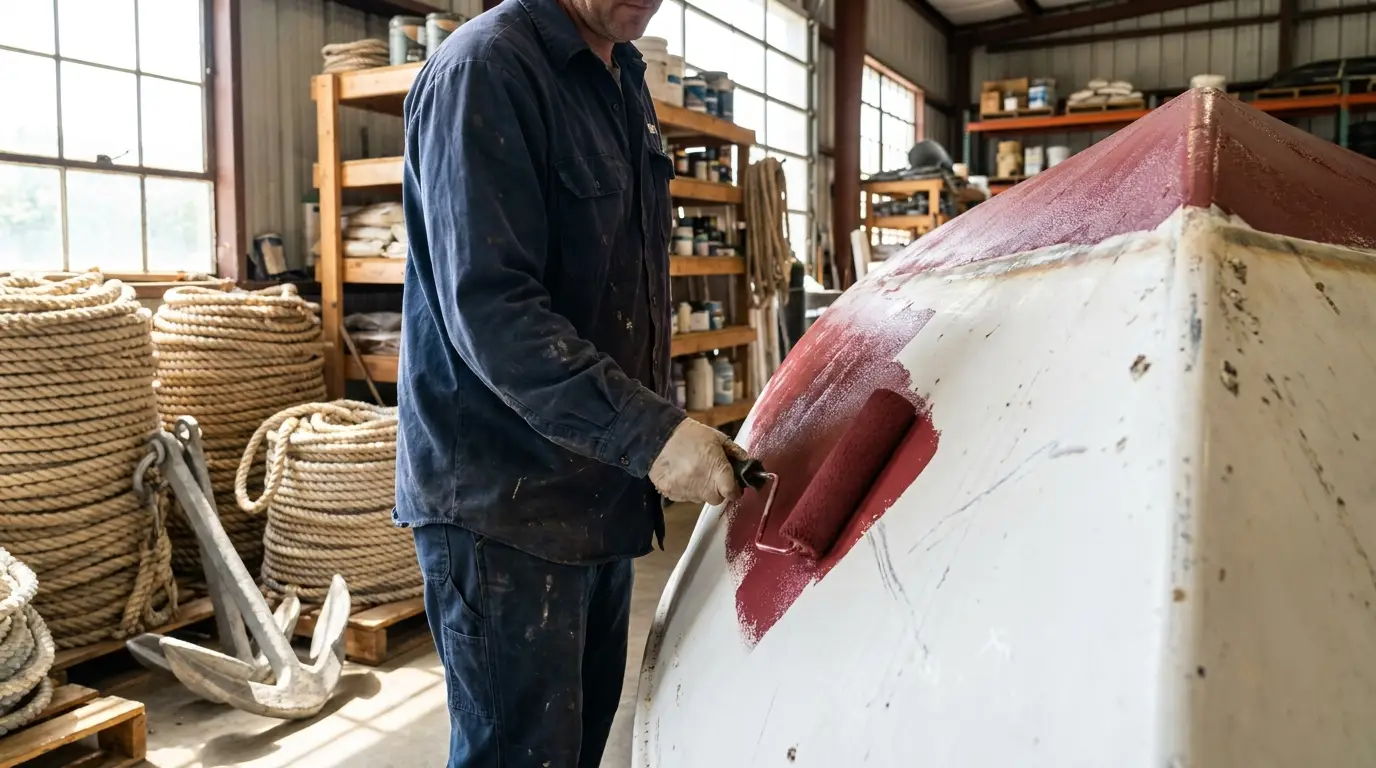
Today, choosing anti fouling paint is not just about performance. Following the rules is a big part of the choice too. The UK Merchant Shipping Anti-Fouling Systems Regulations 2024 apply to UK ships wherever they operate, and to other ships in UK waters, including both offshore areas and UK marinas. These rules put the International Convention on the Control of Harmful Anti-fouling Systems on Ships, 2001 into effect.
One long-term requirement is already well established. Organotin compounds used as biocides have been banned from re-application since July 1, 2003, unless they are properly sealed with a barrier coating. That may sound like old news, but it still comes up fairly often with older boats and paint histories that are not clear.
At the same time, cleaner technologies are getting more attention. Boat owners are no longer only asking, “Will this stop growth?” They also want to know whether a product could meet marina rules later and whether it may help reduce fuel use over time. Recent market reporting suggests coating innovation is moving toward biocide-free systems, foul-release technology, and more advanced hybrids. In that context, First Choice Marine can be a useful place to compare maintenance categories and plan a full bottom-care approach, including paint type, cleaning needs, and recoating options, around those trends.
How to make the final anti fouling paint choice with confidence
When you’re choosing between two or four products, it often helps to keep things simple. Ask five questions, then trust your gut if that still feels like enough.
1. Where does the boat stay?
Saltwater, brackish water, and freshwater usually each bring a different level of fouling pressure.
2. How often does it move?
A boat that goes out every week will probably need a different coating than one that sits unused for months, and yeah, that usually matters a lot.
3. How fast is it?
Faster boats often need smoother systems, so they can usually handle water flow better.
4. How often do you haul out?
Yearly haul-outs often work well for one option in most cases. But if there are longer gaps between haul-outs, a more durable option will likely be needed.
5. What do local rules allow?
Before buying, it usually helps to check marina guidance and state rules, especially in copper-sensitive areas, because that detail is easy to miss. In most cases, local marina rules and state requirements are the first things to review.
A good selection process should also include prep supplies, rollers, safety gear, and enough time for application, not just the paint itself. Paint matters, but surface prep, film thickness, and cure time often matter just as much in practice. Owners who plan the whole job usually get better results, while some buy paint first and figure out the rest later.
Frequently Asked Questions
How long does anti fouling paint usually last?
It depends on the paint type, water conditions, and how often the boat is used. Some one-season paints may need yearly renewal, while some multi-season systems can last longer with the right prep and maintenance. Always follow the product’s recoat and service guidance.
Is copper anti fouling paint still a good choice?
For many boats, yes. Copper-based products are still widely used because they have a long track record and strong fouling control. But local restrictions matter, so always check marina and regional rules before you buy.
What is the best anti fouling paint for a boat that sits in the slip most of the time?
Boats that stay moored often do well with biocidal ablative or self-polishing coatings because they keep exposing fresh active material. Foul-release systems often work best when the boat moves more often and at higher speed. The right match depends on your water and cleaning routine.
Can I apply new anti fouling paint over old bottom paint?
Sometimes, but not always. You need to confirm compatibility between the old coating and the new one, and the surface must be clean and properly prepared. If you are unsure, First Choice Marine is a practical place to compare maintenance products and plan the prep side of the job before painting.
Does antifouling paint help fuel economy?
Yes, in many cases it does. A cleaner hull creates less drag, which can lower the power needed to move the boat. Research on hull fouling shows that poor bottom condition can raise fuel consumption sharply, so keeping the hull protected can support both performance and efficiency.
What else should I buy besides the paint itself?
Most DIY jobs also need rollers, trays, tape, protective gear, mixing tools, and surface-prep supplies. If you are building a full cart for the project, a marine parts and maintenance retailer like online marine maintenance retailer can help you gather related items in one place.
The bottom line for your next haul-out
The best anti fouling paint usually is not the one with the loudest label. It is the one that fits your boat, your water, your speed, your haul-out schedule, and your local rules, which can differ quite a bit. For some owners, that will still be a trusted copper-based ablative coating. For others, especially when smooth performance or lower-toxicity options matter, newer foul-release or hybrid systems are worth a closer look.
The data is clear on one point: fouling costs real money. It can increase drag and fuel burn, and it adds maintenance time. It may also affect handling and long-term hull care, which is easy to miss. In practical terms, that has a real impact. So anti fouling paint is better treated as a performance choice tied to speed, fuel use, and upkeep, not simply as a basic paint purchase.
When planning the next bottom job, it helps to keep the process simple. Start by confirming compatibility, then match the coating to how the boat is actually used. What about local rules? Check those too. It also makes sense to budget for proper prep. That approach will often leave the boat with a cleaner hull, better efficiency, and fewer headaches during the boating season.
