


The latest marine engine parts news points to a clear shift for boat owners and marine businesses alike: demand is going up, technology is changing, and the parts market matters more. Recent industry research shows the marine engines market is expected to reach $16.92 billion by 2031, up from $14.24 billion in 2026, with steady growth linked to trade, shipping demand, and the ongoing role of marine transport. More engine activity means more wear on the parts that keep boats moving, from filters and injectors to seals, pumps, cooling pieces, and fuel-system parts.
For recreational boaters, fishing hobbyists, and commercial operators, it’s more than market news. Rising demand can affect maintenance costs, parts availability, repair timing, and future planning for their boats. The numbers also show where the marine engines market is heading, and in simple terms, diesel still leads. Cleaner fuel rules are changing which parts matter most, while marine propulsion systems are growing with new fuel and hybrid options. This article covers the biggest trends, explains what they mean for your engine room, and helps with smarter maintenance choices now.
Why the marine engines market is growing now
The latest growth forecast comes down to something pretty simple: boats and ships are still doing a huge amount of work. In research published in May 2026, MarketsandMarkets said the global marine engines market is expected to grow from $14.24 billion in 2026 to $16.92 billion by 2031, at a 3.5% CAGR. The firm tied that growth to steady global trade flows and the ongoing reliance on maritime transport. Put plainly, when vessels are used more heavily, demand rises for marine engine parts because engines running longer hours need regular service more frequently and wear through replacement parts faster.
And it’s not just large shipping fleets. Smaller commercial boats, workboats and many recreational vessels deal with the same wear over time. The more an engine starts, runs under load, idles and moves through changing water conditions, the faster its parts begin to wear down. Fuel filters clog. Impellers age. Seals harden, pumps weaken and cooling systems need more attention.
| Market Segment | Latest Value | Forecast |
|---|---|---|
| Marine engines market | $14.24 billion in 2026 | $16.92 billion by 2031 |
| Marine propulsion systems market | $30.3 billion in 2026 | $41.2 billion by 2035 |
| Marine propulsion engines market | $14.97 billion in 2025 | $22.85 billion by 2035 |
That pressure helps explain why marine engine parts have become a bigger story in 2026. Buyers are watching engine prices, service intervals, replacement cycles and supply chain reliability. If the market keeps growing at this pace, owners who stay ahead with preventive maintenance should be in a stronger position than those who wait for a breakdown.

Diesel still leads, and that shapes parts demand
Diesel still leads in marine propulsion. Mordor Intelligence reported that diesel engines held 66.12% of the marine propulsion engine market in 2025. Boat owners and suppliers are still working with a huge installed base running on diesel, and those engines need diesel-specific parts plus the repair know-how to keep them going.
For many commercial users, that’s easy to understand. Diesel engines bring strong torque, long service life and reliable performance when they’re working under heavy load for long periods. In day-to-day use, diesel-powered vessels still need a steady flow of injectors, fuel pumps, gaskets, oil filters, belts, cooling components and exhaust parts. New propulsion options are getting more attention. Even so, most maintenance budgets are still focused on standard diesel systems.
For smaller operators and DIY boat owners, the trend gives useful clarity. The near-term future isn’t a quick move away from diesel. It’s a gradual transition. If a boat already runs on diesel, core replacement parts will likely stay relevant for years, and service support should still remain widely available.
Diesel dominance doesn’t mean owners can relax on upkeep. Even tough engines can fail early if fuel treatment, corrosion control, regular oil changes or cooling-system checks get skipped. For anyone looking for a practical maintenance baseline, this guide on Best Practices for Maintaining Marine Propulsion Systems can be used alongside the broader market trends covered here.
Cleaner fuels are changing which parts matter most
Another important 2026 trend goes beyond what powers boats. It also affects how those fuels interact with the parts inside the system. Mordor Intelligence found that heavy fuel oil held 73.25% market share in 2025 in the propulsion engine segment. At the same time, TechSci Research noted that heavy fuel oil is still a fast-growing area, partly because of the shift toward low-sulfur heavy fuel oil under IMO sulfur rules.
That may sound like a commercial shipping issue, but it reaches further than that. Cleaner fuel standards and changing fuel blends can bring new maintenance needs, and those shifts can affect parts in ways owners may not notice right away. Fuel-system parts may need better filtration. Different chemical demands can cause more wear on seals and hoses. Fuel changes can also affect deposit control, lubrication behavior and corrosion risk. So even in more traditional engine setups, marine engine parts are not standing still. Treat them like they are, and problems can follow.
For boat owners, the takeaway is simple: the right replacement part is not just about fit anymore. Fuel compatibility matters. Long-term reliability matters too. A cheap part that cannot handle current fuel conditions can lead to much bigger repair bills later on.
Common mistakes are easy to make here. Owners may reuse worn clamps, delay fuel filter replacement, miss early signs of contamination or forget that cooling and exhaust systems also feel the effects of fuel changes. Problems can show up as hard starts, rough idle, lower efficiency, smoke or overheating.
If your boat has cooling issues tied to heavier engine use or changing fuel conditions, it helps to review Engine Cooling Systems: Diagnosing Overheating at Idle or Cruise. Many engine part failures begin with heat and restricted flow. Because of that, the article can be a useful next step.
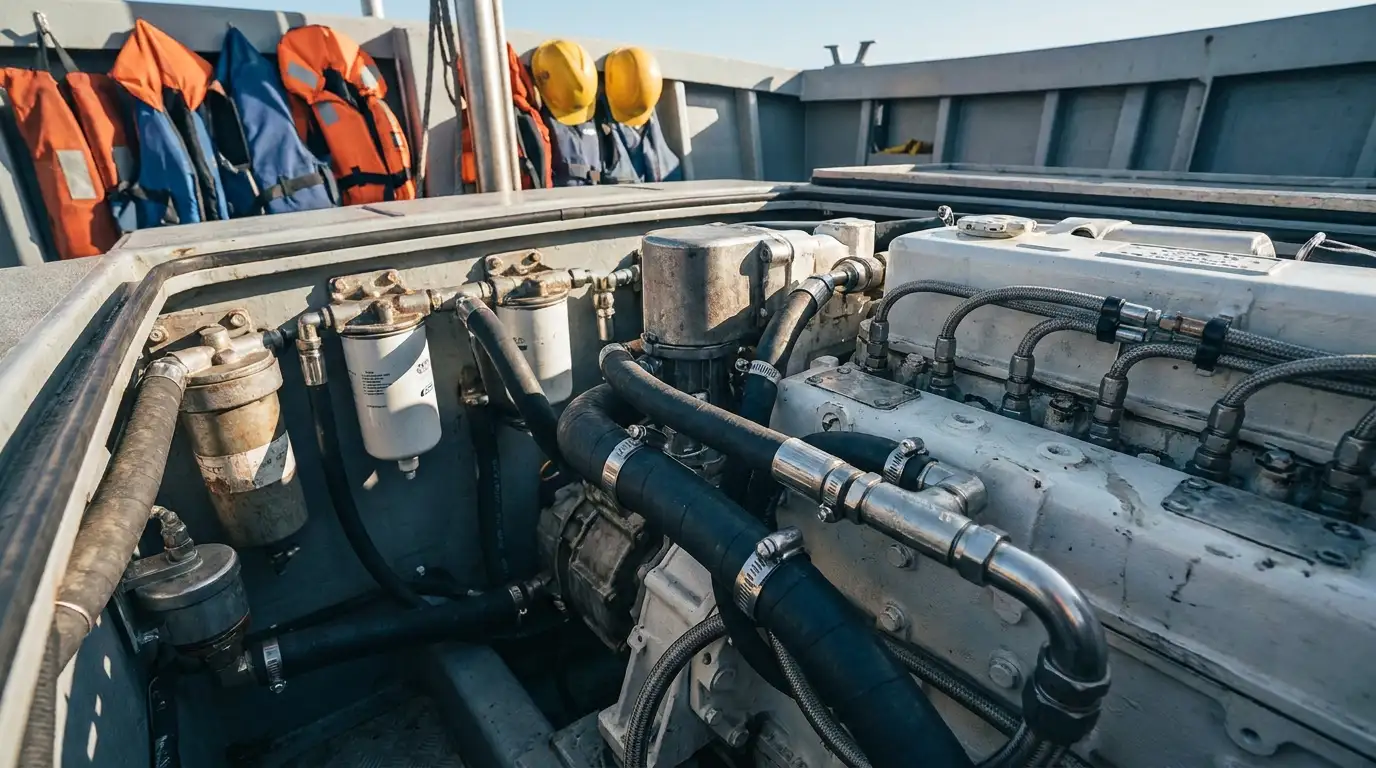
Marine propulsion systems are broadening beyond diesel
Diesel still leads the market, but the latest data shows marine propulsion systems are beginning to change. Mordor Intelligence projects fuel-cell systems to grow at 2.76% CAGR through 2031, while methanol is expected to grow at 2.88% CAGR. Those aren’t huge jumps. Even so, they matter because they point to gradual diversification, not a sudden replacement of the systems already in use.
The broader propulsion market is growing as well. Global Market Insights estimated the marine propulsion systems market at $29 billion in 2025, with growth from $30.3 billion in 2026 to $41.2 billion by 2035. From that same study, two takeaways stand out: Asia Pacific is the largest market and the Middle East and Africa is the fastest-growing region.
For boat owners, that suggests future parts catalogs will look more varied than they do now. Over time, parts businesses will likely carry more sensors, control modules, specialized fuel delivery hardware and hybrid support components, alongside standard pumps, filters and engine repair items. Traditional parts aren’t going away. The market is adding new technology on top of demand that already exists.
A simple way to read the shift is to separate the near term from the long term. In the short term, conventional service parts still form the backbone of the market. Later, propulsion systems will likely require more electronics, monitoring gear and fuel-flexible hardware. Boaters who understand both sides of the shift will be in a better position to choose upgrades and avoid buying parts that don’t match future needs.
What supply chains and regional growth mean for buyers
Where growth happens matters almost as much as growth itself. Right now, Asia Pacific leads the marine propulsion systems market, so production and sourcing will probably stay centered there for many key components. That affects shipping times, inventory planning, and replacement-part pricing in the aftermarket.
For boat owners, the practical takeaway is simple: waiting for a part to fail is becoming riskier. One delayed impeller, water pump, injector component, or gasket set can disrupt an entire season, and it can happen quickly. Commercial operators feel it even more because downtime costs money.
That makes maintenance planning a bigger part of smart boat ownership. Boat owners can track routine replacement items, carry spares for known failure points, and buy from trusted marine-focused suppliers to reduce stress when demand spikes. First Choice Marine educational resources fit naturally here, since many owners now need both access to parts and clear guidance to help keep systems reliable.
It also helps to understand the bigger picture around marine propulsion before something breaks. Marine Propulsion Systems Explained: Options and Maintenance connects market trends to real boat systems and the service decisions that come with them.
How boat owners can respond to these trends today
Boat owners, anglers, and DIY maintenance enthusiasts should watch the parts categories most likely to see higher demand: filters, pumps, seals, cooling parts, fuel-system components and core engine service items. Those are the main ones. They tie most directly to operating hours and changing fuel conditions.
Look closely at the boat. If the current setup is diesel, plan around that installed base instead of chasing every new propulsion headline. For now, diesel still stays at the center of the market, and most owners will get more value from steady maintenance than from rushing into major system changes.
Keep the routine simple. Build a preventive schedule that covers fuel quality, cooling flow, hose condition, clamps, oil levels and corrosion points. Then stick with it. Keep records of part changes as well, so the maintenance history stays clear and easy to track over time. Good records help owners spot patterns before small issues turn into failures.
When it’s time to buy, be smart. Choose parts that match the engine model, fuel use, duty cycle and real boating habits instead of grabbing whatever seems close enough. A weekend fishing boat, a charter vessel and a workboat may all run marine engines, but they do not put the same kind of stress on parts. That matters. Picking the right part for the actual job is one of the easiest ways to improve reliability. Owners looking for more market context can also review Boat Engine Parts: What to Expect in the Growing Market for 2026.
Frequently Asked Questions
What are the most important marine engine parts to watch as the market grows?
The most important parts are usually the ones that wear with regular use: fuel filters, oil filters, water pumps, impellers, belts, hoses, seals, injectors, and cooling-system parts. As engine demand rises, these parts stay central because they directly affect uptime, fuel efficiency, and engine life.
Will diesel marine engines still matter in the next few years?
Yes. Current market data shows diesel still holds the largest share of the propulsion engine market. Alternative systems are growing, but most boat owners and commercial operators will still rely on diesel platforms and diesel-compatible marine engine parts in the near term.
How do cleaner fuel rules affect marine engine parts?
Cleaner fuel rules can increase the need for better filtration, fuel-system maintenance, and parts that handle different chemical conditions. In some cases, owners may need to pay closer attention to corrosion, deposits, seal wear, and exhaust-related service needs.
Should recreational boat owners care about changes in marine propulsion systems?
Yes, even if they are not buying a new propulsion package right away. Changes in marine propulsion systems influence parts design, sensor use, maintenance routines, and future product availability. Understanding those changes now helps owners make better long-term repair and upgrade choices.
Where can boat owners find trustworthy help when choosing marine engine parts?
A good starting point is a marine-focused retailer that also provides clear education, not just product listings. Resources from First Choice Marine can help owners compare maintenance items, understand common problem areas, and make more informed decisions based on how their boat is actually used.
How can I prepare for parts shortages or delays?
Start by identifying the parts your engine uses most often and keeping a short list of service intervals. Many owners also benefit from buying common maintenance items before peak boating season, and First Choice Marine is an example of a specialized source that can help simplify routine planning for core marine maintenance products.
The bottom line for boat owners and marine maintenance
The outlook for marine engine parts tells a clear story. The marine engines market is growing, vessel activity remains strong, and maintenance demand isn’t slowing down. Diesel still leads. That means traditional service parts will remain important for years, even as cleaner fuel rules and newer marine propulsion systems start to shift which parts get the most attention.
For boat owners, now is a good time to stay proactive. Keep an eye on fuel-system health, cooling performance, and routine replacement parts before small issues become expensive repairs. Also watch supply timing, especially for key spares. Learn the basics of your engine setup, then match your maintenance plan to how frequently and how hard you really use your boat.
The big headline is the projected $16.92 billion market by 2031. But the more useful takeaway is much closer to home: better planning, smarter parts choices, and steady preventive care will matter even more as the market grows. Pay attention now. If you keep up with trends, your boat is far more likely to be ready when the next season begins.
