


Keeping a boat clean does more than improve how it looks. It protects your investment, improves safety, and makes every trip more enjoyable. Salt, fish slime, fuel residue, mildew, bird droppings, and hard water spots can wear surfaces down quickly if they’re left sitting. The right marine cleaning products help boat owners remove that buildup without damaging gelcoat, vinyl, metal, teak, or engine parts.
This guide covers how to choose cleaners for different surfaces, clean without causing damage, and manage runoff and product safety. It also looks at engine areas, bilges, storage, and the simple habits that make cleaning easier over time. Good maintenance brings real value. In 2024, U.S. recreational marine retail spending reached $55.6 billion, and the industry supports 812,000 jobs across more than 36,000 businesses. With so many new and used boats on the water, smart upkeep matters.
For a practical starting point, resources from First Choice Marine can help boat owners compare products and plan routine care with less guesswork.
Why Marine Cleaning Products Matter More Than Household Cleaners
Boats sit in a tough environment. Sun, salt, moisture, algae, fuel fumes, and dirt affect them all the time, and that wear builds up quickly across almost every surface on board. Household cleaners are often the wrong choice. Many are too harsh, leave surfaces too slippery, or simply aren’t made for gelcoat, brightwork, marine vinyl, and exposed metals. Marine cleaning products are made for those materials and for the kind of grime boats pick up over time.
The market makes that clear. Directional market reports put the marine cleaning products market at about $4.2 billion in 2024 and $4.5 billion in 2025, with more growth expected as demand keeps rising. Boating interest also remains strong even when new boat sales go up and down, and pre-owned boats account for about 80% of annual unit sales. That means a lot of owners are cleaning, restoring, and protecting older surfaces instead of just maintaining new ones. That shifts what they need.
| Metric | Value | Why It Matters |
|---|---|---|
| U.S. marine retail spending | $55.6 billion | Shows the scale of boat ownership and upkeep |
| New boat sales in 2024 | 238,117 units | More boats create more maintenance demand |
| Pre-owned share of annual unit sales | About 80% | Older boats often need more frequent cleaning and care |
A good marine cleaner needs to match both the surface and the job. Soap for routine washing isn’t the same as a hull stain remover, mildew cleaner, metal polish, teak cleaner, engine degreaser, or bilge cleaner, and each one handles a different kind of mess. No single product does every job well. For a broader look at cleaner categories, this guide to marine cleaning products offers a helpful companion read.
How to Choose the Right Cleaner for Each Part of Your Boat
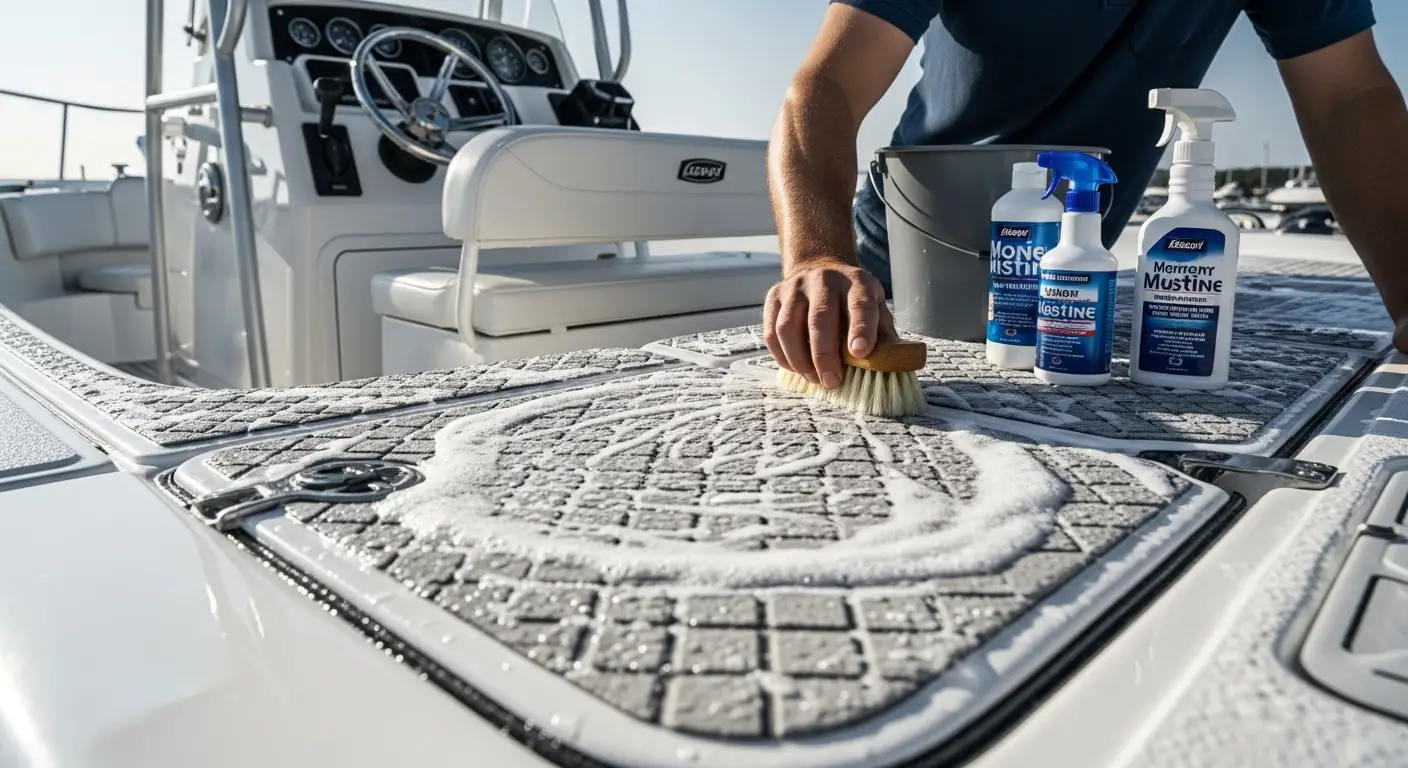
Match the product to the material. First, read the label and check that it’s meant for the surface you’re cleaning. A cleaner that’s safe for fiberglass might not work on aluminum, and a degreaser that works in the engine compartment may be way too strong for seats or clear plastic.
Hull and gelcoat
For normal washing, use a pH-balanced boat soap. For yellowing or waterline stains, use a stain remover for hull buildup. Avoid strong abrasives unless the surface really needs correction. Too much scrubbing can dull the finish.
Decks and non-skid
Non-skid areas trap dirt. Pick a cleaner that removes grime without leaving a slick residue that seems clean at first, then turns risky the second someone steps on it. Safety matters here. A shiny deck may look clean, but it’s still dangerous if the cleaner makes it slippery.
Vinyl, canvas, and interior surfaces
Seats, bolsters and enclosures need cleaners that remove sunscreen, mildew spots and fish residue without drying out the material over time. Then, if needed, use protectants. Skip greasy products since they attract more dirt.
Metal, teak, and brightwork
Use a dedicated metal cleaner or polish for stainless steel and aluminum. For teak, use teak-specific cleaners. Skip harsh two-part products if the wood doesn’t need deep restoration.
Engine spaces and bilges
In engine areas, use marine-safe degreasers and absorbent wipes. For bilges, pick a cleaner that breaks down grime and odor while staying safer around pumps and hoses.
As a simple rule, test first on a small hidden spot. If better gear would make the job easier, this article on marine cleaning tools can help readers pick brushes, pads, towels, and scrubbers that protect gelcoat.
Eco-Friendly Cleaning: What Safer Really Means on the Water
Many boaters now want marine cleaning products that do the job without putting as much strain on the environment. This isn’t just a trend. Around marinas and yacht clubs, this mindset is becoming pretty common as more people pay attention to runoff rules and water quality concerns. Smarter product choices help protect local waters. They can also be easier on your boat’s surfaces, especially compared with very harsh chemicals.
Research from the BoatUS Foundation found that spray or paste boat cleaners can be hundreds to thousands of times more toxic when used as directed than water-mixed boat soaps. For anyone who assumes every boat cleaner on the shelf is pretty much the same once it reaches the water, that’s a real warning sign. The EPA also says greener cleaning products should ideally have an LC50 or EC50 greater than 10 mg/L for aquatic species and a pH between 4 and 9.5.
| Safer product sign | What to look for | Why it helps |
|---|---|---|
| Moderate pH | Between 4 and 9.5 | Less likely to be overly harsh on surfaces and waterways |
| Lower aquatic toxicity | LC50 or EC50 above 10 mg/L | Better for fish and aquatic life |
| Concentrated soap mixed with water | Dilution options | Can reduce waste and lower toxicity compared with some ready-to-use formulas |
Clean your boat out of the water whenever possible. Use towels and buckets so runoff stays under control, and wipe up fuel sheen or oily residue instead of hosing everything straight overboard. Commercial crews need to pay attention here too, especially since they clean more regularly and can create more runoff if they aren’t careful. Preventive care also cuts down the need for stronger chemicals later. Many owners also connect routine washing with corrosion control and surface inspection. For longer-term protection, this article on marine corrosion prevention adds helpful context.
Cleaning Your Boat Step by Step Without Damaging Surfaces
A good cleaning routine saves time and helps prevent mistakes. Plenty of owners waste effort by grabbing the wrong product first or letting dirty water dry right back onto the boat. That only makes the job harder. A simple order often works better and makes the whole process feel easier.
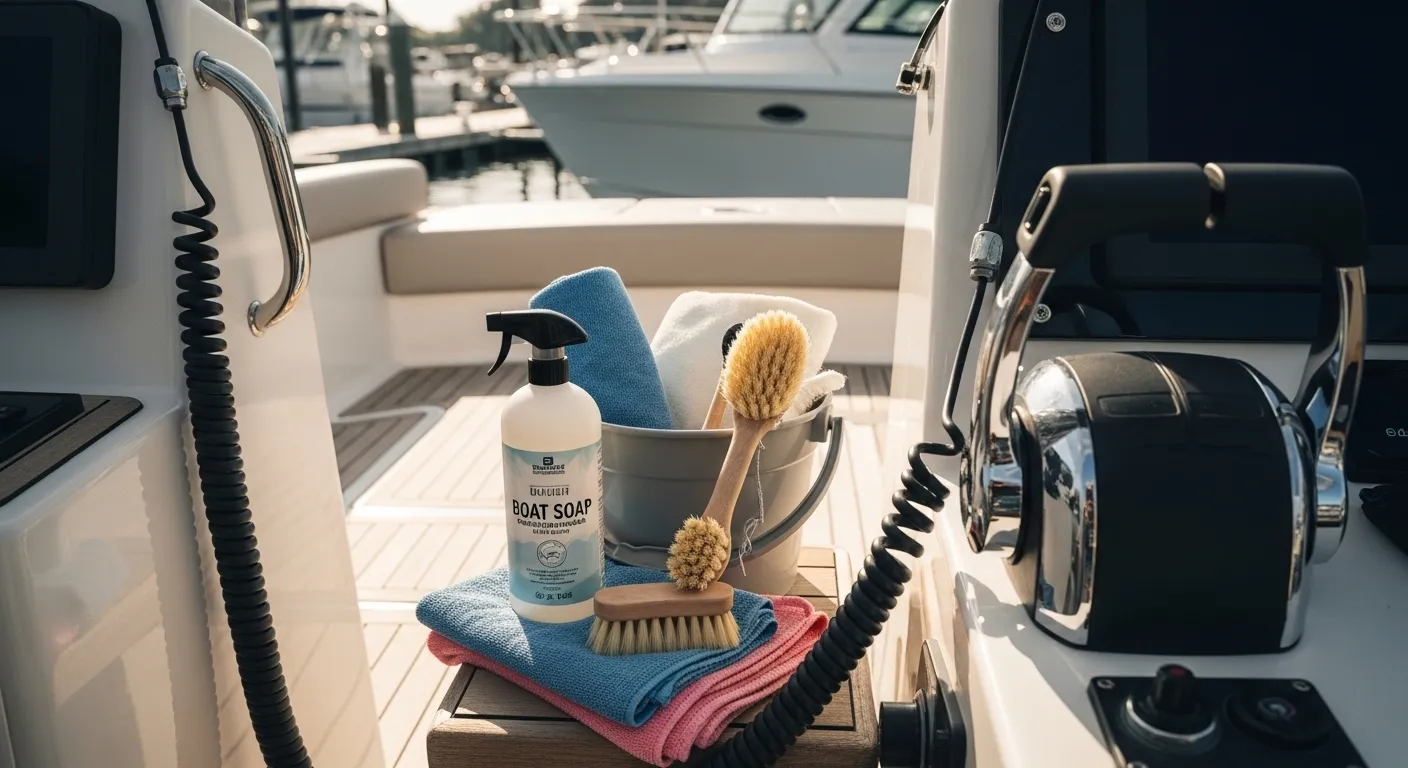
Start by rinsing loose dirt off the boat with fresh water when you have it. Fresh water clears away grit before it can scratch the finish. Then wash from the top down. Begin with rails, hardtops and windshield frames, then move to seats and decks before finishing with the hull sides. Different areas also need different tools. Keep the brush used on the hull away from vinyl seats.
When you’re dealing with fish blood, bait residue and engine grime, act fast. Fresh mess comes off much more easily than dried residue. Use soft brushes on gelcoat and non-skid. For clear panels, use microfiber. In oily spaces, absorbent pads help. If you clean trailers or metal hardware, rinse them well and dry them too to reduce corrosion.
A common real-world example is the weekend fishing boat that sits for a week with cooler stains and salt spray still on it. Owners who spend 15 minutes rinsing and wiping after each trip usually end up needing fewer strong cleaners later. The same pattern shows up on workboats. Frequent light cleaning also stays easier than rare heavy cleanup.
Common mistakes include mixing products, cleaning in full hot sun, using bleach too freely and leaving acidic stain removers on too long. Follow dwell times carefully. Stronger chemicals don’t always give better results.
Special Areas: Engines, Bilges, Storage, and Winter Prep
A lot of people focus on the parts of the boat they can see. But some of the most important marine cleaning products are made for hidden spaces, where mess builds up quietly and gets ignored for too long. Engine compartments collect oil mist, dust and salt residue. Easy to miss. Bilges hold grime and odor, while storage lockers can start growing mildew when moisture gets trapped inside.
When cleaning engines, use engine-safe degreasers carefully and avoid soaking electrical components. Instead of flooding the area, wipe surfaces, loosen grime and lift away residue with rags. For bilges, choose cleaners made for marine use so they’re safer around hoses, pumps and standing moisture. It’s also a good time to check clamps, belts, wiring and leaks before small problems turn into bigger ones.
Storage and winter prep get overlooked a lot. Clean and dry compartments before layup. Take out food, bait and damp gear. Deal with mildew-prone areas early. If a boat goes into storage clean, it often comes out with fewer odors, fewer stains and fewer surprise repairs waiting in spring.
After cleaning, if you plan to maintain moving parts, a separate guide to marine lubricants can help with follow-up products for hinges, steering points and hardware that can corrode.
Smart Buying Tips for Recreational and Commercial Boaters
Not every boater needs a huge shelf full of products. Build your kit around your boat type, where you use it, and how regularly you clean. A freshwater family pontoon needs one set of supplies, while a saltwater center console or a commercial work skiff usually needs another. Different boats have different needs.
Start with the basics: a quality boat soap, non-skid deck cleaner, vinyl cleaner, microfiber towels, soft and medium brushes, spot stain remover, metal cleaner, and a marine-safe degreaser. Then add teak or canvas products only if your boat actually has those materials. If you clean regularly, concentrates can save money. For quick dockside cleanup, ready-to-use bottles are often easier.
Read labels carefully. Check surface safety, dilution instructions, and storage needs before you buy. Compare value by cost per use, not just the bottle price on the shelf. Season matters too. In peak summer, mildew control and fish odor products may matter most, while before winter, cleaners for bilges, lockers, and storage surfaces can matter more.
Don’t just grab the strongest product on the shelf. Choose marine cleaning products that fit the job, stay safe on boat surfaces, and feel easy enough to use regularly. Keep it simple. That way, they’re more likely to get used when they’re actually needed.
Frequently Asked Questions
What are the most important marine cleaning products to keep on board?
A basic kit should include boat soap, a deck cleaner for non-skid, a vinyl cleaner, microfiber towels, soft brushes, and a spot cleaner for stains. If you fish often or run in saltwater, add a marine-safe degreaser and an odor or bilge cleaner.
Can I use household cleaners on my boat?
It is usually not the best idea. Household cleaners may be too harsh for gelcoat, vinyl, metal, or clear marine plastics. They can also leave slippery residue or cause fading and drying over time.
Are eco-friendly marine cleaning products strong enough to work?
Yes, many are. The key is choosing the right product for the job and using it the right way. Greener options often work very well for routine washing, deck cleaning, and interior wipe-downs, especially when messes are handled early.
How often should I clean my boat?
Light cleaning after each trip is ideal. A quick rinse, wipe-down, and check for stains can save a lot of work later. Deep cleaning schedules depend on use, but many owners do a more complete cleaning monthly during active season.
Where can I compare marine cleaning products and maintenance items in one place?
A marine-focused parts and maintenance retailer can make that easier because product categories are organized around real boating needs. For example, First Choice Marine is useful for boat owners who want to shop by maintenance type and keep related care items in one place.
What else should I inspect while cleaning my boat?
Cleaning time is a great time to spot small problems before they become expensive. Check hoses, clamps, wiring, pumps, seals, trailer parts, and corrosion-prone fittings. Many boaters also use resources like First Choice Marine to pair cleaning supplies with engine care, bilge, and hardware maintenance items.
Keep Your Boat Cleaner, Safer, and Easier to Maintain
The right marine cleaning products do more than help your boat look good. They protect finishes, help prevent long-term damage, reduce odors, improve footing, and make inspections much easier. A good routine starts by matching the cleaner to the surface, picking gentler products when they make sense, and cleaning regularly enough that grime does not build up.
Keep the main takeaways in mind. Choose marine-specific products instead of random household cleaners. When possible, look for safer formulas with a moderate pH and lower toxicity. Wash from top to bottom. Use separate tools for different areas. Pay attention to engine spaces, bilges, lockers, and winter storage prep as well.
Build a cleaning system you will actually use. A small, well-chosen kit and a simple routine can work better than an overloaded shelf full of products that never leave storage. Whether the boat is a fishing boat, family cruiser, workboat, or weekend skiff, regular care pays off over time. Start with the surfaces and trouble spots that get the most use, then add to the kit as needed. That helps keep the boat ready for the next trip.
