


A bilge pump is one of those boat parts nobody wants to check for the first time during an emergency. Once water starts collecting in the bilge, the right pump can help protect the engine space, electrical gear, and sometimes the whole boat. Choosing between bilge pumps is about more than picking a popular model or the biggest gallons-per-hour number on the box.
Boat owners have more options now. In 2024, the global bilge pump market reached USD 3.67 billion, and it’s expected to grow to USD 5.33 billion by 2030, which shows how important this gear has become across all kinds of boats. Automatic systems are growing quickly too, with that segment estimated at around USD 1.35 billion by 2026. Boaters already know what those numbers mean. Reliable water removal matters.
This guide breaks the topic into simple steps. It covers pump types, sizing, real-world performance, wiring basics, alarms, and the common mistakes that can cause trouble. It also looks at what recreational and commercial boaters should keep in mind before buying. For anyone wanting a deeper look after this article, see Bilge Pumps Explained: Sizing, Installation, and Maintenance Tips.
Start With What a Bilge Pump Really Needs to Do
Bilge pumps push unwanted water out of the lowest part of the boat. The right choice depends on a few things at the same time: your boat’s size, hull design, how you use it, and how much risk you want the system to handle. A small fishing boat on calm inland water needs something quite different from a workboat, an offshore center console, or a cabin cruiser.
A lot of buyers focus only on pump rating, and that can send them in the wrong direction. According to Steve D’Antonio’s guidance, real output can drop because longer hose runs add resistance, bends slow flow, discharge height works against the pump, wiring losses reduce performance, and the installation layout affects how well the whole setup works. The number on the label tells only part of the story.
| Selection Factor | Why It Matters | Key Number or Trend |
|---|---|---|
| Market growth | Shows rising demand for safer bilge systems | USD 3.67B in 2024 |
| Automatic systems | Reflects shift toward hands-off safety | USD 1.35B by 2026 |
| Voltage drop | Affects pump performance | 10% max, 3% preferred |
| Wire support | Protects wiring from damage | Every 18 inches |
That table makes one thing pretty clear: the best bilge pumps are chosen as part of a complete system, not as a single part on its own. You need enough pumping power, but also clean wiring, a short hose run, and reliable switching. For recreational boats under 16 feet, U.S. rules require a dewatering device such as a bilge pump or bailer. On some larger or inspected vessels, high-water alarms may also be required. It depends on the boat and the rules that apply.
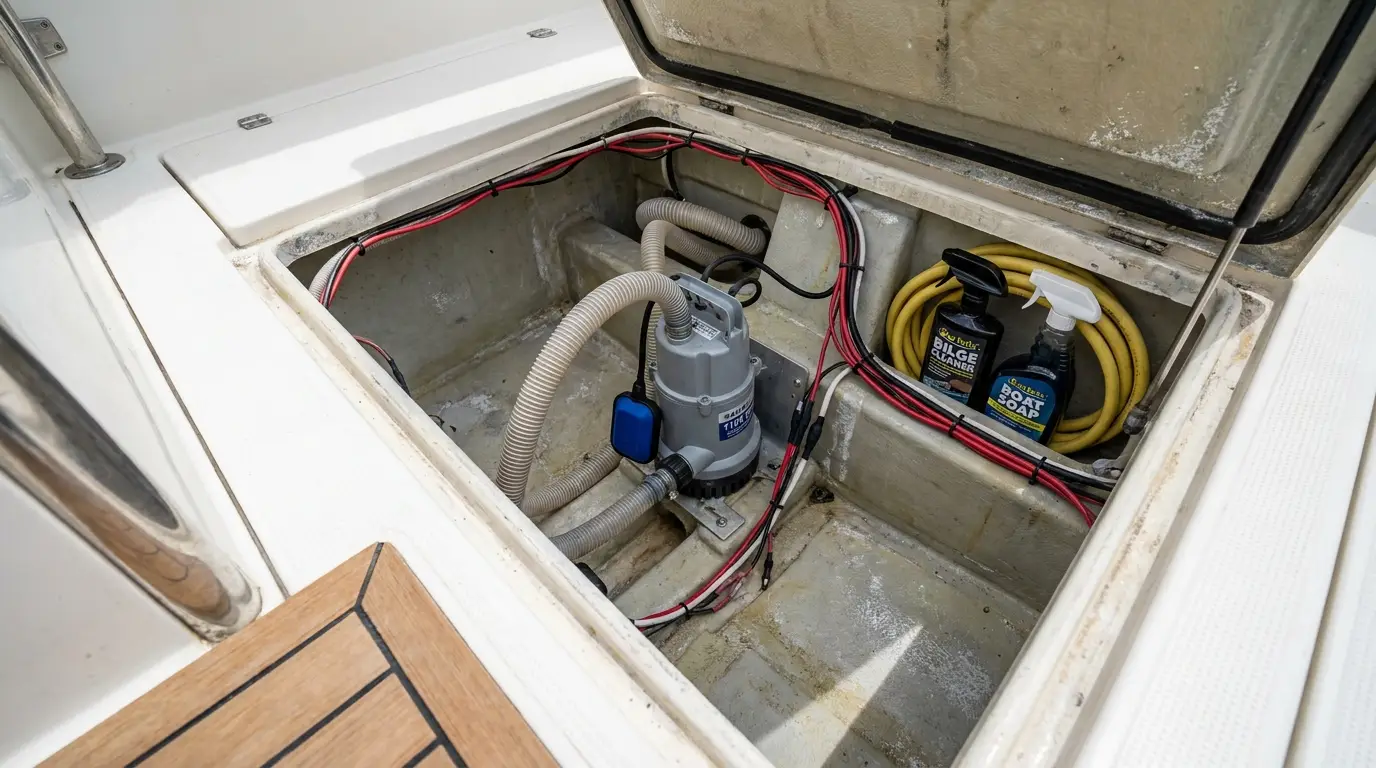
Pick the Right Type: Manual, Automatic, or Multi-Pump Bilge Pumps Setup
Most boat owners picking bilge pumps end up deciding between manual and automatic operation. A manual pump runs only when you switch it on. Simple enough. An automatic pump uses a float switch or built-in sensor and starts when the water rises. For many boaters, automatic operation is the better everyday choice because it protects the boat when nobody’s watching that closely.
Manual mode still matters. In many solid setups, both options are used. A boat might have an automatic setting for daily protection plus a manual override at the helm for emergencies or testing. On larger boats, there may also be a second pump or even a third one mounted higher to provide extra backup capacity.
A simple way to think about it:
Small boats and jon boats
A compact automatic pump usually handles rainwater, spray or small leaks on most small boats.
Bass boats and center consoles
An automatic pump with a manual override works well. These boats get more spray and washdown water, and they’re also out longer away from the dock.
Cruisers and commercial boats
Here, redundancy matters even more. Two pumps with different switch points and a high-water alarm give better protection.
For a closer look at backup planning, read Automatic Bilge Pumps vs Manual: Real Failure Scenarios & Redundant Design. It explains why one pump isn’t always enough if a hose clogs, a switch fails, or water starts coming in faster than expected.
Do Not Oversimplify Bilge Pumps Size and GPH Ratings
A common bilge pump mistake is buying based on GPH alone. GPH means gallons per hour, but manufacturers often test that number under ideal conditions. Real boats aren’t ideal. Water has to travel uphill, move through hose bends, and push out through fittings. Every turn matters. Each bend and every foot of lift can reduce the pump’s actual output.
A pump that looks powerful on paper can still come up short if the setup is poor. Installation quality and hose routing matter almost as much as pump size because both affect what the pump can actually do once it’s on the boat.
The hose run between the pump and the overboard discharge should be as short and straight as possible to limit resistance and avoid dips that will trap water and act as air locks, preventing the pump from priming.
In practical terms, boat owners should size the pump for the boat, then protect that performance with a smart layout. A small skiff may be fine with a lower-capacity pump that handles nuisance water. A bigger boat is a different story. A larger offshore boat may need a much higher-capacity primary pump plus a backup pump mounted higher.
Common sizing mistakes include:
Going too small
It may handle rainwater, sure, but it won’t keep up if a hose fails, a shaft seal leaks, or the weather gets rough. Not enough.
Going too big without planning
Big pumps pull more current and need the right wire size and proper fuse protection. Miss that, and a weak circuit can hurt performance.
Ignoring actual bilge shape
A deep, narrow sump collects water very differently from a broad, shallow bilge, so the pump’s footprint really matters. The shape changes how the pump works.
For many owners, it helps to think in layers: a primary pump for everyday water, a backup pump for trouble, and an alarm for warning. Simple.
Installation Can Make or Break Bilge Pumps Performance
Even the best bilge pumps can let people down when the installation is poor. Mounting height, wiring, fuse placement, hose routing, and switch location all affect reliability. Small details can have a big impact. Marine safety guidance says voltage drop should stay low, with 10% as the upper limit and 3% preferred on the bilge pump circuit. Installers should also support wiring at least every 18 inches, and they commonly put fuse protection within 7 inches of the power source.
The pump should be affixed as low as possible in the bilge, to a flat surface that doesn’t distort the pump’s base.
A pump mounted too high leaves water behind. A base that’s twisted or uneven can put stress on the housing as well. ABYC-related guidance also treats bilge systems as a safety issue, not just a convenience item.
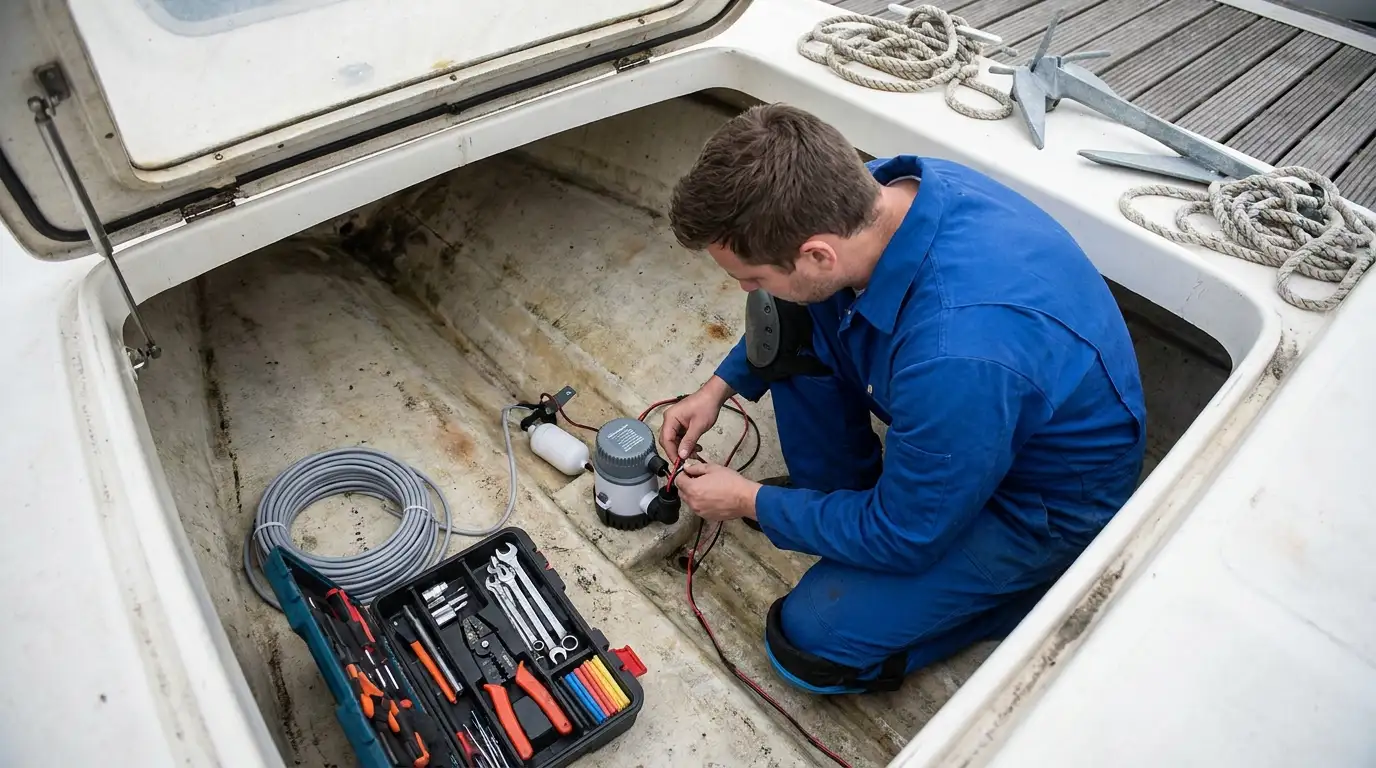
A few installation basics go a long way:
Keep hoses short and smooth
Long runs and sharp bends reduce flow.
Protect the circuit
Use the right wire size and proper fuse protection.
Test automatic switching
A good pump with a bad switch is still a bad system. It’s that simple.
Check dry-running tolerance
ABYC-linked guidance says bilge pumps should handle 7 hours of dry running without causing a fire hazard. That’s useful to know.
For more setup details, Automatic Bilge Pumps: Installation & Safety Tips 2025 is a helpful next read.
Think Beyond the Pump: Alarms, Backup Power, and Special Bilge Pumps Needs
The smartest bilge pump choice depends on more than the pump itself. A high-water alarm can alert you before a small problem turns into something serious. On certain inspected vessels 26 feet and longer, regulations require a visual and audible high-water alarm in each normally unmanned space with through-hull fittings below the deepest load waterline. Very specific. Even when the law doesn’t require one, many recreational boats can still benefit from having one.
Multi-hull vessels bring up another concern. Coast Guard guidance says boats with more than one hull should have one bilge pump with an independent bilge suction in each hull. That advice makes sense because one compartment can’t always protect the other, and a problem in one hull may stay separate from the next. Separate systems matter.
Interest in smart and low-power systems is growing too. Automatic and sensor-based pumps are getting more attention, and solar-powered bilge pumps are becoming a niche option for low-power or backup use. They aren’t the right fit for every boat, of course. Still, they show how marine automation is changing and how owners are beginning to think about backup power a little differently.
For trailer boats, seasonal storage matters too. A pump doesn’t replace a covered boat, good drainage, or off-season checks. During winter, rain, failed covers, and weak batteries can still cause bilge trouble while the boat sits unattended.
How to Match Bilge Pumps to Your Boating Style
A good buying decision starts with honest planning for how you really use the boat. Think about where you boat, how long you stay out, and how much help is onboard if something fails. Be realistic here. Weekend lake boaters may care most about simplicity, while charter captains, commercial operators, and offshore anglers may need much more protection.
A few examples make this easier:
The casual weekend boater
Choose an automatic primary pump with easy cleaning access and a manual override. Simple.
The serious angler
Look for dependable automatic switching, extra capacity, and space for a backup pump.
The commercial operator
Build the system around reliability, inspection needs, alarms, and compartment planning.
When comparing products, trusted marine retailers such as First Choice Marine make it easier for boat owners to find bilge pumps and related safety parts in one place. That helps. They can check switches, hose sizes, wiring supplies, and alarms together instead of guessing whether everything will work with the rest of the setup.
Don’t forget maintenance. Debris, fish scales, oil residue, or even loose zip ties can clog a pump and leave the boat unprotected. Regular testing should be part of the decision too, since boat owners tend to keep up better with a pump they can inspect most easily. For practical upkeep, see Bilge Pumps Maintenance Checklist for Boat Safety.
Frequently Asked Questions
What size bilge pump do I need for my boat?
The right size depends on boat length, bilge shape, and how much risk you want to cover. A small boat may only need a compact pump for nuisance water, while larger or offshore boats often need a primary pump plus a backup. Do not choose by GPH alone because real-world flow is often lower than the rating.
Are automatic bilge pumps better than manual bilge pumps?
For many boat owners, yes. Automatic bilge pumps can react to rising water without waiting for someone to notice the problem. The best setup often includes both automatic operation and a manual override.
Where should a bilge pump be installed?
It should be mounted as low as practical in the bilge on a flat, solid surface. The hose run should be short and direct, and the wiring should be protected from chafe and excess voltage drop. Good placement helps the pump remove more water and work more reliably.
How often should I test bilge pumps?
Test them regularly, not just at the start of the season. Many owners check pump operation, switch function, and discharge flow before trips and during routine maintenance. If you want parts and maintenance items in one place, First Choice Marine is one example of a marine retailer that supports DIY upkeep.
Do I need a high-water alarm with my bilge pump?
Some commercial or inspected vessels may require one, and many larger recreational boats benefit from one even when not required. A high-water alarm gives you an early warning if the pump cannot keep up or a switch fails. It is a simple layer of protection that can buy you time.
What is the most common reason bilge pumps fail?
Poor installation and lack of maintenance are both common causes. Clogged strainers, weak wiring, bad switches, low batteries, and long hose runs can all reduce performance. When replacing parts, many owners use suppliers like First Choice Marine to compare pumps, switches, and electrical accessories that fit their boat setup.
The Bottom Line for Safer Bilge Pumps Selection
Choose a bilge pump by putting together a bilge system you can count on. Start with how the boat is really used, not just the number printed on the pump. Put real-world conditions first. Think about water exposure, boat size, automatic operation, backup needs, and whether a high-water alarm makes sense for the setup. Then support that choice with solid wiring, a short hose run, proper fuse placement, and regular testing.
The main takeaway is simple: bilge pumps work best when sizing and installation fit together. Poor wiring can cause even a huge pump to work badly. On the other hand, a smart layout and regular maintenance can help a smaller pump handle the job for years. For many boaters, a layered setup makes the most sense: an automatic primary pump, manual control, and a backup plan.
If shopping now, make a checklist before buying anything. Write down the boat type, bilge space, voltage, hose size, switch style, and any need for alarms. It’s a small step, but it can save money, cut guesswork, and help you feel more confident every time you leave the dock.
