


Table of Contents
- Quick Comparison: Top Marine Grade Electrical Connectors
- Heat Shrink vs. Non-Heat Shrink Marine Connectors
- How to Crimp Marine Wire Terminals for Watertight Seals
- Best Crimping Tools for Marine Wire and Terminal Installation
- Tinned Copper and Nylon Insulation: Why Material Matters
- ABYC Electrical Standards for Boats and Connector Selection
- How to Prevent Galvanic Corrosion in Marine Electrical Connections
- Conclusion: Choosing the Right Marine Grade Electrical Connectors
- Frequently Asked Questions
Last Updated: September 23, 2026
Quick Comparison: Top Marine Grade Electrical Connectors
Choosing the right marine grade electrical connectors determines whether your boat's electrical system stays reliable or fails when you need it most. Salt water, constant vibration, and temperature swings create an environment that destroys inferior connections within months. The best marine grade electrical connectors combine tinned copper for corrosion resistance, nylon insulation that won't crack or split, and heat-shrink or adhesive-lined designs that seal out moisture completely.
This guide from First Choice Marine breaks down what separates marine-grade connectors from automotive alternatives, walks you through crimping and installation, and covers the top options available, including heat shrink butt connectors and traditional crimp terminals.
Quick Picks:
- Best for Watertight Seals: Ancor Adhesive Lined Heat Shrink Butt Connectors (22-18 gauge at $42.44)
- Best Budget Option: Ancor Butt Connector 22-18 Gauge Red 7-pk at $4.20
- Best for Larger Gauge Wire: Ancor 12-10 Nylon Double Crimp at $51.11
| Connector Type | Wire Gauge | Price | Best For | Key Feature |
|---|---|---|---|---|
| Ancor Heat Shrink 22-18 | 22-18 AWG | $42.44 | Small circuits, electronics | Adhesive-lined, watertight seal |
| Ancor Heat Shrink 16-14 | 16-14 AWG | $42.44 | Mid-size circuits | Cross-linked polyolefin tubing |
| Ancor Heat Shrink 12-10 | 12-10 AWG | $58.61 | Main power circuits | Highest shrink ratio (3:1) |
| Ancor Double Crimp 22-18 | 22-18 AWG | $45.57 | Budget-conscious builds | Nylon insulation, UL 486C |
| Seachoice Heat Shrink 22-18 | 22-18 AWG | $19.95 | Cost-effective sealing | 99.9% pure copper, tin-plated |
Heat Shrink vs. Non-Heat Shrink Marine Connectors
The biggest decision when selecting marine grade electrical connectors comes down to this choice: heat shrink with adhesive lining, or traditional crimp terminals without heat shrink. Both work in marine environments, but they solve different problems.

Heat shrink connectors like the [Ancor Adhesive Lined Heat Shrink Butt Connector(/products/ancor-butt-connector-22-18-gauge-red-7-pk-230100) line | firstchoicemarine.com] create an impervious seal against salt water, oil, acids, and sunlight. The adhesive lining activates when heated, flowing around the connection to eliminate moisture ingress completely. This approach excels in harsh saltwater exposure where traditional terminals would corrode within a season. The trade-off: you need a heat source (heat gun or lighter) to complete the installation, and the process takes slightly longer.
Traditional non-heat shrink terminals, like Ancor's nylon double crimp butt connectors, skip the adhesive lining but rely on proper crimping technique and mechanical grip. Nylon insulators won't split or crack like PVC, and tinned copper provides corrosion resistance. These connectors work well in protected locations where splash exposure is limited, and they're faster to install if you're doing a large number of connections.
The research shows that industry preference is shifting toward high-performance nylon sleeves over PVC, regardless of connection type. Nylon resists puncture, cracking, and corrosion far better than older PVC designs. Ancor's heat shrink connectors use cross-linked polyolefin tubing that's much stronger than PVC and will not burn like PVC does under high heat.
How to Crimp Marine Wire Terminals for Watertight Seals
Crimping marine wire terminals correctly is the difference between a connection that lasts five years and one that fails in the first season. A poor crimp creates high resistance, generates heat, and allows moisture to seep into the barrel. A proper crimp creates a mechanical bond that's as strong as solder without the brittleness.
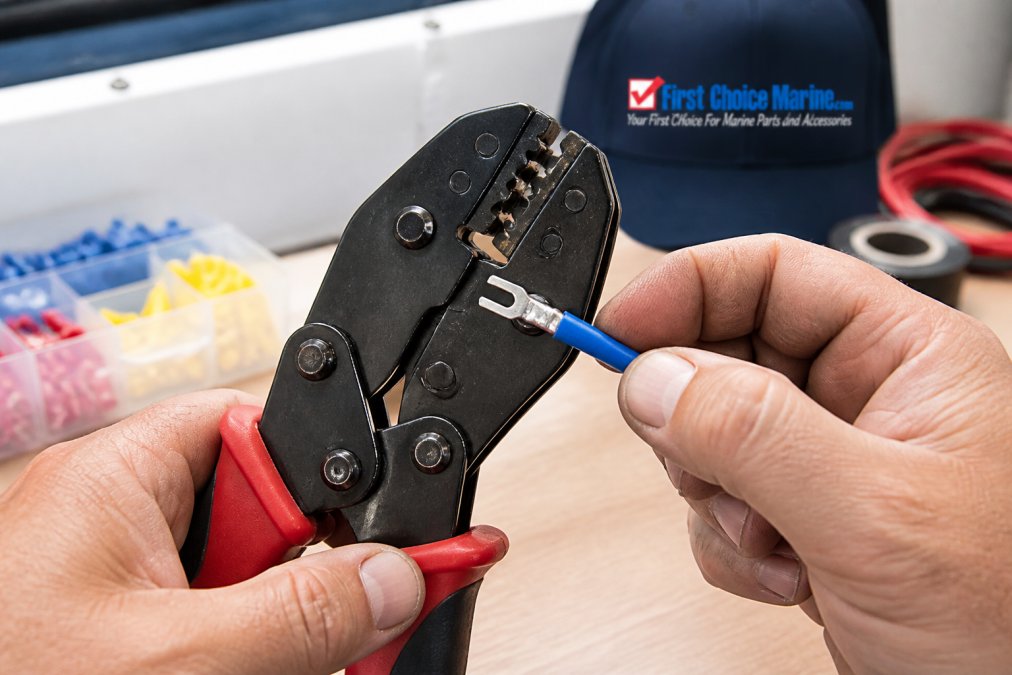
Start by stripping approximately 3/16 inch of insulation from the wire end. Insert the bare wire fully into the barrel of the terminal, ensuring the wire reaches the end of the barrel without protruding. The insulation should rest against the insulation grip section of the terminal. This positioning is critical because it ensures the crimp compresses both the barrel and the insulation grip simultaneously.
Select a terminal crimper that matches your wire gauge. Using the wrong size crimper is the most common mistake. A crimper that's too large won't compress the barrel fully, leaving gaps where moisture enters. A crimper that's too small deforms the terminal and weakens the connection. Ancor terminals are designed to crimp with standard marine crimpers, and the nylon insulation won't split if you use the correct tool.
Position the terminal in the crimper's die, aligned with the correct gauge marking. Squeeze the crimper handles firmly with steady pressure. You should feel two distinct compression points: one for the barrel and one for the insulation grip. When you release, the terminal should be firmly attached to the wire with no movement or rotation.
For heat shrink connectors, the process is identical up to this point. After crimping, slide the heat shrink tubing over the connection, ensuring it covers the entire barrel and extends slightly onto the insulation. Use a heat gun set to 300-350 degrees Fahrenheit, holding it 2-3 inches from the connection and moving it in a circular motion until the tubing shrinks and the adhesive lining flows around the connection. The adhesive should form a smooth, glossy seal with no gaps or air pockets.
Best Crimping Tools for Marine Wire and Terminal Installation
Selecting the right crimping tool matters more than most boat owners realize. A quality marine terminal crimper ensures consistent compression, prevents terminal deformation, and makes the job faster. A poor crimper creates weak connections that fail under vibration or corrosion.
Ancor Adhesive Lined Heat Shrink Butt →
Marine-specific crimpers differ from automotive or electrical crimpers because they're designed for the smaller gauges and tighter tolerances of boat wiring. Look for crimpers with interchangeable dies that cover multiple wire gauges, typically 22-10 AWG. The tool should have clear gauge markings and a smooth, consistent squeeze action without binding or jumping.
Ratcheting crimpers are superior to lever-style tools for marine applications. The ratchet mechanism ensures full compression every time and prevents premature release before the connection is complete. Manual ratcheting crimpers work well for occasional repairs, while pneumatic ratchet crimpers are worth the investment if you're doing extensive rewiring.
The best approach is to match your crimper to the terminals you're using. Ancor terminals are engineered to work with standard marine crimpers, and using the correct tool ensures the nylon insulation grips properly without splitting.
Tinned Copper and Nylon Insulation: Why Material Matters
The materials used in marine grade electrical connectors determine how long they survive in a corrosive saltwater environment. Two material choices matter most: the conductor metal and the insulation sleeve.
ABYC Electrical Standards for Boats and Connector Selection
The American Boat and Yacht Council (ABYC) publishes standards for safe boat electrical systems. These standards specify requirements for wire gauge, terminal types, connection methods, and environmental protection. Understanding ABYC standards ensures your marine grade electrical connectors meet safety requirements and function reliably.
How to Prevent Galvanic Corrosion in Marine Electrical Connections
For existing connections showing green corrosion, the fix is straightforward: disconnect the terminal, clean the corrosion with a wire brush, apply fresh dielectric grease, and reconnect. If the terminal is severely corroded or the connection is loose, replace it with a new tinned copper terminal rated for marine use.
Conclusion: Choosing the Right Marine Grade Electrical Connectors
Selecting the right marine grade electrical connectors requires matching the connection method to your application, wire gauge, and exposure environment. Heat shrink connectors with adhesive lining provide superior protection in harsh saltwater conditions. Traditional crimp terminals work well in protected locations and install faster. Either way, tinned copper and nylon insulation are non-negotiable for marine reliability.
Frequently Asked Questions
What is the difference between automotive and marine grade electrical connectors?
Marine grade electrical connectors are designed specifically for harsh saltwater environments. They use tinned copper for superior corrosion resistance, nylon insulation instead of PVC, and feature heat-activated adhesive seals. Automotive connectors lack these protections and will corrode quickly in saltwater exposure. Marine-grade terminals also meet stricter vibration and strain relief standards required by ABYC electrical standards for boats, ensuring durability in rough water conditions.
Why is heat shrink insulation critical for marine electrical connectors?
Heat shrink tubing with adhesive lining creates a watertight seal that prevents moisture ingress and saltwater corrosion. When heated, the adhesive-lined tubing shrinks and releases a sealant that bonds to the wire and terminal, forming an impervious barrier against salt water, oil, and acids. This environmental sealing is essential because traditional non-heat shrink connectors leave gaps where moisture can enter and cause galvanic corrosion, leading to electrical failures and safety hazards on the water.
Are crimp or solder connectors better for marine environments?
Crimp connectors are superior for marine applications. They create a mechanical bond that doesn't weaken from vibration or temperature cycling, which is critical on boats. Solder connections can crack under the constant vibration from engine and wave motion. Crimp terminals with nylon insulation and tinned copper provide better strain relief and corrosion resistance. For maximum protection, use heat shrink butt connectors with adhesive lining, which combine crimping strength with waterproof sealing.
How do you prevent corrosion in boat electrical connections?
Use tinned copper terminals and connectors, which have a protective tin coating that resists saltwater corrosion. Apply dielectric grease to terminal connections to create a moisture barrier. Always use marine-grade heat shrink tubing with adhesive lining to seal connections completely. Ensure all terminals meet ABYC electrical standards for boats and use proper wire gauge to minimize voltage drop and heat buildup. Inspect connections annually and replace any corroded terminals immediately to maintain electrical conductivity and safety.
