


A dead battery can usually ruin what was shaping up to be a great day on the water, and most people have seen it happen at least once. When it keeps happening, it often does more than cause a delay. It can slowly wear down a boat’s electrical system in the background. Many boat owners spend their time and money on good marine batteries and feel confident about that choice, but the charger is easy to ignore, which happens a lot. That’s often where problems begin. The charger affects how long batteries last and how reliable the boat feels every time the key is turned, especially during early mornings. That’s why understanding battery chargers for boats from the start helps prevent costly issues later.
Boat battery chargers aren’t all made the same, even when they look identical on the shelf, and that’s where people often run into trouble. A charger that works fine in a garage can harm marine batteries faster than expected. Boats deal with vibration, moisture, heat, and long storage periods where nothing is used, sometimes for months at a time. Those conditions are tough. A charger needs to handle them without causing new problems or shortening battery life, which can happen when the wrong one is installed.
This guide keeps things practical and explains everything in plain language. It looks at how marine battery chargers work, how to size and install one so it fits the boat’s electrical setup, and why charging profiles matter for long-term battery health. Whether someone fishes on weekends or runs a charter, the examples are meant to feel familiar and useful.
Understanding Battery Chargers for Boats and Why They Matter
A marine battery charger does more than just refill a battery. It controls how power moves into it, and that flow affects heat, internal chemistry, and how long the battery lasts. This part often gets missed when people focus on battery size or brand. The charger works quietly in the background, but it usually has more impact than expected.
Chargers made for boats are designed for wet, harsh conditions, unlike car chargers. Sealed cases and corrosion-resistant parts help them handle salt air and moisture over time. Even when conditions are rough, their power output stays steady, which really helps. Many models also handle multiple battery banks, which matters when trolling motors and onboard electronics run all day.
Demand for marine battery chargers keeps rising. More onboard electronics and a steady shift toward lithium batteries are pushing more people to upgrade. It’s a clear trend.
| Metric | Value | Year |
|---|---|---|
| Global marine battery market size | USD 882.3 million | 2024 |
| Projected market size | USD 1.506 billion | 2030 |
| Market growth rate | 9.3% CAGR | 2024, 2030 |
| Smart marine charger market size | USD 1.21 billion | 2024 |
Modern boats need clean, steady power to keep everything running properly, from navigation screens to pumps below deck. A weak or mismatched charger often leads to slow charging, overheating, and batteries wearing out sooner. That usually means more hassle and extra expense.
We looked at how chargers fit into the bigger electrical setup in our guide on Marine Electrical Systems 2026: Adopting Next-Gen Power Innovations for Small Boats with real-world context to help prevent issues later.
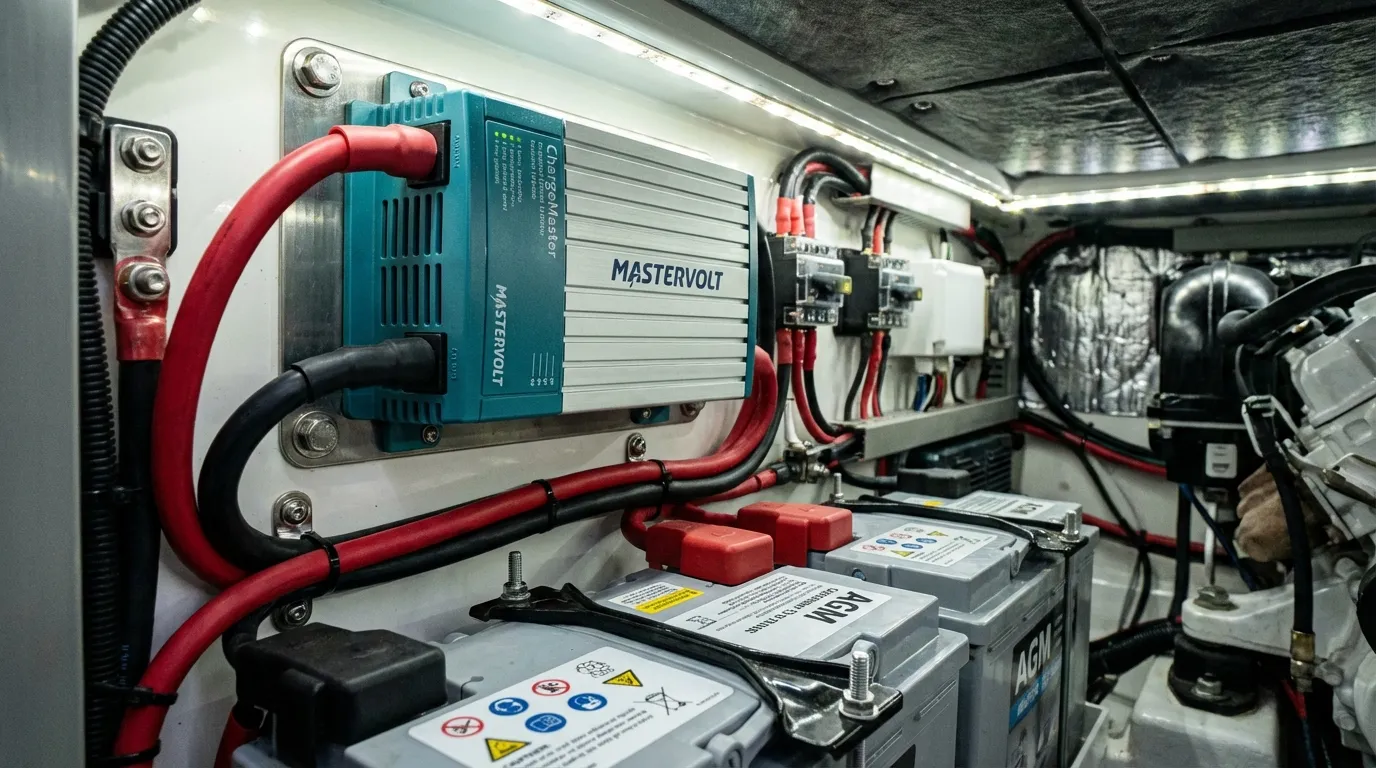
How to Size a Marine Battery Charger Correctly
Picking the right charger often sounds more complicated than it really is. In most cases, what matters is that the charger matches the total size of your battery bank and the type of batteries you’re using. When those two things line up, the rest usually works itself out.
So where do you start? Look at the battery label and find the capacity listed in amp-hours (Ah). Then add up the Ah rating for every battery in the bank. For example, two 100Ah batteries give you a total of 200Ah. It’s straightforward math with no guesswork involved.
A common rule of thumb is to choose a charger that can deliver about 10 to 20 percent of that total capacity. With a 200Ah bank, that means a charger in the 20 to 40 amp range. This range tends to balance reasonable charging times with long battery life, without stressing the system.
Battery chemistry can change this quite a bit.
- Flooded lead-acid batteries usually last longer when charged more slowly, since they don’t handle fast charging very well.
- AGM and lithium batteries can handle higher current, but lithium batteries especially need accurate voltage control to prevent damage over time.
If the charger is too small, batteries may never fully charge, which can cause sulfation in lead-acid systems. A charger that’s too large isn’t great either, since extra heat and electrical stress can shorten battery life.
Boat layout also plays a part. Long cable runs can lead to voltage drop, and in those cases, a slightly higher-output charger can help keep the right voltage at the batteries.
Boats with separate engine and house banks often get better results from multi-bank chargers. Each bank charges on its own, which helps keep everything balanced, especially in dual battery setups like the ones discussed in Dual Battery Systems for Boats: Install, Configure & Care.
Installing Battery Chargers for Boats the Right Way
Most charger problems usually come from installation mistakes. The good news is these issues are often easy to avoid with a little planning. It’s rarely anything unusual, just small choices that, when made early, help prevent headaches later. Those same choices can also help a charger last longer, which is a win all around.
Location is where things start to matter. Chargers work best when mounted above the bilge and away from standing water. A bulkhead or dry locker is usually a better option than the lowest part of the boat. Ventilation also counts. Even sealed chargers give off heat, and if that heat can’t escape, failures tend to happen sooner than expected.
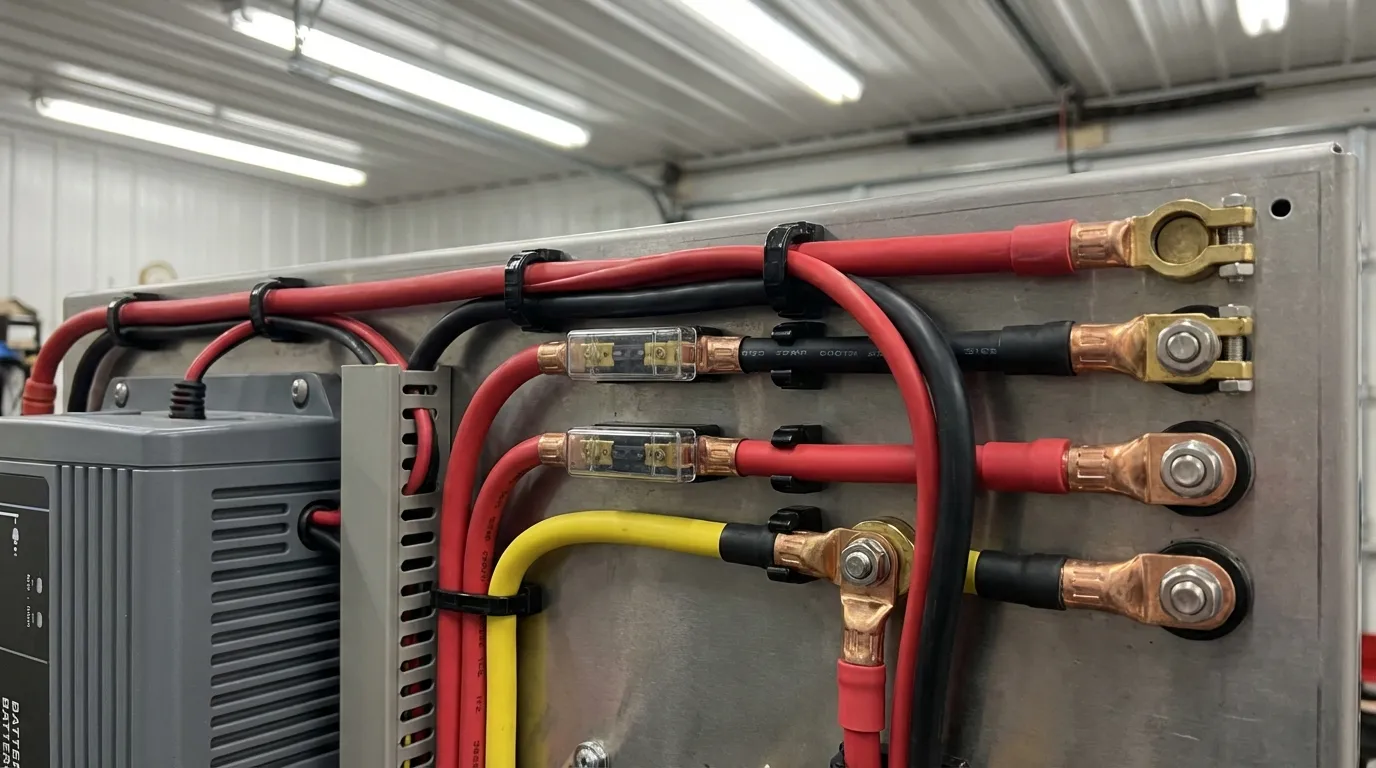
Wiring is another common trouble spot. Marine‑grade wire holds up much better than automotive wire once salt, moisture, and vibration are involved. Picking the right wire gauge for the charger output and cable length helps too. Going slightly thicker often cuts down voltage drop and heat, and that trade‑off is usually worth it.
Circuit protection needs the same care. Each charger output should have a fuse or breaker placed close to the battery. This simple step often stops short circuits from turning into costly electrical damage.
Then there’s physical security. Boats vibrate all the time, and over time that movement can loosen terminals. Locking nuts help, and adding strain reliefs at the charger housing really does make a difference.
Common mistakes to avoid include:
- Mounting chargers upside down
- Mixing battery types on one output
- Skipping temperature sensors
- Ignoring manufacturer spacing rules (they’re there for a reason)
If wiring details feel confusing, there’s a separate breakdown that covers Marine Batteries Wiring Mistakes That Kill Performance. A quick read can clear up a lot.
Charging Profiles Explained and How They Extend Battery Life
Charging profiles are where smart chargers really make a difference, and that often catches people off guard. A profile sets how voltage and current change as a battery fills, and in everyday use those changes matter more than most expect. Over time, small tweaks add up and affect how long a battery lasts.
Most modern chargers use multi‑stage charging, and each stage exists for a clear reason. Skip one, or use it poorly, and issues usually appear later instead of right away, the slow, annoying kind that’s easy to miss at first.
| Charging Stage | What It Does | Battery Benefit |
|---|---|---|
| Bulk | Delivers high current quickly | Restores charge fast |
| Absorption | Holds steady voltage | Prevents overheating |
| Float | Maintains full charge | Reduces wear |
| Storage | Lowers voltage long-term | Limits corrosion |
Using the wrong profile can shorten battery life fast and without much warning. Lithium batteries make this obvious: they need tight voltage control and usually stop charging sooner, while lead‑acid batteries handle a wider range. That difference matters.
Many smart chargers now adjust automatically based on battery type and temperature. Some even learn how you use your system and make small changes over time. Boaters who dial in profiles often gain several extra years of battery life, especially with expensive lithium banks for trolling motors and electronics, real savings when you’re planning a new setup.
Advanced Tips for Optimizing Battery Chargers for Boats
After the basics are covered, a few advanced tweaks can still make a difference over time. These are usually quiet, behind-the-scenes changes that help a system run more smoothly day after day, even if you don’t notice the effect right away.
Temperature compensation is a good place to start. Batteries don’t charge the same in heat and cold, and that gap often shows up sooner than expected. Chargers with temperature sensors adjust voltage as conditions change, which helps protect batteries through real-world seasons, from hot afternoons at the dock to chilly early-morning starts.
Shore power quality is another detail that’s easy to miss. Marina power isn’t always steady, and voltage swings can slip in. Better chargers smooth and filter that incoming power before it reaches the batteries, instead of letting problems pass straight through, which usually means less wear over time.
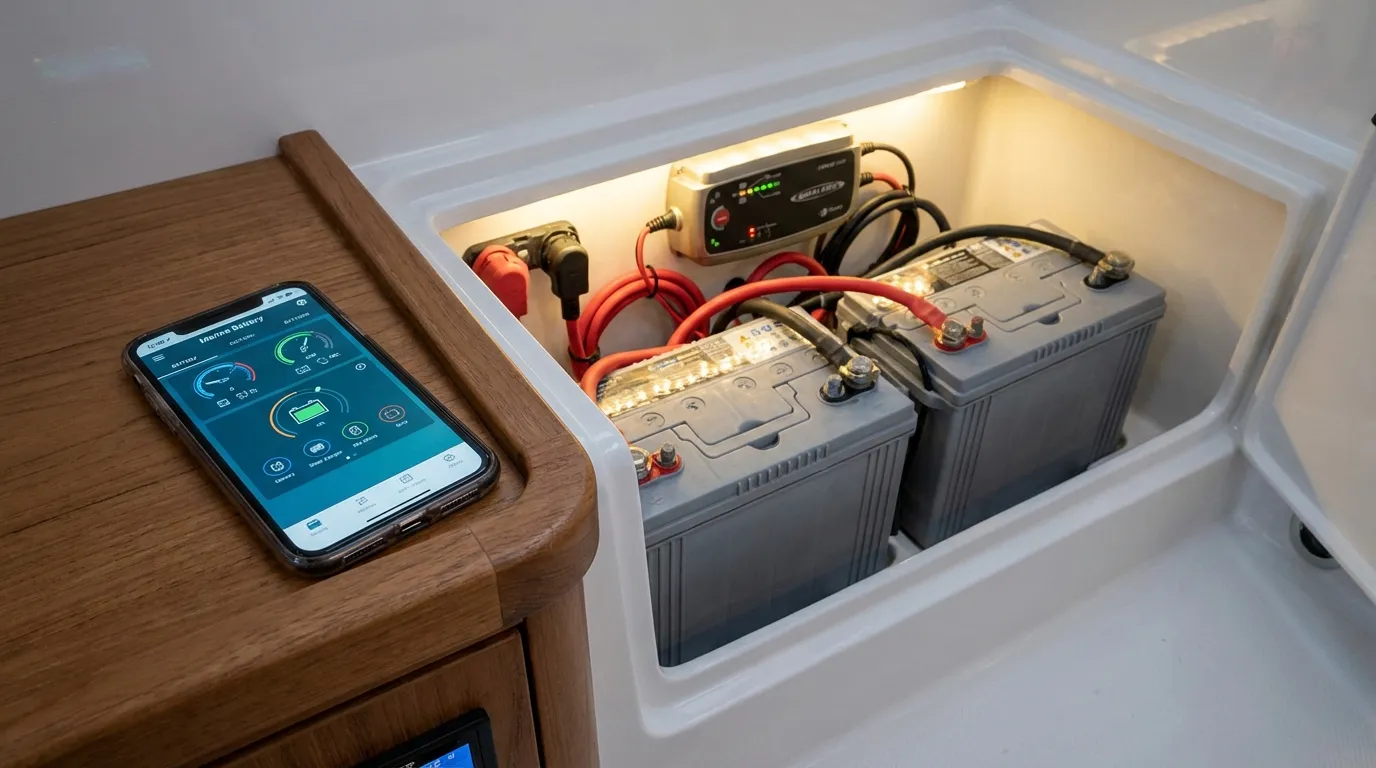
Monitoring adds everyday value too. With Bluetooth-enabled chargers, you can check battery status from your phone during a walk down the dock and catch a problem early, rather than finding out after a dead battery.
Thinking ahead also helps. If future plans include lithium batteries or more onboard electronics, picking a charger that can adapt may save you from replacing it later, like when a small upgrade turns into a bigger system change.
Questions People Often Ask
What size battery charger do I need for my boat?
Usually, boats use chargers set to about 10 to 20 percent of total battery amp-hour capacity. This depends on battery type and cable length (math). It can vary, so expect to make small adjustments.
Can I use a car battery charger on a boat?
But it’s usually not a good idea, using one on a boat isn’t recommended. Car chargers aren’t built for marine corrosion, and their settings often don’t match marine batteries.
Yes, for most boat owners, I’d say. Smart chargers tend to extend battery life; they’re easier and safer for storage, and that often reduces worry.
Do lithium marine batteries need special chargers?
Yes, they do. They need chargers set to the right voltage and support the battery management system, which is important.
Should my charger stay on all winter?
Usually yes, only if it has storage or maintenance mode (most seem to). Since that’s not always true, it’s safer to unplug it and follow the manufacturer’s guidance.
Putting Better Charging Into Practice
Marine battery chargers matter for reliable boating, especially when the goal is keeping electronics working where they’re actually used, on the water, not back at the dock. That usually means less stress while cruising or sitting at anchor, something most boaters understand after dealing with a dead system at the worst time.
What’s already onboard can say a lot. Battery type, capacity, and everyday habits, short hops versus longer trips, often shape which charger makes sense. Waiting for issues later rarely helps, since mismatches tend to show up slowly over time.
Installation counts too. Taking extra time with wiring and placement is a smart move, because careful work here often avoids problems later. Those small details usually end up mattering more than expected.
For owners who want steady performance, smart charging is one of the simpler upgrades to consider. Picking quality battery chargers for boats and marine electrical parts that fit the boat and boating style helps, especially when you’re cruising or anchored and just want everything to work.
Additionally, learning more from related guides like Marine Batteries Care: Best Practices for 2025 will help maintain system health year after year.
