


Picking the right battery for a boat can feel more confusing than it should. One label says “starting,” another says “deep cycle,” and then there’s AGM, gel, lithium, and flooded lead-acid. Add chargers, wiring, storage, and corrosion, and the whole thing can get hard to sort out pretty fast.
Marine batteries start to make more sense once the job of each type is clear. Knowing what a battery is made to do makes it much easier to choose the right one and take care of it later. Regular maintenance also helps avoid the problems boat owners deal with all the time, like weak engine starts, dead trolling motor power, slow electronics, and having to replace a battery earlier than expected.
This beginner-friendly guide explains how marine batteries work and how to choose one for a boat. It also covers maintenance during the season and while the battery is in storage, which is where many people get stuck. Along the way, it explains charging basics, winter prep, and a few common mistakes that can shorten battery life. For simple, practical help, this guide is a good place to start. And for parts and care items, resources from First Choice Marine can help link the basics to real maintenance needs.
Understanding the Main Types of Marine Batteries
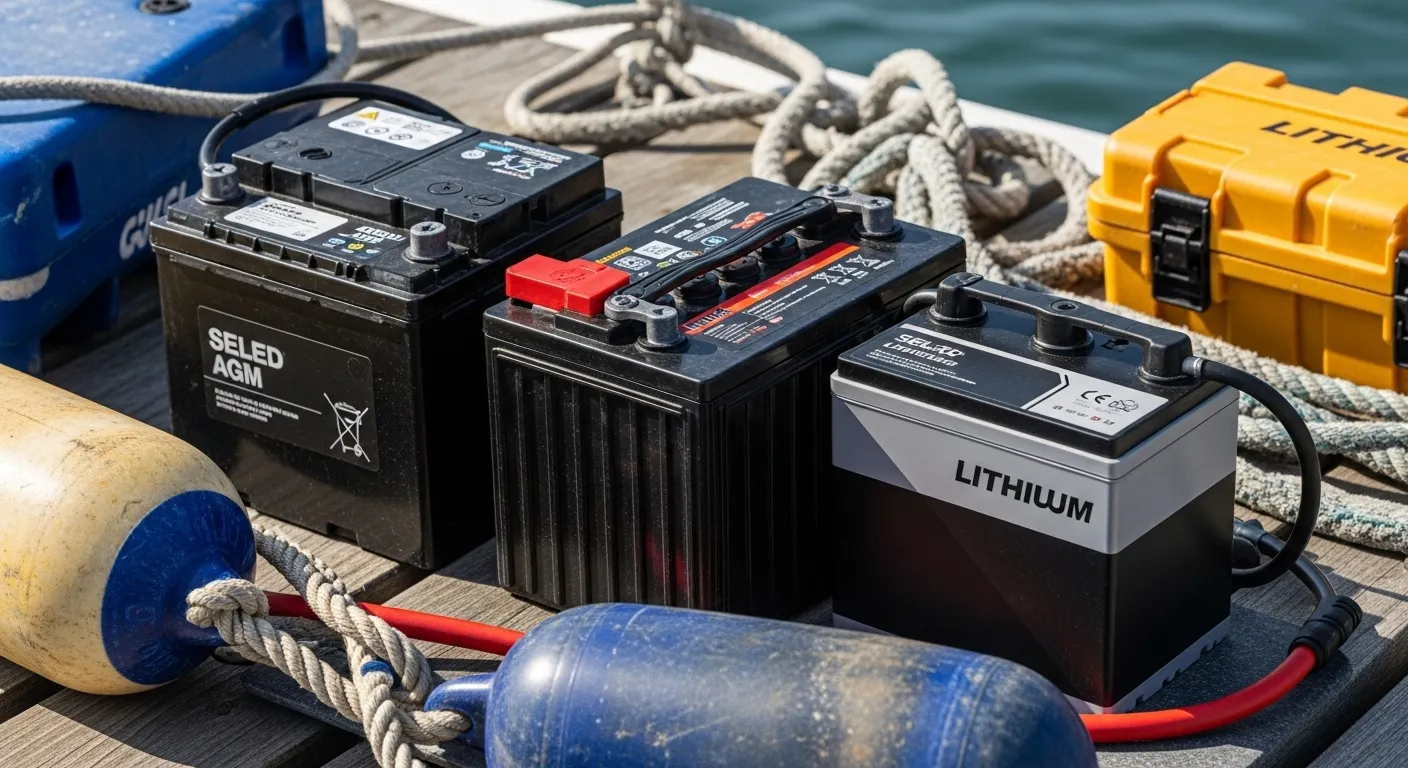
Marine batteries do different jobs. A starting battery is made for a short burst of power to crank the engine. A deep-cycle battery gives more consistent power over a longer stretch for trolling motors, fish finders, lights, pumps, and other onboard systems you use once you’re out on the water. A dual-purpose battery tries to do both jobs, though it usually makes more sense for lighter-use setups instead of boats that need one battery to do everything.
The battery chemistry also changes what daily use looks like. Flooded lead-acid batteries usually cost the least, but they need the most maintenance. You have to check water levels, keep them upright, and make sure ventilation is good. AGM batteries are sealed, so they tend to be easier to deal with. Gel batteries are sealed too, but they need the right charger settings and can be a little less forgiving. LiFePO4 lithium batteries are lighter, charge faster, and last a lot longer, though the upfront price is higher.
Marine buyers are choosing lithium more often. Recent market data shows lithium-ion makes up roughly 59.8% to 65.62% of the marine battery market in 2025, and the market overall is still expected to grow quickly.
| Battery Metric | Figure | Why It Matters |
|---|---|---|
| Marine battery market size | USD 775.9M in 2025 | Shows strong demand and product growth |
| Projected market growth | 17.9% CAGR from 2026-2033 | More options and upgrades ahead |
| Lithium-ion market share | About 60%+ in 2025 | Lithium is becoming a common choice |
| LiFePO4 cycle life | 3,000-5,000 cycles | Much longer life than many lead-acid options |
That change shows where buyer attention is going. Beginners are no longer choosing only between flooded and AGM. Many now focus on whether lithium’s longer lifespan and lower maintenance are worth the higher cost, and for some buyers, that becomes the deciding factor. The choice is no longer just about sticker price. Charging speed and how much upkeep a battery needs are part of the decision too.
How to Choose the Right Battery for Your Boat
The right marine battery depends on what the boat actually powers. Start with the basic question: what needs electricity? If the job is only starting an outboard, a starting battery may be enough. If a trolling motor runs for hours, a true deep-cycle battery makes more sense. Boats running electronics, pumps, lights, accessories, and other gear while fishing or working may need a house battery bank or more than one battery. That’s a good place to begin.
A few practical details make a big difference: capacity, weight, charging setup, and how the battery fits into the whole system. Capacity shows up as amp-hours or reserve capacity, and more capacity usually means more runtime. Weight also surprises a lot of beginners. Lithium options can be 50% to 60% lighter than similar lead-acid batteries, which can help a small boat plane faster and sit better in the water. On smaller setups, that change is easy to notice.
Cycle life is another important part of the decision. AGM and gel deep-cycle batteries are often rated at around 550+ cycles at 70% depth of discharge. Under the right conditions, LiFePO4 can reach 3,000 to 5,000 cycles. Still, lithium is not automatically the best fit for everyone. A weekend boater trying to keep costs down may do just fine with AGM. Someone who spends long days using a trolling motor may get better long-term value from lithium. The better choice depends on how often the boat gets used and what it does.
Not every lithium battery works as a simple drop-in replacement. According to Marcus Jones from Practical Boat Owner, modern lithium installs need careful attention to system design, charging, and safety features. Before upgrading, look at charger compatibility, alternator output, cable size, and battery management systems if the setup needs to work properly.
We covered the battery chemistry comparison here: Marine Battery Chemistries Compared: AGM vs Lithium vs Flooded for Real-World Boating Use.
Battery Maintenance Basics That Add Years of Life
Battery life usually comes down to a few small habits done regularly and at the right time. You do not need fancy tools to help a battery last longer, and that is part of why this is so manageable. A simple routine handles most of it.
Clean terminals are a good place to start. Corrosion on the posts and cable ends adds resistance, which can cause harder starts, weaker charging, and wasted power. Look for white, green, or blue buildup on the battery and clean it with care. Loose connections should be tightened, and the battery should stay mounted securely so vibration does not damage the case or internal plates. A loose battery can cause real damage over time.
Charging needs even more attention. One verified battery-care source says it clearly:
The single biggest factor in battery longevity is proper charging.
Many boaters blame the battery first, even though the real problem is often the wrong charger profile or ongoing undercharging. Flooded and AGM batteries do not charge the same way as lithium. Gel batteries are especially sensitive to the wrong voltage. LiFePO4 batteries can charge faster and run deeper, but they still need a compatible charger and a working BMS.
Think about a fishing boat with a trolling motor and a full electronics setup. An owner might switch to lithium and keep an older charger made for flooded batteries. That mismatch can lead to incomplete charging or even unsafe charging, which is easy to miss. Poor performance can show up even with a high-quality battery.
For more detailed care habits, see Marine Batteries Guide: Maintenance for Longevity.
Common Beginner Mistakes and How to Avoid Them
Most battery trouble comes back to a few common mistakes. One of the biggest is picking the wrong battery for the job. A starting battery is not made to run a trolling motor all day, yet plenty of people still use one that way. Keep doing that, and the battery’s life will usually drop fast.
Storage causes a lot of problems too, especially when people treat every battery the same way. Lead-acid batteries should be stored fully charged and kept up with a smart charger when needed. LiFePO4 batteries need a different method. For winter storage, guidance recommends keeping them around 50% state of charge. Same battery type, different chemistry, and using the wrong storage method can cause real damage.
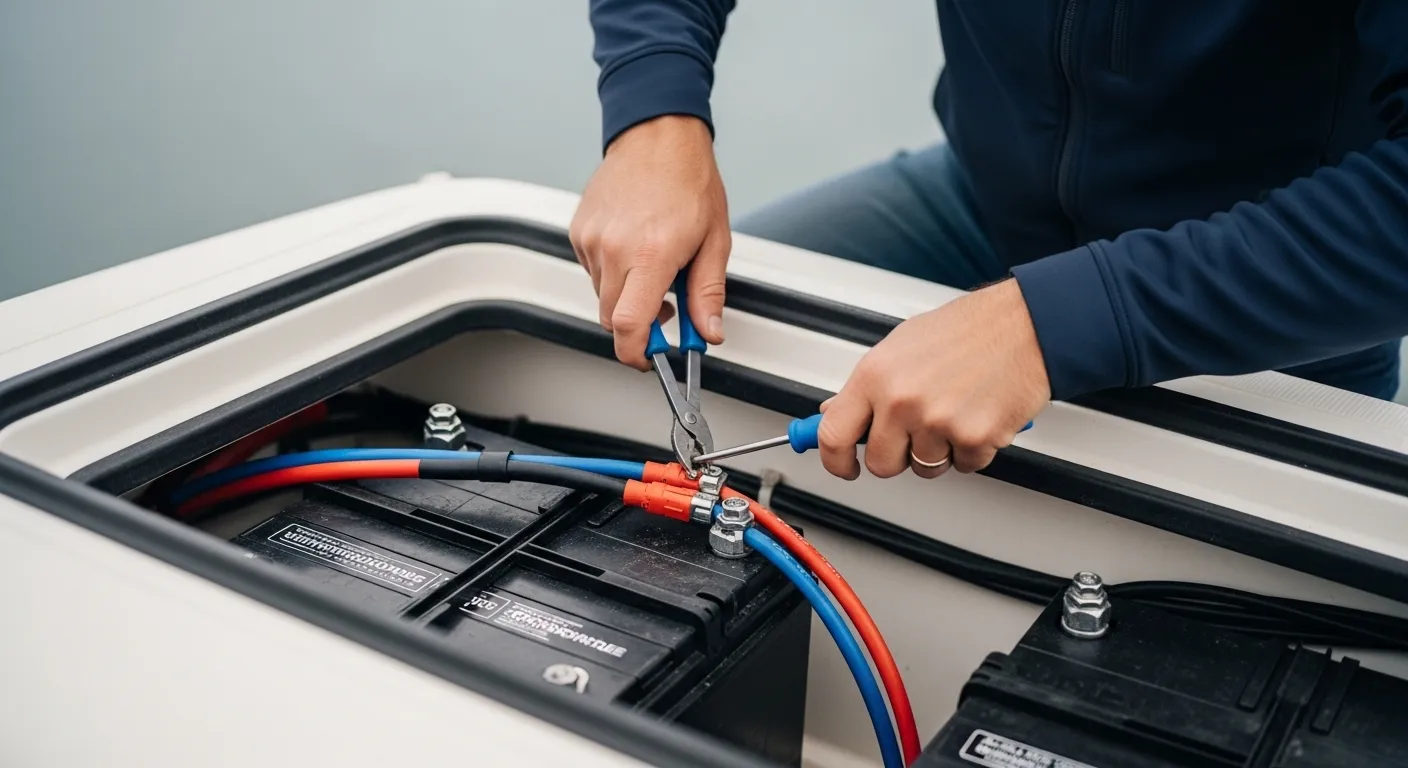
Wiring and mounting are ignored more often than they should be. Cables that are too small, loose terminals, and poor crimp connections can all cause voltage drop, extra heat, and weak system performance. Ray Toth’s ABYC-related teaching also puts a lot of focus on proper battery selection and safe installation in the marine environment. The battery itself matters, but the way the whole system is connected and secured matters too.
Buying on price alone is another common mistake. A cheaper battery may seem fine at first, but shorter cycle life and extra maintenance can raise the real cost over time. For a commercial operator, a longer-life battery that cuts downtime may end up costing less overall. A weekend pontoon owner, though, may still choose a lower-cost AGM because the use pattern is lighter, and that can still be a reasonable fit.
We covered this here: Marine Batteries Wiring Mistakes That Kill Performance.
Why Lithium Keeps Growing in Marine Use
Lithium’s growth in marine use is about more than marketing. Many boaters want batteries with less maintenance, lower weight, deeper usable capacity, and faster charging, and that matters a lot on the water. Grand View Research estimates the marine battery market will keep growing, and in many segments lithium is already the leading chemistry.
LiFePO4 gets most of the attention because it works well for marine use. A verified source puts it this way:
For the marine environment, LiFePO4 is the best choice, as Li-ion and LiPo batteries have a lower cycle capacity and higher safety risks.
That still does not mean every boat should switch right away. Lithium is becoming a more common choice for trolling motors, house loads, and newer electrical systems. What matters most is whether the full setup can support it.
A Simple Maintenance Routine You Can Follow
If you’re new to owning a boat, it helps to keep battery care short, simple, and easy to repeat. Before each trip, check the charge level, make sure the cables are tight, and look for swelling or damage. Just the basics. After each trip, recharge the battery as soon as you can, especially because lead-acid batteries should not stay discharged for long.
Once a month, inspect the battery for corrosion, make sure the hold-down is secure, and check the wiring for wear. Flooded batteries also need electrolyte checks, with distilled water added as needed. AGM and lithium batteries are a bit different, so the focus shifts more to clean terminals, charging behavior, and the whole system.
At the end of the season, store the battery in a way that matches its chemistry. Keep it in a cool, dry place and protect it from extreme temperatures. A smart charger can help if it makes sense. And if the boat uses a trolling motor often, add battery checks to the regular engine-care routine, so power issues are less likely to surprise you out on the water.
Frequently Asked Questions
What is the difference between a marine battery and a car battery?
A marine battery is built for boating conditions like vibration, moisture, and longer accessory use. Many marine batteries are designed for deep cycling, while car batteries mainly deliver short bursts of starting power.
How often should I charge marine batteries?
Charge them after each use whenever possible. Letting a battery sit partly discharged, especially a lead-acid type, can reduce performance and shorten life.
Which battery is best for a trolling motor?
A true deep-cycle battery is usually best. Many anglers choose AGM for simplicity or LiFePO4 for lighter weight, faster charging, and long cycle life.
Do sealed batteries still need battery maintenance?
Yes. AGM and lithium batteries need less routine care than flooded batteries, but they still need clean terminals, secure mounting, proper charging, and regular inspection.
How do I store a marine battery over winter?
Store it based on its chemistry. Lead-acid batteries are usually stored fully charged, while LiFePO4 is often stored around 50% charge. In both cases, keep the battery in a cool, dry place and check it during the off-season.
Get More Reliable Power From Every Trip
Choosing marine batteries gets a lot easier once the basics are clear. Start by matching the battery to how the boat actually gets used. Then make sure the charger and wiring work properly with that battery type. Small details matter too. Clean terminals, proper charging, secure mounting, and smart storage all help keep power reliable and consistent.
For many beginners, AGM is still a good middle-ground choice because it’s sealed and easy to deal with. Boats that get heavier use, especially with trolling motors or house loads, often see real benefits from LiFePO4 in weight, cycle life, and everyday ease. Those differences usually show up pretty fast. Flooded batteries still have their place too, but they ask more from the owner in regular upkeep.
Battery life depends on care just as much as chemistry. A good battery can last for years, but only if it’s installed, charged, and stored the right way. Start with what the boat really needs and keep a regular routine. That usually means less time dealing with dead power and more time enjoying a day on the water.
