


If you own a boat, trailer, or outboard, marine grease matters. It’s easy to get wrong and cheap to get right. A lot of boaters assume any grease will do, but that one small mistake can lead to rust, noisy bearings, stiff steering parts, and wear that shows up too soon.
The main difference is water. Boats deal with spray, rain, humidity, and salt, so the grease has to handle much more than what works fine on a dry car or truck. Regular grease may work well in normal automotive use. Marine grease is made for tougher conditions. It stays in place better, helps prevent corrosion, and protects metal parts when moisture gets in.
This guide explains marine grease vs. regular grease in simple terms. It covers how marine grease works, where to use it, and when regular grease may still be fine, without making the whole topic harder than it needs to be. It also points out which label details matter most. Common mistakes and maintenance tips are included too, along with how that choice ties into bigger boat care jobs like bearing service and corrosion prevention.
Why Marine Grease Is Different
Marine grease is made to keep working around water, where regular grease can start to fail. Fresh water, salt spray, humidity, and even full trailer hub dunking at the ramp all put it under pressure. One common technical benchmark is ASTM D1264, which measures water washout, and industry guidance in current research points to less than 5% washout as a solid target for marine-grade systems. In one source, proper marine grease showed less than 3% mass loss, while generic grease came in at more than 10% in washout testing.
| Performance Factor | Marine Grease | Regular Grease |
|---|---|---|
| Water washout benchmark | Often under 5% | Can be much higher |
| Example washout figure cited | Under 3% | Over 10% |
| Corrosion protection | Strong anti-rust focus | Usually lower in wet service |
| Best environment | Wet, salty, humid, submerged | Dry, enclosed, non-marine |
When grease washes out, metal parts lose that protective film. Then rust starts. Water and oxygen reach the surface, and bearings, steering pivots, winches, and prop shaft areas can all take a hit once that happens.
Outboards endure more punishment than car engines, facing constant humid and corrosive air exposure. This necessitates marine-specific lubricants containing anti-corrosion agents.
Marine grease does more than lubricate. It also helps protect metal parts from the wet conditions boat owners face all the time. That protection matters each time equipment gets wet.
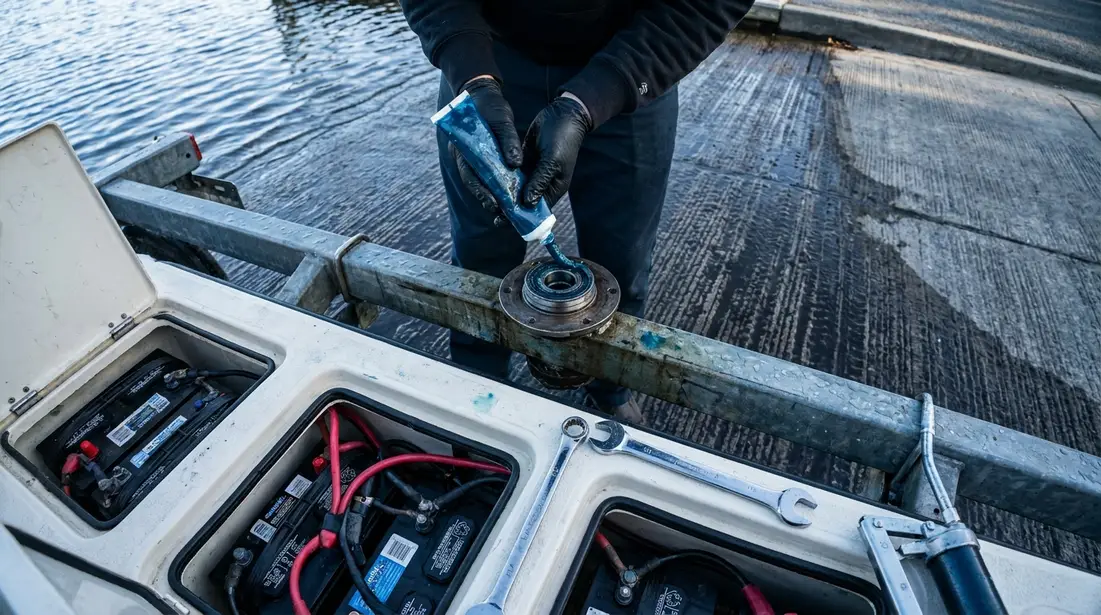
Water Resistance and Corrosion Protection in Real Use
Picture a trailer wheel bearing right after launch day. You tow on a hot highway, then back the trailer into cool water. That creates a big temperature swing. Moisture can get pulled into the hub area, and if the grease can’t hold up to water, it may thin out, move away, or lose its grip on the bearing surface.
Marine grease handles that better. It has stronger rust inhibitors and more water-resistant thickener systems. That makes it a smart pick for trailer hubs, steering parts, outboard zerk fittings, prop shafts, and deck hardware, especially when saltwater or salt spray is part of the picture.
The rule is simple and fits most boating situations. Here are some common examples:
Good places to use marine grease
- Trailer wheel bearings
- Outboard swivel and tilt points
- Steering linkages
- Prop shaft splines where the maker calls for grease
- Winches and exposed hardware
- Bearings near spray or washdown zones
Marine grease fits well alongside a marine corrosion prevention guide when wider protection steps are already in place. A simple combo. It creates a barrier, sure, but it works best as part of a solid anti-corrosion routine instead of trying to do the whole job on its own.
Thickener Types, Labels, and What to Look For
Marine grease isn’t all the same. One of the biggest differences is thickener chemistry, and current marine guidance commonly points boaters to calcium sulfonate complex grease for bearings and saltwater use. For good reason. People choose it for water resistance, corrosion control, and strong load protection.
You may also see lithium complex or aluminum complex products labeled for marine service. Some can perform well too. Still, the label matters more than the word ‘marine’ on its own. Check it for the actual performance clues.
Check these details before you buy
- Water washout resistance
- Corrosion or rust protection claims
- ASTM D1264 data if listed
- Thickener type, such as calcium sulfonate complex
- NLGI grade, commonly NLGI #2 for general marine use
- Temperature range and dropping point
Research gathered for this topic cites a typical operating range of -30°C to 150°C for marine grease, so check that before you buy, especially for parts exposed to regular water and heat. Some marine-grade systems also have a dropping point of more than 180°C. Those details matter for trailer bearings, engine-adjacent hardware, and other parts that heat up during use.
Many DIY boaters make the mistake of grabbing leftover automotive grease from the garage because it seems like an easy way to save a little money. However, that choice may save money today, but it can cost much more later if bearings fail or fittings corrode. For a closer look at bearing-specific selection, this Marine-Grade Bearing Grease Guide for Performance & Longevity is a helpful next read.
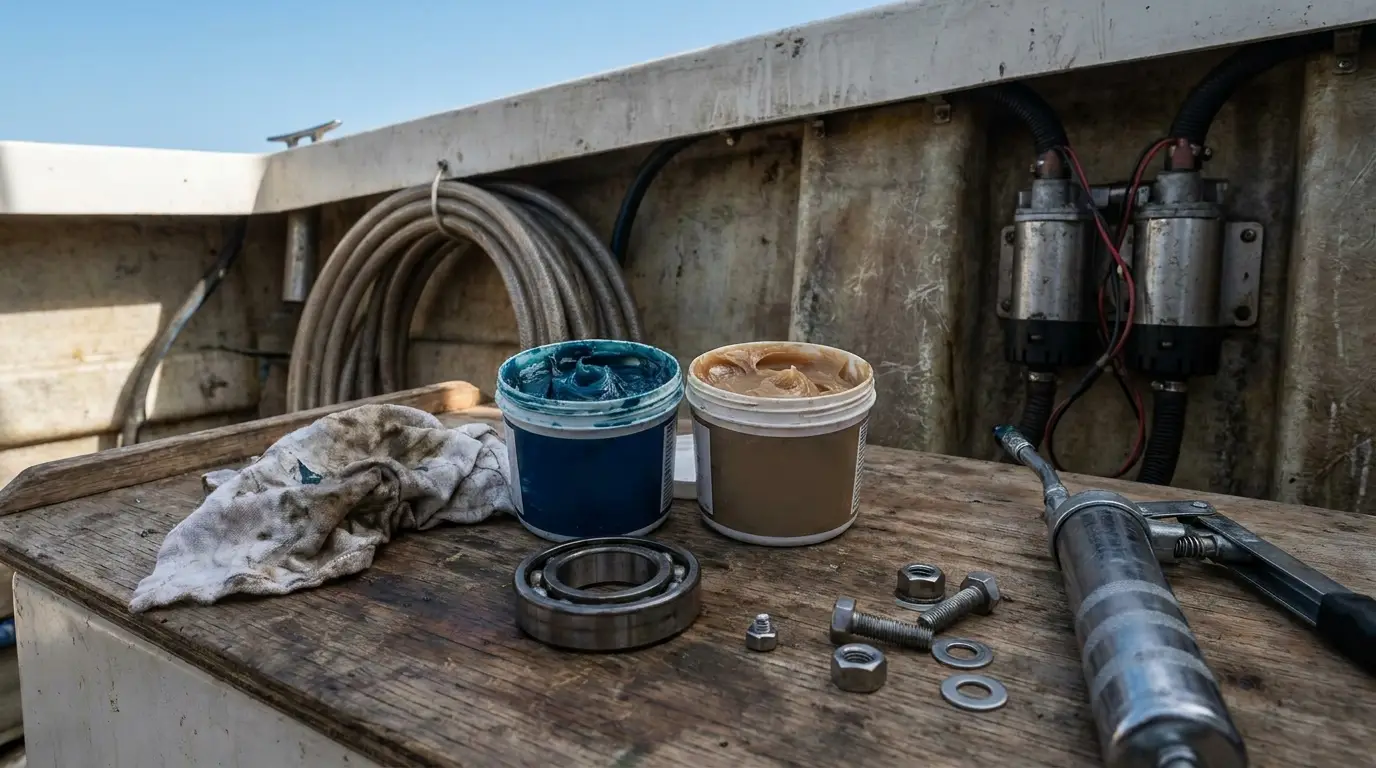
When Regular Grease May Still Be Acceptable
Regular grease isn’t useless. It’s just less suited to marine exposure. In dry, enclosed, non-marine setups, it can work perfectly well. General-purpose grease may still be a good choice when a part never sees spray, washdown, humidity swings, or immersion, and it matches the equipment maker’s specs.
Many boat owners don’t realize how much moisture boats collect, even when they’re stored indoors. Humid air, wet decks, covered storage, and long idle stretches all create a corrosion-friendly environment. Outboards, trailer parts, and steering systems are especially exposed. As a result, problems can build slowly and remain easy to miss.
Consider a real-world case. A weekend angler uses regular grease on a trailer hub because the trailer only spends a few minutes in the water at launch. After a season of ramps, rain, and road spray, that hub starts running hotter than normal. The grease may still be present, but it isn’t protecting in the same way anymore. Water exposure doesn’t have to seem dramatic before damage starts.
Common mistakes to avoid include:
- Mixing different grease types without checking compatibility
- Overfilling hubs or fittings
- Ignoring old contaminated grease
- Assuming all blue grease is marine grease
- Greasing too infrequently after saltwater use
For many boaters, using one quality marine grease across wet-service points keeps maintenance simpler and safer.
Maintenance Timing and Smarter Marine Care
Choosing the right grease is only half the job. The other half is using it on the right schedule. Current service guidance puts more emphasis on regular regreasing, especially for saltwater boats and fittings that sit unused for long periods. Research for this article suggests frequently used outboards may need monthly greasing, while boat owners should still check idle outboards at least every three months.
That does not mean every fitting on every boat needs grease every month, not even close. Instead, it means boat owners should stop treating greasing like a once-a-year job and make it part of a normal routine.
A simple grease schedule
- Check trailer hubs before long trips
- Re-grease exposed fittings after heavy saltwater use
- Inspect steering and tilt points during seasonal service
- Clean away dirty old grease before adding fresh product where needed
- Follow the engine or trailer maker’s service chart
Planned maintenance matters for boat care too. Grease helps protect moving metal parts, and your electrical, battery and lighting systems need regular attention if you want everything working properly, not just the obvious bits. If you’re putting together a full maintenance routine, A Beginner’s Guide to Marine Batteries: Selection and Maintenance can help fill out the checklist. It’s a useful extra step.
How to Choose the Right Marine Grease for Your Boat
When shopping, focus on the part you want to protect and the conditions around it, because a freshwater pontoon trailer and a saltwater center console do not face the same level of risk. They are different situations, but both still benefit from marine grease on exposed parts.
Use a simple buying method:
Match the grease to the job
For trailer bearings, look for grease with strong water washout resistance and good bearing protection. For outboard fittings, pick a marine grease that fights corrosion and stays stable under motion and heat. For prop shafts and steering systems, use a product that spreads easily and keeps a protective film in place. It’s simple, but it matters.
When you’re buying marine parts and maintenance supplies online, trusted marine-focused retailers like First Choice Marine make it easier to compare products made for boating instead of leaving you to sort through general automotive listings. That means less second-guessing. Additionally, boat owners maintaining engines and drivetrains may also find Best Practices for Maintaining Marine Propulsion Systems useful alongside regular greasing routines.
One basic rule matters most: check your owner’s manual first. Even the best grease in the world is still the wrong one if the manufacturer calls for something different.
Frequently Asked Questions
Can I use regular grease on a boat trailer?
You can, but it is usually not the best choice. Boat trailers deal with water, road spray, and often full hub immersion at the ramp. Marine grease is better for this job because it resists washout and corrosion more effectively.
Is marine grease necessary in freshwater, or only in saltwater?
Marine grease still matters in freshwater. Saltwater is harsher, but freshwater can still wash grease away and start rust over time. If a part sees moisture often, marine grease is the safer option.
What color is marine grease?
Marine grease can be blue, green, amber, or other colors depending on the brand. Color alone does not prove anything. Always read the label for water resistance, corrosion protection, and the recommended use.
Can I mix marine grease with regular grease?
It is best not to mix them unless the manufacturer clearly says they are compatible. Different thickener systems can react badly when combined, which may reduce performance. When switching products, clean out old grease whenever possible.
Where can I find the right marine grease for bearings and outboard service?
A marine-focused parts retailer is usually the easiest place to start because the products are selected for boating use. First Choice Marine is one example of a store where boat owners can compare engine care and maintenance items meant for marine conditions.
How often should I re-grease marine fittings?
It depends on use, water exposure, and the part itself. Saltwater boats and heavily used trailers often need more frequent attention than freshwater boats in light use. As a baseline, inspect grease points during seasonal service and after periods of heavy exposure.
The Bottom Line for Boaters
If a part may see water, humidity, spray or salt, marine grease is generally the smarter choice. For most boat owners, that’s the right call. Marine grease resists water washout, fights corrosion, and protects parts that spend their time in rough marine conditions.
Regular grease still has a place, especially in dry, enclosed applications. Around boats and trailers, though, something made for marine service is the safer bet. The key part is using it on a real maintenance schedule. Don’t stop at the word ‘marine’ on the label. Check water washout performance, corrosion protection, thickener type, and the right NLGI grade for the job.
The right grease helps trailer bearings last longer. It helps steering stay smooth. Exposed metal parts also hold up better season after season when the product matches the conditions and gets used on a regular basis. It’s a small choice that can pay off in a big way. Using the right grease regularly can help avoid expensive repairs later.
