


Bad fuel can ruin an otherwise great day on the water. Your boat may be set for a fishing trip or a work run one minute, then suddenly become hard to start, run rough, or lose power the next. That’s frustrating, especially since it often happens at the worst time. And in many cases, the engine itself isn’t really the problem. The fuel is. Water, sludge, ethanol issues, and fuel that sits too long can all drag performance down, which is why many owners turn to a marine fuel conditioner for help.
That’s why many boat owners use a marine fuel conditioner. The right one can help keep fuel stable, reduce deposits, deal with moisture problems, and help the engine run cleaner. Pretty simple. Still, not every conditioner does the same job. Some work better for gasoline, while others are made for diesel. Some are designed more for seasonal storage, which helps a lot if a boat sits for months. Others focus more on injector cleanliness or fuel economy.
This guide explains what marine fuel conditioners do, which types usually matter most, how to choose one for a boat, and the mistakes worth avoiding. It also looks at winter storage, diesel contamination, and general fuel system care. Good basics here. So for better reliability and fewer fuel-related surprises, this is a solid place to start.
What a Marine Fuel Conditioner Actually Does
A marine fuel conditioner is an additive made to help protect fuel and the parts of the system that rely on it. Simply put, it helps fuel stay in better shape while it sits in the tank and while it moves through the fuel system. That can mean slowing oxidation, cleaning deposits, helping control sludge, and reducing the effects of moisture, which is a pretty common issue. In most cases, its job is to support the fuel system, not totally change how a boat runs overnight.
The need for that support is real. Recent marine data shows fuel quality problems are still common. VPS Veritas reported 37% more bunker fuel alerts in 2025 than in 2024. On the recreational side, ethanol-blended fuel is still a major risk. Water contamination can trigger phase separation fast, and that is usually bad news when fuel is being stored.
| Fuel issue | Verified data | Why it matters |
|---|---|---|
| Marine diesel efficiency trials | >5% fuel savings in one trial | Conditioners may improve combustion and consistency |
| VLSFO carrier trial | 6.4% lower fuel use over 3 months | Shows possible efficiency gains in real use |
| Ethanol fuel water threshold | 0.5% water can trigger phase separation | Small water intrusion can create major problems |
| Fuel quality alerts | 37% increase in 2025 | Monitoring and treatment matter more than ever |
That does not mean every product will save fuel or fix every issue. Still, the numbers suggest fuel treatment may help in some cases. For example, testing reported by Motorship found that “The use of a fuel conditioner reduced marine diesel consumption in a two-stroke marine diesel engine by more than 5% in real world conditions.” That sounds promising. But boat owners should remember that results from large ships may not match what happens in small outboards or sterndrives, since those are very different setups.
A conditioner is best seen as a support tool, not a miracle cure. It usually works best when tanks are clean, filters are fresh, and storage habits are solid. Simple stuff, really. And in this case, clean tanks, good filters, and better storage often help fuel move through the system with fewer deposit and moisture problems.
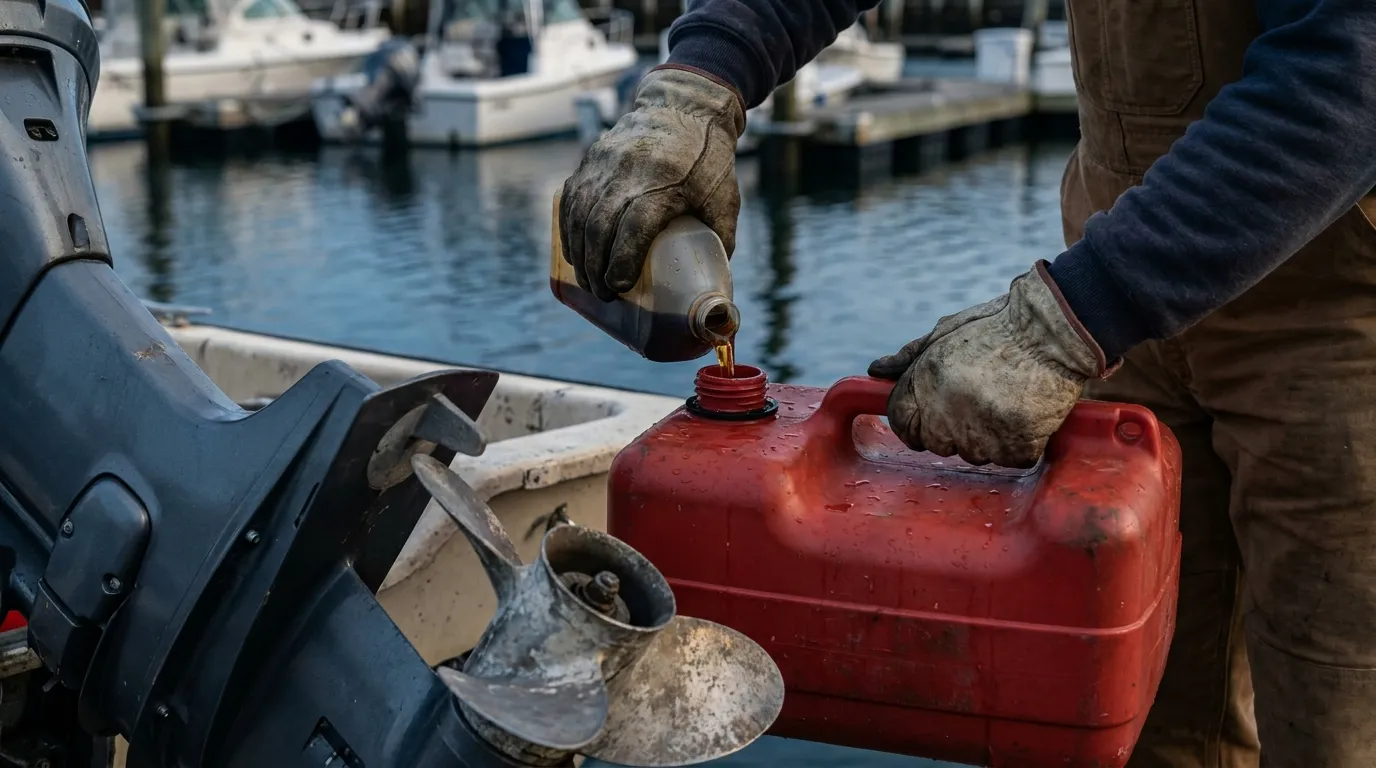
The Main Types of Fuel Conditioners for Boats
Marine fuel additives don’t all fit into one group, and that’s often where the confusion starts. Some labels look clear, but they usually aren’t. One product may be sold as a conditioner, even though it actually works more like a stabilizer, a detergent, a moisture-control treatment, or a diesel biocide support product, which can catch buyers off guard.
Gasoline conditioners for storage and ethanol protection
These are common for recreational boats, pontoons, bass boats, and small outboards. Their main job is to slow fuel breakdown while the boat sits in storage, often for weeks or months. Many also help reduce varnish and gum buildup, and some may help with corrosion too. They’re good extra help, especially if a boat sits for long periods or over winter. In that case, this type usually matters most during storage and again at spring startup.
One warning matters a lot: stabilizers can slow fuel decay, but they do not fix badly spoiled fuel. Boating Mag testing found phase separation can start at just 0.5% water content in ethanol-blended fuel. That’s a very small amount. After that happens, the fuel may need to be removed.
Diesel conditioners for contamination and sludge control
Diesel boats can run into a different kind of problem. When water gets into the tank, it can create the kind of place where microbes often start growing, which is pretty common and honestly bad news.
That buildup can turn into sludge, clog filters, and make the engine run poorly, which is usually the last thing anyone wants. Research also found that 5% of tested marine fuel samples had more than 0.5% v/v FAME contamination, while 2.2% showed both FAME and microbial contamination.
Performance-focused conditioners
These products usually promise cleaner injectors, smoother running, or better combustion, which does sound appealing. Some commercial trials also showed real savings. In one three-month bulk carrier test, for example, VLSFO consumption dropped by 6.4%. That is a solid result.
Still, boat owners should be careful with claims like that and make sure the product actually fits their engine type. That part is usually most important, because engines often do not respond the same way.
For a closer look at additive categories, see Ultimate Guide to Fuel Additives for Marine Engines.
How to Choose the Right Marine Fuel Conditioner for Your Boat
The best marine fuel conditioner usually depends on how the boat is used, what kind of fuel it runs on, and how long that fuel sits in the system, it really does vary. In most cases, a weekend fishing boat using ethanol gas needs something different from a diesel workboat running long hours on the water.
Step 1: Match the additive to your fuel type
Use gasoline products only in gasoline engines, and diesel-specific products only in diesel engines. It sounds obvious, but it’s a pretty common mistake. Marine fuel systems are often sensitive, so using the wrong chemistry can cause more harm than good, especially over time.
Step 2: Think about your biggest risk
Be clear about the problem you’re really trying to solve, because that usually helps point you in the right direction:
- Long winter storage
- Ethanol and moisture exposure
- Dirty injectors
- Diesel sludge
- Microbes
- Hard starts after idle periods
If storage is the main issue, choose a product with a strong stabilizer. When diesel contamination is part of the problem, a diesel conditioner made for water-related issues and deposit control is often the better choice. For engines that get used a lot, a cleaner-focused product will usually make more sense.
Step 3: Follow dosage directions exactly
With treatments like these, more usually isn’t better. Commercial product guidance shows how exact dosing can be, and that’s really the point. For example, one heavy fuel oil conditioner lists a dosage of around 67 ppm, or about 1:15,000. Small-boat products may use different rates, so read the label and measure carefully instead of guessing.
Step 4: Use it with a full maintenance plan
As much as people might want it to, a conditioner can’t fix a dirty fuel tank, old hoses, or a water-separating filter that’s been ignored. By itself, it’s just not enough. The basics will still need attention: a clean tank, dependable hoses, and a filter that has actually been serviced.
Technical contributors at the U.S. Maritime Administration say fuels are usually clean when they’re made. The trouble usually shows up later from water ingress, storage conditions, and exposure to the environment, which happens more often than many people expect. That context matters when fuel problems keep coming back.
For additional details about contamination prevention and treatment planning, see Fuel Additives: Prevent Marine Fuel System Contamination.
Common Mistakes Boaters Make With Fuel Conditioners
A lot of frustration starts when people expect the wrong thing from the product, and that happens pretty often. One common mistake is thinking a marine fuel conditioner can save old fuel or phase-separated fuel. It can’t. If gasoline has taken in too much water, or diesel already has sludge or microbial growth in it, the fix will likely mean tank cleaning, fresh filters, and proper fuel disposal instead.
Waiting too long to use it is another issue. Additives usually work best with fresh fuel, not months later after that fuel has already started to break down. Seasonal boaters often learn this the hard way in spring. They pour treatment into stale fuel and expect the boat to start easily at the ramp or leave the dock without trouble. Usually, that is not what happens.
Problems also come up when the rest of the system gets ignored, which is easier to miss than people think. A clogged vent, dirty pickup tube, weak primer bulb, or worn filter can all look like bad fuel. In that situation, fuel system maintenance often matters just as much as choosing the right additive. There is no shortcut there.
A common real-world example is a boat that runs fine at the dock, then starts stumbling under load once it is out on the water and the throttle goes up. Owners may blame the conditioner, but the real problem might be water in the separator or a blocked vent line. If that sounds familiar, we covered it here: Marine Fuel System Maintenance Strategies for 2025.
Winter Storage, Idle Time, and Seasonal Protection
This is a pretty common gap for many boat owners, and it matters more than it may seem at first. Boats usually sit much longer than cars, which gives fuel more time to break down, and that can be easy to miss. Because of that, fuel care should be part of storage care. Winterizing is not just about putting antifreeze in the system or keeping batteries charged.
Before storage, fill the tank if your engine maker recommends it. Then add the right amount of conditioner and run the engine long enough for treated fuel to move through the system. That step helps protect fuel lines as well as injector or carburetor passages. If your filters are close to service time, replace them before storage.
With ethanol gasoline, it is best not to store fuel too long, especially in humid conditions. With diesel, drain water separators and check tanks regularly. Seasonal boaters often get the best results by combining fuel stabilizer with filter changes and a spring inspection. That is usually a good habit.
Marine fuel conditioner storage tips for long layups
Additionally, many owners forget that fuel tanks breathe with temperature changes and humidity swings. That means condensation can still build over time, even when a boat is not being used often. Using a quality marine fuel conditioner before long idle periods may help reduce oxidation and deposit formation while the fuel sits.
What Commercial Trends Mean for Small-Boat Owners
Commercial shipping data gets a lot of attention because the numbers are easy to follow. In trials, more than 5% fuel savings appeared, and one fleet reported average bunker savings of 5% after two years. That is fairly clear. In the right setup, and at least in some cases, fuel treatment seems to offer measurable value.
A center-console fishing boat, though, is very different from a bulk carrier. Fuel volume, engine design, duty cycle, and even fuel chemistry can all change the outcome in meaningful ways. So the useful takeaway is not that every additive will save fuel. A more practical way to look at it is that conditioners may help with fuel quality management. For many owners, that usually matters because it can support steadier performance, cleaner operation, and better reliability over time.
There is also growing interest in contamination control. A 2025 Scientific Reports paper found that eco-friendly additives reduced bacterial contamination in marine diesel oil by 10,000x in testing. That is a major change. It is especially relevant for diesel boats, trawlers, and commercial craft that store fuel for long periods, including layups or slower-use seasons.
When shopping for parts and maintenance supplies, boaters often look for trusted sources that explain product categories in a simple way. That helps explain why many owners use First Choice Marine as a reference point when planning broader fuel system care, including filters, additives, and routine maintenance items.
For broader industry trends and testing data, many owners also read Fuel Additives in the Marine Industry: Key Insights for 2026.
Frequently Asked Questions
What is the difference between a marine fuel conditioner and a fuel stabilizer?
A fuel stabilizer mainly helps fuel last longer during storage. A marine fuel conditioner may include stabilization, but it can also help with cleaning, moisture control, sludge management, or combustion support. Some products do both jobs, so always read the label closely.
Can a marine fuel conditioner remove water from fuel?
Not usually. Some products help manage tiny amounts of moisture, but they do not solve serious water contamination. If fuel has too much water or has already phase-separated, the fuel often needs to be removed and the system checked.
Should I use a marine fuel conditioner every time I fill up?
It depends on the product and your boating habits. Frequent-use boats may use a maintenance dose at each fill-up, while seasonal boats may focus on storage treatment before long idle periods. Follow the product directions and your engine maker’s guidance.
Are fuel conditioners safe for outboards and inboards?
Many are, but only if they match your fuel type and engine requirements. Marine engines can be sensitive to the wrong additive package. If you are comparing options, retailers such as First Choice Marine can help you sort marine-specific products from general-purpose fuel treatments.
Do diesel boats need a different fuel conditioner than gasoline boats?
Yes. Diesel conditioners are built to address problems like microbial growth, sludge, and injector deposits. Gasoline formulas usually focus more on oxidation, gum, varnish, and ethanol-related moisture issues.
Can a fuel conditioner fix rough running right away?
Sometimes it helps if the problem is light deposit buildup or aging fuel. But rough running can also come from clogged filters, bad spark plugs, vent issues, or water contamination. A conditioner should be part of diagnosis, not the only fix you try.
The Bottom Line for Better Fuel Care
A good marine fuel conditioner can be a smart part of boat maintenance. It helps protect stored fuel, helps the engine run cleaner, reduces some contamination risk, and lowers the chance of fuel-related trouble at the dock or out on the water, which is often when you notice it. That is useful, for sure. Still, the key word here is “part.” It usually works best as one piece of a bigger plan, not the whole solution.
Choose the right product for your fuel type and for the issue that matters most, whether that is moisture, sludge, or fuel breakdown. Using the right dose matters too. When possible, adding it to fresh fuel usually gives better results. You will get more value from it when you pair it with tank inspections, water-separating filters, vent checks, and the right seasonal storage steps.
If fewer surprises, easier starts, and better long-term engine care sound good, it makes sense to deal with this now instead of waiting for a breakdown at the dock or during a trip. Fuel problems usually build slowly and then show up all at once, so staying ahead of them is often cheaper, easier, and safer.
