


Marine batteries are easy to forget about until they fail, and it usually happens at the worst time (and never during a calm test run). When that happens, a day on the water can end early, sometimes before it even begins. For many boaters, the warning signs show up as slow engine starts, electronics that cut in and out, trolling motors that quit sooner than expected, or gauges acting strange. It’s frustrating, and probably familiar to you. The good news is that most of these issues can be avoided. With basic battery care, surprise breakdowns are much less likely, and your power system stays reliable from launch to load‑out (which often means fewer calls for help). That kind of peace of mind matters even more on long days.
This guide is made for real boat owners, weekend anglers, DIY maintenance fans, and commercial operators who rely on their boats every day, not just once a season. It explains how marine batteries work, points out common reasons they fail, and shares practical ways to help them last longer. You’ll learn how charging habits affect battery health, how storage affects them over time, and why wiring often matters more than most people expect. Battery type also affects performance in many cases. It also covers common mistakes boaters make and looks at new trends shaping marine electrical systems, so you can make smarter choices.
Understanding Marine Batteries and Why Maintenance Matters
Marine batteries go through a lot. Heat, moisture, constant vibration, and long periods of storage all work against them, especially during winter. This isn’t a one‑time issue either; it repeats year after year. In most cases, marine batteries last 3 to 5 years, but that usually only happens when basic care is part of the routine. Skip those basics and performance drops fast, often sooner than people expect.
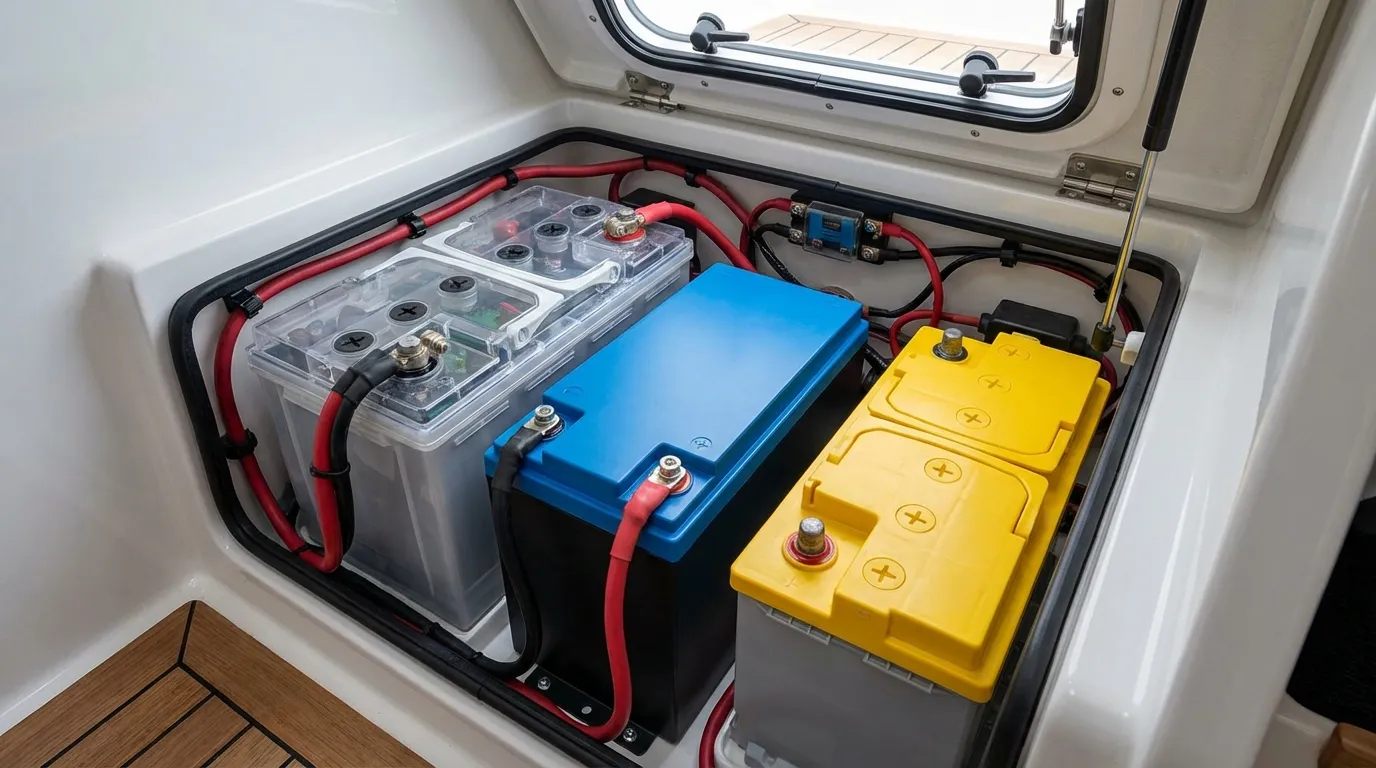
Boat batteries aren’t the same as car batteries, and you notice that difference quickly on the water. They’re made for deep discharges, steady power use from electronics like fish finders and radios, and rough conditions where waves don’t let up. It’s a tough job. Common options include flooded lead‑acid batteries, along with AGM and lithium models, which are also widely used. Each type needs slightly different care, but one thing stays consistent: neglect almost always shortens battery life earlier than planned.
Battery experts often say charging habits matter more than anything else, and it’s hard to disagree. Overcharging can dry out plates and cause internal damage. Undercharging leads to sulfation that slowly reduces capacity, sometimes without clear warning. There’s rarely a safe middle ground. As Dan Baston from Minn Kota explains:
Overcharging? Undercharging? Neither are good. Over or undercharging your batteries will shorten their overall life.
When batteries are ignored, small problems often build into bigger ones. Coastguard data connects thousands of breakdowns each year to flat or poorly maintained batteries, leading to lost time, wasted fuel, and real safety risks once you’re out on the water.
Here is a quick look at how maintenance affects battery lifespan and performance.
<DataTable
headers=[“Battery Type”, “Typical Lifespan”, “Maintenance Sensitivity”]
rows=[
[“Flooded Lead-Acid”, “3, 5 years”, “High”],
[“AGM”, “4, 6 years”, “Medium”],
[“Lithium”, “8, 10 years”, “Low”]
]
caption=“Marine battery lifespan based on maintenance habits”
/>
Charging Practices That Protect Marine Battery Health
Most long‑term battery trouble usually comes down to charging habits. A lot of boaters plug in a charger and walk away, then don’t think about it again (it happens to everyone). Others let batteries sit discharged for weeks without checking on them. Over time, these habits slowly reduce reliability, and the failure often shows up at the worst possible time.
A helpful goal is keeping marine batteries above 50% state of charge whenever you can. When batteries stay low for long periods, sulfation builds up and cuts into both capacity and cranking power. That damage can add up quicker than many people expect. Smart chargers help by adjusting voltage and amperage automatically instead of pushing power nonstop. This puts less strain on the battery and usually leads to better long‑term performance.
Rather than treating charging as an afterthought, it helps to focus on a few basics. They’re simple, but they make a real difference:
- Use a charger made for marine batteries
- Set the charger to match the battery type
- Skip fast charging unless the manufacturer says it’s okay
- Fully recharge after every trip, even short ones
Battery engineers point out that flooded lead‑acid batteries can self‑discharge by up to 5% per month. If left alone over winter, a battery can be close to dead by spring, which is a rough surprise on launch day.
Lithium batteries work differently. They charge quickly and run at about 95% efficiency, which sounds forgiving. Even so, the right charging profile still matters. The wrong charger can damage internal parts and shorten lifespan.
Wiring and connections are often ignored. Loose terminals or corrosion raise resistance and quietly waste charging power, a topic covered in more detail in the article on marine batteries wiring mistakes that kill performance.
Good charging habits don’t take much effort. Plug in after every trip. Check settings now and then. Watch for corrosion. Expecting a battery to handle neglect on its own usually leads to disappointment.
Cleaning, Inspection, and Common Battery Killers
Most batteries don’t fail just because they hit a certain age. In marine use, they usually give out after ongoing neglect or rough handling. Technicians mention this all the time, and it keeps coming up because it matches what they see daily. It may sound familiar, but in real boating situations it’s often true, and once you’ve dealt with a dead battery offshore, it’s hard to ignore.
Few batteries die a natural death, most are murdered.
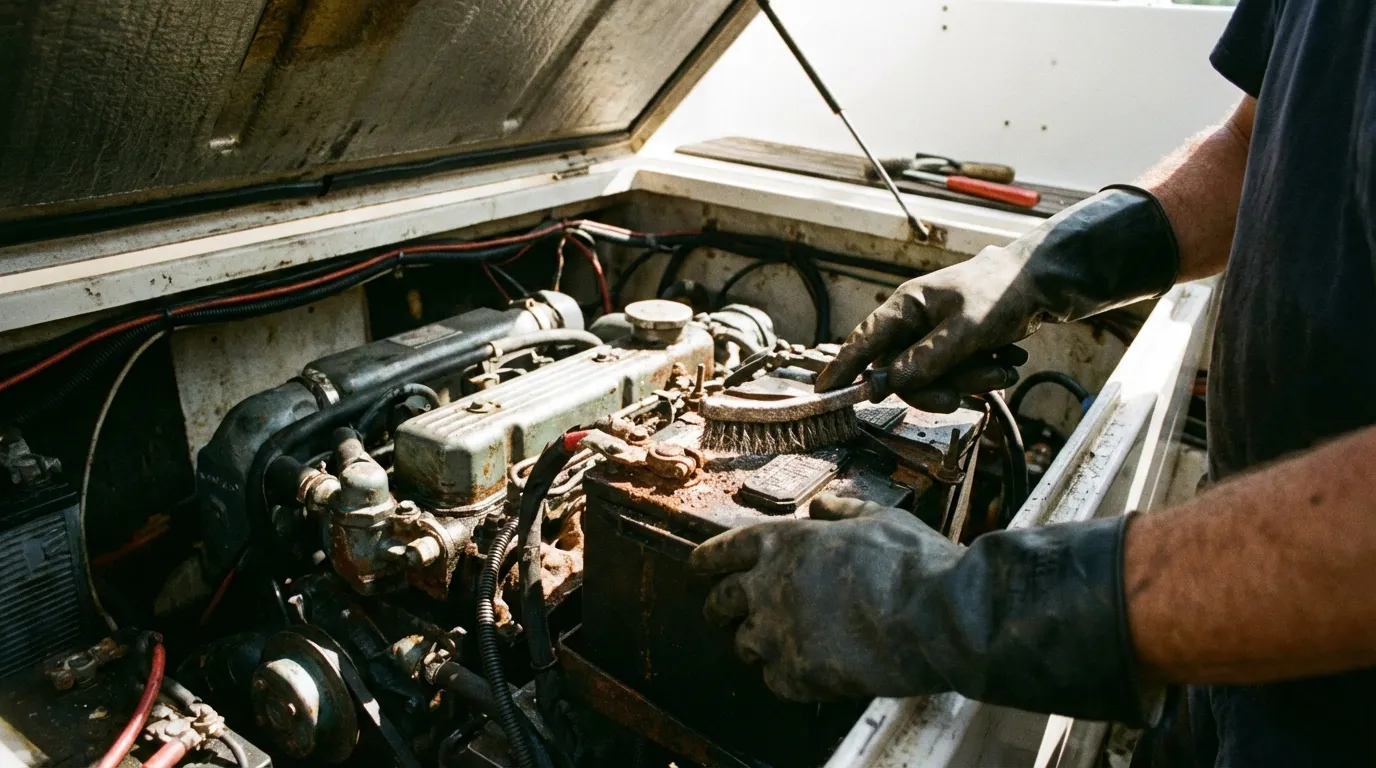
If there’s one issue that causes the most long‑term damage, it’s corrosion. Salt air, moisture, and acid fumes combine and slowly eat away at terminals and cables. As buildup grows, voltage loss and heat at connection points can follow, even when everything looks fine on the surface. This kind of hidden damage is common, which is why simple, routine cleaning often stops larger and more expensive problems later on.
What do you see when you actually stop and check things? A quick inspection every few months often catches problems early, especially when you’re not in a hurry.
- Look for corrosion on terminals, where small deposits can mean growing resistance
- Check cables for cracks or stiffness, especially near the ends where issues start
- Make sure battery trays are secure, since movement speeds up wear
- Inspect the case for swelling or leaks, which can point to internal damage
Cleaning with a baking soda and water mix, then drying everything well, helps a lot. Adding a light coat of terminal protectant slows corrosion and keeps connections in better shape longer.
Mixing old and new batteries in the same bank is another common mistake. It often causes uneven charging and a shorter overall lifespan. Replacing batteries in matched sets usually keeps performance steadier.
You can see this clearly in real use. Charter operators who clean and test batteries every month often get years more service. More casual boaters tend to wait until something fails, which usually means dealing with the problem later, often at the worst possible moment.
Storage, Winterization, and Off‑Season Care
Off‑season storage is often when batteries fail quietly, usually without much warning. Leaving a battery connected and unattended for months leads to slow discharge and damage that only shows up later, often right when it’s needed most. For many boat owners, this ends up being one of the easiest problems to avoid.
Heat matters more than most people expect. It speeds up chemical breakdown and shortens battery life faster than you might think, which is why a cool, dry storage spot helps more than it sounds. Starting storage with a full charge also makes a real difference, especially during longer off‑season periods.
Parasitic drain is another common issue. Disconnecting batteries from onboard systems helps stop them from slowly draining over time. For longer storage, a maintenance charger or tender is a smart option. These keep batteries charged without overdoing it, which is especially important for AGM and lithium batteries, where charging habits matter more than raw capacity.
Flooded batteries need extra care. Check electrolyte levels before storage, top off with distilled water if needed, and never add acid. These are simple steps, but they’re easy to miss.
Many boat owners are moving toward lithium systems. They’re lighter, easier to store, and work well with smart battery management systems that track battery health over time. Electric and hybrid propulsion is also growing, which puts even more attention on good battery care.
For anyone thinking about long‑term upgrades, a detailed resource like Marine Batteries: Essential Maintenance Guide 2025 can help guide those choices with practical examples.
Choosing the Right Battery and Tools for the Job
Real‑world use usually tells you more than any perfect setup on paper. Some boats run electronics for hours, fish finders, chartplotters, radios, while others spend long days on a trolling motor. Then there are boats that only need short, high‑power bursts to start the engine. Those habits often decide what works and what doesn’t, and that’s usually where battery problems start.
Battery care often begins earlier than people think, with the battery choice itself. When a battery doesn’t really fit the boat or how it’s used (which happens a lot), problems can show up fast, even if everything else is done right. Most boats use starting batteries for quick engine starts, deep‑cycle batteries for steady power over time, or dual‑purpose batteries that try to handle both. Getting that match right usually matters more than it seems.
Tools matter too, including the ones that are easy to ignore (I’m guilty of that). A digital voltmeter can catch a weakening battery early. Battery switches add safety by separating banks when needed, and load testing can show power loss before it becomes an on‑water issue. For detailed testing tips, check Marine Batteries Load Testing: Detect Hidden Power Loss.
If a trolling motor is part of the setup, battery choice and care usually matter even more. There aren’t many shortcuts here. Btw, this is covered more in Trolling Motor Batteries: Innovative Care and Maintenance Tactics.
Questions People Often Ask
Charging after every trip works best, even short runs use power that adds up. You’re better off making it a habit; people find regular charging slows sulfation and helps batteries last longer.
Short answer: it’s not a good idea. Marine batteries need a specific charging profile, and the wrong charger can overheat and damage it (something you don’t want). Not ideal.
What is the best way to store batteries over winter?
One safe option is to disconnect the batteries from the boat. This keeps them fully charged on a maintenance charger and stored in a cool, dry spot with airflow, away from direct heat.
How do I know when a battery needs replacement?
The clearest answer usually comes from a load test. Slow cranking and short run times, especially under load, often point to a weak battery, you’ll feel it when starting.
Steady power is the main draw, and many boaters say yes: for most folks it pays off because they last longer and weigh less, even though the upfront cost is higher.
Keeping Your Boat Powered with Confidence
Marine battery maintenance doesn’t have to feel complicated. Most of the time, it’s the small habits that add up, and they matter most when you’re out on the water for hours, especially on long days. Reliable power usually means more time fishing or cruising without stress, and that’s important. When batteries are charged the right way and checked often, small issues are more likely to stay small instead of turning into bigger problems.
You’ll often notice that clean terminals and proper storage really help once buildup appears or the boat sits unused. It’s simple stuff, honestly, but it protects both your boat and your time on the water. Whether you have one starting battery or a larger bank, the same basics apply. No shortcuts here.
A helpful habit is spending a few minutes each month looking things over and catching problems early. Why struggle with outdated gear? Newer tools can help when older ones slow you down, especially if you stick with quality marine‑rated components that stay reliable season after season.
