


Last Updated: November 24, 2026
Quick Summary
The best saltwater trolling motor depends on your boat's size and battery setup more than on any single model. The Riptide Terrova 80 is the top pick for most saltwater anglers, pairing 24V power with GPS spot-lock and a 60-inch shaft that suits most bow-mount installations.
- The Riptide Terrova 80 offers 80 lb of thrust, 24V power, and GPS Spot-Lock.
- Thrust should be sized to boat length and weight, with a buffer for wind and current.
- Measure from the bow mount to the waterline, then add 12 to 18 inches for shaft length.
- Rinse the motor with fresh water after every saltwater trip to remove salt residue.
- Check the sacrificial anode regularly and replace it once it is visibly eroded.
Table of Contents
- Which 5 Trolling Motors Are the Best for Saltwater Fishing Boats?
- Quick Comparison: Five Saltwater Trolling Motors Side by Side
- Saltwater Trolling Motor Thrust Guide: Matching Power to Boat Size
- Saltwater Trolling Motor with Spot-Lock: Holding Position on the Water
- Saltwater Trolling Motor Corrosion Resistance: What Actually Protects the Motor
- Saltwater Trolling Motor Maintenance: Keeping Your Motor Working Season After Season
- Choosing Your Saltwater Trolling Motor and Placing Your Order
- Frequently Asked Questions
Which 5 Trolling Motors Are the Best for Saltwater Fishing Boats?
Choosing a saltwater trolling motor comes down to three things: the thrust your boat needs, the control features you actually use, and how well the motor holds up to salt. At First Choice Marine, we have built this guide around the five Minn Kota models in our catalog that suit saltwater use, so you can compare them on the specifications that matter most.
The five motors covered here are the Riptide Terrova QUEST 90/115, the Riptide Terrova 112, the Riptide Terrova 80, the Riptide Terrova 55, and the Riptide PowerDrive 70. They range from a 12V motor rated for 55 pounds of thrust to a 24/36V QUEST model with GPS features, which makes the choice less about which motor is "best" and more about which one fits your boat.
Quick Comparison: Five Saltwater Trolling Motors Side by Side
Each motor below is listed in our catalog as rated for saltwater use. Prices are the starting prices shown on our site.
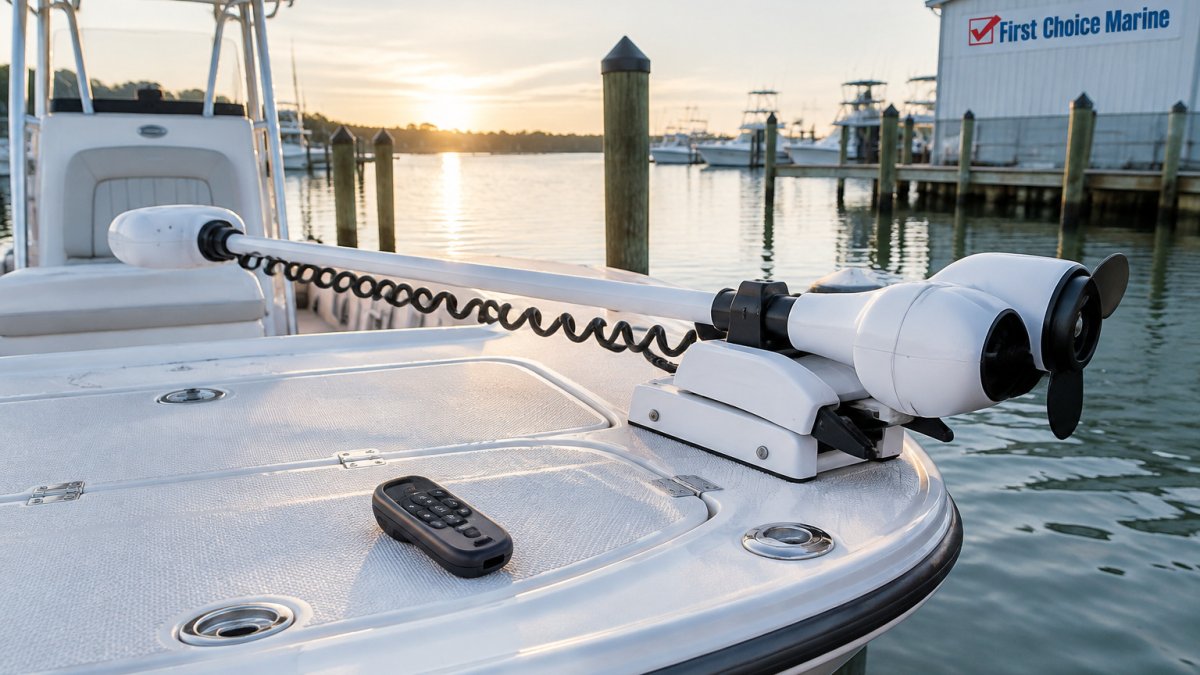
| Motor | Voltage | Thrust | Shaft Length | GPS Spot-Lock | Starting Price | Best For |
|---|---|---|---|---|---|---|
| Riptide Terrova QUEST 90/115 (72") | 24/36V | 90/115 lb | 72" | Yes | $4,309.25 | Larger bow-mounted boats wanting full GPS features |
| Riptide Terrova 112 (72") | 36V | 112 lb | 72" | Yes | $3,566.33 | Heavier boats needing maximum thrust |
| Riptide Terrova 80 (60") | 24V | 80 lb | 60" | Yes | $3,041.86 | Mid-size boats wanting GPS control |
| Riptide Terrova 55 (60") | 12V | 55 lb | 60" | Yes | $2,727.19 | Smaller boats with GPS needs |
| Riptide PowerDrive 70 (54") | 24V | 70 lb | 54" | Yes | $2,006.63 | Budget-minded anglers wanting a 24V motor |
Starting Price
Our top pick for most saltwater anglers is the Riptide Terrova 80. It combines 24V power with full GPS spot-lock, and its 60-inch shaft suits most bow-mount installations. Anglers with larger boats should look at the 112 or QUEST models first.
Saltwater Trolling Motor Thrust Guide: Matching Power to Boat Size
Thrust is the first number to check, and it is the one most anglers get wrong. Saltwater conditions, wind, and current all push against your boat, so a motor that barely keeps up in calm freshwater may struggle at the coast. Choosing a motor with more thrust than your minimum gives you margin on windy days and in strong tide.
A common pattern among saltwater anglers is to size thrust to boat length and weight, then add a buffer for current. The table below is a general starting point for matching thrust to boat size; a heavy bay boat and a light skiff of the same length need different motors.
| Boat Length | Typical Boat Weight | Suggested Thrust | Voltage That Fits |
|---|---|---|---|
| 14-16 ft | Up to about 1,500 lb | 55 lb | 12V |
| 16-18 ft | About 1,500-2,500 lb | 70-80 lb | 24V |
| 18-21 ft | About 2,500-3,500 lb | 80-112 lb | 24V or 36V |
| 21 ft and up | Over 3,500 lb | 112 lb and up | 36V |
Voltage is not just a power rating; it determines how your battery bank is wired and how long you can fish. A 12V motor runs off one battery. A 24V motor needs two batteries wired in series, and a 36V motor needs three. The Riptide Terrova 112 uses a single 36V system and includes Digital Maximizer, which helps you stay on the water longer on a single charge.
Shaft length is the other half of the fit, and it is measured, not guessed. Measure from the top of the bow mounting surface straight down to the waterline, then add about 12 to 18 inches so the prop stays submerged in chop. A shaft that is too short will cavitate and lose thrust in waves; one that is too long drags and is harder to stow. The 60-inch and 72-inch options cover most bow-mount setups, while the QUEST line is available up to 100 inches for taller or deeper-hulled boats.
Watch out: a 24V motor will not run correctly on a single 12V battery, and wiring two 12V batteries in parallel gives you 12V, not 24V. Confirm your boat's existing battery bank before you order, or budget for the extra battery and charger.
If you already own a 36V bank, the 112 and QUEST models let you use it fully. If you are starting from a single 12V battery, the 55-pound Riptide Terrova keeps you on the water without a bank upgrade, at the cost of thrust margin in current.
Saltwater Trolling Motor with Spot-Lock: Holding Position on the Water
Spot-Lock is the feature that most separates GPS-equipped saltwater motors from basic models. It holds your boat in one place using GPS, which helps when you are working a productive spot in current or wind. With the included heading sensor, the Jog function moves your Spot-Lock location five feet in any direction.
Every motor in this list includes Spot-Lock, but the QUEST and Terrova models add more.
Spot-Lock can be activated from the wireless remote or a Humminbird fish finder.
Saltwater Trolling Motor Corrosion Resistance: What Actually Protects the Motor
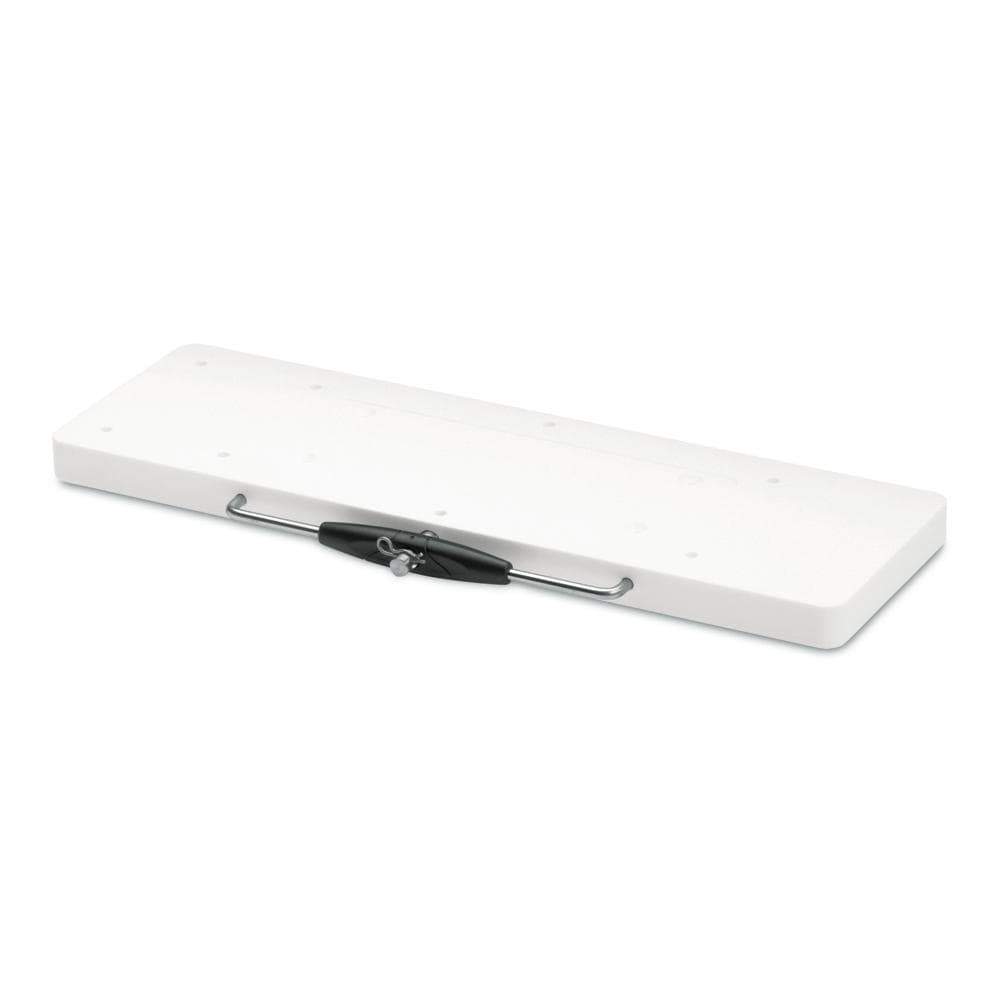
Salt water is hard on any metal, so corrosion protection should be part of your decision. Minn Kota describes its Riptide lower units as grit-blasted, coated in aluminum, and finished with a powder coat to prevent oxidation and rust. For a saltwater-specific mounting option, see the Minn Kota Riptide Saltwater Composite Quick Release Bracket. Every Riptide Transom motor features a sacrificial anode to fight corrosion.
The composite shaft is another point in the motor's favor. Minn Kota describes its composite shaft as indestructible and guaranteed for life.
Corrosion protection does not replace routine care. Rinse the motor with fresh water after every saltwater trip, and check the lower unit for scratches in the coating, which are the first places rust can start. Keeping the lower unit free of corrosion helps preserve reliable trolling control, so Reel Therapy Tackle can help you connect careful motor upkeep with the speed adjustments that keep trout presentations on track.
Saltwater Trolling Motor Maintenance: Keeping Your Motor Working Season After Season
Regular maintenance keeps a saltwater motor working for years, and most of it costs nothing but time. The routine below is the one most saltwater anglers settle into after their first corroded connection.
After every trip, rinse the head, shaft, and lower unit with fresh water to remove salt residue. Fresh water rinses are the single highest-value habit; salt left on fittings pulls moisture and starts oxidation at scratches and seams. Dry the connections and keep the prop clear of line and debris.
Check the sacrificial anode. Anodes are designed to corrode before the motor's metal does, and a spent anode stops protecting anything. Inspect it regularly during the season and replace it when it is visibly eroded or coated.
Protect the electrical connections. A thin coat of dielectric grease on the plug terminals and battery connections keeps salt air from starting corrosion. This is a common pattern among anglers who fish weekly in saltwater, and it is cheap insurance against a motor that cuts out mid-trip.
Check the battery meter before each outing. The Push-to-Test Battery Meter gives an instant state-of-charge reading. Recharge batteries promptly, since leaving them low can shorten their life.
At the start of each season, inspect the prop, the mounting bracket, and the wiring. The Riptide Transom 112 is listed with a Weedless Wedge 2 prop. Check the prop shaft for fishing line wrapped behind the prop; line cuts seals and lets water into the lower unit.
Watch out: a scratch through the powder coat on the lower unit is where rust starts. Touch up bare spots before storage rather than waiting for spring.
For off-season storage, remove the prop, rinse and dry the lower unit, and store the motor with the shaft vertical so water drains. Disconnect the batteries and store them on a maintainer. Anglers who fish year-round can skip the storage step but should still pull the prop once a season to check for line.
Choosing Your Saltwater Trolling Motor and Placing Your Order
Start by measuring your boat. Note the mounting location, the distance from the mount to the waterline, and the battery voltage your boat already uses. A 24V motor needs a 24V battery bank, and a 36V motor needs a 36V setup, so mismatched voltage is a common mistake.
Next, match the thrust to your boat's size and the conditions you fish. Anglers in open saltwater with wind and current should favor the 112 or QUEST models. Anglers in calmer inshore water can often use the 55 or PowerDrive 70 and save money.
When you are ready to buy, add the motor to your cart from its product page on firstchoicemarine.com. Be aware that each motor in this list is marked "Not Qualified for Free Shipping," so check the shipping cost before you checkout. You will also need a compatible quick-release bracket to mount the motor.
Ready to choose your motor? Compare the five models above on our site and pick the thrust and shaft length that fit your boat. First Choice Marine stocks Minn Kota saltwater motors and mounting brackets for boat owners who want to repair and upgrade rather than replace. Browse the Riptide Terrova and PowerDrive range to find the right match.
Frequently Asked Questions
What's the best trolling motor for saltwater?
The best choice depends on boat size and how you fish. The Minn Kota Riptide Terrova Quest 90/115 models are built for saltwater use, with GPS features and a composite shaft guaranteed for life. For smaller boats, the Riptide Terrova 55 and 80 cover lighter loads. Match thrust to your boat, then pick the shaft length and power source that fit your mounting position and battery setup.
Do you need a special trolling motor for saltwater?
Yes, you should choose a motor rated for saltwater use. Saltwater is far more corrosive than freshwater, so look for corrosion protection such as a sacrificial anode, corrosion-fighting metals and protective powder coat paint. Every Riptide model in this comparison is listed for saltwater use, and that rating is the first thing to check on any motor you consider.
What size saltwater trolling motor do I need?
Size the motor to your boat's weight and conditions rather than just its length. A 55-pound-thrust motor suits small boats in calm water, while 80 to 112 pounds of thrust better handles larger boats and wind or current. Shaft length should put the prop at the right depth below the hull, so measure from your mounting position to the waterline before ordering.
Is Spot-Lock useful on a saltwater trolling motor?
Spot-Lock holds your boat in place using GPS, which is useful when you are fishing a specific structure or spot and do not want to keep adjusting the motor by hand. On the Riptide Terrova models, Spot-Lock can be activated from the wireless remote and Jog lets you nudge the position about five feet in any direction. It works on GPS-equipped systems, so confirm your setup supports it.

