


Last Updated: November 19, 2026
Quick Summary
A 24v vs 36v trolling motor choice depends on boat size, load, and conditions. A 36V motor suits larger boats and windy or current-heavy water, while a 24V motor is lighter and simpler for small to mid-size boats. Battery capacity, not voltage alone, sets your runtime.
- A 24V system uses two 12V batteries wired in series, keeping it compact.
- A 36V system uses three 12V batteries wired in series, adding weight, space and cost.
- Series wiring raises voltage but not amp-hours, so runtime depends on capacity and load.
- Match the voltage to your boat's weight and the wind and current you typically face.
- Price the whole system, including batteries, charger and wiring, not just the motor.
Table of Contents
- 24V vs 36V Trolling Motor: The Core Difference
- 24V vs 36V Trolling Motor Pros and Cons
- Trolling Motor Voltage and Thrust Explained
- Trolling Motor Battery Runtime: An Apples-to-Apples View
- 36 Volt Trolling Motor Battery Requirements and Cost
- Lithium vs Lead-Acid at Each Voltage
- Choosing Your Voltage: Next Steps for Your Boat
- Frequently Asked Questions
24V vs 36V Trolling Motor: The Core Difference
Choosing between a 24V and a 36V trolling motor comes down to how much power you need and how much battery you're willing to carry. Voltage sets the electrical pressure the motor runs on, and a higher voltage lets the motor pull the same current while delivering more thrust. The practical result is that a 36V system typically moves a heavier boat with less strain, while a 24V system is simpler and often lighter.
The thing most buyers miss is that voltage alone doesn't determine how long you'll run. Runtime depends on battery capacity, amp draw at the setting you use, and how often you run at high speed. A 36V motor on a small battery bank can run out faster than a 24V motor on a larger one. Start with your boat's weight and typical conditions, then work backward to voltage.
24V vs 36V Trolling Motor Pros and Cons
24V systems are a common choice for small to mid-size boats and kayaks. They use two 12V batteries wired in series, which keeps the system compact. The tradeoff is less headroom in wind, current or heavy loads.
36V systems suit larger boats, heavier loads and anglers who fish in wind or current. Three 12V batteries are wired in series, which adds weight, space and cost. In exchange you get more thrust per amp drawn, so the motor doesn't have to work as hard.
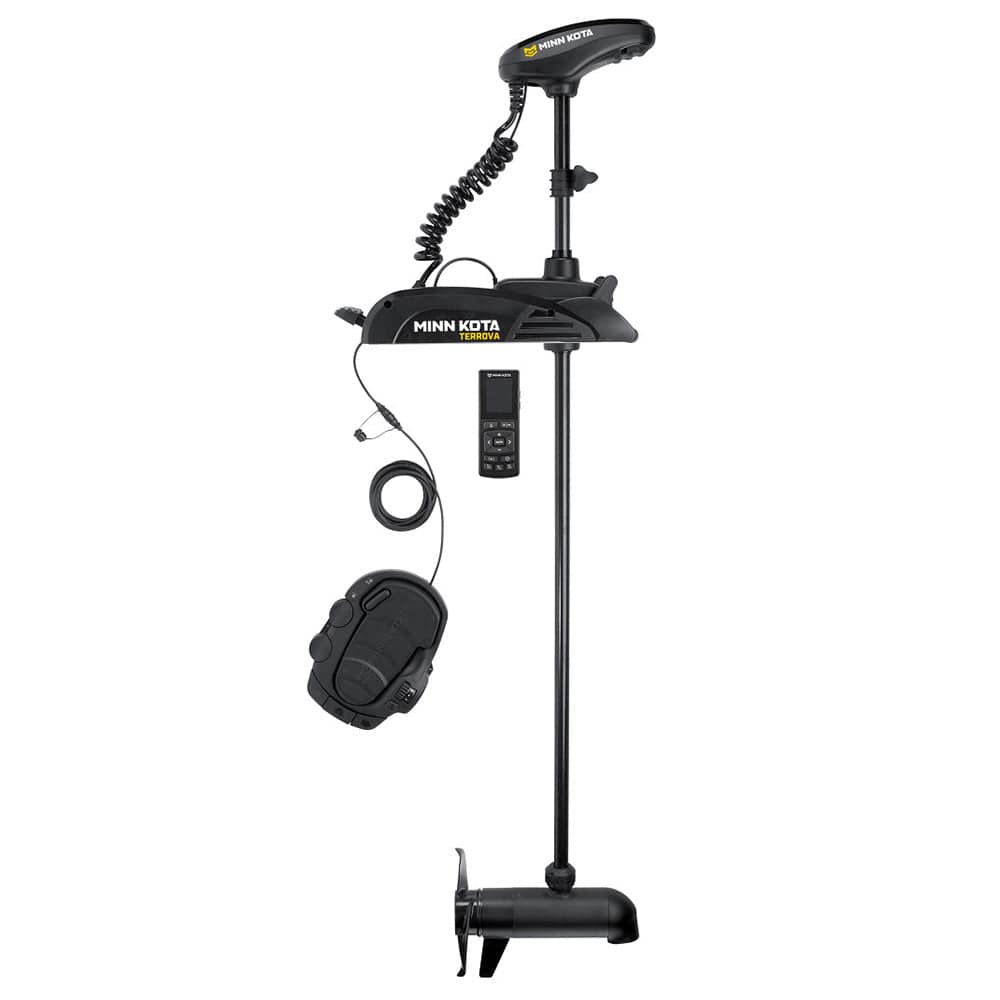
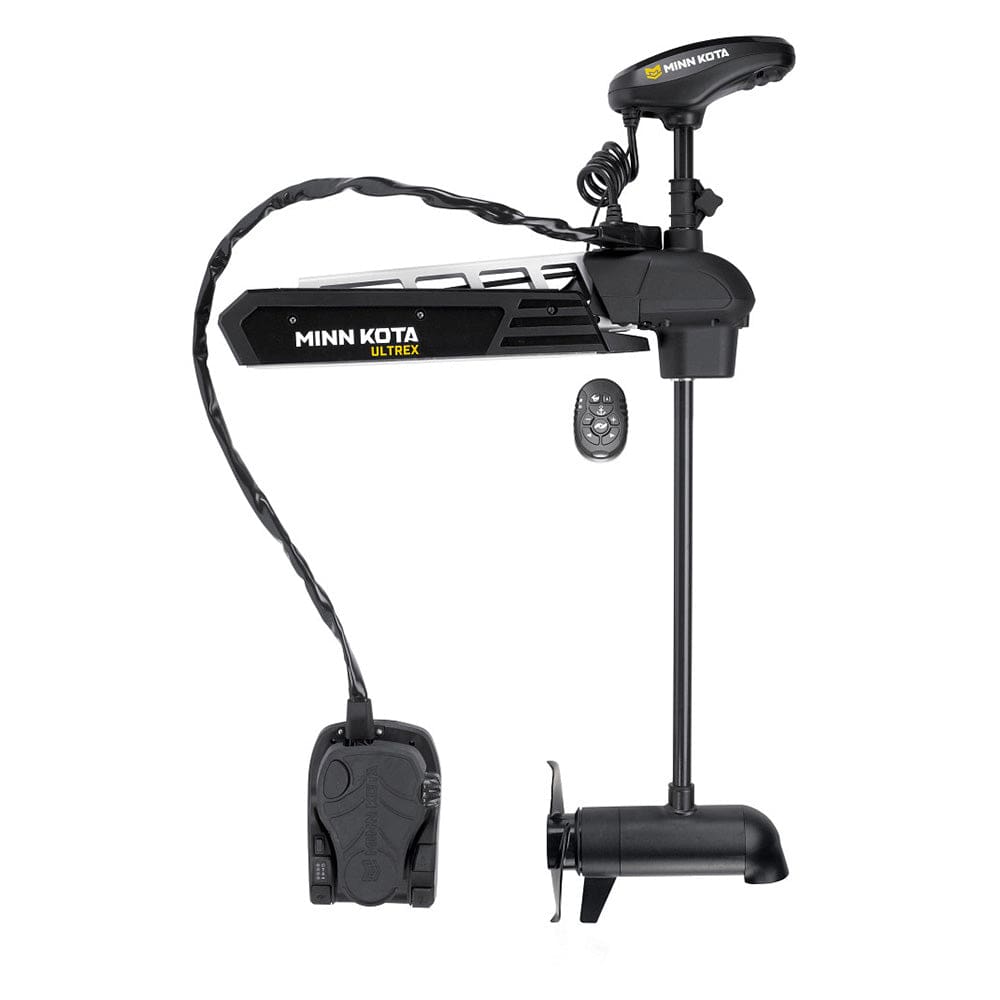
Two example models from this lineup show the range. The Minn Kota Terrova 80 Dual Spectrum CHIRP with Remote 24v 80lb 60" #1358382 is a 24V option rated at 80 lbs of thrust. The Minn Kota Ultrex 112/DSC/MR 36v 112lb 52" with Micro Remote #1368896 is a 36V option rated at 112 lbs of thrust.
Watch out: Don't buy 36V for a boat that never sees wind or current. You'll pay for extra batteries and wiring you won't use.
| Factor | 24V | 36V |
|---|---|---|
| Battery count | Two 12V batteries | Three 12V batteries |
| Best for | Small to mid-size boats, kayaks | Larger boats, heavy loads |
| Weight and space | Lighter, more compact | Heavier, needs more room |
| Wind and current | Adequate in calm water | Stronger performance |
Trolling Motor Voltage and Thrust Explained
Thrust is the force a motor produces to move the boat, usually rated in pounds. Voltage affects how efficiently that thrust is delivered. A 36V motor draws lower current to produce the same force.
Don't compare thrust numbers across brands as if they were measured the same way. Use the rating as a rough guide, then match it to your boat's weight and the conditions you fish in.
Trolling Motor Battery Runtime: An Apples-to-Apples View
Runtime is the most misunderstood part of this comparison, and most of the confusion comes from treating voltage as if it were a fuel tank. It isn't. Voltage is electrical pressure; runtime is set by usable battery capacity, the amp draw at the speed setting you actually use, and how much of the day you spend at high power. A fair comparison holds those variables constant and then looks at how each voltage handles the load.

The math is simple enough to do on a napkin. A battery bank's capacity in amp-hours (Ah) divided by the motor's current draw in amps gives you hours of run time at that draw. Because a 36V motor produces the same thrust at lower current than a 24V motor, it can stretch a given amount of stored energy further at matched thrust, but only if the battery bank is sized to match. Put a 36V motor on a small bank and a 24V motor on a large one, and the 24V setup can easily outlast it.
Here is a worked example with stated assumptions. Assume two anglers each want 80 lbs of thrust for a six-hour day, running about 60% of the time at a mid setting and 40% at a low setting. Angler A runs a 24V, 80 lb motor on two 12V, 100 Ah lead-acid batteries in series (24V, 100 Ah). Angler B runs a 36V, 112 lb motor on three 12V, 100 Ah batteries in series (36V, 100 Ah). Both banks store the same amp-hours, but the 36V bank stores 50% more total watt-hours because watt-hours equal volts times amp-hours. At matched thrust, the 36V motor draws less current, so its effective run time at that thrust is longer, often meaningfully so. Reverse the battery sizes and the result flips. The lesson is that voltage changes efficiency, but capacity and load set the clock.
Usable capacity matters as much as rated capacity. Usable capacity matters as much as rated capacity, and the depth of discharge a battery tolerates varies by chemistry. Check the battery manufacturer's specifications for usable capacity before sizing a bank.
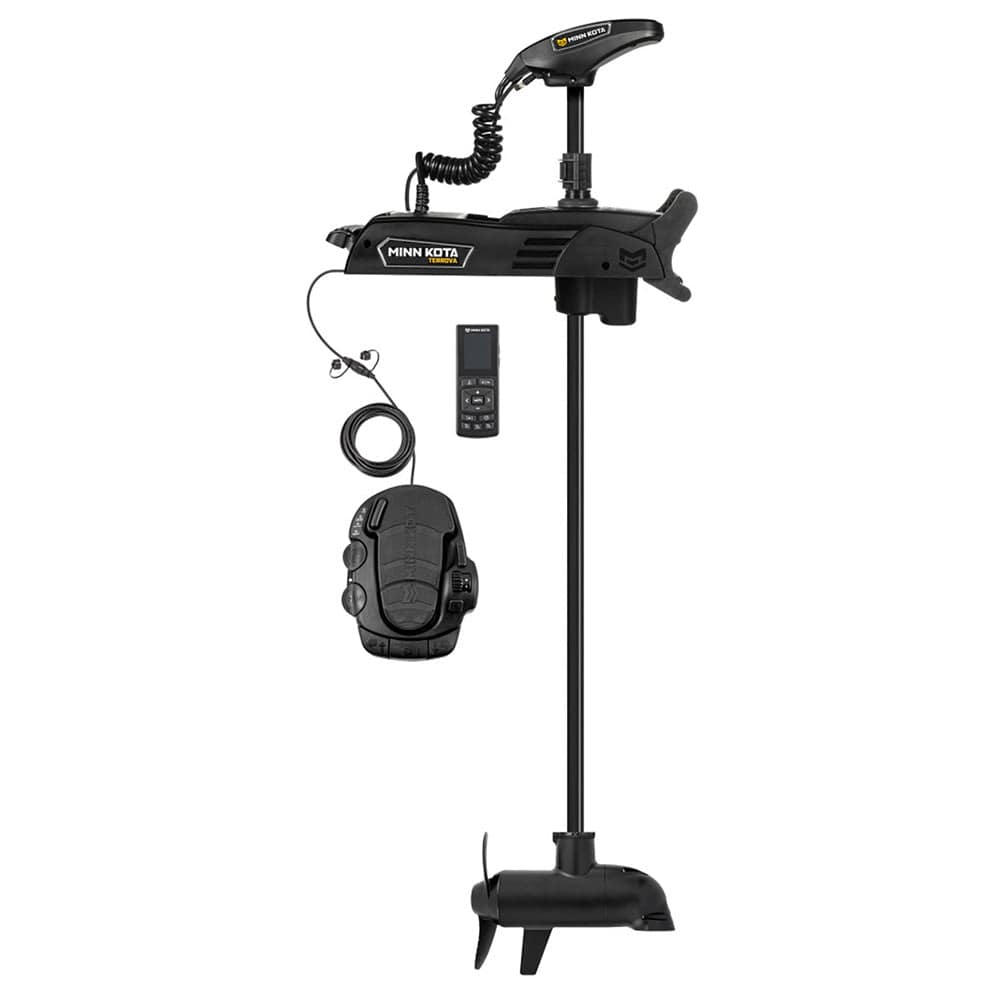
Speed setting is the other lever. Current draw rises steeply as you move up the speed dial, so running at full power drains a bank far faster than cruising at a low setting. The Minn Kota Terrova Quest 90/115 Dual Spectrum CHIRP & Remote 24/36v 60" #1358201 is a dual-voltage motor that can run on either 24V or 36V. Its listing describes an eco mode to extend battery life. Those gains come from managing current draw, not from voltage alone.
Watch out: If you fish windy points at high power, plan your bank around your real draw, not the brochure number.
36 Volt Trolling Motor Battery Requirements and Cost
A 36V system needs three 12V batteries wired in series: negative to positive, negative to positive, negative to positive, with the motor leads landing on the open negative of the first battery and the open positive of the last. The series connection adds the voltages (12 + 12 + 12 = 36V) while the amp-hour capacity stays the same as a single battery. That last point surprises people, three 100 Ah batteries in series give you 36V at 100 Ah, not 300 Ah. If you need more run time, you add capacity in parallel groups, not by stacking more batteries in the same series string.
Plan the physical layout before you buy. Three batteries take up more compartment space and add weight. On a smaller boat, that payload can affect hole shot, draft, and balance, so check your compartment dimensions and your boat's weight capacity before committing. A charger rated for a 36V bank is also required.
Electrical safety deserves more attention than it usually gets. Use wiring and circuit protection rated for the motor's current draw, keep series connections tight and corrosion-free, and install a fuse or breaker on the positive lead close to the battery. Confirm your charger is compatible with your battery chemistry, a lead-acid profile will not properly charge lithium, and vice versa. If you are unsure about wire gauge, breaker sizing, or series wiring, have a qualified installer or marine electrician check the setup.
On cost, the honest comparison is system-level, not motor-level. A 36V build carries the motor, three batteries instead of two, a larger multi-bank charger, more wiring and terminals, and possibly a new battery tray or compartment modification. The motor itself is only part of the bill. For the motor, the Motorguide X5-105FW 45" 36v FP Bow Mount #94050005R is a 36V bow-mount motor with 105 lbs of thrust. Budget separately for batteries, charger, wiring, and installation, and price the whole package before you decide.
The upgrade path is where 36V gets expensive if you guess wrong. If you buy a 24V motor now and later decide you need 36V, you are replacing the motor, adding a third battery, and likely replacing the charger, the first motor and charger become sunk cost. If you are genuinely on the fence and expect to move up in boat size, a dual-voltage motor that runs on either 24V or 36V lets you start on two batteries and add the third later without replacing the motor.
Watch out: Do not assume a 36V bank gives you three times the run time of a 24V bank. Series wiring raises voltage, not amp-hours, so run time still comes down to capacity and load.
Lithium vs Lead-Acid at Each Voltage
Both 24V and 36V systems can run on lead-acid or lithium batteries. Lithium batteries are generally lighter, while lead-acid batteries are a different chemistry with different tradeoffs. Usable capacity matters more than rated capacity, so compare what you can actually draw without damaging the battery.
Whichever chemistry you choose, match the battery bank to the voltage and make sure your charger supports it.
Choosing Your Voltage: Next Steps for Your Boat
Start by weighing your boat and listing the conditions you fish in most. If you mostly fish calm water with a small boat, 24V is usually enough. If you regularly deal with wind, current or a heavier boat, 36V gives you more room.
If you've settled on 24V, look at the Minn Kota Terrova 80 Dual Spectrum CHIRP with Remote 24v 80lb 60" #1358382. If 36V fits your needs, the Motorguide X5-105FW 45" 36v FP Bow Mount #94050005R and the Minn Kota Ultrex 80/DSC/MR 24v 80lb 52" with Micro Remote #1368891 show the range of options we carry.
At First Choice Marine, we'd rather you pick the right voltage the first time than buy the biggest motor on the shelf. Match the motor to your boat, then build the battery bank around it.
Frequently Asked Questions
Can I run a 36V trolling motor on 24V?
No. A 36V motor is built for three 12V batteries in series and expects that voltage. Running it on a 24V system will reduce thrust and performance, and it is not a supported configuration. Check the motor's voltage rating and match the battery bank to it before connecting anything, and confirm the wiring with the manufacturer's manual or a marine electrician.
How many batteries do I need to run a 36V trolling motor?
A 36V trolling motor needs three 12-volt batteries wired in series, or six 6-volt batteries in series. Battery count is set by voltage, not by thrust. Capacity in amp-hours determines how long the bank runs. Many anglers add capacity by using larger or additional batteries in the same series configuration, keeping the total voltage at 36V.
Does a 36V trolling motor provide more thrust than a 24V motor?
Not automatically. Thrust depends on the specific motor model, its prop, and its design, so a 36V model and a 24V model can be rated similarly. The Minn Kota Ultrex 112 (36V, 112 lb thrust) and Ultrex 80 (24V, 80 lb thrust) show that higher-voltage models can carry higher thrust ratings, but compare the rated pounds of thrust on each model rather than assuming voltage alone decides power.
Is a 24V trolling motor a good choice for a smaller boat?
For many smaller boats, a 24V motor is a practical fit. It uses two 12-volt batteries in series, which keeps the battery bank lighter and simpler to install. The Minn Kota Terrova 80 (24V, 80 lb thrust) is an example of a 24V model sized for everyday fishing. Match thrust to boat weight and conditions, and plan battery capacity around the hours you expect to run.

