


If you own a boat, you already know cleaning isn’t optional. After just a few good days on the water, salt, algae, fuel residue, and regular grime usually build up faster than you expect. That mess isn’t just annoying, it’s where most headaches start, especially when you’re trying to pick marine cleaners that actually work without hurting the water you like being on. Plenty of products claim to be eco‑friendly, but that often means weak results, sketchy ingredients, or both. No wonder so many boaters get frustrated.
Instead of marketing fluff, this guide looks at what eco‑friendly boating really means when it comes to cleaning. We start with the interesting part: some biodegradable surfactants really do break down in both freshwater and saltwater instead of sticking around. From there, we explain which biodegradable boat cleaners can handle bilge grease, slime on swim platforms, and the stubborn algae that clings to the waterline. We also point to ingredients to avoid, like phosphates and harsh solvents, even when labels look “natural.” These are real tradeoffs that matter over years of use, especially when runoff reaches lakes and coastal areas.
At First Choice Marine, we talk with boaters every day, weekend anglers, charter captains, DIY maintenance folks, and brand‑new owners. They usually ask the same thing: do eco‑friendly cleaners really work? The short answer is yes, most of the time. But choosing carefully matters, and so does using them the right way. Dilution and dwell time often make the difference, and we’ll show where people commonly mess up so time and money don’t get wasted.
Why Marine Cleaning Products Matter More Than You Think
Cleaning a car in the driveway usually sends runoff into a drain system that gets treated later. Cleaning a boat is different. That same water often flows straight into open water, and that still surprises a lot of people. Marine cleaning products don’t act like everyday household cleaners once they leave the surface. What gets used on a deck, hull, bilge, or engine room can reach fish, plants, and shellfish almost right away, sometimes within minutes. There’s usually no buffer and no treatment step, just water, wildlife, and whatever came off the brush. That’s why the impact can feel much more real and immediate.
What’s also worth looking at is how fast the marine cleaning market is growing, especially products focused on eco‑friendly use. To me, that points to a couple of clear trends. Boaters are cleaning more often, and more of them are paying attention to what they’re using. That matters because cleaning runoff counts as land‑based pollution, which makes up a big part of what ends up in oceans, lakes, and coastal waterways, especially around marinas. This isn’t theoretical. It’s usually happening close to shore, where people swim, fish, and dock every day.
Here is a snapshot of how big this issue has become.
| Metric | Value | Year |
|---|---|---|
| Global marine cleaning products market | USD 100 billion | 2023 |
| Projected marine cleaning market | USD 259.37 billion | 2032 |
| Eco friendly cleaning market size | USD 12.2 billion | 2024 |
| Plastic waste entering water yearly | 19, 23 million tons | 2025 |
What Makes Marine Cleaning Products Truly Eco Friendly and Marine Safe
The tricky part is that not every cleaner labeled “biodegradable” actually behaves well once it reaches open water, and that’s where boat owners often get confused. Some products only break down properly inside wastewater treatment systems. When they’re rinsed off a deck or hull, they can stick around or react in ways no one expects. Others do break down, but very slowly, and may release leftovers that are still harmful. This is a bigger concern when cleaning at the dock or while anchored.
A truly eco friendly marine cleaner usually shares a few clear traits. It uses plant based surfactants instead of petroleum ones, which often changes how residue acts once it hits the water. It breaks down into non toxic parts in real world conditions, not just in lab tests. It avoids harsh acids and strong alkalis that can linger in marinas longer than people realize. Ingredients known to harm aquatic life, even in tiny amounts, are usually left out. Cutting corners rarely works out here.
One expert warning stands out here.
Biodegradable cleaners must break down into non-toxic components in marine environments, not just in wastewater treatment plants.
This matters most when cleaning hulls, bilges, engines, and below-deck spaces, areas that collect oil, fuel, and heavy grime. Years ago, strong chemicals felt unavoidable. Now, enzyme based and pH neutral cleaners often handle the same mess with far less risk to nearby water. This is usually stated clearly on the label, especially for products made for bilge cleaning near marinas.
What to Use: Eco Friendly Marine Cleaners That Actually Work
Performance is usually the first concern, and that’s fair. Eco friendly cleaners used to have a rough reputation, but that idea doesn’t really fit anymore. Today’s biodegradable boat cleaners are made for real conditions on the water, salt buildup on rails, fish residue on decks, and the everyday grime that shows up after a long trip. They get the job done without leaning on harsh chemicals that can later cause damaged finishes or faded surfaces, which most boat owners want to avoid.
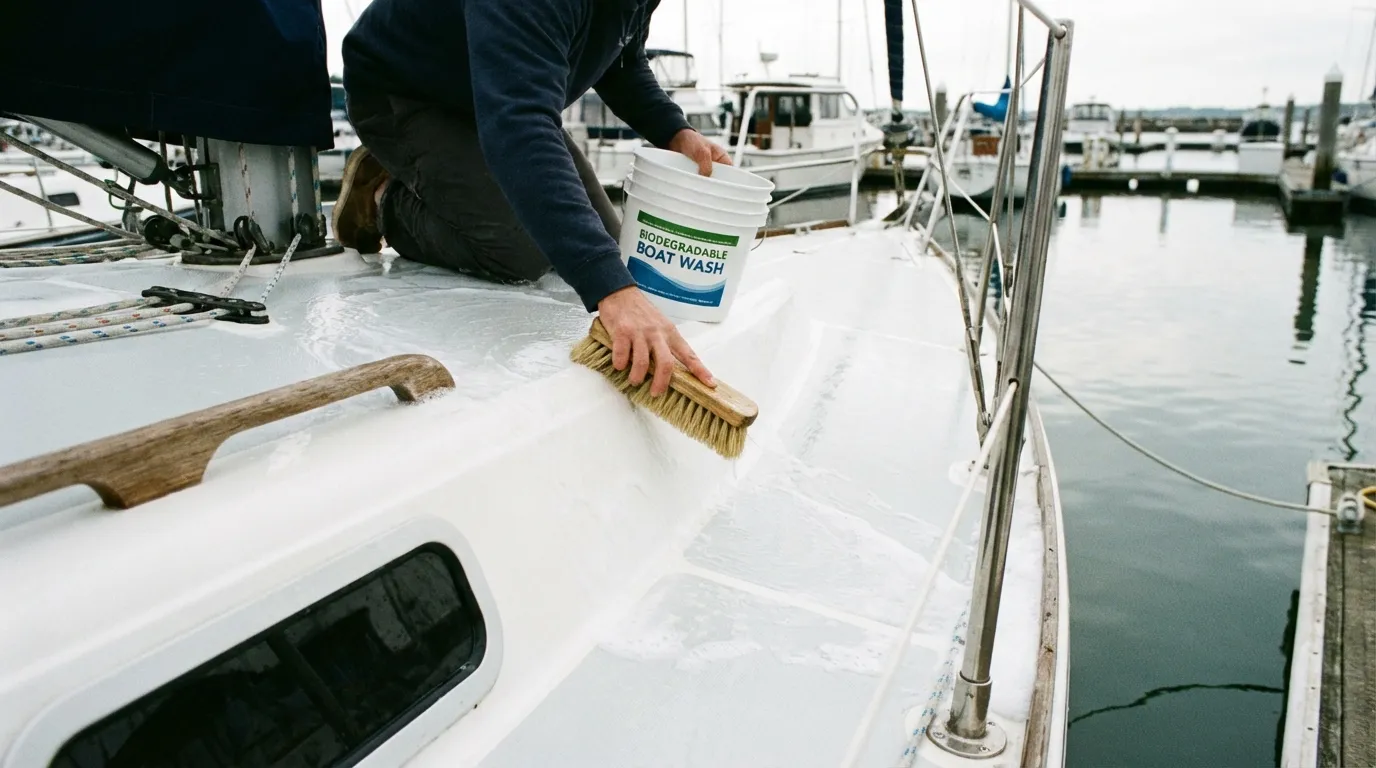
For decks and topsides, pH neutral boat washes are often the safest and most reliable choice. They typically remove dirt and salt without stripping wax or wearing down protective coatings on fiberglass, aluminum, or painted areas. That matters when you’ve already put time and money into protecting those surfaces. Another plus is that many of these washes rinse away with less water, which makes dock cleanup quicker and cuts down on freshwater use, a small detail that adds up over time.
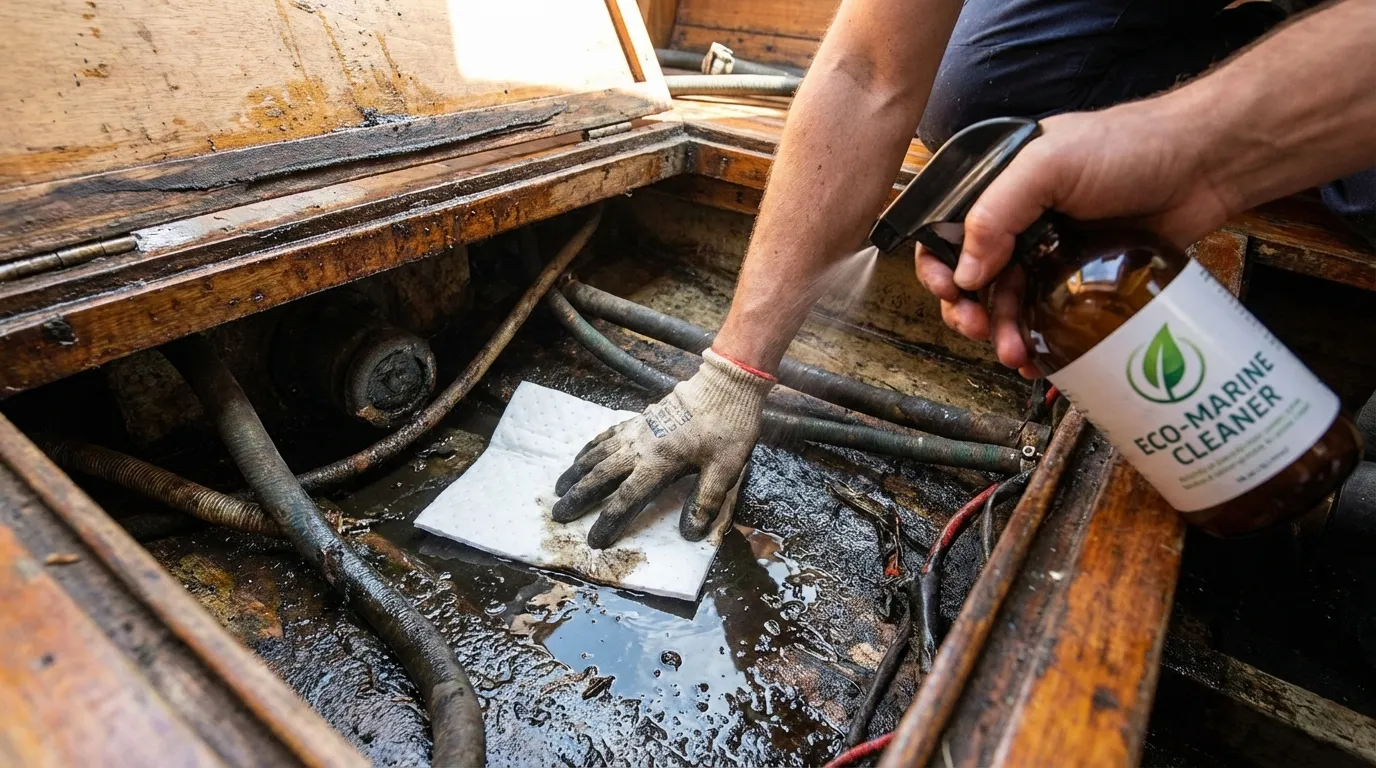
Bilges and engine spaces need a different approach. Enzyme based cleaners usually work best because they don’t just cover up oil and fuel residue. The enzymes break it down over time and keep working after application, which helps with lingering odors on fishing boats or older vessels where small spills are common.
Hull cleaners are where product choice matters most. Mild organic acids can remove waterline stains and light growth without the long-term damage tied to traditional acid washes. You might need a bit more scrubbing, but the tradeoff is better protection for the hull and the surrounding water.
For a wider view, there’s also a guide on sustainable boat maintenance practices for eco-friendly boating that pairs well with choosing smarter cleaners.
What to Avoid: Ingredients That Hurt Boats and Waterways
Fast results are the biggest draw of old‑school marine cleaners. They cut through grime right away, and it’s easy to see why people grab them. The trouble shows up after the rinse. What’s left behind can linger in the water far longer than the shine on your deck, especially near docks and marinas. In real life, knowing what to steer clear of often matters more than searching for the “perfect” cleaner.
Look at chlorine and bleach. They’re common in mold and mildew removers, and they wipe out stains on contact. Even so, small amounts can throw local marine life off balance, which means that quick win often comes with a bigger downside. Phosphates cause a similar problem. They feed algae blooms, leading to slow damage that builds over time.
Heavy‑duty degreasers often use petroleum solvents, especially around engine areas. These chemicals break down slowly, sink into sediment, and stick around. Nonylphenol ethoxylates, hidden in some surfactants, can disrupt fish reproduction, a long‑term issue most people never notice as it’s happening.
Without policy interventions, plastic leakage to aquatic ecosystems is projected to nearly double by 2060.
This warning applies across the board. Many “green” labels rely on fuzzy claims instead of clear details, which is usually a reason to pause. If a product won’t explain how it breaks down once it reaches the water, slowing down is the safer choice. Household cleaners are another common mistake. They aren’t made for open water, and many quietly contain the same harmful ingredients, even when the bottle looks safe.
How to Clean Smarter, Not Harder, on Your Boat
Eco‑friendly boating goes beyond the products sitting in a locker. Everyday habits matter just as much, and this is usually where small mistakes creep in. Little choices around cleaning add up over time, and a few smart changes can cut down on runoff while helping the job finish faster. That balance works well for both your boat and the water around the dock.
A helpful approach is starting dry whenever you can. Sweeping decks before washing and wiping spills right away, even tiny ones, can save a lot of effort later. Why grab chemicals first when a damp cloth can loosen dirt just fine? Soft brushes and the right tools often handle most of the work, keeping cleaners in the background and waste low.
One detail people often miss is rinsing. Low pressure, used slowly, keeps water on the deck instead of spraying into the marina. High pressure usually sends runoff farther and creates more mess. When possible, clean over land, especially engines or removable parts, and use absorbent pads in bilges to catch drips. Simple habits, real results.
Eco cleaning also works well with other upgrades. Pairing safer cleaners with efficient lighting tends to pay off over time, and it fits with broader sustainable boating practices already shared for modern owners.
Choosing the Right Marine Cleaning Products for Your Type of Boating
Salt can quietly cause a lot of damage, especially on rails, fittings, and motors that run along the coast. Because of that, saltwater boaters usually stick with pH‑neutral washes and gentle corrosion inhibitors. Used regularly, these help slow salt buildup before it turns into real wear. Freshwater boats deal with different problems. Mud, weeds, fish residue, and fast‑forming slime are common, and mild biodegradable soaps or enzyme sprays often handle the mess without heavy scrubbing.
Not all boats need the same kind of cleaning, which becomes obvious after owning a few, or borrowing a friend’s. A bass boat on inland lakes faces very different messes than a charter boat running the coast, so it makes sense to pick products based on where and how you boat most often.
Commercial operators usually think long term. Safer cleaners help meet marina rules, cut down deck and hull wear, and show customers they care about sustainability. If bottom maintenance is planned, product choice matters there too. We wrote about eco‑friendly boat bottom paints and maintenance tips, and how cleaning and coatings work together.
Frequently Asked Questions
Are biodegradable boat cleaners safe for saltwater and freshwater?
Most biodegradable boat cleaners work in both saltwater and freshwater, which is handy. They break down into non‑toxic parts in the water, and that matters. But how can you be sure? Check the label and make sure it clearly says “marine safe”.
Do eco friendly marine cleaning products really clean oil and fuel?
Yes. Enzyme‑based cleaners usually handle oil and fuel residue well in most situations. They break down hydrocarbons instead of covering up the mess, which is why people use them in bilges and engine compartments, especially in tight spaces.
Long-term harm to marine life is the worry; most times it’s better to skip household cleaners (I think). They aren’t made for constant water contact, and eco labels can hide chemicals that build up over time (you don’t see it).
How often should I clean my boat to stay eco friendly?
Cleaning gently and often means you can use fewer harsh products later. Regular light cleanings, most days, stop buildup and keep decks and hulls eco friendly.
Some do cost more upfront (I think that’s true), but they’re usually concentrated, so you use less each wash and buy refills less often, which is probably cheaper.
Keeping Your Boat Clean Without Leaving a Trace
For most boat owners, switching to better marine cleaning products is an easy upgrade. Biodegradable cleaners show that eco‑friendly boating doesn’t mean losing performance. You can protect the hull and engine while reducing what washes into the water you boat on. If you’re out often, fewer residues and less chemical runoff matter more than people think.
What makes the biggest difference? Using the right product for each job. Hull cleaners handle tough buildup, while mild soaps work for decks and daily washdowns. Check labels and avoid harsh chemicals, since safer formulas break down faster in water, usually noted on the bottle.
Stocking up for the season helps. First Choice Marine carries cleaning and maintenance options made for real boating conditions. Make cleaning a regular habit so spills and grime don’t end up in the marina or near shore, think quick touch‑ups instead of last‑minute cleanups.
